
Andalusia: eight provinces, three seas, and 87,268 km²
Sierra Nevada and the Alpujarras: altitude on the Mediterranean
Mulhacén (3,479 m) is the highest point on the Iberian Peninsula. The Sierra Nevada ski resort, the southernmost in Europe, operates between 2,100 and 3,300 metres. On the southern face, the Alpujarras stack white villages between ravines: Pampaneira, Bubión, and Capileira, above 1,400 m, keep flat roofs of launa (slate pressed with waterproof clay) — a Berber-origin building technique that sheds rain without timber.
Guadalquivir: marshes, rice fields, and Doñana
The Guadalquivir runs 657 km from the Sierra de Cazorla to Sanlúcar de Barrameda. In its final stretch, the Doñana marshes (National Park, 54,252 ha) host more than 300,000 wintering waterbirds, including Europe's largest colony of common spoonbills. The Lower Guadalquivir rice paddies (35,000 ha between Isla Mayor and Los Palacios) produce 40 % of Spain's rice.
Oil and olive trees: Jaén's green sea
Jaén province holds 66 million olive trees — the highest density on Earth — and accounts for 20 % of global olive oil output. The Sierra de Cazorla PDO alone groups 31 municipalities with 80,000 hectares of mountain olive groves. Mechanical trunk-shaker harvesting runs alongside hand-picking on slopes above 30 % gradient, where each tree is beaten with poles between November and January.
Whitewash, courtyards, and defensive architecture
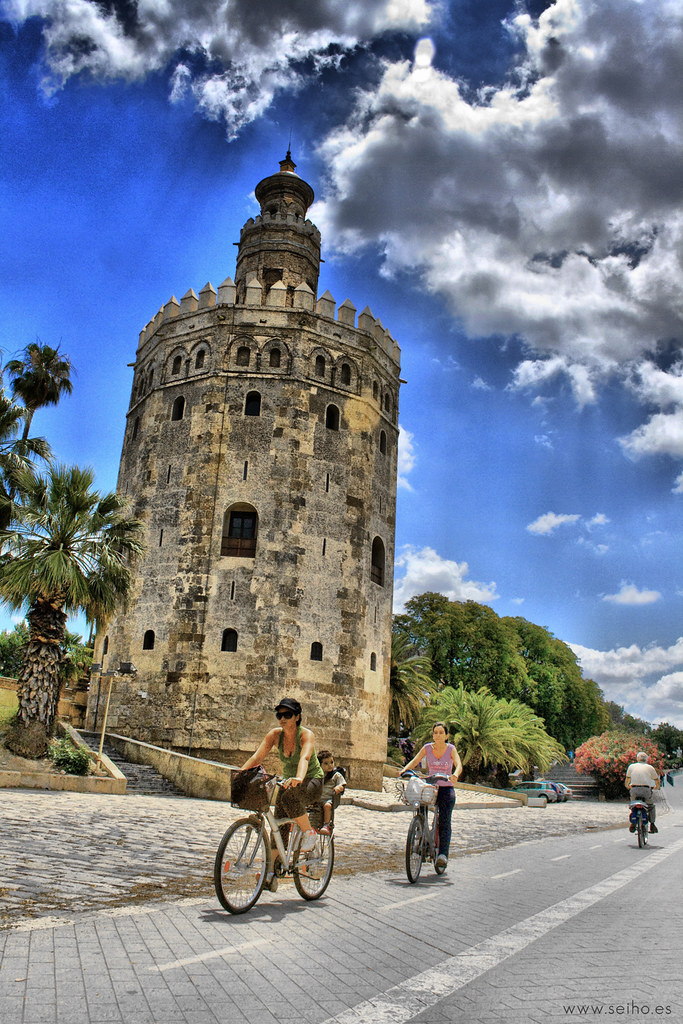
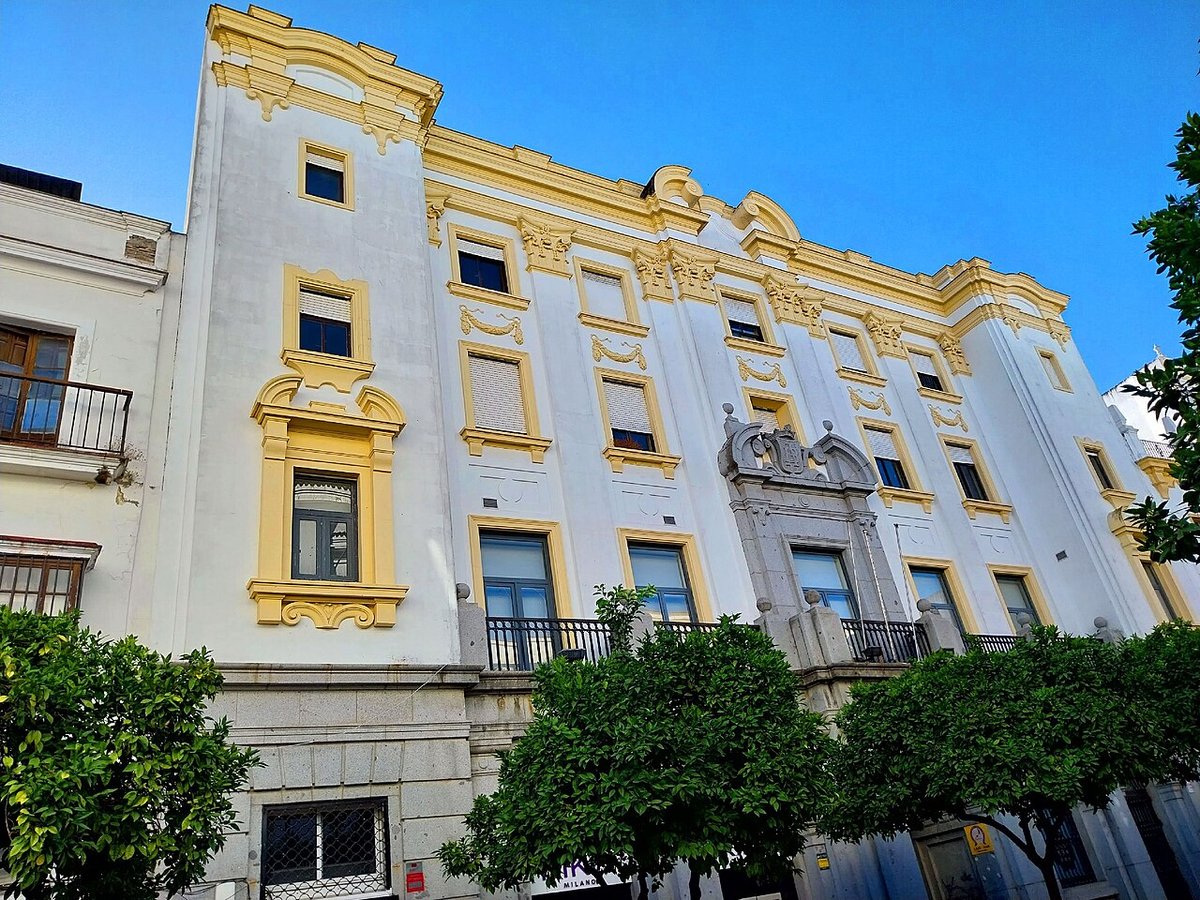
Lime (calcium oxide) coats the facades of the inland white villages — Arcos de la Frontera, Vejer, Setenil de las Bodegas — not only for appearance: it reflects up to 80 % of solar radiation and acts as a biocide. Along the coast, 16th-century watchtowers (44 in Málaga province alone) formed a surveillance network against Barbary corsairs, spaced 4 to 8 km apart for line-of-sight signalling.