Full Article
about Carrión de los Céspedes
Small Aljarafe town known for Manila-shawl making and fervent religious fiestas.
Hide article Read full article
A village bought outright
Carrión de los Céspedes owes its name to a sixteenth-century transaction that still raises eyebrows. Gonzalo de Céspedes bought the entire village, and with it came the surname. Before that, it was called Carrión de los Ajos. On balance, the rebrand was probably an improvement.
Today the village sits in the Aljarafe region of Seville province, about 25 minutes from the city of Seville. The distance is short, yet the change in atmosphere is immediate. This is not postcard Andalusia staged for visitors. It feels more like arriving at someone’s home and adjusting to their tempo. Life moves slowly here.
With just over 2,600 residents, Carrión de los Céspedes is small. The urban centre clings to a gentle hill, a tight weave of narrow streets and whitewashed houses. There are no tour groups threading through the lanes, no coaches unloading passengers on a schedule. Neighbours greet one another by name. People linger in doorways. A television might be murmuring in a bar, turned low because the real focus is conversation.
Sit for long enough in the square and fragments of local life drift across without much prompting. It is that kind of place.
The Aljarafe without pretence
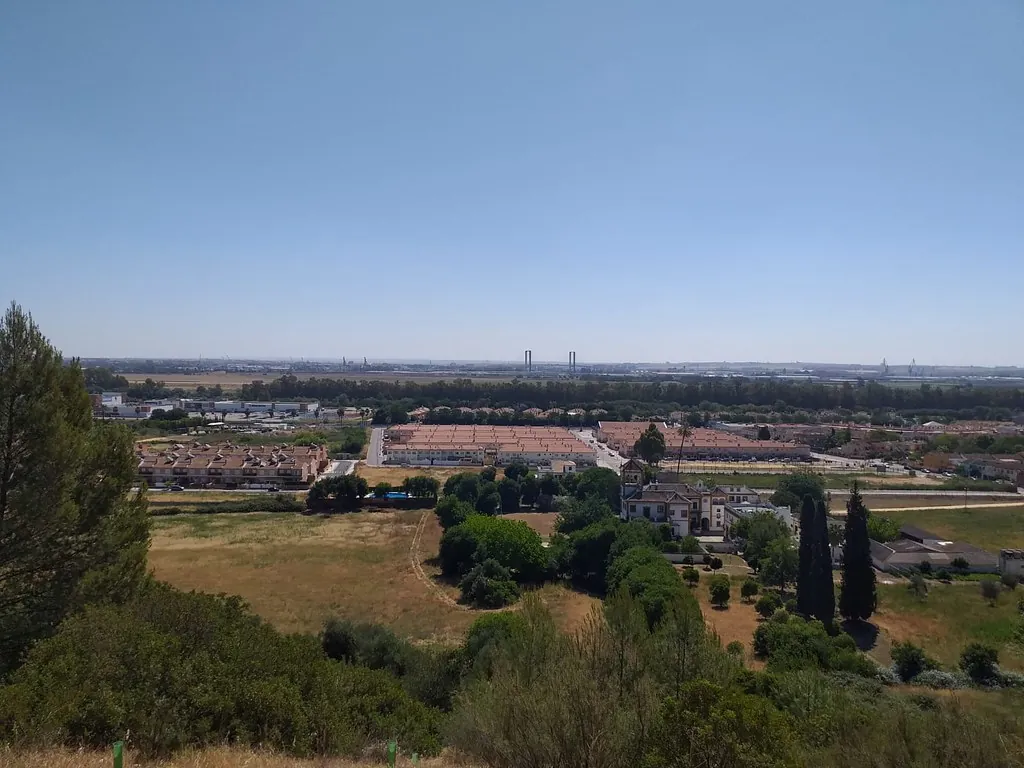
The Aljarafe is known as a fertile plateau west of Seville, dotted with towns and farmland. In Carrión de los Céspedes, that rural character remains close to the surface. There is often a faint scent of the countryside in the air, the sort that clings lightly to clothes.
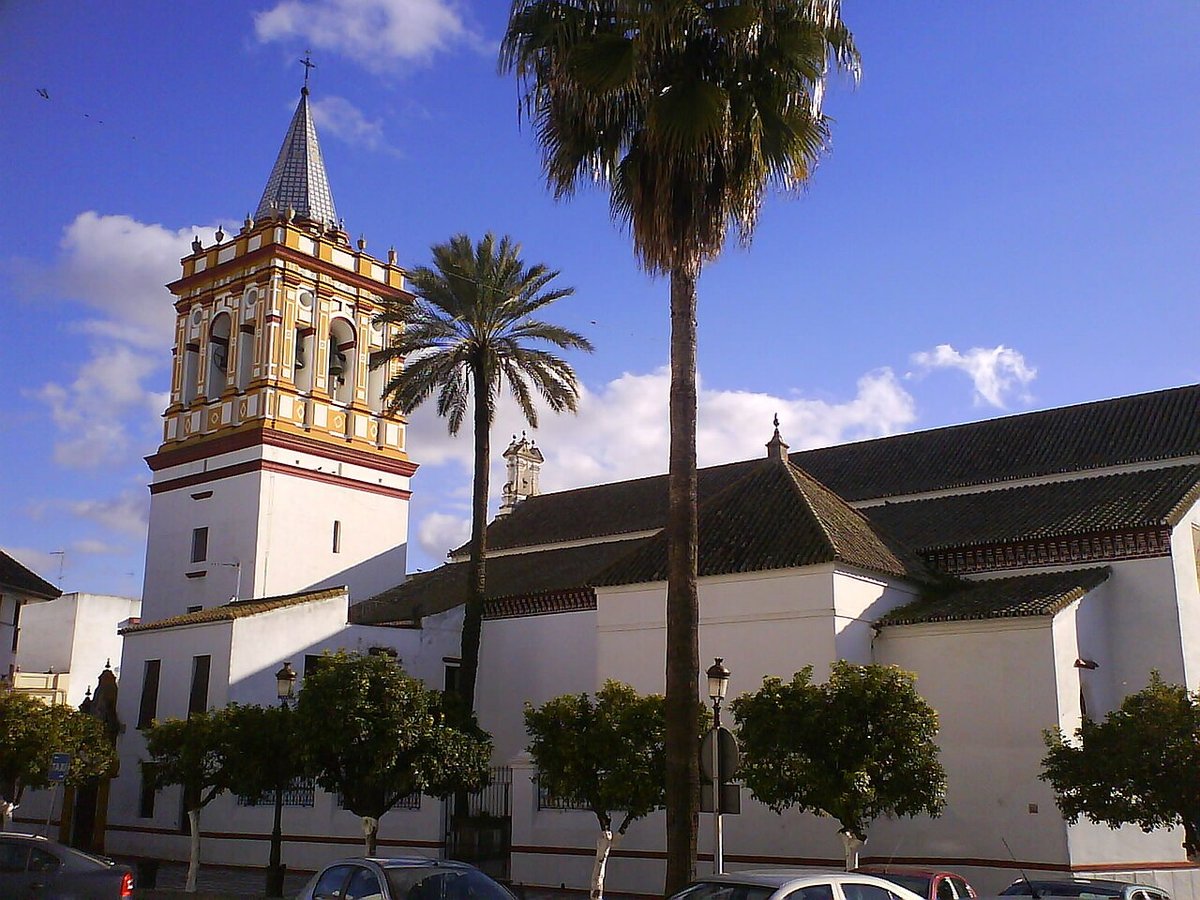
The historic heart rises gently towards the Iglesia de San Martín. Its origins date back to the late fifteenth century, although the building has clearly evolved over time. Like many old churches in Andalusia, it has been reshaped by successive generations. Renovations, additions and repairs have left their mark. The result is a blend of periods that sits comfortably together.
Reaching the church involves a modest climb. Nothing strenuous, but enough to make the pause at the top worthwhile. From there, the landscape of the Aljarafe opens out, rolling away beyond the village rooftops.
A little outside the urban centre stands the Ermita de Consolación. Its location follows a pattern common among sanctuaries historically linked to military orders such as the Order of Calatrava, which often placed their hermitages at a slight remove from the town. The setting is quiet, more hushed than the village streets. Devotion to the Virgen remains strong among residents, and the site continues to hold meaning within the community.
Carrión de los Céspedes also has a tradition connected to El Rocío, the famous pilgrimage in Andalusia. A local hermandad, or religious brotherhood, sets off each year towards the village of El Rocío. In the weeks leading up to the pilgrimage, preparations become visible. Carts are readied, plans are made, and the rhythm of daily life picks up.
Simple food, no fuss
Local cooking here does not try to impress. It sticks to what has always been prepared at home.
One dish with a name that catches the ear is guisado de las brujas, literally “witches’ stew”. Despite the dramatic title, it is a straightforward combination of noodles and fish. The appeal lies in its simplicity.
There are also habas cochas, broad beans cooked in a way that suggests solid, filling fare. It is the sort of dish that feels designed to sustain rather than to decorate a plate. For something sweet, roscos de vino appear in local kitchens. They may not win prizes for appearance, but they taste like a traditional afternoon treat, the kind associated with family tables rather than display counters.
Eating in the village is uncomplicated. Menus tend to be short and shaped by what is in season. There is no attempt to tailor dishes for visitors or to translate everything into multiple languages. What is served is what has long been cooked.
Walking the old ways
Several rural tracks lead out from Carrión de los Céspedes, linking it with other parts of the Aljarafe. Some are signposted and can be followed on foot or by bicycle without much difficulty.
One route heads towards Valencina and stretches for around seven kilometres. The landscape opens into fields and olive groves. Silence is part of the experience, broken occasionally by the sound of a tractor or a dog barking in the distance.
In the direction of Guillena, other paths cross cultivated land and gentle undulations in the terrain. These are not mountain trails and require no specialist equipment. They are traditional dirt tracks, used for generations to move between villages.
Practicalities are straightforward. Water is essential, especially under a strong sun. A hat is sensible in hot weather, and decent footwear makes a difference. In summer, the dust of the Aljarafe has a way of making itself known. After rain, the same paths can turn to sticky mud.
When village life turns outward
The annual feria usually takes place at the beginning of August. It is very much a local affair, built around neighbours, music and temporary casetas, the marquee-like structures that define Andalusian fairs. Almost everyone seems to know everyone else. Visitors stand out at first, yet that rarely remains the case for long. Conversations start easily.
Semana Santa, Holy Week, also carries weight in Carrión de los Céspedes. The Vía Crucis of the Cristo del Buen Fin is said in the village to have centuries of tradition. The tone is sober and restrained, more about reflection than spectacle. There is little excess, and the emphasis lies on collective participation rather than display.
A word on the climate: July and much of August can be intense. The Aljarafe in high summer feels dry and fiercely hot, the countryside giving off the scent of sun-baked earth. Spring and autumn are more forgiving seasons for walking and exploring at a relaxed pace.
What you will, and will not, find
Carrión de los Céspedes is unlikely to leave anyone speechless in the way a major historic capital might. It does not trade in grand monuments or headline attractions.
What it offers instead is a working village in the Aljarafe where daily life continues much as it has for years. Whitewashed houses line the streets. Buildings such as the Iglesia de San Martín show the layers of time through their alterations. Religious traditions linked to the Ermita de Consolación, El Rocío and Semana Santa remain woven into the calendar.
Spend time in one of the small squares and someone may well ask where you are from, out of simple curiosity. That exchange says as much about the place as any landmark.
For travellers seeking oversized landmarks or carefully curated scenes, this may not be the right stop. For those interested in seeing how a small Andalusian community moves through its days, Carrión de los Céspedes offers a clear, unhurried glimpse.