Full Article
about Castilleja del Campo
Quiet farming village on the Huelva border, its white-washed houses still intact.
Hide article Read full article
Morning light over the Aljarafe
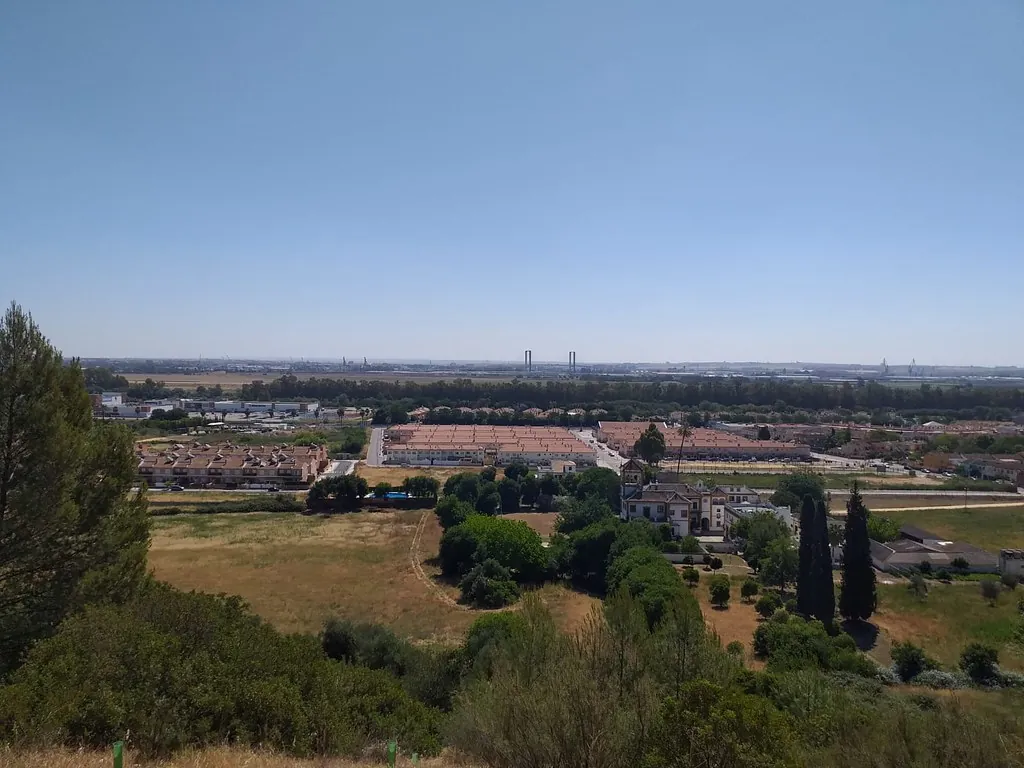
Early in the day, before more than the occasional car passes along the nearby road, the light falls at an angle across the olive trees surrounding Castilleja del Campo. The whitewashed façades reflect a stark brightness typical of winter mornings in the Aljarafe region. Around 25 kilometres from Seville, the village has just over six hundred residents. There are no grand monuments or streets designed with tourism in mind. What defines the place is a slower rhythm, closely tied to the farmland that begins just beyond the last houses.
The streets run between low homes with iron window grilles and interior patios where geraniums or mint often appear. At the edges of the built-up area, agricultural tracks take over. Between these spaces stand reminders of the village’s rural past: old cortijos, oil storage buildings and agricultural outbuildings, still recognisable by their wide doorways.
From the slight rise where the main square opens out, the surrounding landscape becomes clear. Lines of olive trees stretch across the Aljarafe, broken by cultivated plots and dirt tracks that lead towards neighbouring villages.
The church and everyday life in the centre
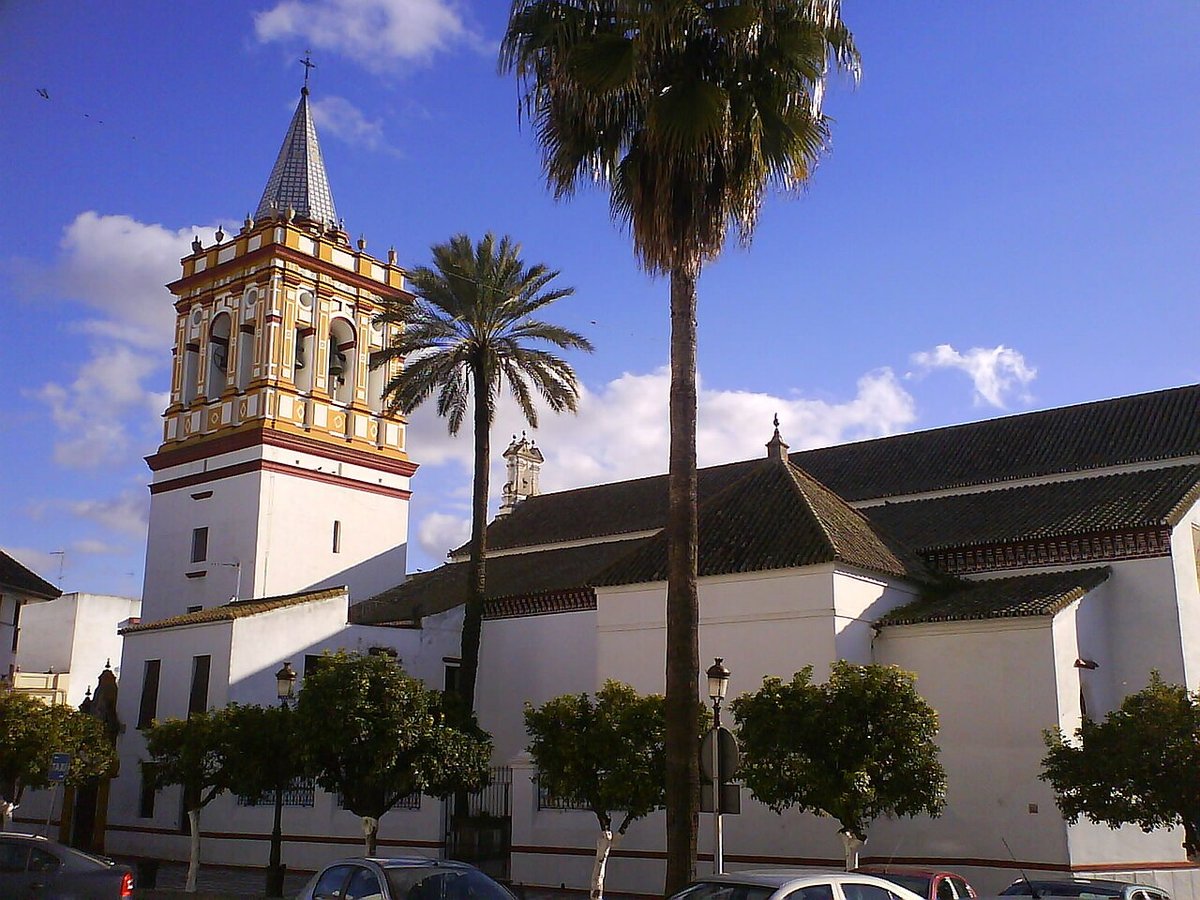
At the heart of Castilleja del Campo stands the church of San Juan Bautista. Its origins are usually placed in the 16th century, although the building has undergone later modifications. The tower rises above the low rooftops and acts as a visual reference point when approaching from any of the streets that lead into the square.
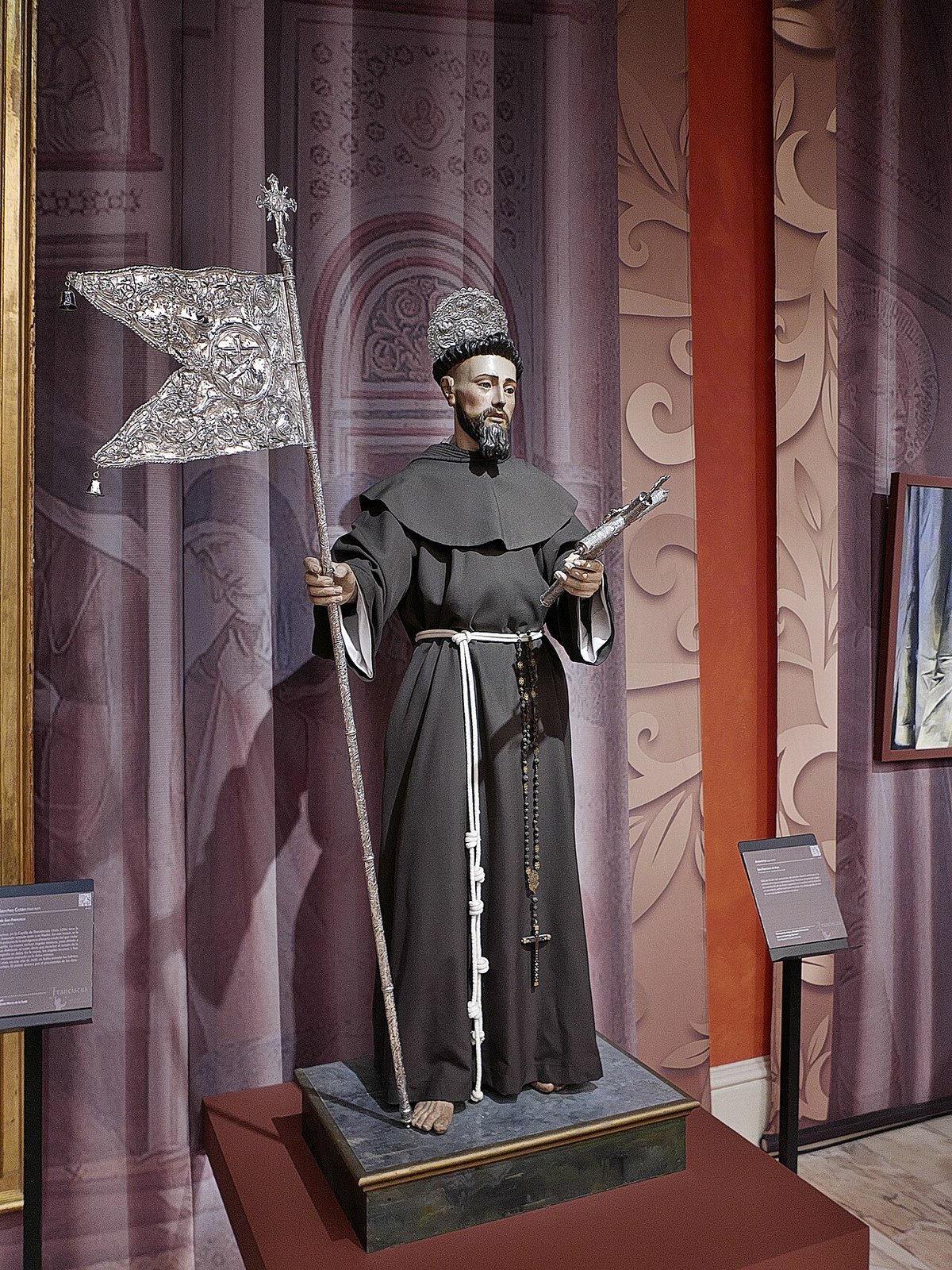
Inside, the spaces are simple, in keeping with rural churches across this part of Andalusia. Nearby is a small chapel dedicated to the Virgen de la Cinta, closely linked to local devotion. The figure is dressed in different cloaks throughout the year, a task still carried out by people from the village itself.
The town hall square works as a daily meeting point. By mid-morning, it is common to see neighbours chatting in the sun when the weather allows. It is not a monumental square, but a practical, open space from which several of the main streets extend.
Paths through olive groves
A short walk is enough to leave the village behind and step onto the agricultural tracks that surround Castilleja del Campo. The landscape of the Aljarafe is clearly defined here: olive groves dominate, with some cereal fields depending on the season, and straight paths linking farms and cortijos.
These routes are straightforward for walking or cycling, although they are not always signposted. The usual approach is to follow the main tracks and return along the same route. The terrain is flat or gently sloping, so it does not demand much effort.
The climate shapes the experience. In summer, the sun falls directly on the paths and shade is scarce. Spring brings a different scene, with tall grasses and small flowers appearing among the olive trees. In autumn, after the first rains, the smell of damp earth becomes noticeable.
Food shaped by the land
The cooking associated with the village reflects what the surrounding countryside provides. Traditional dishes still include spoon-based meals such as lentil potaje and stews made with seasonal vegetables. Migas also appear in many homes, especially during the colder months.
Olive oil is a constant presence. Olive farms and mills are spread across the area, and newly pressed oil begins to make its way into kitchens towards the end of autumn.
In some households, sweets made with honey and almonds are still prepared. These are closely tied to family recipes rather than production for wider sale.
Dates that mark the year
The main celebrations centre on San Juan Bautista, the village’s patron saint, at the end of June. During these days, the streets become livelier than usual and the image is carried through the village, accompanied by neighbours and music.
Semana Santa is also observed, on a smaller, local scale. Processions move through narrow streets where white walls reflect the light of candles as evening approaches.
When olive harvesting season arrives, between late autumn and early winter, agricultural work once again sets the pace of daily life. Tractors and trailers become a more common sight along the tracks that surround the village.
Getting there and choosing when to go
From Seville, the journey by car usually takes around half an hour, depending on traffic when leaving the city. Access is via regional roads that pass through other towns in the Aljarafe.
There are also bus connections with nearby villages, although services are not always frequent, so it is worth checking in advance.
Spring and autumn make walking in the surrounding countryside more comfortable. Summer heat can be intense, so it makes sense to head out early in the morning or later in the day if visiting during those months.
A place without ornament
Castilleja del Campo remains a small settlement shaped by its surroundings rather than by visitor expectations. The urban layout, the agricultural paths and the daily routines all follow the same quiet logic. It is a place where the landscape and the village are closely linked, and where that connection continues to define how life unfolds.