Full Article
about Huévar del Aljarafe
A farming village in Aljarafe with a well-kept old quarter ringed by sunflower and olive fields.
Hide article Read full article
A village that wakes gently
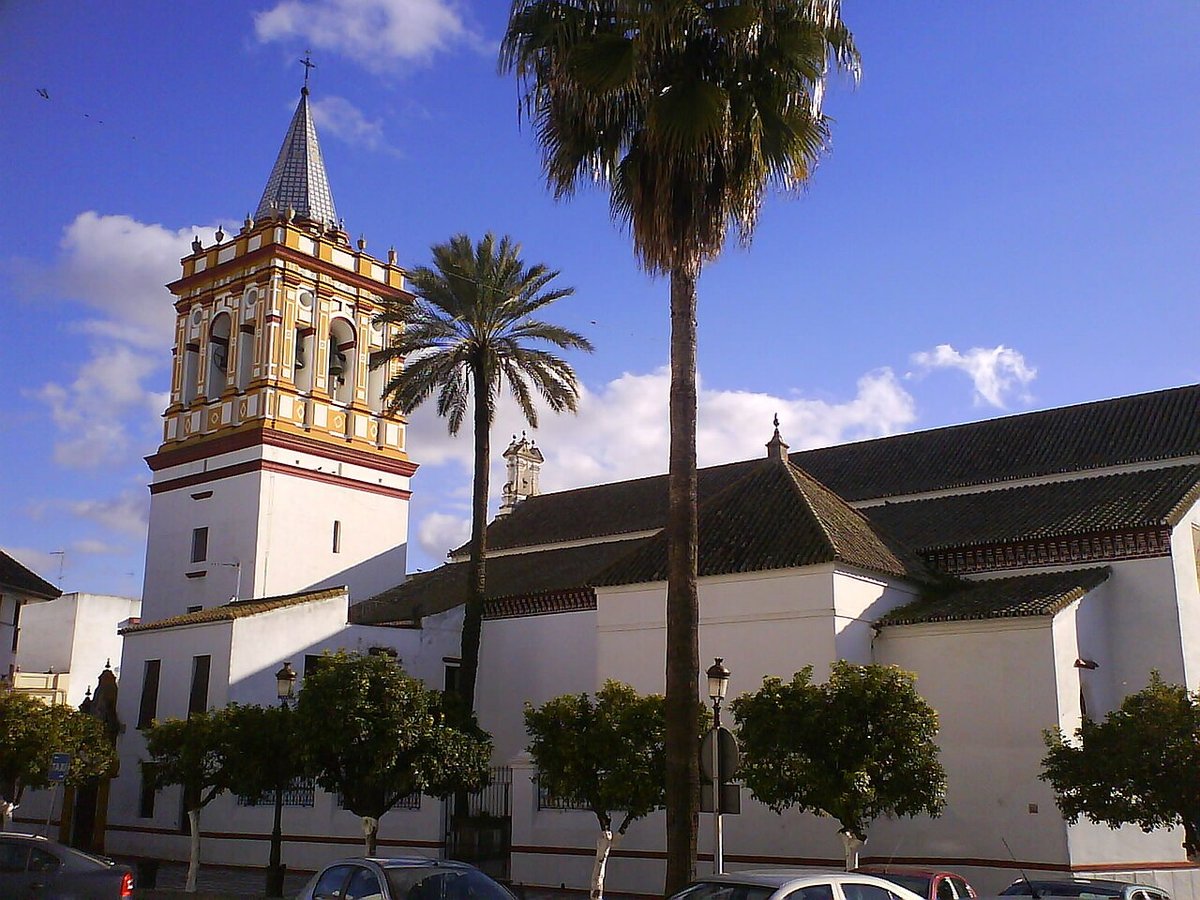
At seven in the morning, Huévar del Aljarafe smells of fresh bread with a soft hint of orange blossom. From the main square, the church of San Juan Bautista casts a long shadow over the sandy ground, while the first roosters break the quiet and metal shutters begin to rattle open. The village, home to just over three thousand people living in low, whitewashed houses, has not quite gathered speed for the day yet. It invites an unhurried look.
Life here unfolds at a measured pace. Early sounds carry easily across the square, and the light settles slowly on façades that still hold the coolness of the night. There is no rush to move on. Huévar reveals itself best in these in-between moments, when the day is only just beginning.
Streets that fold into themselves
The historic centre resists straight lines. Streets begin narrow, curve away, tighten further, then suddenly open into small pockets of space where someone might be watering plants in a dressing gown. Many houses keep heavy wooden doors and shaded entrance halls. Step across one of these thresholds and the temperature drops at once.
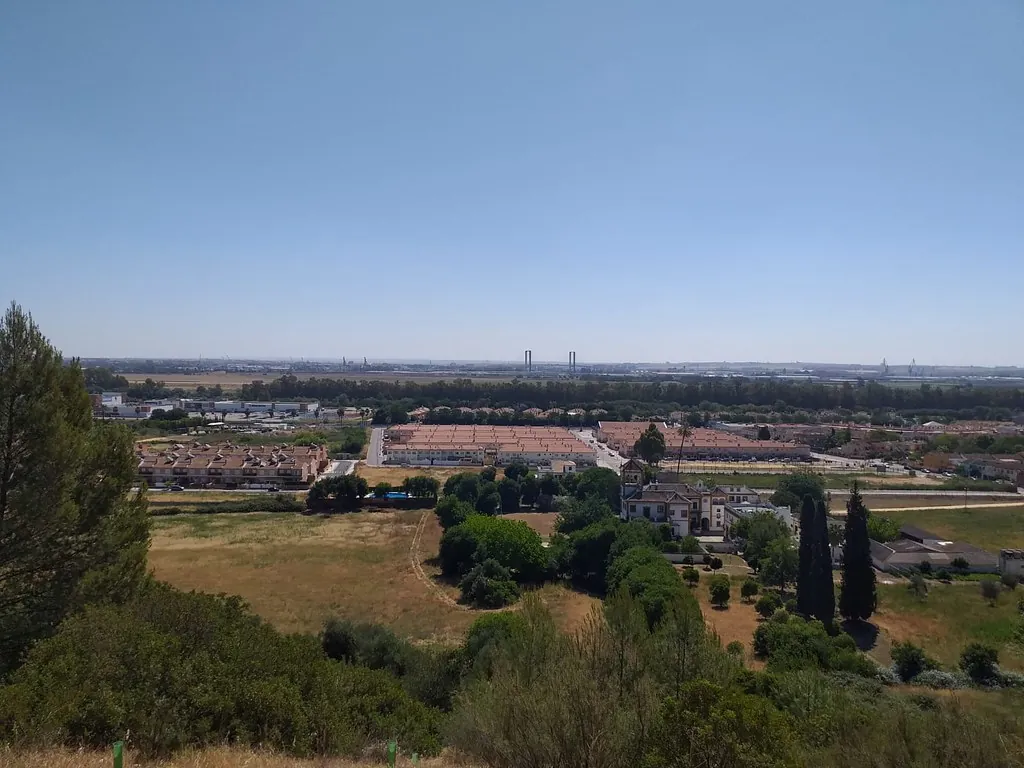
A walk without a set direction eventually leads out towards the edges of the village, where the land starts to roll. This part of El Aljarafe spreads into gentle hills planted with olive trees, some cereal fields and pale dirt tracks. One of the higher points, known as the cerro de San Cristóbal, is often linked to very old settlements in the area. What can be seen today is more modest: scattered stones among scrub, along with wide views across the surrounding countryside.
The sense of enclosure in the centre gives way to openness as the streets thin out. White walls become fewer, horizons stretch further, and the rhythm shifts from enclosed corners to broad, quiet slopes.
A winter dish that fills the air
Towards the end of January, Huévar takes on a different scent for a few hours. Paprika, long-simmered broth and wood smoke drift through the streets. Around this time, the village traditionally celebrates the Festival del Puchero. It is not a formal event held in one place. The whole village organises itself around cooking pots.
From mid-morning onwards, tables begin to appear in courtyards, open garages or beneath improvised awnings. The puchero, a traditional stew, usually includes chickpeas, pork fat, salted bones and cured meats, although each household prepares it in its own way. Bowls come out steaming, and the air fills with the metallic sound of spoons against ceramic.
Arriving early is advisable. As the day moves on, the atmosphere grows louder and some central streets become difficult to pass through. The festival feels collective rather than staged, shaped by neighbours, shared food and the steady movement of people from one space to another.
Paths through olive-covered hills
Several agricultural tracks begin just outside Huévar, cutting across the typical landscape of El Aljarafe. The soil shows a reddish tone, olive groves mark out the land, and in wetter years wheat moves with the wind. These are not mountains but a sequence of long, gradual hills that rise gently and are easy to walk.
March and April bring colour to the edges of the paths, with poppies and wild greens such as tagarninas appearing along the way. The scent of rosemary emerges when the ground still holds some of the night’s moisture. On clear days, the higher points offer a faint view of the Guadalquivir in the distance, along with the flat stretch that separates this region from Seville.
These paths remain simple and open, with little interruption. The terrain does not demand much effort, but the exposure to the sun becomes noticeable as the seasons shift. Early morning or late afternoon tends to offer the most comfortable conditions for walking.
When to go and what to bear in mind
Spring usually feels like the most rewarding time to visit. The fields turn green and the scent of orange blossom lingers through many streets. During the week, the village keeps its calm rhythm. Some weekends in spring bring more visitors from Seville, which slightly changes the pace without overwhelming it.
Summer brings strong heat. Walking along exposed paths at midday can feel heavy and slow. The landscape remains open, with limited shade in certain stretches.
For dirt paths, closed footwear is a good idea. When the ground is damp, the clay sticks and quickly becomes heavier than expected.
As evening falls, the light changes quickly. Whitewashed walls shift from bright white to a warm golden tone, and the shadows of orange trees stretch across the ground. The village settles again into a slower tempo. Someone takes in laundry from a line, a ball rolls across the square, and the sound of the church bells lingers briefly above the rooftops before fading into the olive groves. The day tends to end like this, without much noise, and without urgency.