Full Article
about Palomares del Río
Residential town with the only preserved Arab baths in the rural Aljarafe.
Ocultar artículo Leer artículo completo
The morning bus from Seville wheezes to a halt beside a row of orange trees, and half its passengers step straight into a bar. It's not yet nine o'clock, but the counter is already lined with stubby cañas of beer and small plates of migas—fried breadcrumbs scattered with chorizo. Nobody bats an eyelid; this is simply how Palomares del Río starts the day.
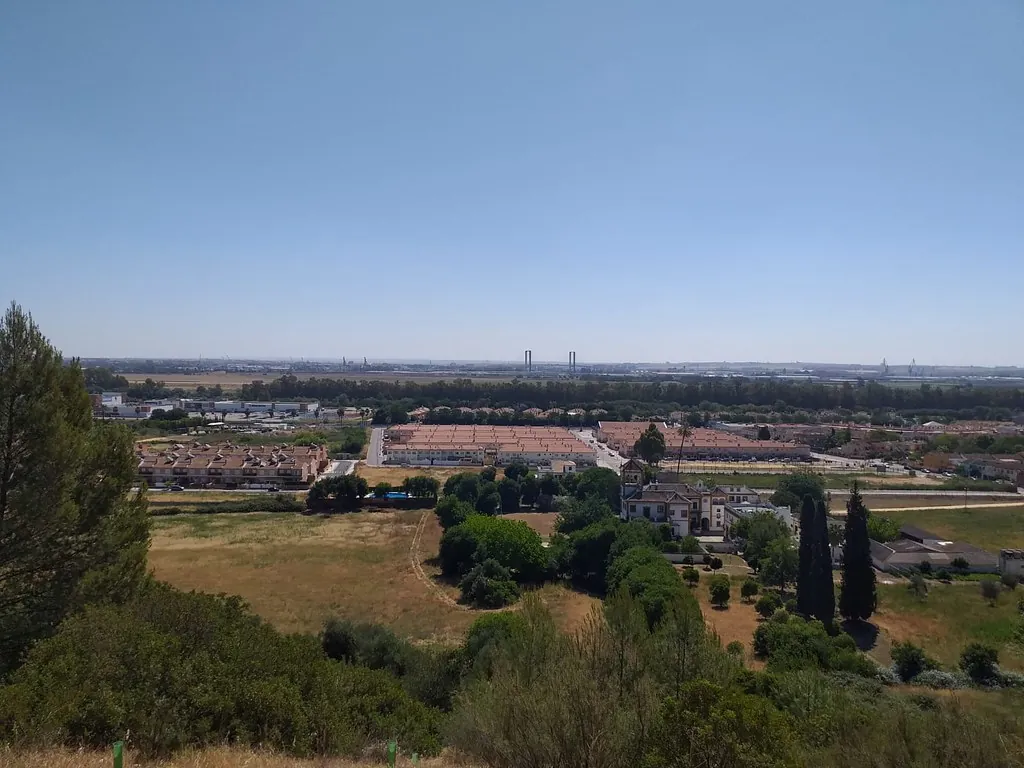
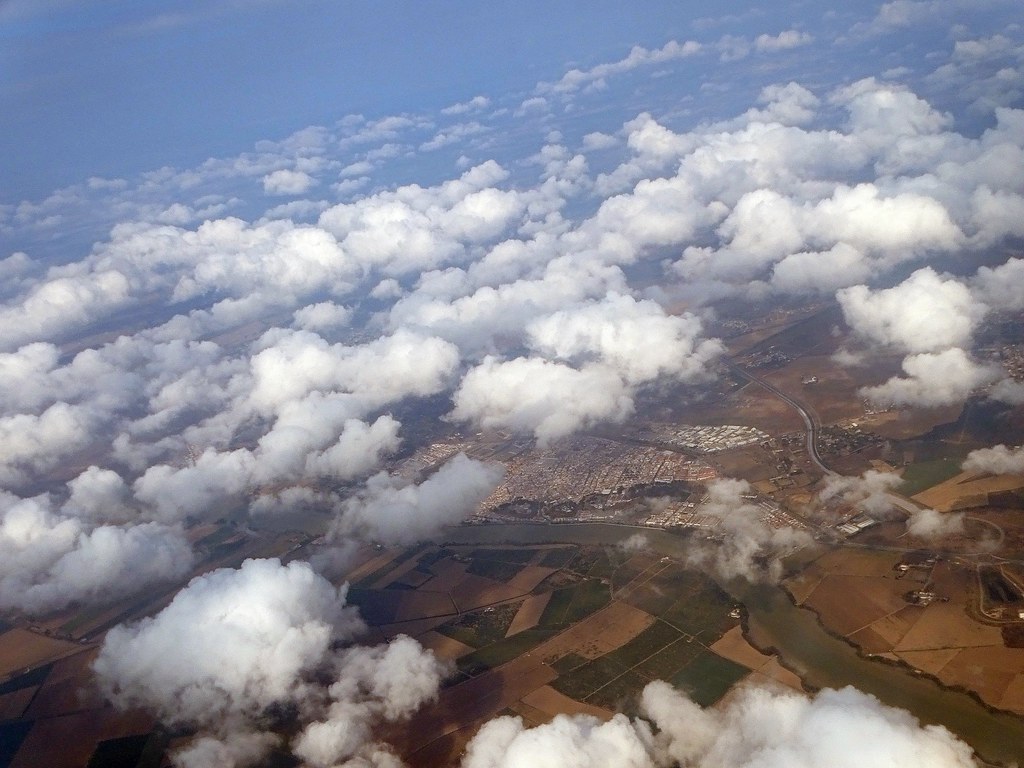
At only 37 metres above the Guadalquivir, the village spreads itself across a low ridge of the Aljarafe, the gentle plateau that acts as Seville's back garden. Olive groves press against modern chalets, and the old centre—little more than a grid of whitewashed lanes—still smells faintly of wood smoke and horse feed. There are no monuments to tick off, no tour coaches clogging the entrance. What you get instead is an unfiltered slice of weekday Andalucía, delivered at the volume of everyday life rather than holiday theatre.
The Church Bell and the Bread Queue
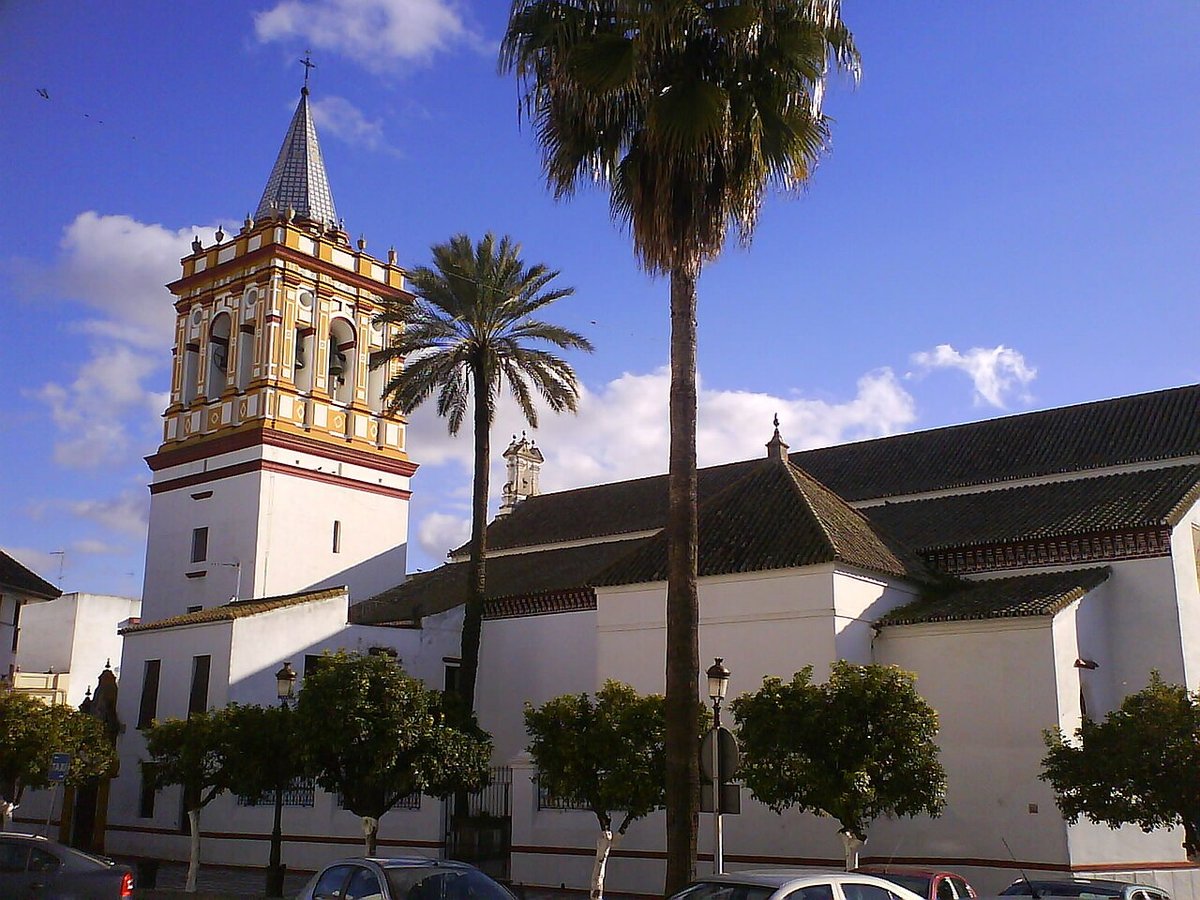
Every quarter-hour the bell of San Sebastián clangs above the rooftops. The church itself is a modest affair—Mudéjar brickwork patched with later stone—but it serves as the village compass. Face its portal, turn left, and you reach Plaza Andalucía where women queue for still-warm pan de pueblo. Turn right and you are on Calle Real, a five-minute stroll that takes you past the bakery, the butchers, the pharmacy and finally to Adelino, the bar that doubles as the information office for anyone who arrives after Saturday's market shuts.
Order a coffee here and someone will ask where you're headed. Say "just looking" and they'll suggest a loop: follow the lane behind the church, cut through the huerta allotments, then pick up the dirt track that skirts the olive press. The walk takes forty minutes, needs nothing sturdier than trainers, and delivers wide views down to the river and Seville's cathedral spire shimmering on the horizon. Go early; by noon the sun has erased all shade and the only creatures still moving are the hoopoes strutting across the furrows.
Olive Oil, Not Instagram
Palomares sits in the geographical centre of the Aljarafe's Denominación de Origen oil zone. The cooperative on the edge of town handles 2.3 million kilos of olives each winter, and if you turn up between November and January you can watch the fruit rattling along conveyor belts into the hammer mill. Tours aren't advertised—walk in, ask for "ver la almazara" and someone will usually shrug and wave you through. The tasting room pours two oils: a mild arbequina that British palates tend to prefer, and a peppery picual that catches the back of the throat and keeps local cardiologists in business.
Outside harvest season the focus shifts to consumption. Adelino's house dressing is 70% local oil, 30% sherry vinegar, zero ceremony. Ask for salad "sin aliño" if you prefer your leaves naked; they will oblige without the Spanish horror usually reserved for requesting milk in tea.
When Seville Sneezes, Palomares Catches a Cold
Proximity to the capital cuts both ways. House prices have doubled since the metro-area tram-train project was announced, and every third front door seems to sprout a "Se Vende" sign aimed at commuters who fancy a pool within half an hour of the office. The upside for visitors is an unexpectedly good range of restaurants. El Huerto del Portugués has a proper vegetarian section—rare this side of the Atlantic—and will tone down the garlic in gazpacho if you ask nicely. The downside is that tables fill with laptop-toting locals at two o'clock sharp; arrive at 3.30 and the kitchen is already mopping the floor.
The commuter tide also explains the traffic. Between 07.45 and 08.30 the single road into Seville becomes a slow-moving car park. If you're day-tripping, aim for the 10.00 bus and you'll have the village to yourself until the schools empty at 14.00.
A Flat Walk with Wings
Guidebooks hunting for drama will be disappointed: the highest point within the municipal boundary is a mere 95 metres, roughly the elevation gain of Hampstead Heath extension. What the terrain lacks in altitude it repays in birds. The Corredor Verde del Guadiamar—a converted mining railway—runs just west of the olives. Its poplars and tamarisks form a green tunnel alive with serins, bee-eaters and the occasional glossy ibis fresh from the Doñana marshes. Bring binoculars, but leave the Ordnance Survey habit at home; signposting is sporadic and every path eventually spits you out onto someone's cucumber field. Locals navigate by farm gate colour rather than map grid.
Cycling Brits can rent hybrids at Seville's Plaza de Armas and catch the same M-150 bus: the driver charges €1.20 to sling the bike in the hold. Ride north-east for 12 km and you hit the ruins of Itálica, where Game of Thrones filmed the dragon pits. Continue another 10 km and you're back in Seville in time for last orders at the Alameda craft-beer bars.
Fiestas Meant for Neighbours
January brings San Sebastián, patron saint and excuse for three nights of processions, marching bands and doughnuts dipped in anisette. Visitors are welcome but accommodation ceases to exist; every spare room is commandeered by cousins from Cádiz. A kinder entry point is September's feria, when the recinto opposite the sports ground fills with striped canvas stalls. Entrance is free, beer is €1.50 a plastic cup, and the playlist alternates between nineties Europop and traditional sevillanas. Fair-goers divide neatly: under-30s in regulation skinny jeans, over-50s in full flamenco dress. Both groups dance with the sincerity of people who learned the steps at primary school.
If you hanker after something quieter, turn up for the Cruces de Mayo in early May. Neighbours balance flower-decked crosses on barrows, wheel them into Plaza Andalucía, then argue amiably over whose geraniums look livelier. The council lays on free montaditos—miniature pork rolls—while the church choir launches into a rendition of "Suspiros de España" that would make a Brexit voter blush.
Getting There, Getting Out
Public transport is refreshingly honest: one bus, no railway, no airport shuttle. The M-150 leaves Seville's Plaza de Armas at 30-minute intervals, takes 28 minutes, costs €1.65 exact change. Last departure back to the city is 22.00; miss it and a taxi clocks €35 before you've crossed the ring road. Monday service is skeletal—hourly, and the 07.00 run is always full of schoolchildren who will stare unapologetically at anyone over 25.
Drivers should leave the A-49 at Sanlúcar la Mayor and follow the A-8059 for six kilometres. Don't trust sat-nav postcodes: they dump you in a 1980s housing estate where streets are named after Andalucían poets and the turning circle requires a three-point manoeuvre worthy of an HGV test. Park under the eucalyptus trees by the Parque de las Moreras and walk in; the old quarter's lanes were laid out for mules, not mirrors.
The Catch
Palomares is not pretty in the picture-postcard sense. Satellite dishes bloom on façades, and the river view includes a cement works whose floodlights glow like a low-budget Close Encounter. Come expecting cobbled hill-town magic and you will leave underwhelmed. What the place offers instead is something British travellers claim to crave yet rarely reward with bookings: the rhythm of Spain when nobody is watching. If that sounds like your sort of detour, catch the 10.00 bus. Just remember to queue for bread before the bell strikes twelve.