Full Article
about Tomares
Upscale residential municipality with plenty of parks and the recently discovered Tomares Treasure.
Hide article Read full article
More Than Just Another Aljarafe Town
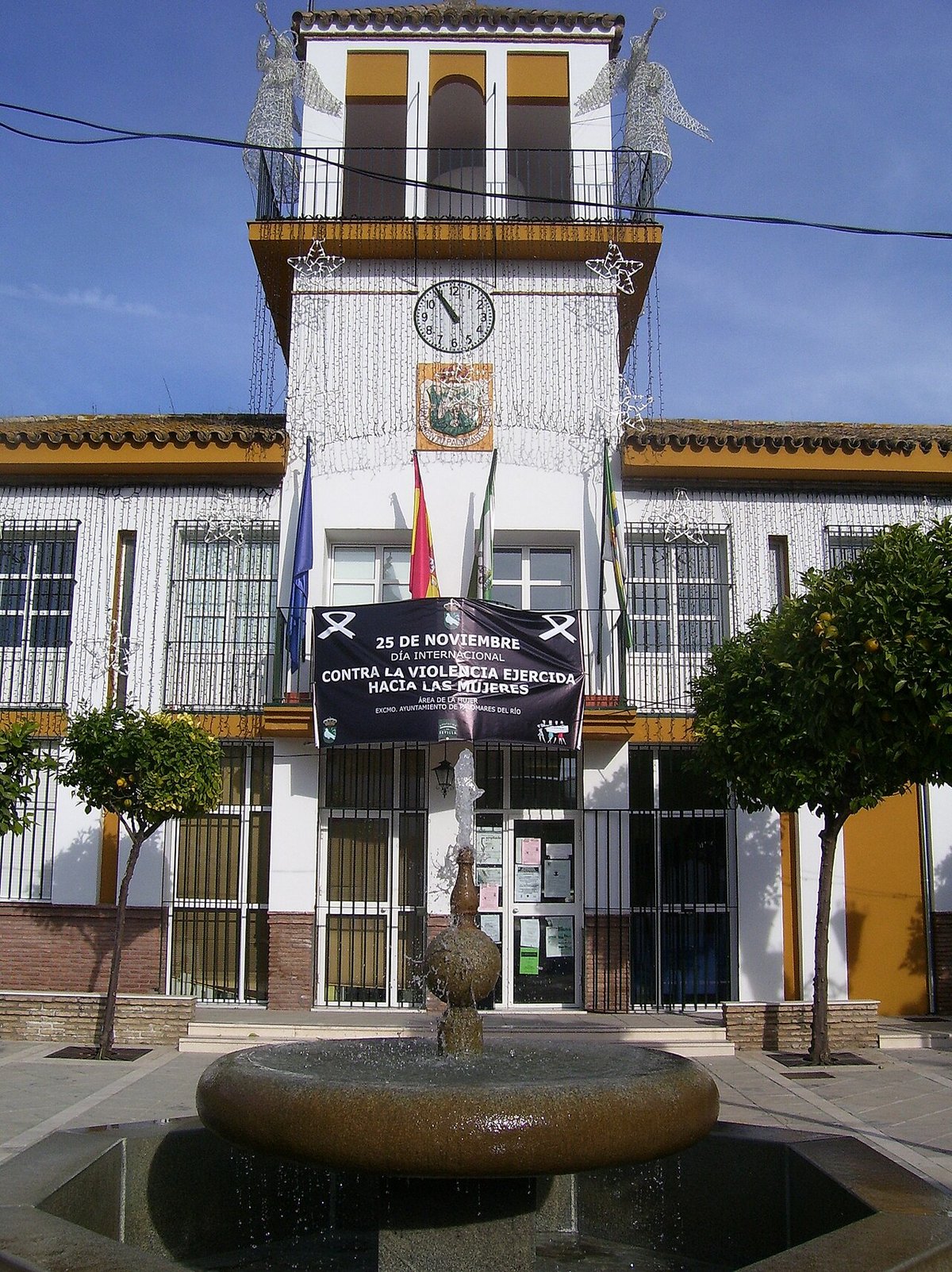
Some places look ordinary on the map. Tomares might seem like just another town in the Aljarafe, the belt of settlements to the west of Seville. Then you arrive and realise it works differently. It feels less like a small village and more like a city neighbourhood that has grown independent and built its own rhythm.
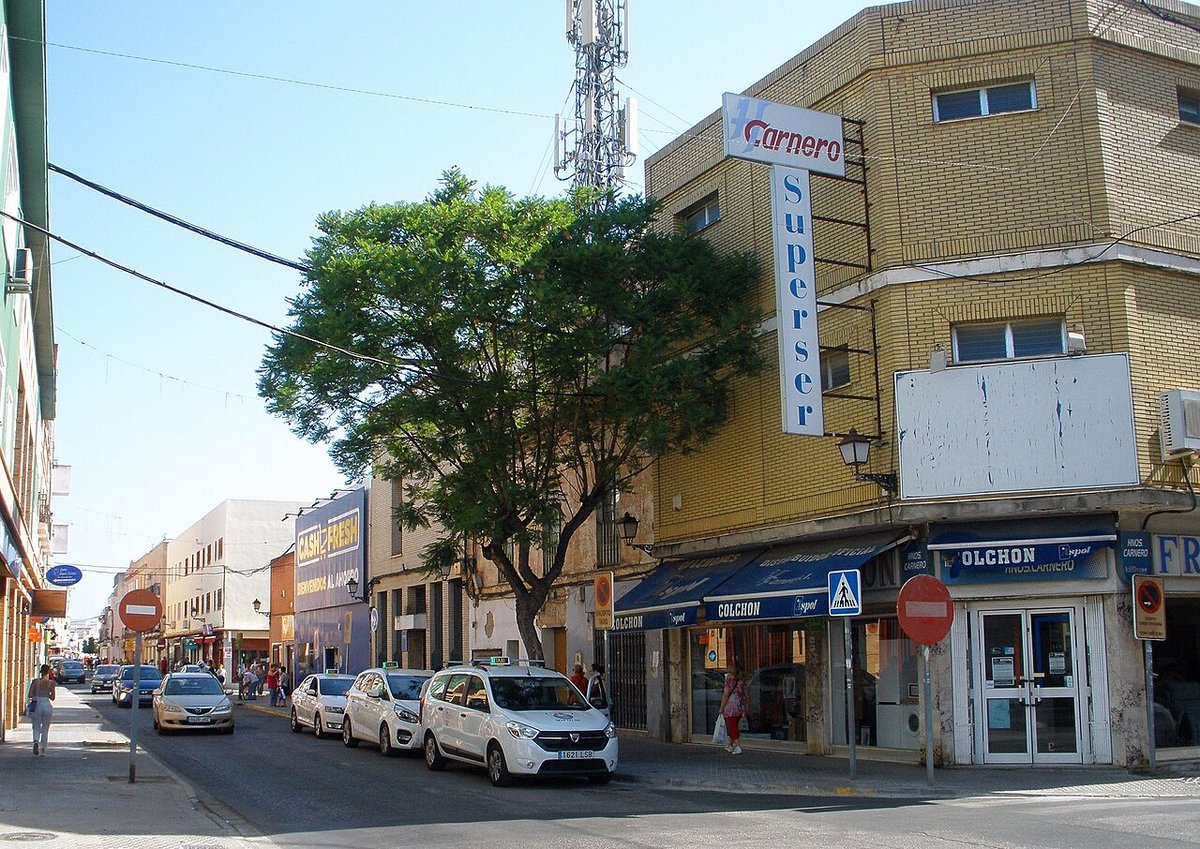
It sits very close to Seville, yet daily life unfolds at a slower pace. People walk to do their shopping. Conversations happen mid-pavement without anyone in a hurry to move on. That sense of routine shapes the place more than any headline attraction.
With more than 25,000 residents, Tomares has outgrown the idea of a small town. It resembles those residential areas that expand until they have everything they need: schools, wide avenues, large green spaces. Even so, it still holds onto a few stories that catch visitors off guard.
The Park Where 53,000 Coins Turned Up
One of those stories begins in the Parque del Olivar del Zaudín. During construction work, something unusual came to light. Amphorae filled with Roman coins were discovered underground. Not a handful, but thousands. More than fifty thousand in total.
It is the kind of find that sounds almost fictional. Picture operating heavy machinery and suddenly uncovering ancient currency in bulk. The comparison that comes to mind is finding loose change behind a sofa, just taken to an archaeological extreme.
This discovery is known as the Tesoro de Tomares. The coins are no longer kept in the town, but the story lingers. A walk through the park carries a different feeling once you know what was found beneath the surface. It is hard not to glance down now and then, as if something might still be waiting.
The park itself remains one of the main green spaces in the area. Its wide paths and open layout make it a regular meeting point, especially later in the day when people head out for a stroll.
When Water Travelled from Tomares to Triana
There was a time when Tomares had something that Seville lacked: good-quality water. In the mid-19th century, an উদ্যprising entrepreneur decided to make use of it. Water was channelled from Tomares all the way to Triana, ending near Calle Betis.
Seen from today’s perspective, the idea has a slightly improvised feel. It brings to mind a long hose stretched across a garden to fill a small pool, except on a much larger scale. In this case, that “hose” crossed a significant part of the Seville area.
For a period, it worked. Water sourced in Tomares supplied residents on the other side of the river. It is one of those lesser-known episodes that quietly connects the town with the wider history of Seville.
Bombita and a Name That Stuck
Tomares also appears in the history of bullfighting through the Bombita family. Emilio Torres Reina and his son Ricardo were both born here and became well-known figures in their time.
Their surname still carries weight locally. There is a statue and a plaque marking the family home, small reminders of that link. It works in a similar way to how a neighbourhood might celebrate a footballer who grew up on its streets. Even for those with little interest in bullfighting, the name forms part of the town’s shared memory.
A Place That Keeps Its Own Pace
Despite being so close to Seville, Tomares does not revolve around it. The town has its own residential areas, everyday routines and social life. Mornings bring the usual movement of school runs and commuters heading towards the city. By the afternoon, the atmosphere shifts. Streets feel more local, with neighbours out and about rather than traffic passing through.
The Parque del Zaudín plays a central role in that daily rhythm. It is the kind of place people head to in the evening for a walk, a pause at the end of the day, or simply to stretch their legs. Its size and greenery stand out, especially given how near it is to an urban centre.
Local festivals still draw strong participation. The romería de San Sebastián in January brings together a large part of the town. Later in the year, the September feria creates that familiar setting of casetas and reunions. In a place of this size, it can feel like a gathering of people who already know each other, or who share some connection.
Getting There and Taking It Slowly
Tomares lies alongside the A-49, the motorway linking Seville with Huelva. From the city, the journey by car takes only a few minutes. It is the sort of trip that passes quickly, often shorter than a single song on the radio.
There are also frequent bus connections from Seville, which explains why many people travel back and forth each day. Part of the town functions as a commuter base, with residents working in the capital while living just outside it.
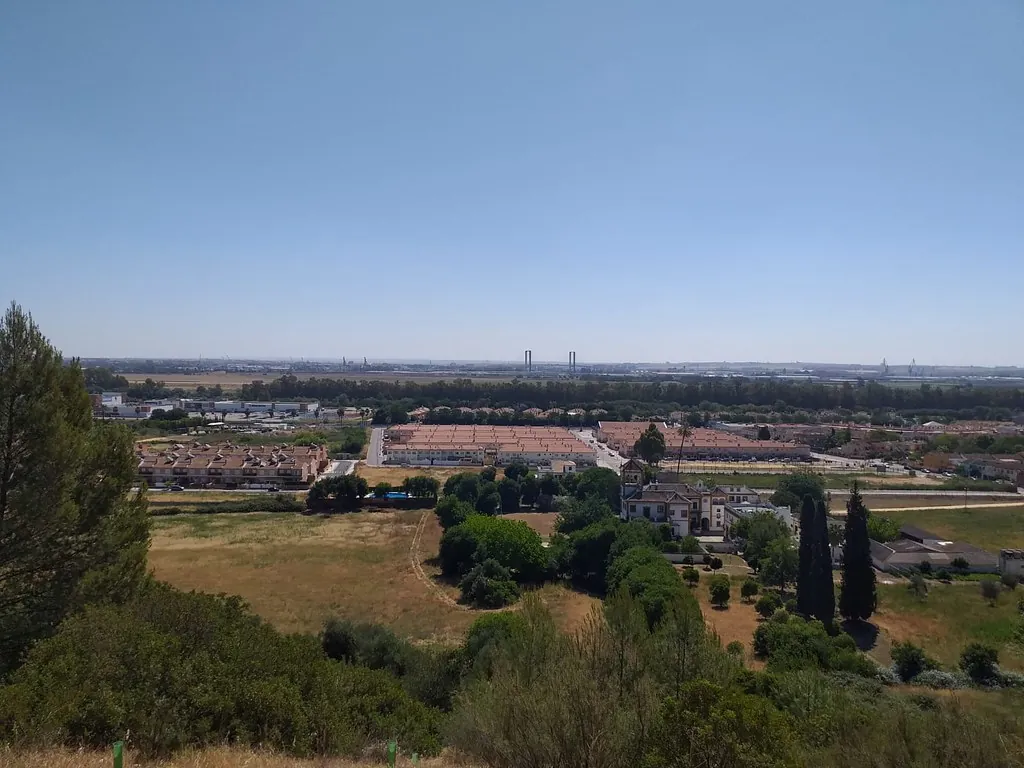
Once in Tomares, the best approach is to slow down. Walk through the town centre, spend time in the Parque del Zaudín, and head up towards the cornisa del Aljarafe. From certain points along this ridge, Seville stretches out in the distance. As evening approaches, the view takes on a softer tone, with the city appearing almost like a pale model set against the horizon.
Food here follows the wider traditions of the region. There is no single dish tied specifically to Tomares. What you find instead is what defines much of Andalusia: good ibérico pork and straightforward cooking. In places where menus are written on a chalkboard and much of the terrace is filled with locals, the atmosphere tends to speak for itself.
Tomares is not a destination designed for a long stay. It works better as a short visit. A walk, a few curious stories beneath your feet, and the sense of having seen a place that lives close to Seville without depending on it. It is the kind of town that stays nearby, quietly present, and ends up being more memorable than expected.