Full Article
about Umbrete
Known as the city of mosto, with a striking archbishop's palace and grand Baroque church.
Hide article Read full article
An Easy Rhythm in the Aljarafe
On Friday afternoons, as the sun drops over the Aljarafe and the air sometimes carries the scent of freshly pressed grape must, Umbrete settles into its natural pace. Grandparents sit outside playing cards. Children run through the streets without anyone hurrying them along. It is not especially beautiful, nor does it boast a monument that leaves visitors speechless. What draws people here is something simpler. Tourism in Umbrete is about the rhythm of the place.
Everything moves a little more slowly. It feels like hearing an old song on the radio and letting it play, even though you meant to change the station. That unhurried atmosphere defines the town more than any landmark.
Umbrete lies around fifteen minutes from Seville city, traffic permitting on the western exit. At first glance, it might seem like just another town in the Aljarafe region, the gently rolling area west of Seville known for olive groves and vineyards. Then the scale of its main church comes into view.
The Cathedral of the Aljarafe
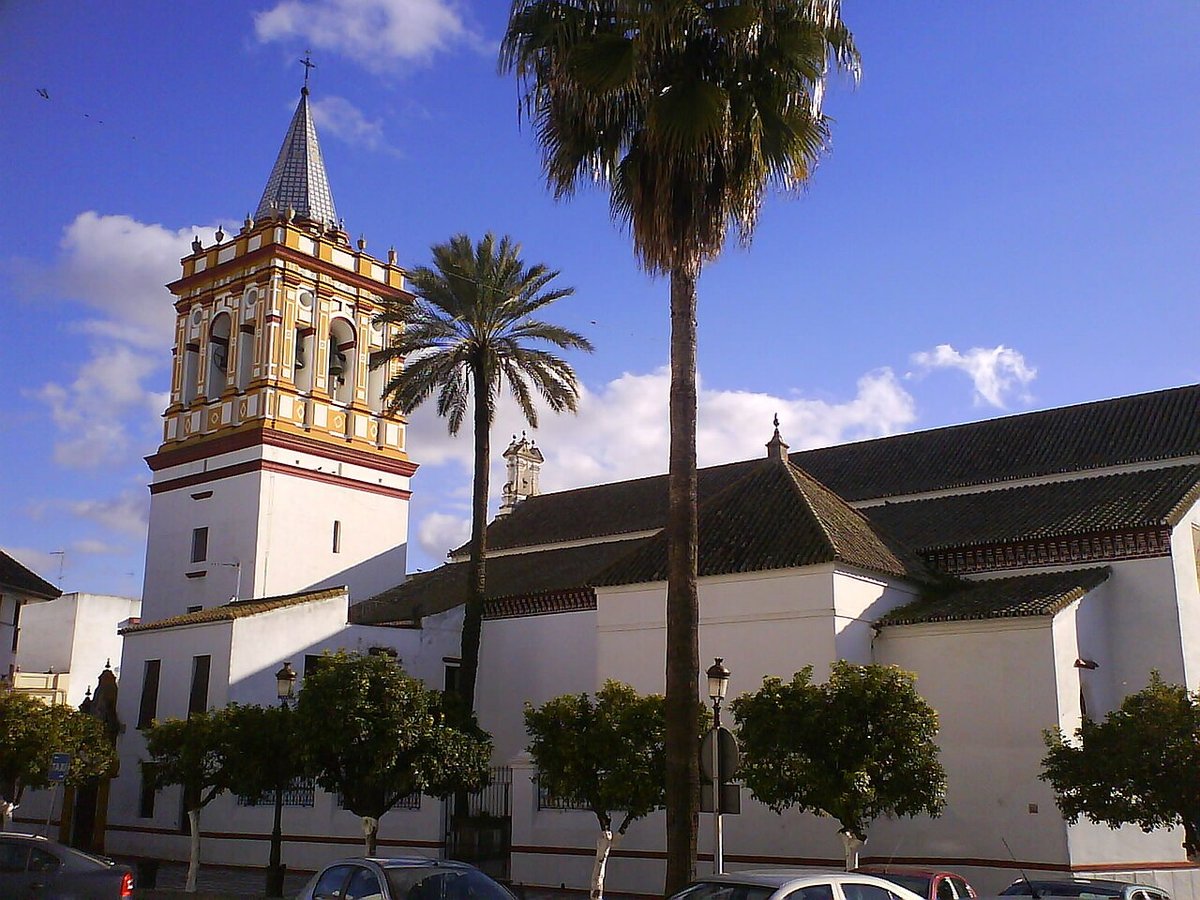
The Church of Nuestra Señora de la Consolación dominates the centre. Many locals refer to it as “the Cathedral of the Aljarafe”, and standing in front of it, the nickname makes sense. For a town of this size, the proportions are striking. It has three naves and a generously scaled structure, with a richly decorated Baroque interior that draws the eye upwards.
Set on a relatively quiet square, the church has a commanding presence. It is the kind of building that changes the feel of its surroundings simply by being there.
Very close by stands the Arco del Arzobispo, a passageway linking the church to the former archiepiscopal palace. It appears in many photographs of Umbrete, less because it is grand and more because it sums up the town’s past. For centuries, Umbrete was closely tied to the archbishops of Seville. That connection shaped much of its history and explains the scale and importance of religious buildings in what is otherwise a modest municipality.
A walk around this central area, between the square and the arch, gives a clear sense of Umbrete’s character. There are no vast boulevards or monumental avenues, just streets that feel lived in and familiar.
When Mosto Sets the Tone
In Umbrete, mosto is not simply a seasonal drink. It is almost an excuse to gather. Mosto is young wine, made from freshly pressed grapes and consumed shortly after fermentation begins. When autumn arrives and the local lagares, traditional presses or wineries, begin to open, people from across the Aljarafe head to Umbrete to taste the new vintage.
The town has a long winemaking tradition, and there are still places that serve freshly made mosto during those months. The atmosphere tends to be straightforward. High tables, conversations about the year’s harvest, the slightly sweet scent of fermenting grapes in the background. It is less about ceremony and more about meeting friends and marking the season.
Each year the Feria del Mosto y la Aceituna Fina takes place, usually stretching over several winter months. This is not a large-scale festival designed for mass tourism. It works more as a reason to visit, sample the year’s mosto and try aceitunas finas, a local variety of olives for which this part of the Aljarafe is known.
Even something as everyday as crisps has its place in the town’s identity. Umbrete has a tradition of making patatas fritas, and locals mention it with a certain pride. It may seem like a small detail, yet it fits the wider pattern. Here, ordinary things matter.
Haciendas in the Landscape
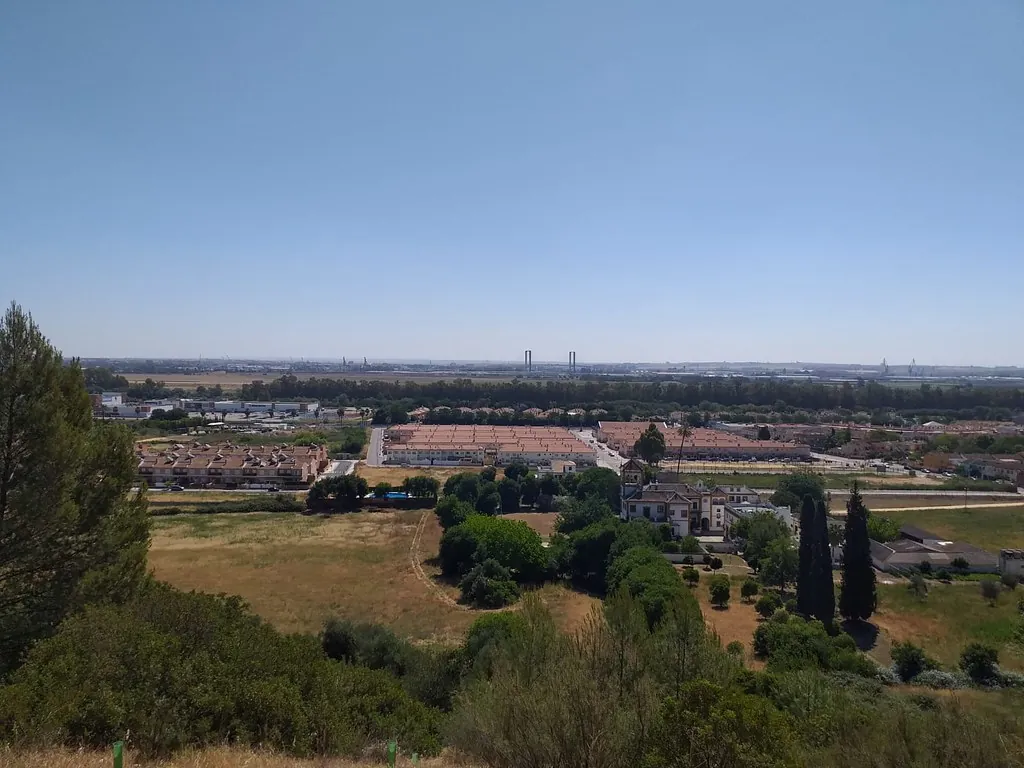
A short walk beyond the town centre brings traces of Umbrete’s agricultural past into view. Across the Aljarafe, old haciendas are common. For centuries, this region depended on olive groves, cereals and vineyards. These large agricultural estates were the backbone of the local economy.
The Hacienda de Quitapesares, usually dated to around the 17th century, has one of those names that sounds almost poetic. Time has left its mark, and the building shows signs of wear. Even so, its former scale is still apparent: broad patios, thick walls and the typical layout of an Andalusian working estate.
The Hacienda del Rosario, probably from the 19th century, is better preserved. It offers a clearer sense of how these estates once functioned, back when agriculture truly drove life in the Aljarafe.
There are no extensive museums here and no highly organised visitor routes. These haciendas remain part of the landscape, half concealed among modern housing developments and country lanes. They are reminders rather than attractions, fragments of a rural system that shaped the town.
Simple Cooking, Seasonal Flavours
The cooking in Umbrete closely resembles that of other towns in the Aljarafe. Dishes are straightforward and tied to what the land provides at any given time.
Tortilla de espárragos trigueros is one example. Espárragos trigueros are thin wild asparagus that grow along paths and among olive groves. They are used to make a modest-looking omelette with a slightly bitter edge, the kind of flavour that comes directly from the countryside.
Alongside this are Andalusian staples found in many homes. Salmorejo appears when the heat sets in, as does gazpacho. Fried fish also features regularly. Eaten slowly in the centre of town, these dishes form part of everyday life rather than a staged culinary scene. Conversations drift between tables, often circling back to whether it will rain this year, a subject that passes for a local sport.
A Town Measured in Hours, Not Checklists
Umbrete is not a place of long lists or packed itineraries. In a couple of hours, it is possible to gain a good sense of the town. A stroll around the church square, a look at the Arco del Arzobispo, a wander through the centre and, if the season allows, a glass of mosto.
The terrain is flat and easy to walk. The atmosphere is that of an Aljarafe town where people seem to know one another, where daily life unfolds in public view without much fuss.
Few would claim it is the most beautiful village in Andalucía. Yet that is not really the point. Umbrete offers something quieter: an insight into the pace of the Aljarafe, shaped by wine, olives and long afternoons that do not feel the need to rush.