Full Article
about Villanueva del Ariscal
Land of wine with century-old wineries and cuisine tied to must and traditional cooking.
Hide article Read full article
A village on the Aljarafe plateau
Almonds crunch like dry snow between your teeth. The first sip of ajoblanco, that chilled almond and garlic soup, comes in a roadside venta under the shade of an old cork tree. It makes immediate sense why in Villanueva del Ariscal people start the day with something cold, even in the height of August. The air carries the scent of freshly pressed grape must and rustic bread still warm inside its paper wrapping. By ten in the morning, the thermometer is already brushing thirty-two degrees.
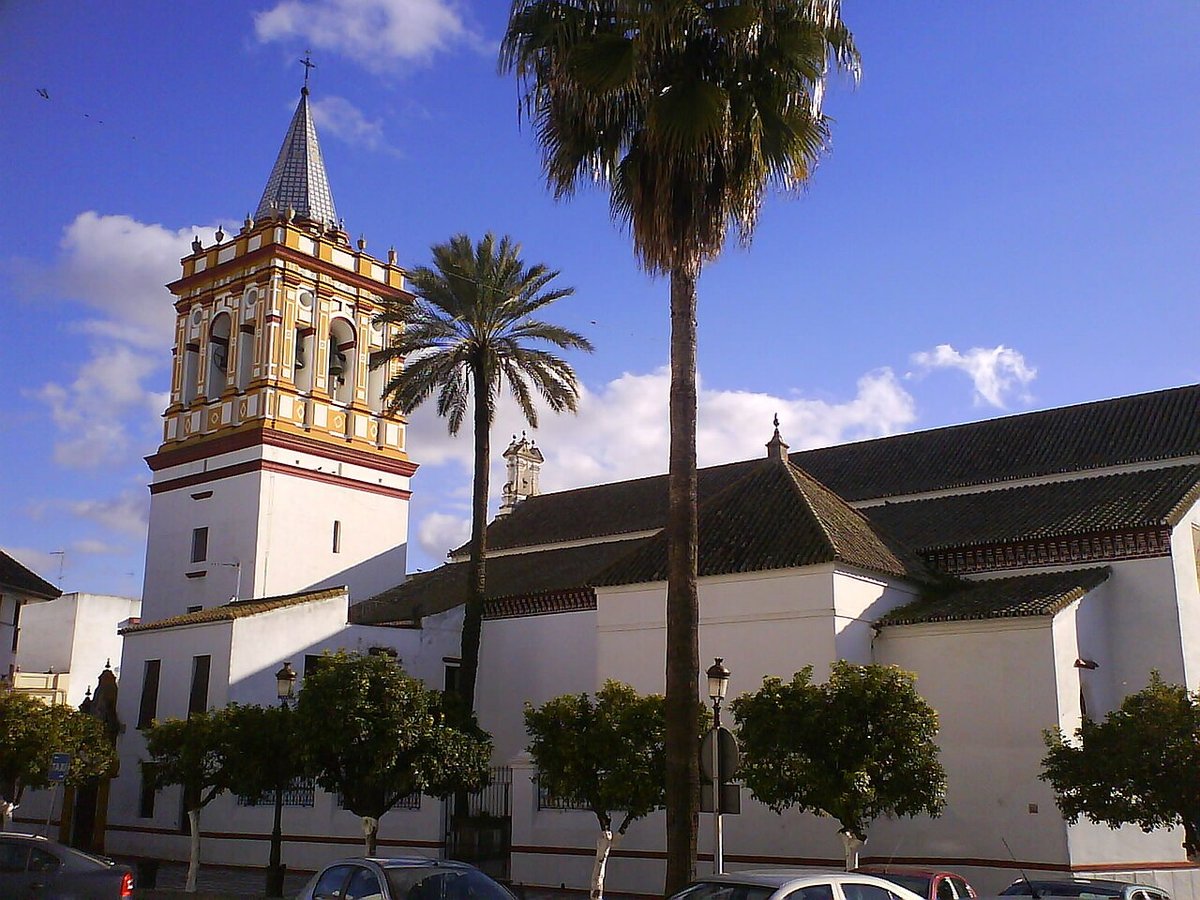
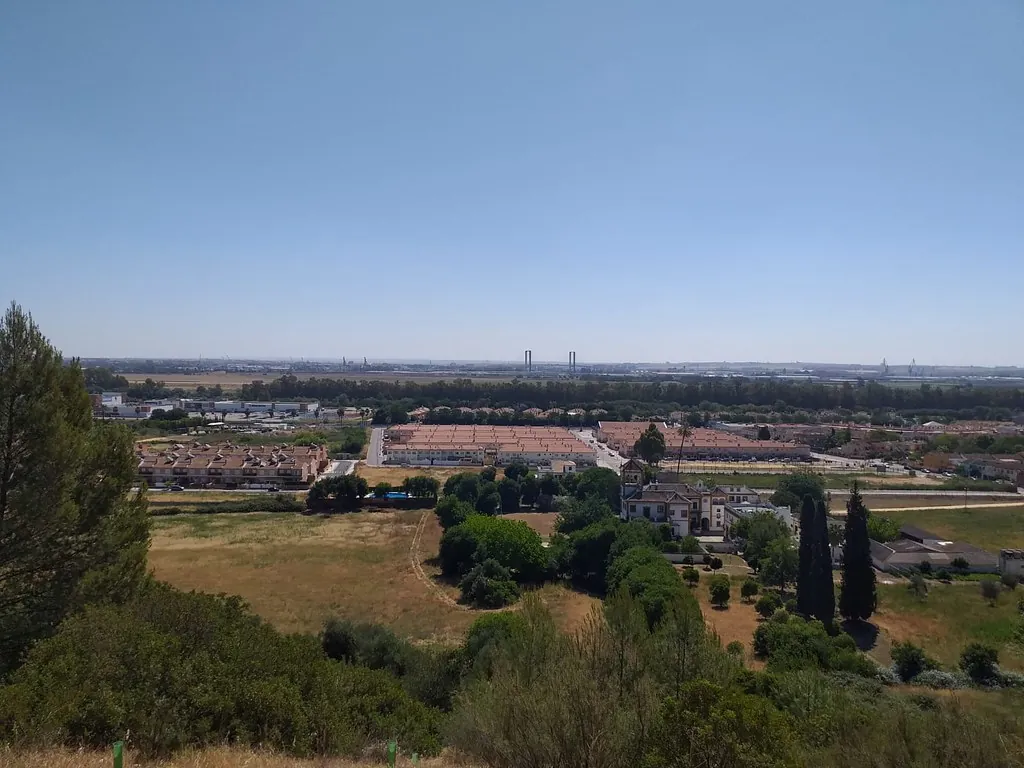
Villanueva del Ariscal sits on the Aljarafe, a raised plateau just outside Seville where a bit of breeze still moves when the valley below feels still. The access road winds through olive groves with trunks so old they look almost sculpted, twisted over time. Above, the bell tower of the Iglesia de Nuestra Señora del Rosario keeps time in a place that remains closely tied to farming and wine.
The taste of the land
Stepping into the back room of a family-run bodega here feels closer to entering someone’s kitchen than a formal visit. Grape must drips slowly through a metal pipe into a container below, producing a soft, steady sound. The smell is sweet and slightly fermented, with the damp wooden note typical of old pressing rooms.
A couple of historic bodegas still remain in the village. They can sometimes be visited if arranged in advance. There are no set tours or rehearsed explanations. Someone opens a door, points out the tanks, and ends up pouring a small glass of freshly drawn must. If the conversation lingers, a bit of chacina, cured meats typical of the region, often appears on the table. Stories follow, usually about past harvests, from the time when grapes were still crushed by foot.
Towards the end of August, the summer fair takes over. The casetas, temporary fair tents, are usually set up by local social groups known as peñas. There is wood, paper garlands, slow-turning fans, and the smell of grilling from mid-afternoon onwards. Wild asparagus, espárragos trigueros, go straight from the grill to the plate and are eaten with your fingers while still too hot. In many homes, solomillo al whisky also makes an appearance, pork sautéed with a generous splash of whisky and served on clay dishes that have been in the family for years.
The church you do not expect
The Iglesia de Nuestra Señora del Rosario stands in the main square with the quiet presence common to many churches in the Aljarafe. A pale façade, slightly worn iron railings, and the occasional motorbike passing in the nearby street.
Inside, the atmosphere shifts. The wooden door closes and the smell of wax and cool stone settles in the air. An old organ still retains much of its metal pipework. When it plays, sometimes during rehearsals or local celebrations, the sound is deep and slow, filling the nave and echoing gently off the walls.
Along one side, a set of early 20th-century tiles tells episodes from local history in blue and white. Roman figures, medieval scenes, farmers with their tools. They are not designed to impress so much as to recount what belongs to the place, in a steady, unhurried way.
When the countryside celebrates
Each spring, around the feast of San Isidro, the village heads out on a romería, a traditional pilgrimage, to a small hermitage a few kilometres away. It is not an event arranged with visitors in mind. Shawls are taken out from family wardrobes, and traditional short jackets are worn again after months put away.
Carts are decorated with olive branches, paper flowers and sometimes a speaker balanced in a car boot. Sevillanas music plays while horses move slowly along the road. At the hermitage, people share simple food, bread, olive oil, and something sweet for children. By late afternoon, the return journey raises a fine cloud of dust that clings to shoes.
Walking among olive trees
Early in the morning, while there is still a trace of cool air, several agricultural paths lead out from the edge of the village into the surrounding olive groves. Not all of them are signposted, but they are used daily by locals walking or cycling.
The terrain rises and falls gently. Between the twisted trunks grow patches of rosemary and thyme, releasing their scent as the sun begins to warm the ground. From some of the higher points on the Aljarafe, on a clear day, the Guadalquivir plain can be seen stretching towards Seville like a silvery band.
It is best to set out early for much of the year. The heat here does not build gradually. By mid-morning it is already pressing down fully on the paths.
Getting there and when to go
Villanueva del Ariscal lies a short distance from Seville, in the Aljarafe region. From the main road that crosses the area, it can be reached in just a few minutes along local roads lined with olive trees.
Spring is usually the most comfortable time for walking in the surrounding countryside. The ground still holds some moisture, the air carries the scent of orange blossom from nearby groves, and the evenings stretch out without the harsher heat of summer.
August brings a different atmosphere. Many people from Seville return to their family homes, and the streets become livelier than usual. For a quieter experience, it is better to be out early in the day or stick to weekdays.
For somewhere to eat or have a drink, the simplest approach is to ask around. On the nearby roads there are places where…