Full Article
about Alhabia
Set where two rivers meet; a pottery and farming village in the Alpujarra
Hide article Read full article
A small village in the Andarax Valley
Tourism in Alhabia begins with a practical thought: bring a car, but be ready to leave it at the edge of the village. Parking inside is not easy. The streets are narrow and often steep, and driving through them rarely makes sense. Most visitors find it easier to park near the entrance and continue on foot.
Alhabia has around 700 inhabitants and you can walk across it quickly. There are no grand monuments or vast historic quarters to explore. This is a small settlement in the Andarax Valley where daily life moves at an unhurried pace. Summer brings intense heat. In winter, cold air drops down from the sierra and the temperature falls noticeably as soon as the afternoon light fades.
From Almería, the village is reached via the A‑348, following the course of the Andarax Valley. The drive takes roughly three quarters of an hour. The road has plenty of bends, although it is straightforward to drive.
Calle Virgen de Belén and the village centre
The main street is Calle Virgen de Belén. It crosses much of the built-up area and links the key points of the village. Early in the morning the atmosphere is calm. As the day moves on, more cars pass through and neighbours come and go.
Many of the side streets end in short slopes or small cul-de-sacs. Trying to cover every corner by car quickly becomes impractical. Alhabia works better at walking pace, where the scale of the place makes sense.
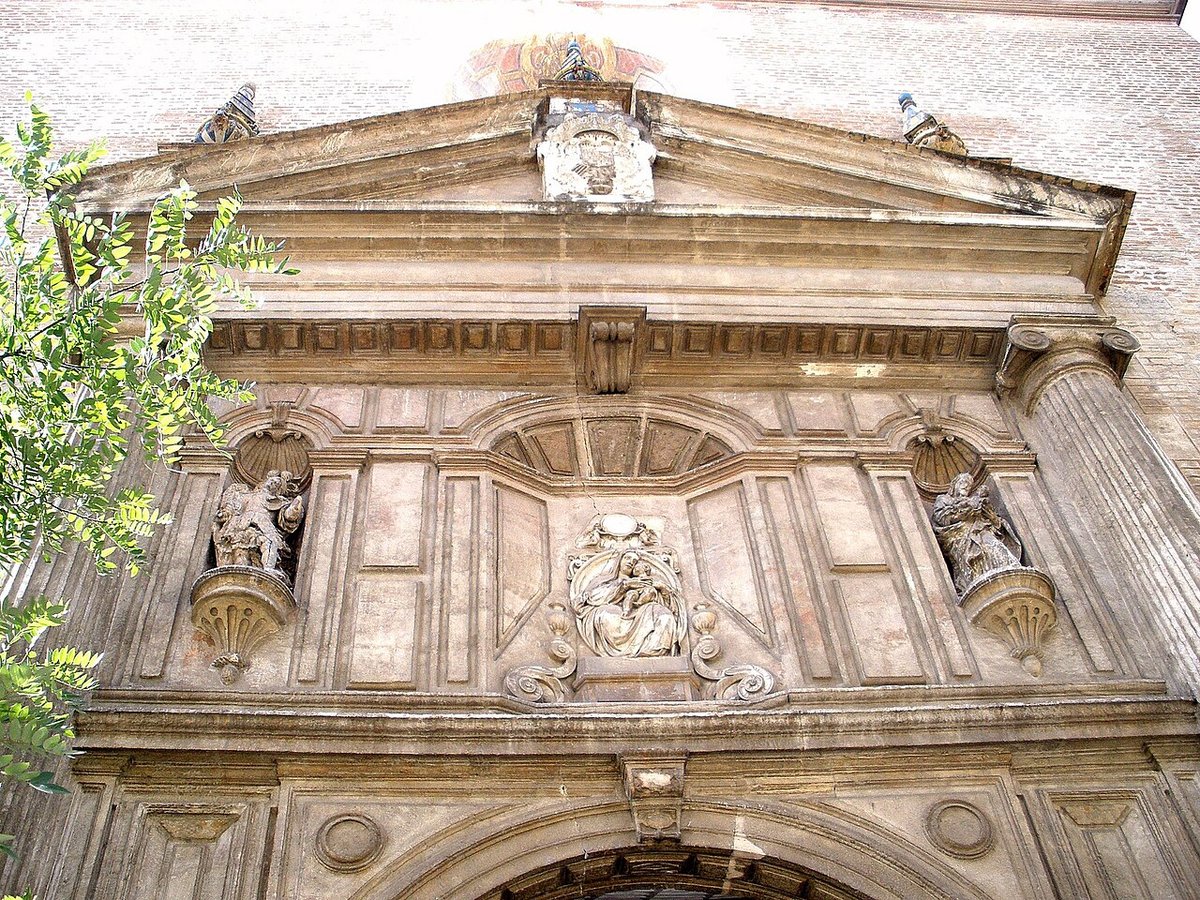
At the centre stands the parish church of Nuestra Señora de la Encarnación. Its bell tower can be seen from several points around the village. The building itself is simple. Inside, it preserves a Mudéjar arch, a reminder of the Andalusí past of this part of the Andarax. Mudéjar refers to the artistic influence of Muslim communities who remained in Christian territories after the Reconquista, and traces of that heritage still appear in architecture across Andalucía.
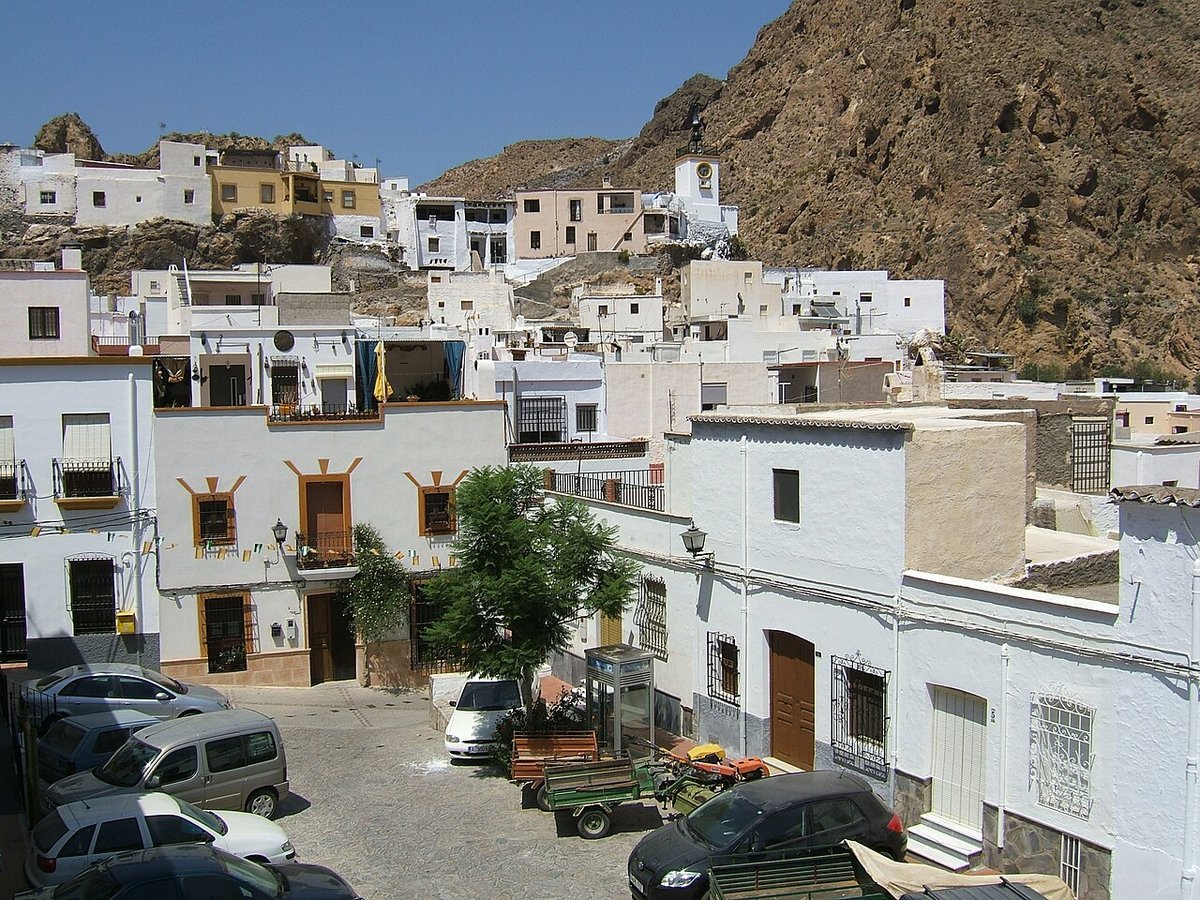
The oldest streets cluster around the church. Whitewashed houses line the slopes, with thick walls and iron balconies. This is not a large historic quarter. In ten or fifteen minutes you can walk through it. Even so, it is worth slowing down. Small gaps between houses suddenly open onto views of the valley below.
Paths, terraces and the river Andarax
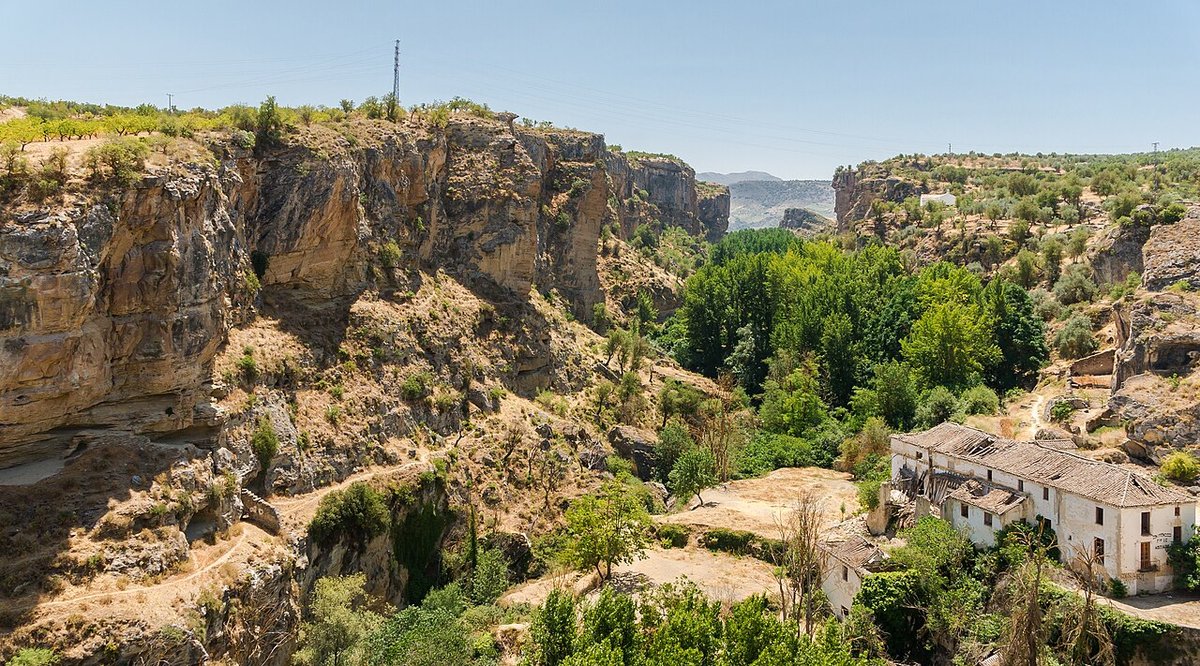
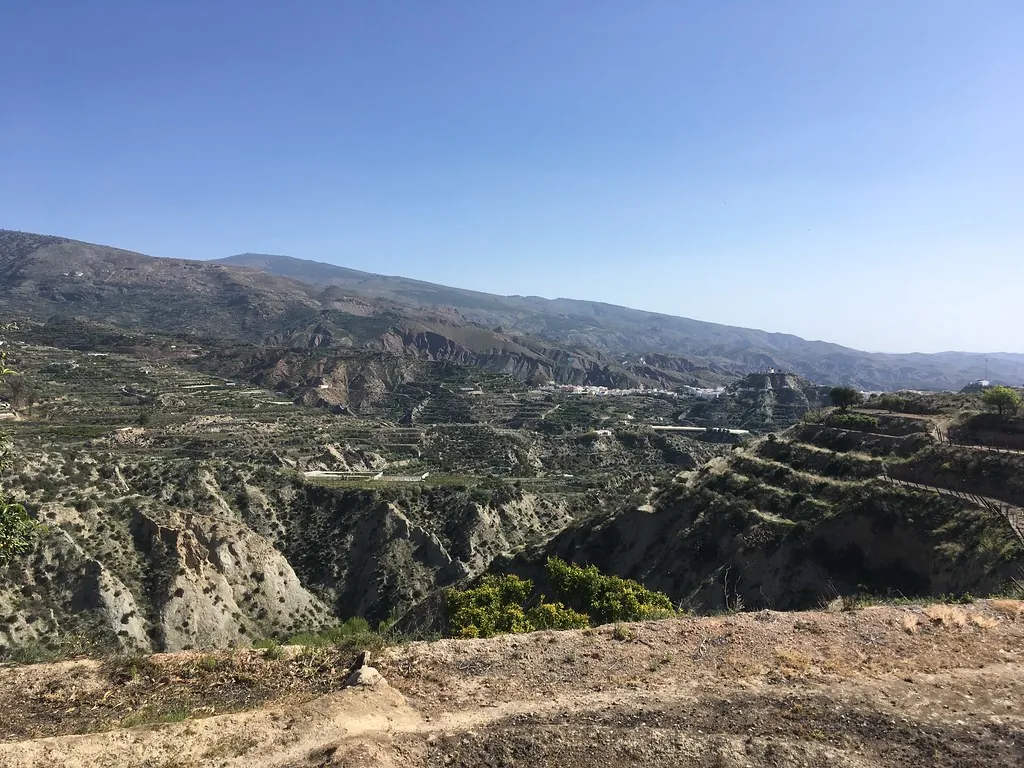
Once you leave the centre, agricultural tracks begin almost immediately. Some descend towards the river Andarax. Others climb towards hillsides shaped by old terraces.
Almond trees, olive trees and fig trees still stand scattered among dry-stone walls. Remains of acequias, traditional irrigation channels, also appear. According to local accounts, these channels date back to the Andalusí period. That irrigation system allowed these slopes to be cultivated for centuries despite the dry landscape.
Short paths connect farmhouses and abandoned plots of land. They are not signposted. If you know the area or check a map beforehand, they are generally easy to follow. Distances can look short on paper. Under the valley sun, they often feel longer.
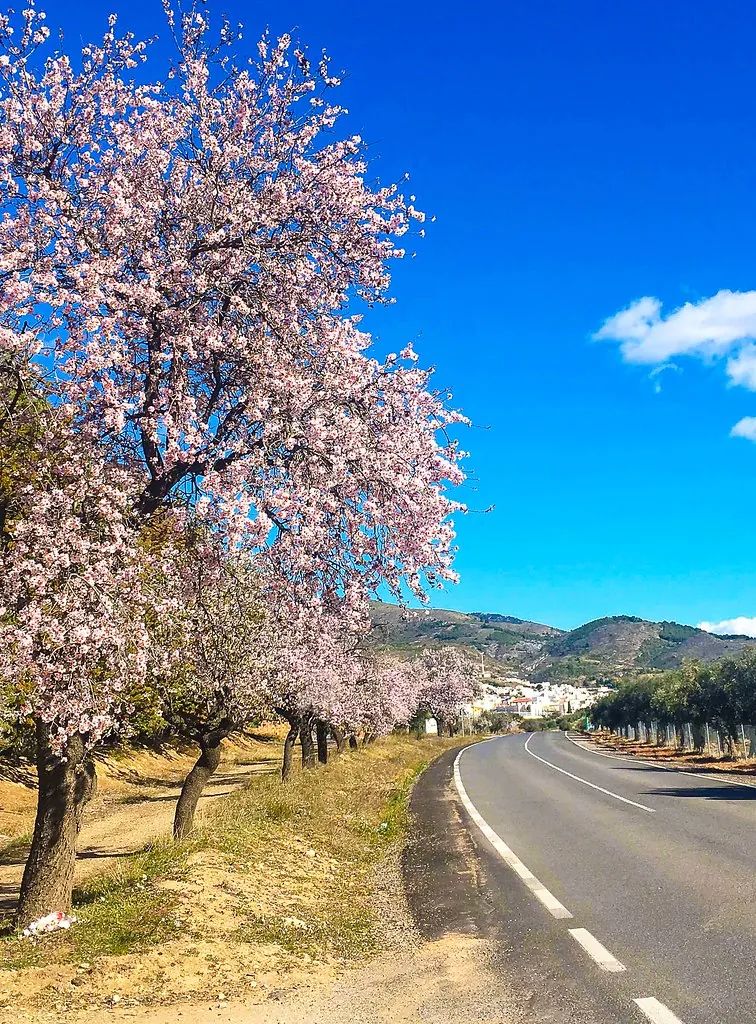
The landscape remains dry for most of the year. In spring and autumn the temperatures are more manageable for walking. At times the almond trees add touches of colour to the hillsides, softening the otherwise muted tones of the valley.
Local festivals and traditions
Alhabia’s main festivities usually take place in August in honour of the Virgen de la Encarnación. During those days the village feels fuller than usual. Many residents who live elsewhere return to spend time here with family and friends.
In September, the village celebrates San Migueliro, a smaller local festival. Holy Week is also marked with processions through the steep streets of the centre. The routes are short, but the inclines are noticeable. These events reflect the rhythm of a small community where religious and seasonal celebrations continue to shape the calendar.
Visitors who happen to arrive during a festival will find a livelier atmosphere than usual. Outside those dates, daily life returns to its quiet routine.
When to visit and a final tip
Spring and autumn offer the most comfortable conditions for exploring on foot. Summer heat can be intense, especially in the middle of the day. Winter brings a different kind of chill, as cold air flows down from the sierra and settles in the valley by late afternoon.
Services are limited and do not operate at all hours. This is a small village, and expectations should match its size. Anyone planning to spend the day walking along tracks or dry riverbeds should carry water and something to eat. The sun in the Andarax Valley is stronger than it first appears.
Alhabia does not compete with larger destinations in Andalucía. It offers a brief pause instead: a cluster of streets around a modest church, a bell tower visible above whitewashed houses, and paths that lead into terraces shaped by centuries of cultivation. The scale is small, the pace is slow, and the valley sets the tone.