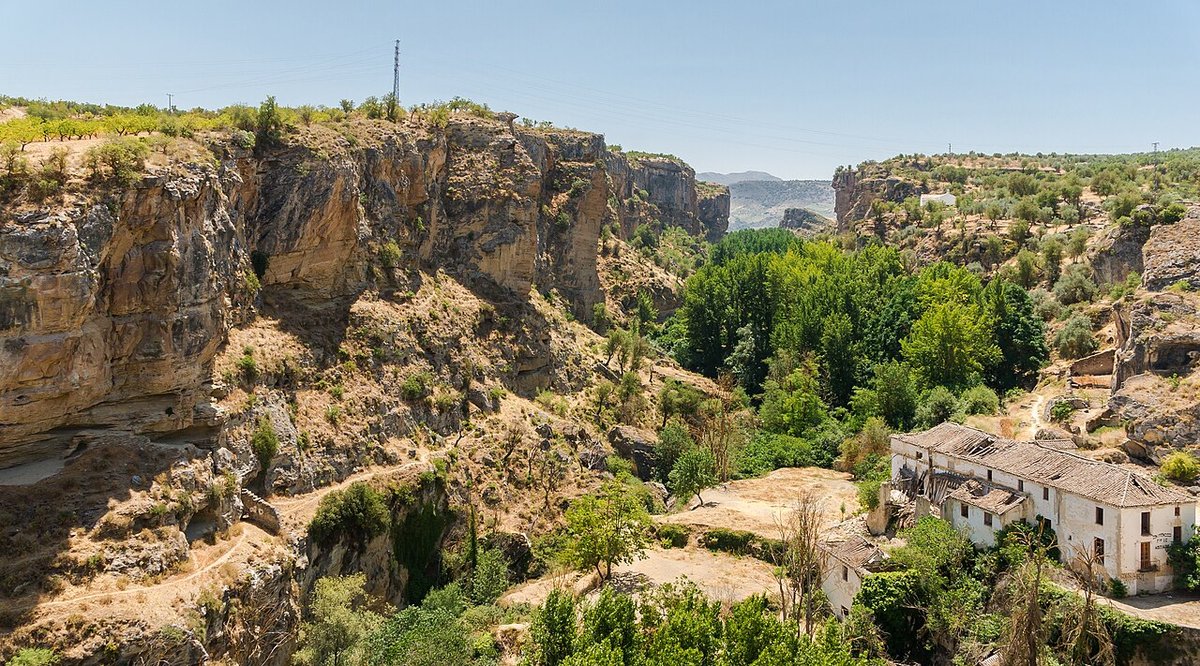
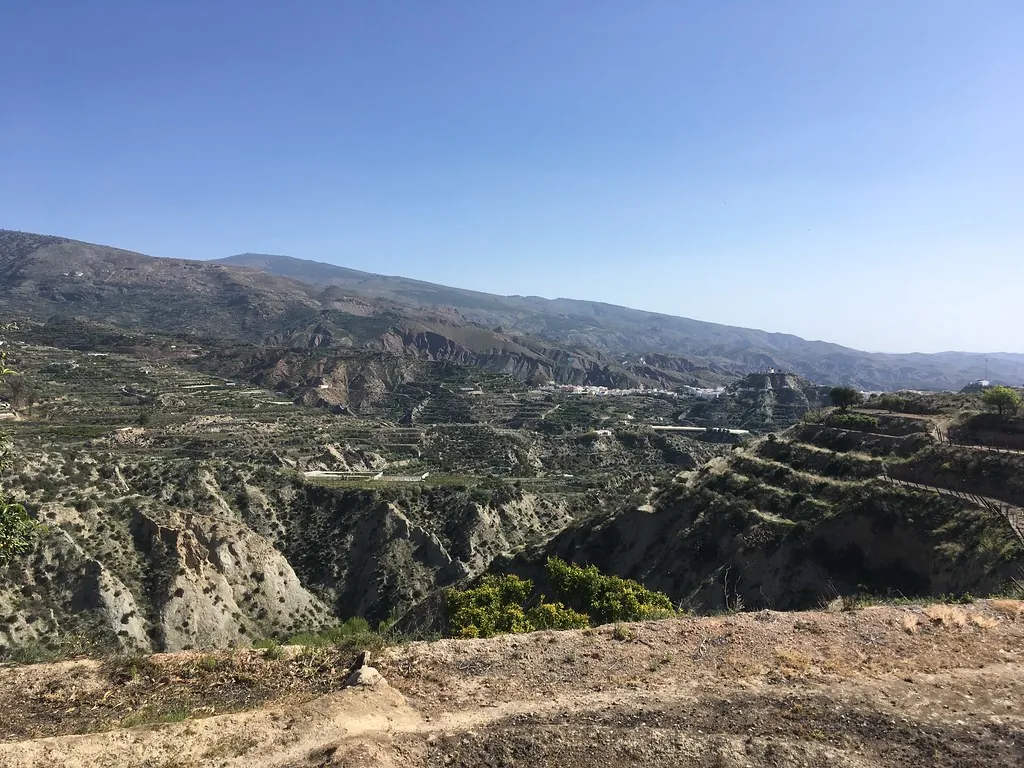
Vista aérea de Alicún
Instituto Geográfico Nacional · CC-BY 4.0 scne.es
Andalucía · Passion & Soul

Alicún

The church bell strikes noon and the only other sound is a neighbour’s front door clicking shut. Alicún doesn’t do fanfare. At 420 m above sea leve...

206 inhabitants · INE 2025
420m Altitude

Why Visit

San Sebastián Church Fountain Trail

Best Time to Visit

year-round

San Sebastián festivities (January) agosto

Things to See & Do
in Alicún

Heritage

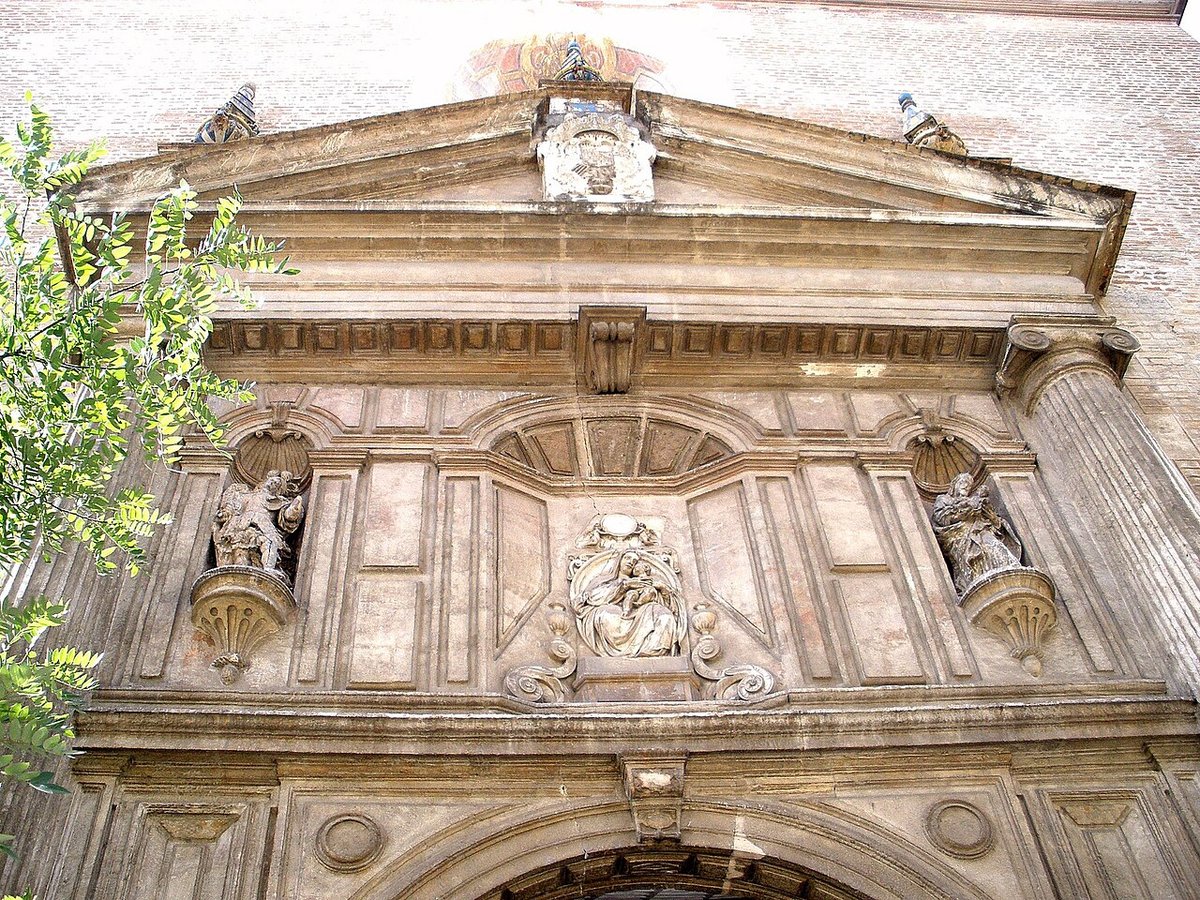
  • San Sebastián Church
  • Alicún Spring
  • Moorish baths

Activities

  • Fountain Trail
  • Local hiking
  • Enjoy local food

Festivals
& & Traditions

Fecha agosto

Fiestas de San Sebastián (enero), Semana Cultural (agosto)

Las fiestas locales son el momento perfecto para vivir la autenticidad de Alicún.

Full Article
about Alicún

A small Alpujarra village of Arab origin; it keeps its Islamic street plan and natural springs.

Ocultar artículo Leer artículo completo

The church bell strikes noon and the only other sound is a neighbour’s front door clicking shut. Alicún doesn’t do fanfare. At 420 m above sea level, on the last southern folds of Sierra Nevada, the village is simply the point where the steep green terraces give up and let the desert of Almería begin. Two hundred and twenty-one residents, one bar, one grocer, one bakery—numbers that tell you straight away whether to stay on the A-92 or turn off.

The Uphill Bit

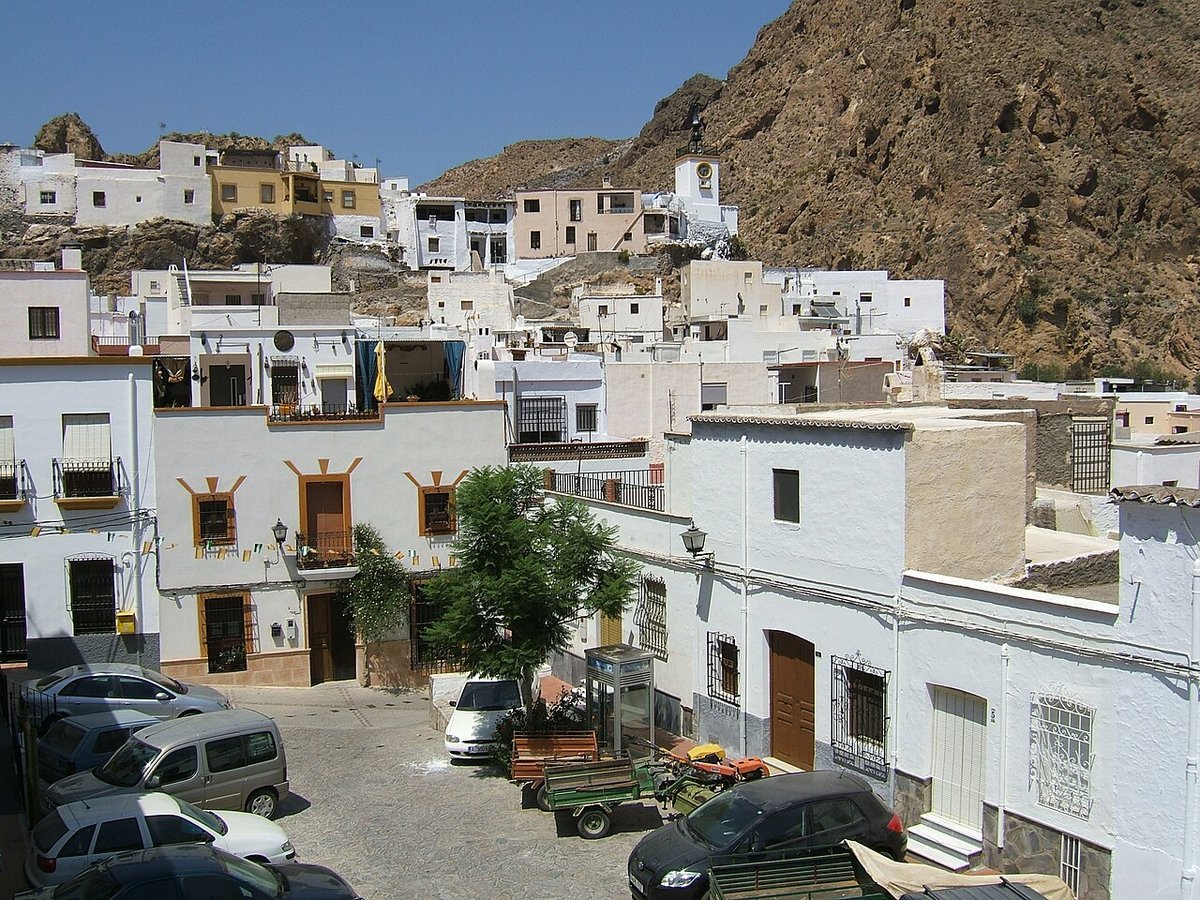
Park where the tarmac ends; the rest is footwork. Houses climb the ridge like stairsteps, their flat roofs of dark launa slate catching the sun at odd angles. Walls are a metre thick—cool in July, warm in January—and the famous Alpujarra chimneys wear little conical hats, more miniature turrets than stove pipes. Cats sprawl across the narrow lanes; they belong to everyone and no one, and they know the quickest route to any patch of shade.

The lanes lead inevitably to the modest parish church, built with the same whitewashed mortar as the houses so it almost disappears until you are in front of it. Stand on the small paved terrace afterwards: northwards the almond terraces stack up towards the snow-streaked Sierra; southwards the land empties, turning ochre and cracked like the set of a spaghetti western. The contrast is absurdly dramatic for a place that takes barely ten minutes to cross.

What Grows Between the Stones

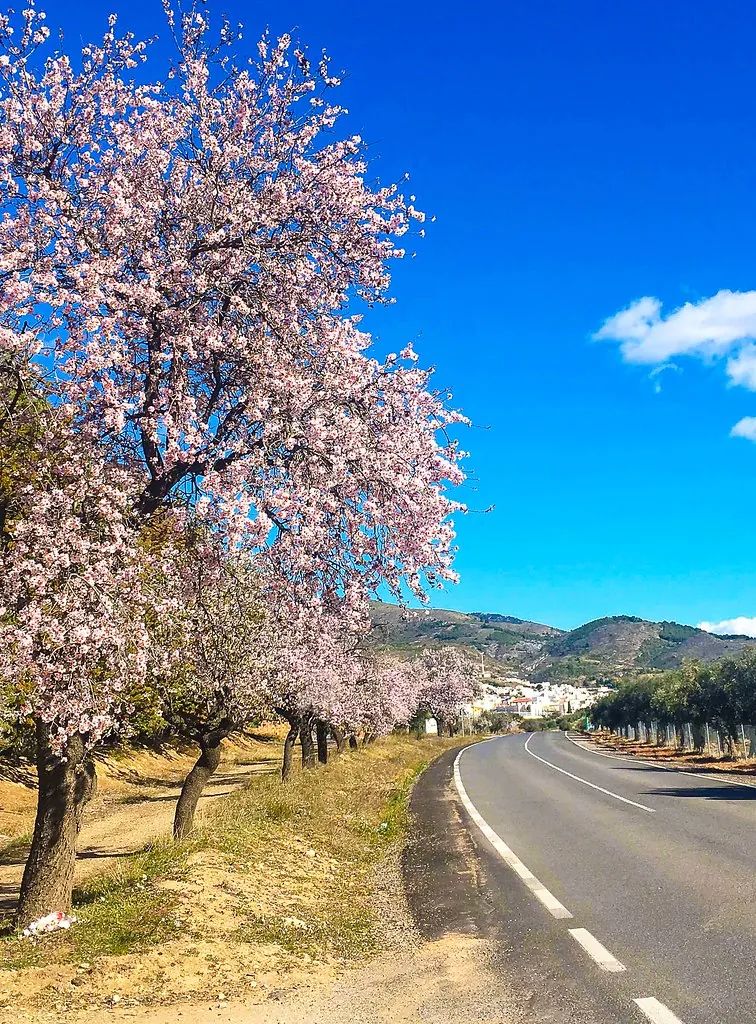
Alicún’s glory season is late February, when almond blossom turns every terrace blush-white. Photographers arrive with long lenses, but even they are outnumbered by the bees. After the petals drop the trees get on with producing the nuts that end up, salted and paper-bagged, on the bar counter—50 c a scoop, honesty box beside the coffee machine. Olives, vines and the odd kitchen garden fill the remaining space. Irrigating them still follows the Moorish calendar: water flows for two hours on, four hours off, channelled by stone dividers older than any living resident.

Walking tracks follow the old irrigation ditches, contouring around the hill rather than charging straight up. A gentle 40-minute circuit heads east to the abandoned threshing circles on the ridge; the return leg dips through a gully of rosemary and dwarf oak. Serious hikers can keep going along the GR-7 long-distance path—eight kilometres of steady ascent brings you to the neighbouring hamlet, Alhabia, where the bakery does a decent pork loin bocadillo if you reach it before 14:00.

Eating, Drinking, Paying

The village bar doubles as the social centre. Opening hours are elastic; if the owner’s cousin is visiting from Órgiva you might find the door locked at 19:00. Inside, the menu is chalked on a board and rarely changes: migas (fried breadcrumbs laced with garlic, pepper and scraps of chorizo), papas a lo pobre (potatoes slow-fried in olive oil with green pepper), and a bowl of garbanzos con collejas (chickpeas with winter foraged greens) that tastes better than it photographs. House wine comes in a plain glass, cold from the fridge, €1.20. Cards are accepted—sometimes. Bring a €20 note and you’ll be loved.

There is no restaurant, but the grocer will slice jamón on the ancient manual cutter and sell you a hunk of local goat’s cheese for about €6. Picnic tables sit under the eucalyptus by the dried river bed; the shade is deep, the ground is dusty, the view back up to the village is postcard-perfect without trying.

When the Village Decides to Wake Up

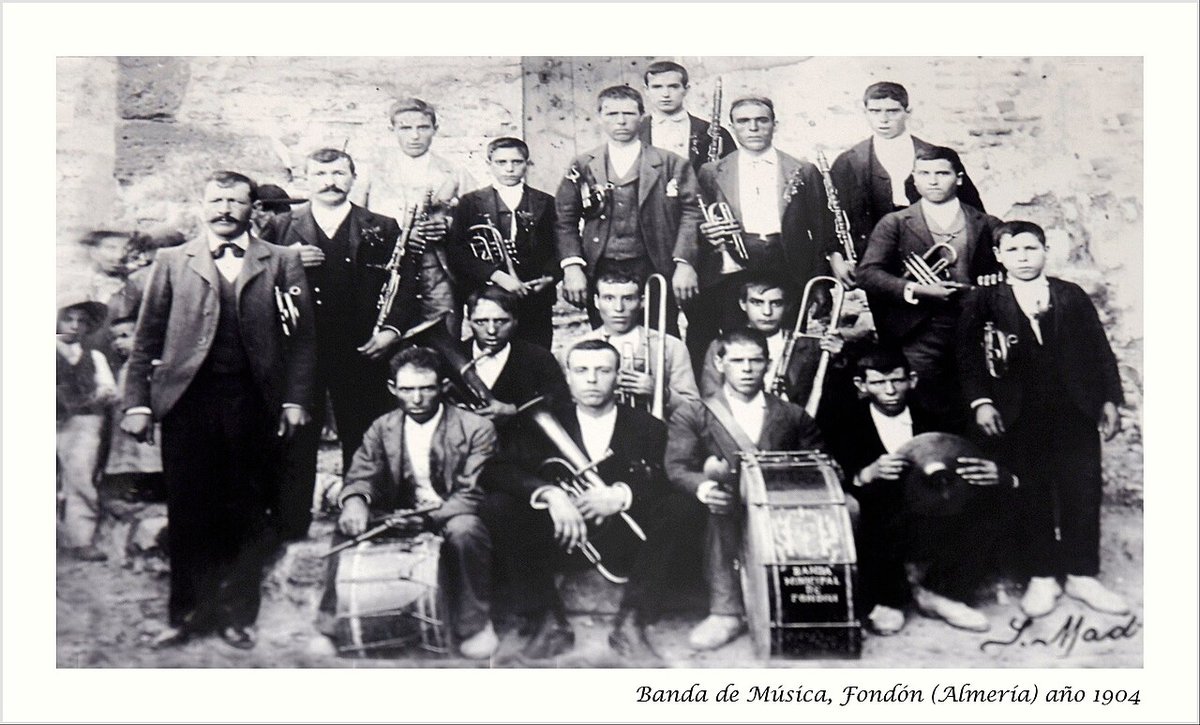
The fiesta calendar is short and intense. On 20 January San Sebastián is celebrated with a mesón gastronómico in the old schoolhouse—think church-hall pricing (€8 for a plate and a drink) and neighbours arguing over whose morcilla is superior. The big date is 26 August: brass bands, flamenco at midnight, a paella cooked in a pan you could park a Mini in. For three days the population quadruples; cars line the track all the way back to the irrigation dam. If crowds make you twitchy, come the week after instead, when the streets smell of citronella and everyone is hoarse.

Semana Santa is low-key but moving. The tiny procession squeezes through lanes barely wider than the platform itself; bearers swap places beside somebody’s front step, cigarettes stubbed out against the wall the moment the drum starts. Visitors are welcome, silence is expected. Shorts and tank tops feel inappropriate—carry a scarf.

Getting There, Getting Out

Almería airport is 30 km south, served from Gatwick and Manchester (2 h 30 min). Hire cars are cheapest pre-booked; the drive takes 35 minutes on the A-92, exit 338 signed “Alicún/Alhama”. Petrol is cheaper at the supermarket pumps on the airport ring road—fill up before you return. A single daily bus leaves Almería at 14:15 and returns at 07:00 next morning; unless you fancy a very long layover, the car is non-negotiable.

Parking is free but unsurfaced—don’t wear your finest shoes in dry weather unless you enjoy beige dust on suede. Winter mornings can be nippy (frost is rare but 4 °C happens); summer afternoons top 38 °C, so hike early, siesta late, emerge again at seven when the swifts start screaming overhead.

Worth Knowing, Worth Ignoring

There are no thermal baths in Alicún. The Roman spa site is 6 km away in Villanueva de las Torres—worth a dip if you’re passing, but don’t base your whole trip on it. Phone signal is patchy inside the houses; WhatsApp voice notes judder and stall—consider it the village telling you to log off. Finally, half a day is ample for wandering, coffee, photos and a short almond-scented walk. Stay longer only if you crave silence, starry skies and the smell of woodsmoke drifting down the street at dusk. Alicún will happily supply all three, no Instagram filter required.

Key Facts

Region
Andalucía
District
Alpujarra Almeriense
INE Code
04012
Coast
No
Mountain
No
Season
year-round

Livability & Services

Key data for living or remote work

2024
Connectivity5G available
TransportTrain 10 km away
HealthcareHospital 18 km away
EducationElementary school
Housing~5€/m² rent · Affordable
CoastBeach 17 km away
Sources: INE, CNMC, Ministry of Health, AEMET

Official Data

Institutional records and open data (when available).

  • Antigua Iglesia Parroquial
    bic Edificio Religioso ~0.1 km

Planning Your Visit?

Discover more villages in the Alpujarra Almeriense.

View full region →

More villages in Alpujarra Almeriense

Traveler Reviews