Full Article
about Almócita
Eco-friendly village in the Alpujarra, known for its murals and Moorish architecture.
Hide article Read full article
A village where time loosens its grip
There is a particular feeling that arrives almost immediately in Almócita. The road climbs up from the valley, bends through changing scenery, and then the village appears. You park wherever space allows, step out, and realise things move at a different pace here. Not because it is empty or forgotten, but because no one seems in a hurry.
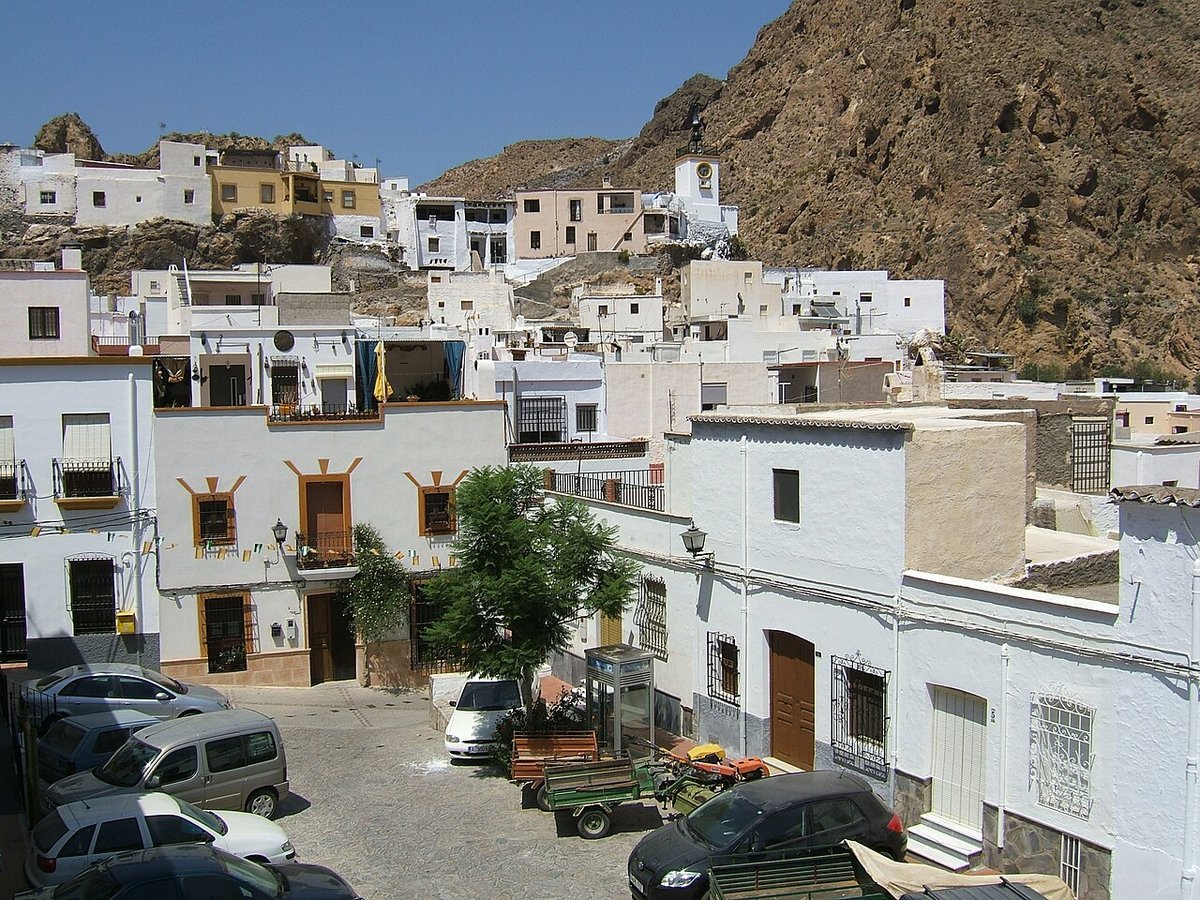
Tourism in Almócita begins quietly. With just over two hundred residents, this is a small place where the most consistent sounds tend to be the wind or a conversation drifting across the square. The white houses seem to grow out of the hillside itself, and the streets rise and fall as if they simply followed the land without much argument.
This is the Alpujarra, a region on the southern slopes of the Sierra Nevada, though here it feels especially calm.
A compact centre shaped by the terrain
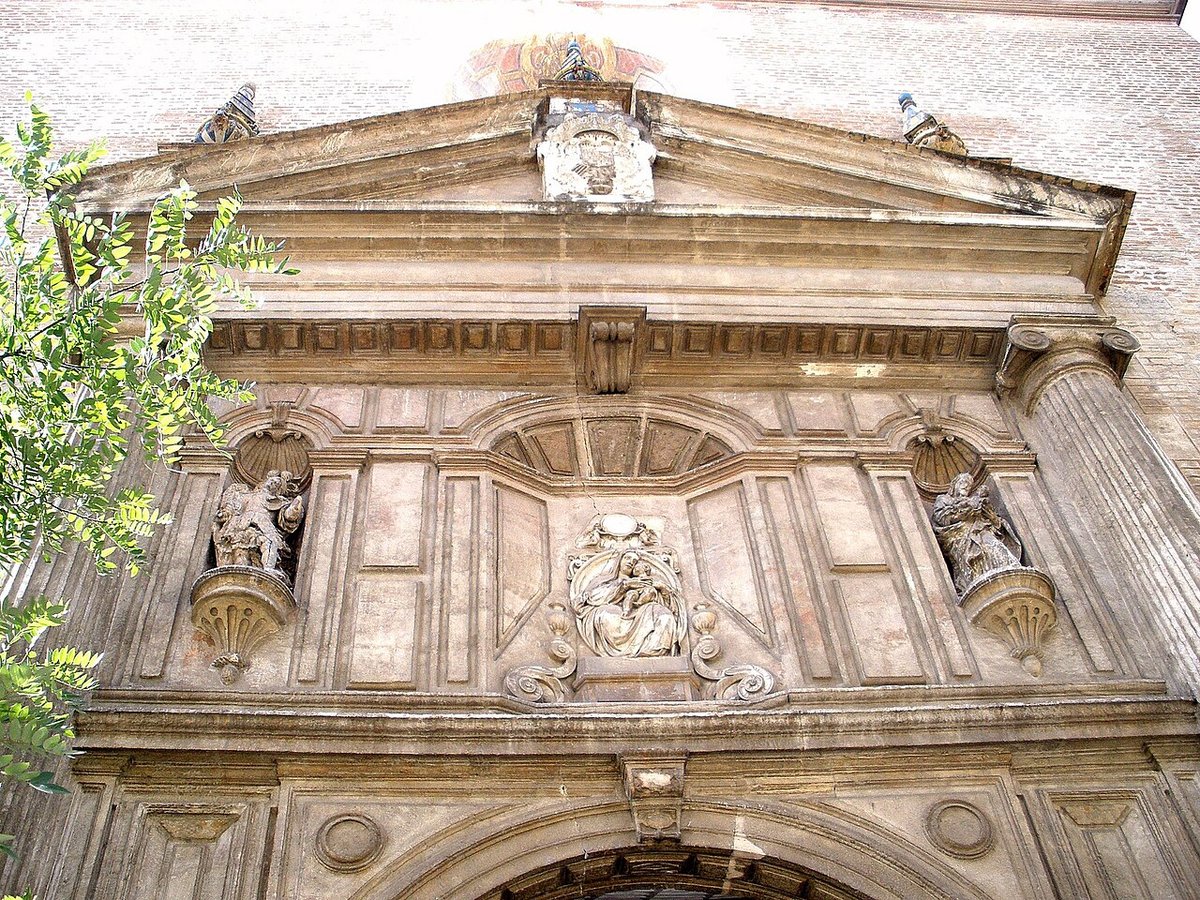
The heart of Almócita revolves around the church of Nuestra Señora del Rosario, built around the 16th century. It is not monumental in scale, yet it plays an important role. When the narrow streets twist and turn and orientation slips, the bell tower becomes a useful point of reference.
The village centre is compact enough to walk across in about half an hour without rushing. Along the way, the buildings reveal the area’s traditional construction: thick walls, dark wooden balconies, and flat roofs covered with launa, a clay-based material typical of the Alpujarra. These features appear throughout the region, but here they feel especially cohesive.
There is a sense that the village developed gradually, house by house, responding to need rather than following a strict plan. And despite that, everything fits together. The irregular streets and uneven slopes do not feel chaotic, more like a natural extension of the hillside.
Water, terraces and the surrounding landscape
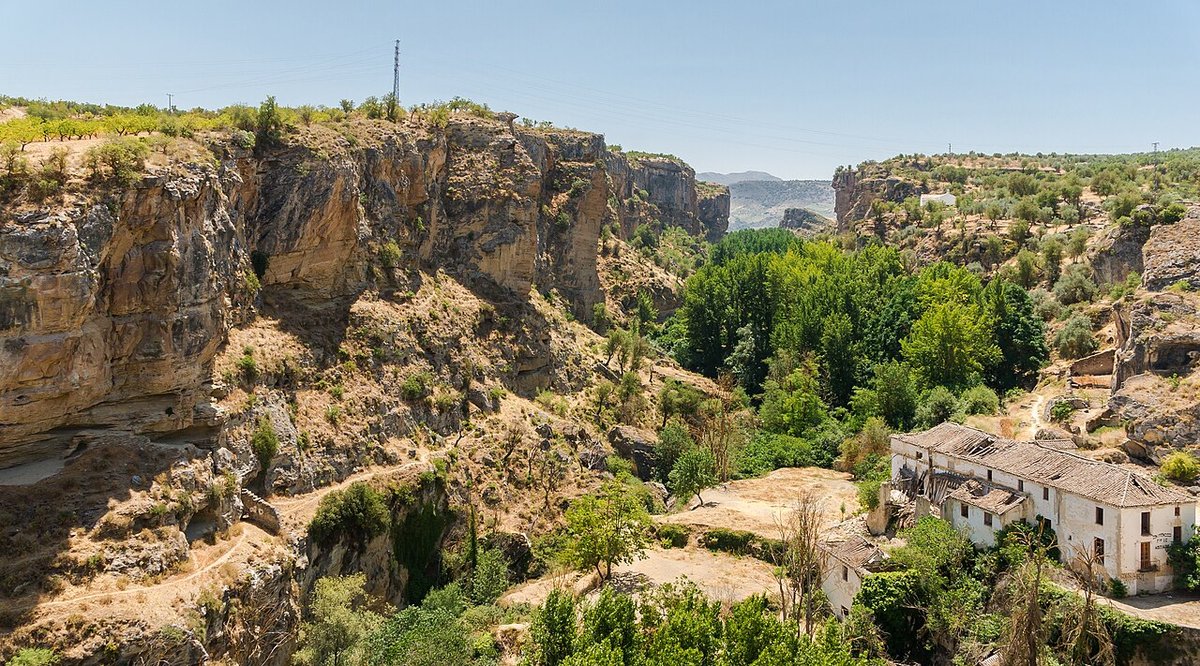
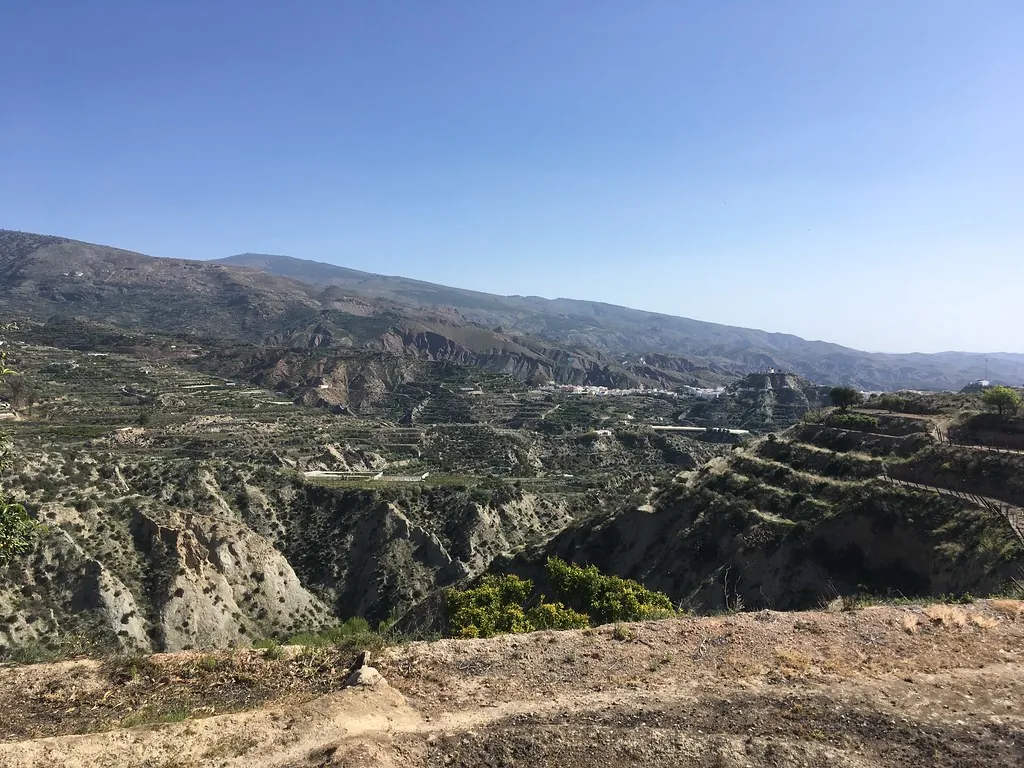
Just a couple of streets beyond the centre, the built space gives way to cultivated land. Terraces step down the slopes, planted with olive trees, almond trees and small vegetable plots. These are still irrigated using acequias, traditional water channels that date back to the Andalusi period.
In many places, the water runs openly, without signs or explanations. There is no marked route guiding you through it, no panels describing what you are seeing. You simply walk and observe. If you pay attention, you can follow how the water is distributed between plots and begin to understand how these systems have lasted for centuries.
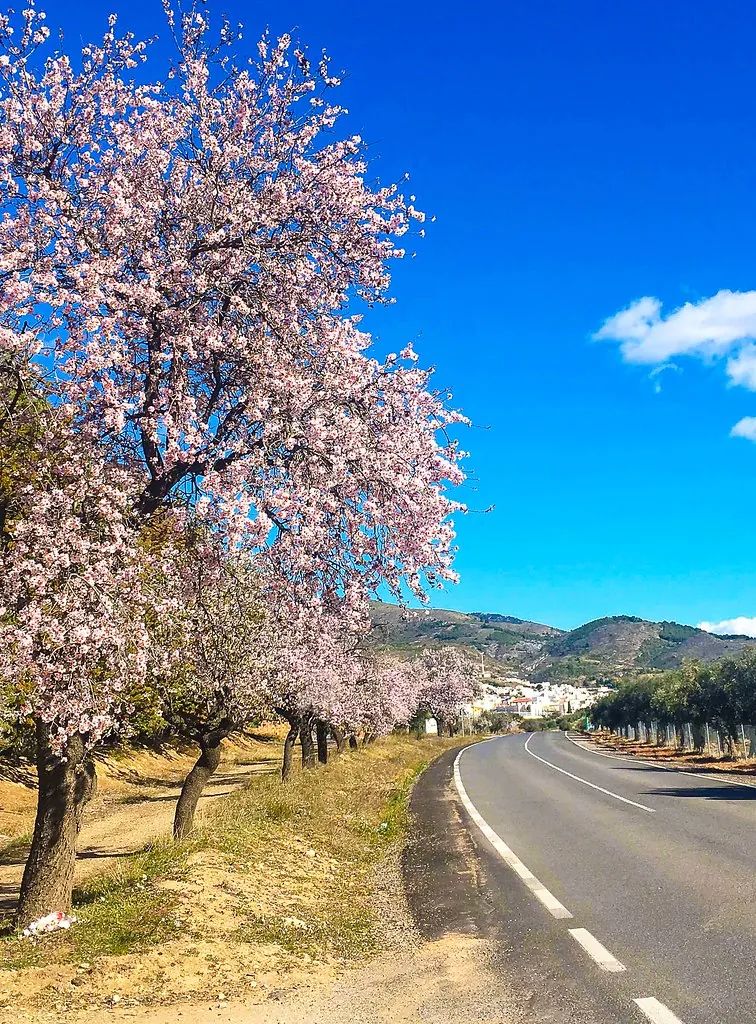
From higher points in the village, the pattern of terraces becomes clear. The landscape forms a kind of mosaic, shaped by agriculture and time. In spring, when the almond trees bloom, the slopes fill with white and pink. Photographs capture the colours, but the contrast with the surrounding mountains is something better appreciated in person.
Short walks into the Alpujarra Almeriense
Almócita works well as a starting point for short walks in the surrounding area. Paths and tracks connect with nearby ravines and with other villages in the Alpujarra Almeriense, such as Padules and Alsodux.
These are not technical hiking routes, though they are not entirely effortless either. The terrain brings steady climbs, stony ground and strong sun during the summer months. Even on shorter walks, carrying water is a sensible precaution.
During the almond blossom season, routes are sometimes organised around the village. These walks tend to be simple and relaxed, chosen more for the landscape than for any sporting challenge. They offer a chance to move through the terraces and see the area at a slower rhythm, in keeping with the village itself.
Food that reflects the land
Local cooking in Almócita is straightforward and rooted in the surrounding countryside. Dishes such as migas, choto al ajillo and gachas de maíz appear regularly, alongside traditional sweets like roscos de vino.
For anyone unfamiliar, migas is a dish based on fried breadcrumbs, often associated with rural cooking, while choto al ajillo refers to goat cooked with garlic. Gachas de maíz is a thick maize-based preparation, typical of inland areas.
There is nothing elaborate about how these dishes are presented. The focus is on substance rather than style. This is food meant to follow a morning working in the fields or walking through the sierra: filling, direct and without unnecessary decoration.
Festivities rooted in tradition
The main celebrations in Almócita are centred on Nuestra Señora del Rosario, usually held in early October. At that time, many people who live elsewhere return, and the village becomes livelier than usual.
There are also Easter processions, which are fairly restrained, and in May crosses are decorated with flowers and shawls, a tradition seen in various parts of Andalusia. During August, cultural activities and gatherings bring some extra energy to the summer months.
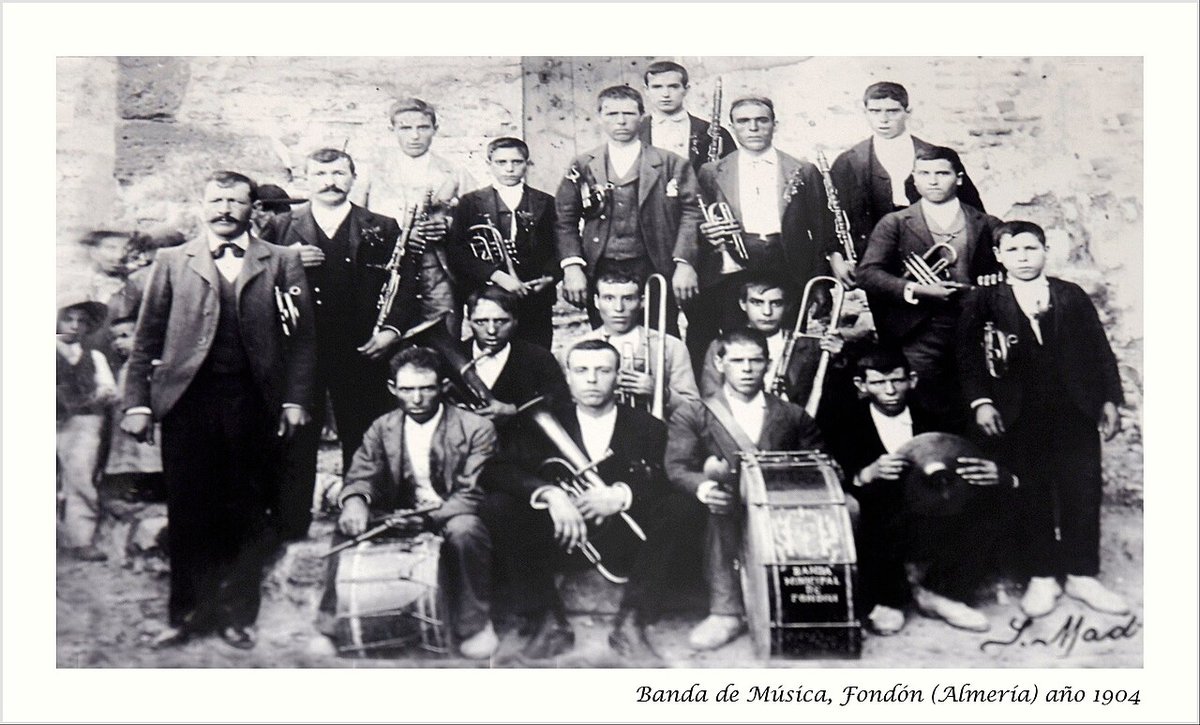
This is not a calendar designed to attract large crowds. These events continue because they have always been part of village life, rather than being reshaped for visitors.
The road up from Almería
Reaching Almócita from the city of Almería takes around 50 minutes by car. The route climbs steadily towards the Alpujarra, with noticeable shifts in the landscape along the way. The drier areas of the valley gradually give way to greener slopes as altitude increases.
The drive is not particularly difficult, though it rewards a slower pace. The curves and changing views encourage a steady approach rather than a rushed one.
In the end, Almócita is the kind of place that does not rely on grand attractions or long lists of things to do. It is defined by its short streets, its surrounding terraces, and a shared sense that time operates a little differently here. Nothing is overstated. It simply exists as it is, and that is enough.