Full Article
about Rágol
Quiet village in the Andarax known for its grapes and raisins; set amid traditional irrigated farmland.
Ocultar artículo Leer artículo completo
The church bell strikes noon as a farmer leads his mule through Rágol's narrowest passage, Callejón de las Flores. The animal's hooves clatter on centuries-old cobbles, echoing off whitewashed walls so close together that neighbours can shake hands from opposite balconies. This is Rágol at its most typical: a village where modernity arrives slowly, if at all, and where the rhythms of rural Spain persist against the dramatic backdrop of Almería's Alpujarra.
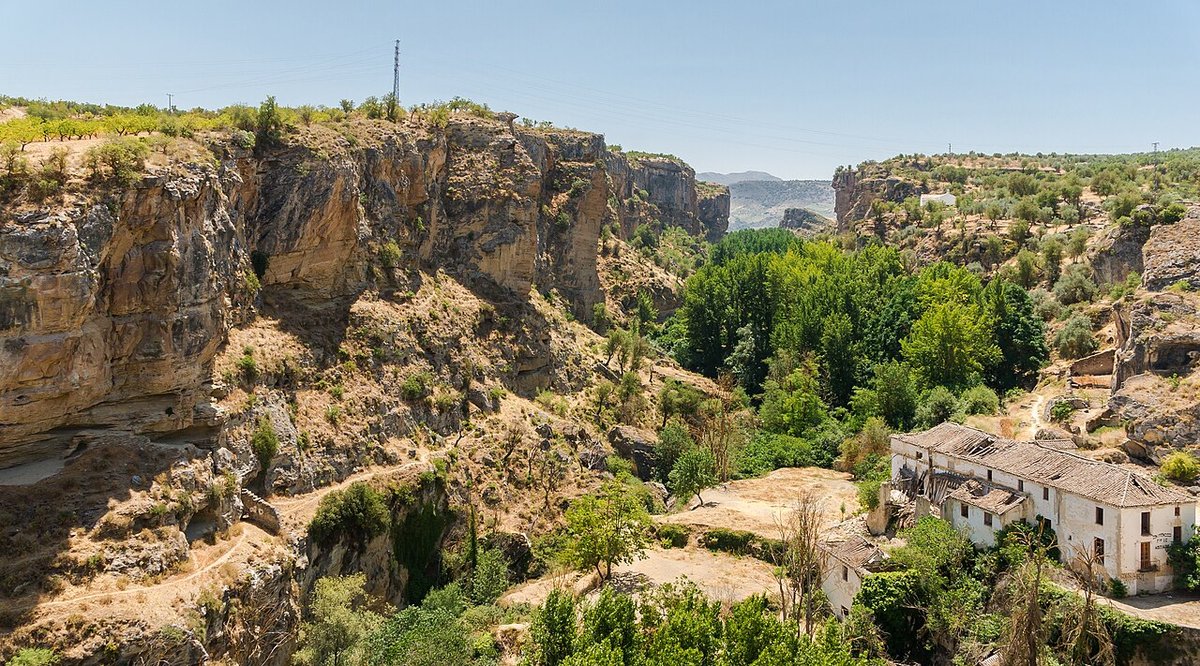
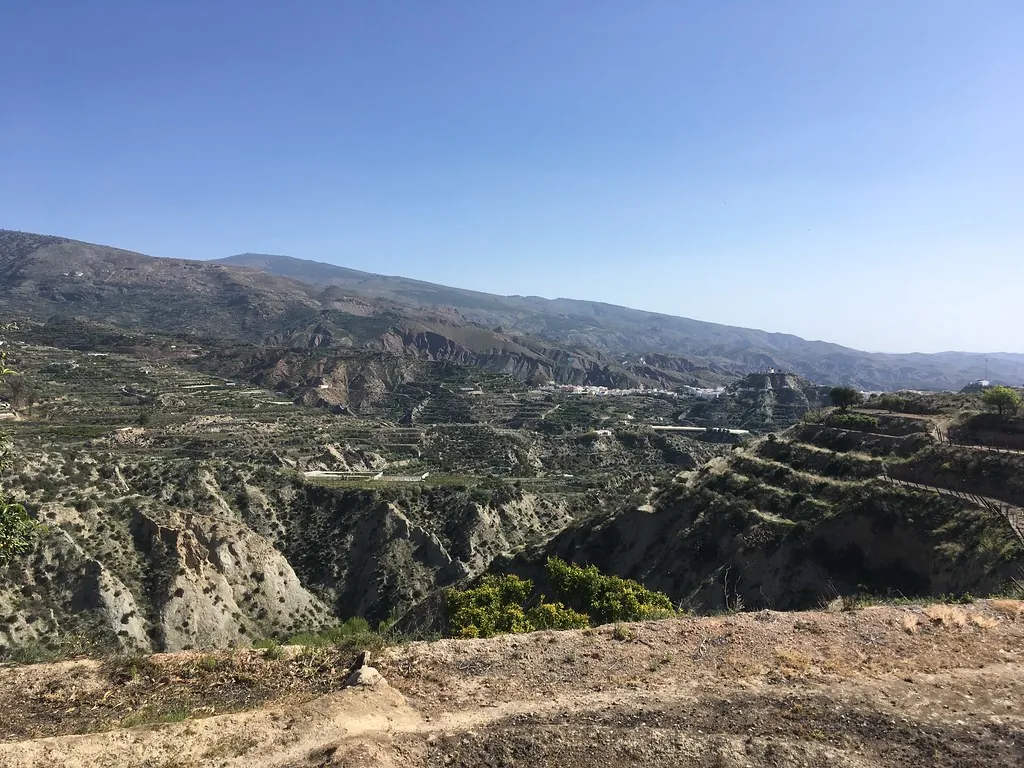
At 425 metres above sea level, Rágol occupies that sweet spot between mountain and valley. The village straddles the final foothills of the Sierra Nevada before they surrender to the Andarax Valley, creating a landscape that shifts from rugged peaks to fertile terraces within a few kilometres. This geography has shaped everything here, from the architecture that clings to impossible gradients to the agricultural traditions that have sustained its 300 inhabitants for generations.
The Moorish Legacy in Stone and Mortar
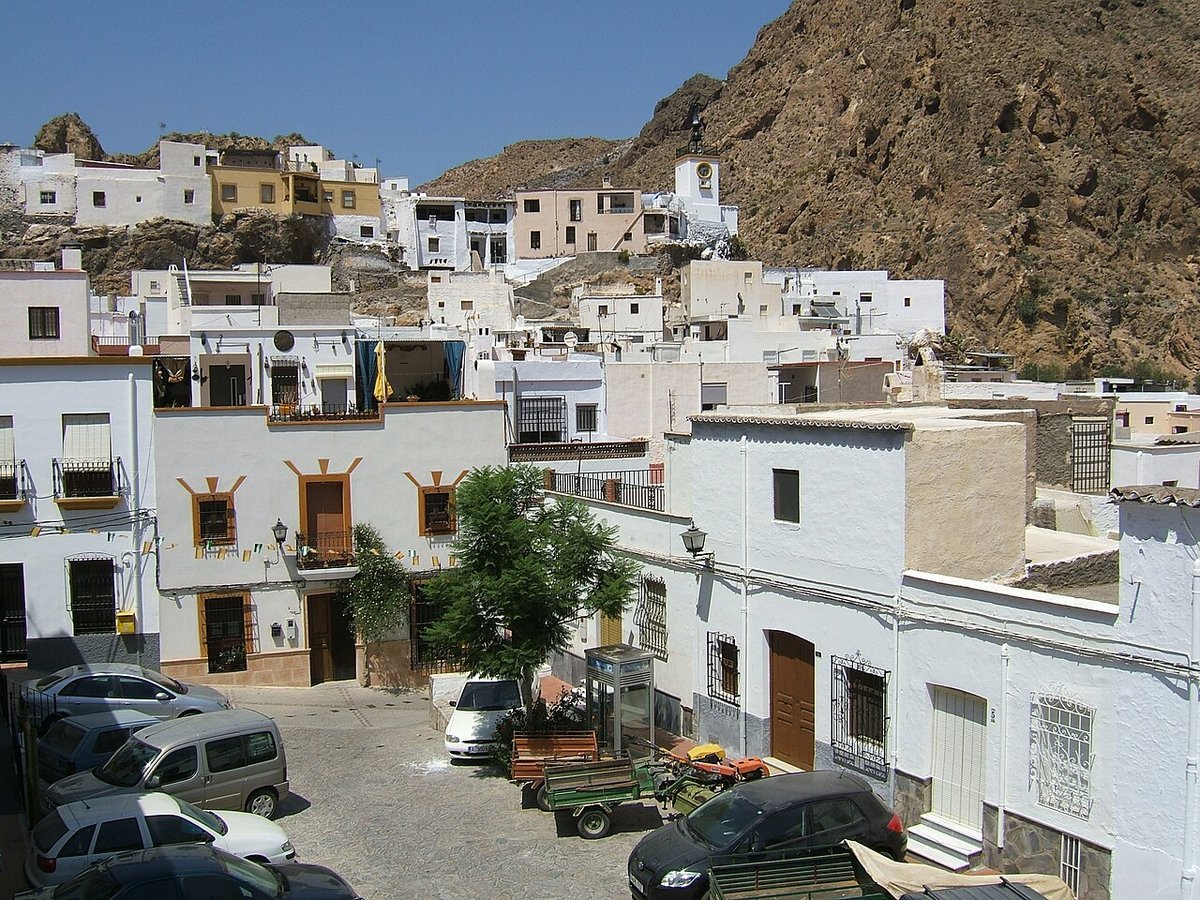
There's no grand entrance to Rágol, no dramatic plaza welcoming visitors. Instead, the village reveals itself gradually, turning past a bend to expose houses stacked like sugar cubes against the hillside. The Moorish influence isn't confined to guidebook descriptions here – it's lived in daily. The simple cubic volumes, the traditional chimney stacks, the way buildings integrate with the natural slope all speak of a heritage that predates the Christian reconquest.
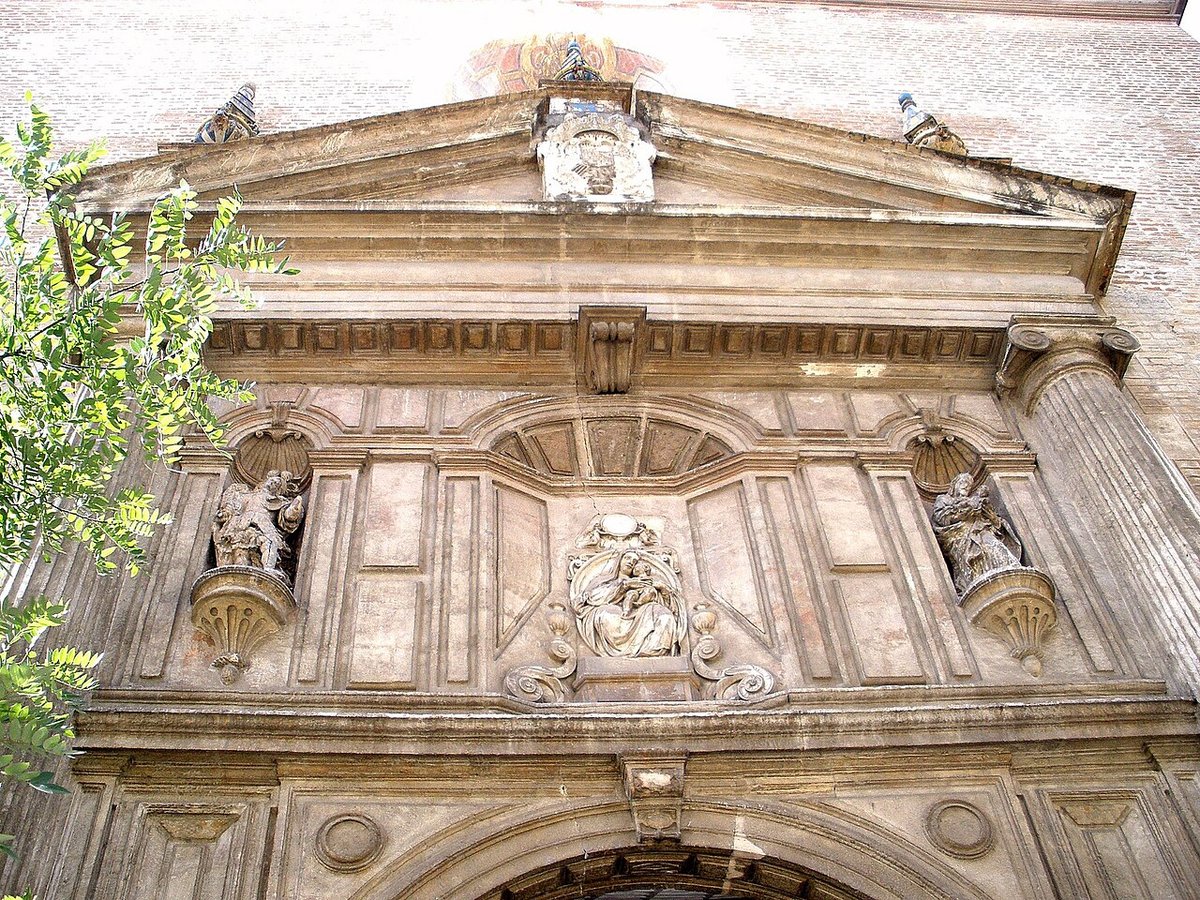
The Iglesia de San Antonio de Padua stands as the village's only significant landmark, its modest Mudéjar-influenced architecture a reminder of the craftsmen who built it after the Catholic conquest. Inside, the atmosphere matters more than ornamentation. If you find it open (hours are irregular, governed more by local need than tourist schedules), take a moment to appreciate how this building serves as both spiritual centre and social anchor for the community.
Wandering upwards through the labyrinthine streets reveals Rágol's true character. Each turn presents a new perspective: suddenly the valley opens below, or a tiny plaza appears with its inevitable stone bench and elderly residents engaged in the Spanish art of conversation. The climb isn't gentle – comfortable footwear with good grip isn't just recommended, it's essential. The reward comes at the upper reaches where the entire Andarax Valley spreads below, a patchwork of agricultural terraces that have been coaxed from the mountainside over centuries.
Working the Land, Against the Odds
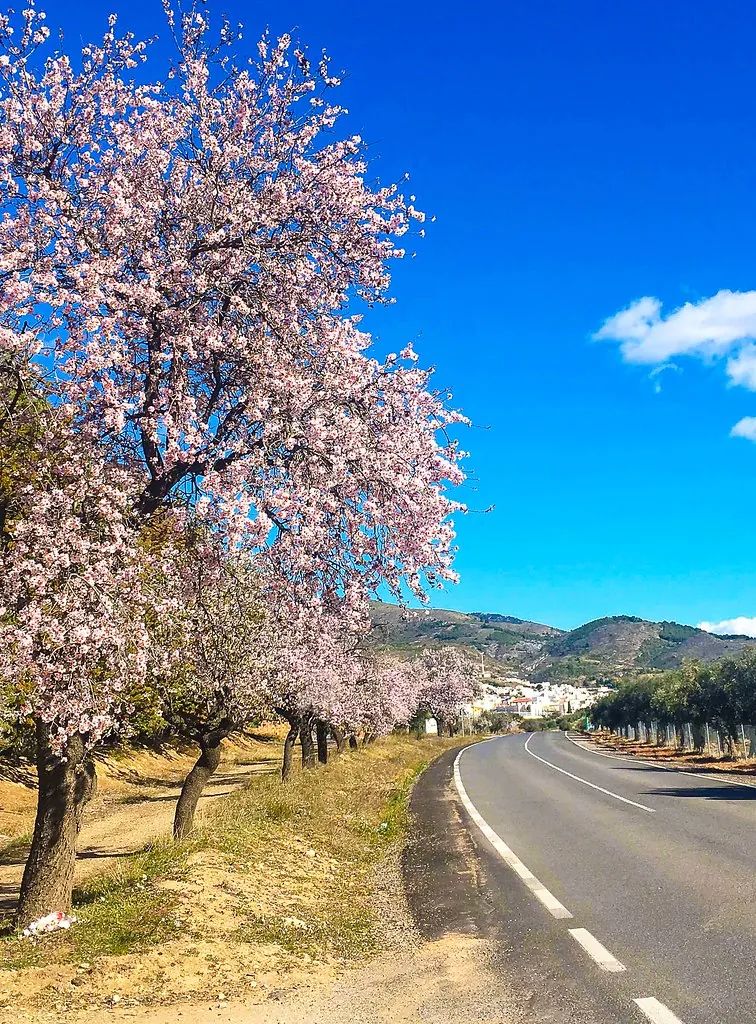
Those terraces, or bancales, represent more than scenic backdrop. They're testament to human determination in a landscape that makes farming an act of faith. Dry stone walls create level platforms on slopes that would defeat lesser ambitions, supporting olive groves, almond trees and vineyards that produce modest yields but exceptional flavours. February and March transform the area when almond blossoms paint the hillsides white – photographers arrive in droves, though most depart by lunchtime, missing the subtle beauty that persists year-round.
The agricultural calendar dictates local cuisine. In Rágol's single restaurant (there are no others, plan accordingly), menus change with what's available from surrounding gardens. Migas – fried breadcrumbs with garlic and local sausage – appears regularly, as does choto al ajillo (young goat with garlic) when herders bring livestock down from summer pastures. The sensible approach involves asking what's fresh rather than ordering from memory. Vegetables arrive still warm from the sun, prepared simply to honour their natural flavours.
For those seeking liquid refreshment, the village bar doubles as social centre. Morning coffee comes with agricultural discussions; evening beer accompanies debates about football and politics. The proprietor, typically juggling multiple roles, can provide hiking information, weather updates and local gossip with equal authority. Prices remain refreshingly honest – a coffee costs €1.20, a beer €1.50, making this one of Spain's more affordable drinking establishments.
Trails and Tribulations
Walking opportunities abound, though preparation proves crucial. Traditional paths connect Rágol to neighbouring villages, following ancient routes used by muleteers and shepherds. The acequias – irrigation channels that snake along hillsides – provide relatively level walking with constant water views and birdlife. However, trail maintenance varies dramatically. Some paths appear freshly cleared; others have surrendered to encroaching vegetation. Checking current conditions at the village hall prevents disappointment.
Ambitious hikers might eye Cerro del Almirez, the prominent peak dominating the northern horizon. This isn't a casual stroll but a serious mountain undertaking requiring proper equipment, navigation skills and adequate time. The ascent gains over 1,000 metres from village level, passing through multiple climate zones. Weather changes rapidly at altitude – morning sunshine can transform into afternoon storms with little warning.
More manageable options follow the valley floor, where the Andarax River has created a ribbon of green through otherwise arid terrain. These walks reveal abandoned farmhouses, traditional water mills and the occasional cortijo (rural estate) still operating much as it did centuries ago. Spring wildflowers appear in March and April, transforming the normally brown landscape into unexpected colour.
When to Visit, How to Manage
Rágol's climate surprises those expecting typical coastal Almería. Summer temperatures regularly exceed 35°C, making midday exploration uncomfortable. Early morning or late afternoon visits prove more pleasant, when shadows provide relief and the village emerges from its siesta-induced torpor. Winter brings sharp contrasts – bright sunshine might accompany temperatures near freezing, and night-time requires proper heating rather than Mediterranean optimism.
Spring and autumn offer the best compromise. March through May brings mild temperatures and the almond blossom spectacle, while October provides harvest season atmosphere with grape and olive picking in full swing. These periods also attract the fewest visitors – summer crowds heading to coastal resorts drive straight past Rágol's turn-off, unaware of what they're missing.
Access requires commitment. From Almería city, the 80-kilometre journey takes ninety minutes via the A-7 motorway followed by increasingly winding regional roads. The final approach involves sharp curves and dramatic drop-offs that test nervous drivers. Public transport exists but proves inflexible – one daily bus each direction, timed more for local needs than tourist convenience. Hiring a car provides essential flexibility for exploring the wider Alpujarra region.
The Reality Check
Rágol won't suit everyone. Those seeking boutique hotels, sophisticated dining or vibrant nightlife should continue to nearby Órgiva or coastal Motril. The village offers instead an authentic glimpse of rural Spain largely unchanged by tourism's touch. English isn't widely spoken, though communication happens through gestures, goodwill and the universal language of shared food and drink.
Physical limitations matter here. The steep gradients and cobbled surfaces challenge anyone with mobility issues. Pushchairs prove impractical; wheelchair access is virtually non-existent. Even fit visitors feel the altitude when climbing from the lower streets to the upper viewpoints. Accepting these limitations becomes part of the experience – Rágol demands engagement on its terms, not yours.
Yet for travellers seeking Spain beyond the Costas, Rágol delivers something increasingly rare: a village that exists for its residents first, visitors second. The elderly men discussing politics on the plaza bench aren't performing for cameras. The woman hanging washing across the street does so because that's where the sun hits, not because it photographs well. This authenticity can't be manufactured or marketed – it simply is, existing in the space between tourist expectation and rural reality.
Stay for lunch, walk the terraces, accept the church might be closed, and leave before sunset. Rágol doesn't need full days or lengthy itineraries – it needs appreciation for a way of life that perseveres despite geography, economics and changing times. In an age of curated experiences and Instagram moments, this stubborn refusal to adapt for visitors becomes Rágol's greatest charm.