Full Article
about Terque
Museum village of the Alpujarra; preserves the history of the ship-bound grape and everyday life.
Ocultar artículo Leer artículo completo
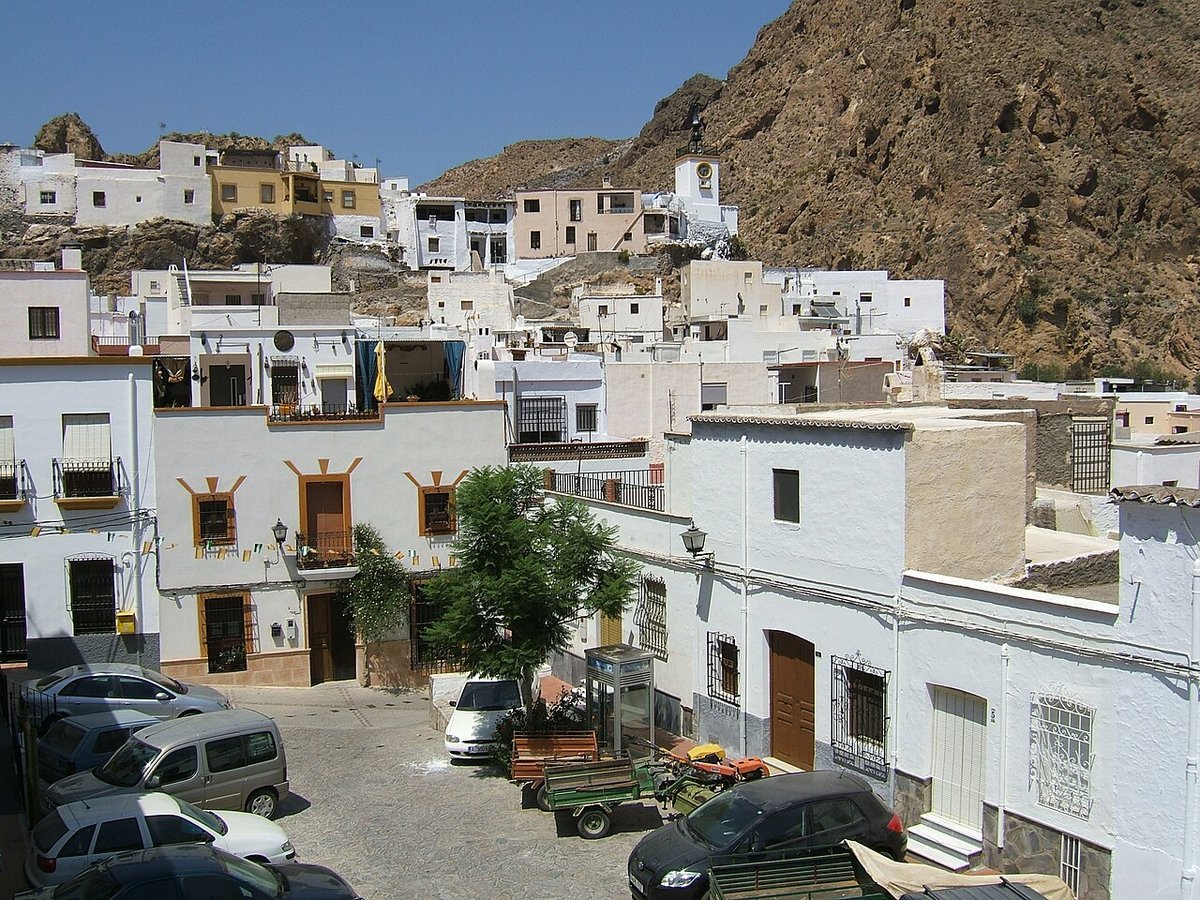
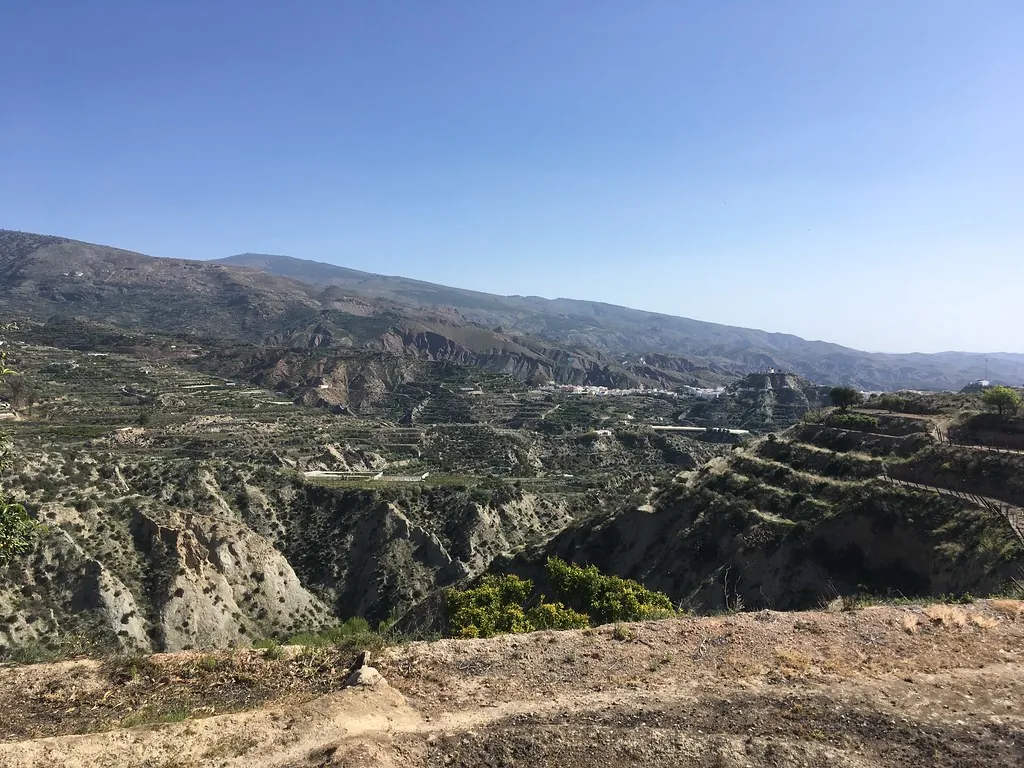
The church bell tower appears first, rising above a cluster of whitewashed houses that seem to tumble down the hillside. From the road approaching Terque, it's the only indication that this patchwork of almond terraces and citrus groves actually contains a village. At 300 metres above sea level, the settlement surveys the Andarax valley like a watchman who's grown weary after centuries on duty.
The Arithmetic of Small Places
Three hundred and ninety-six residents. One parish church. A handful of streets so narrow that two people must turn sideways to pass. These numbers matter in Terque, where the scale of everything reminds visitors that they're treading on territory meant for locals rather than tourists. The village squats in the lower Alpujarra, that transitional zone where the Sierra Nevada's southern flanks dissolve into Almería's semi-arid plains. It's geography that explains both the town's survival and its obscurity.
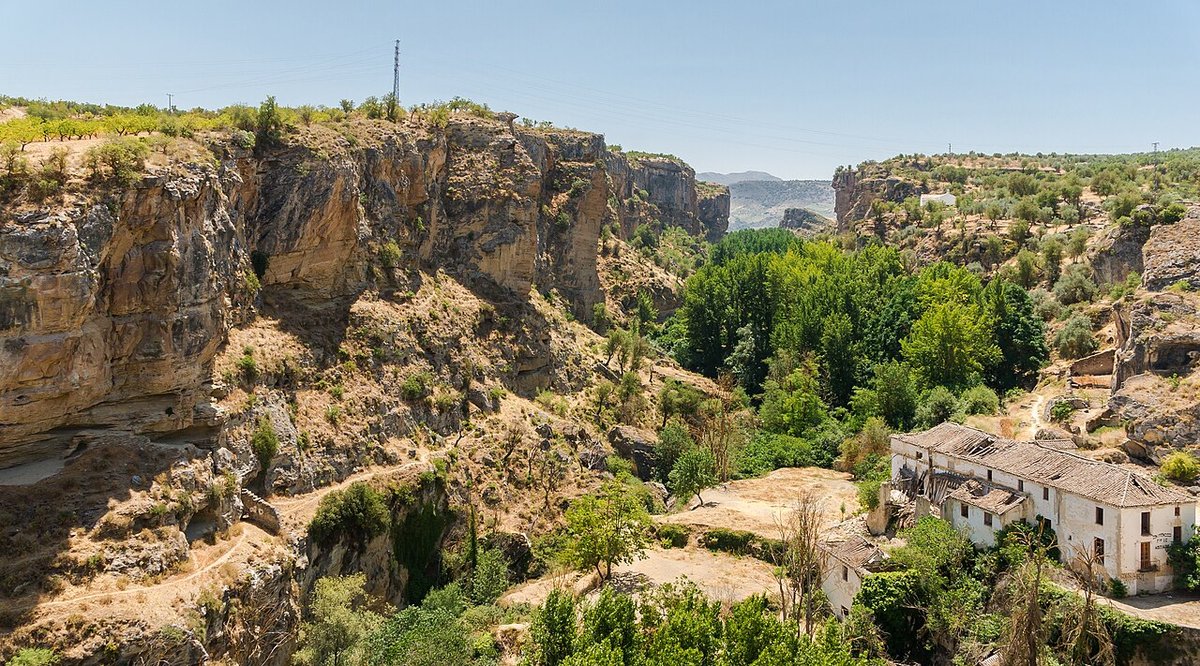
The Moors understood this terrain. Their irrigation channels still thread through the valley, delivering water to terraces where oranges grow alongside almonds and the occasional greenhouse glints with plastic. These acequias represent engineering that modern civil engineers quietly admire: gravity-fed systems that have functioned for eight centuries with minimal maintenance. Walking the paths that follow these channels reveals the true extent of Terque's agricultural footprint—what appears from the road as a compact village actually spreads across several kilometres of cultivated valley floor.
Morning Sounds, Evening Light
Dawn brings the most activity. By seven o'clock, farmers have already descended to their plots, and the smell of wood smoke drifts from chimneys. The village follows agricultural time rather than tourist schedules. The church bells mark the hours, but the real clock is the sun's arc across the valley. During summer months, this becomes crucial intelligence—midday heat renders the landscape hostile to anything more strenuous than siesta.
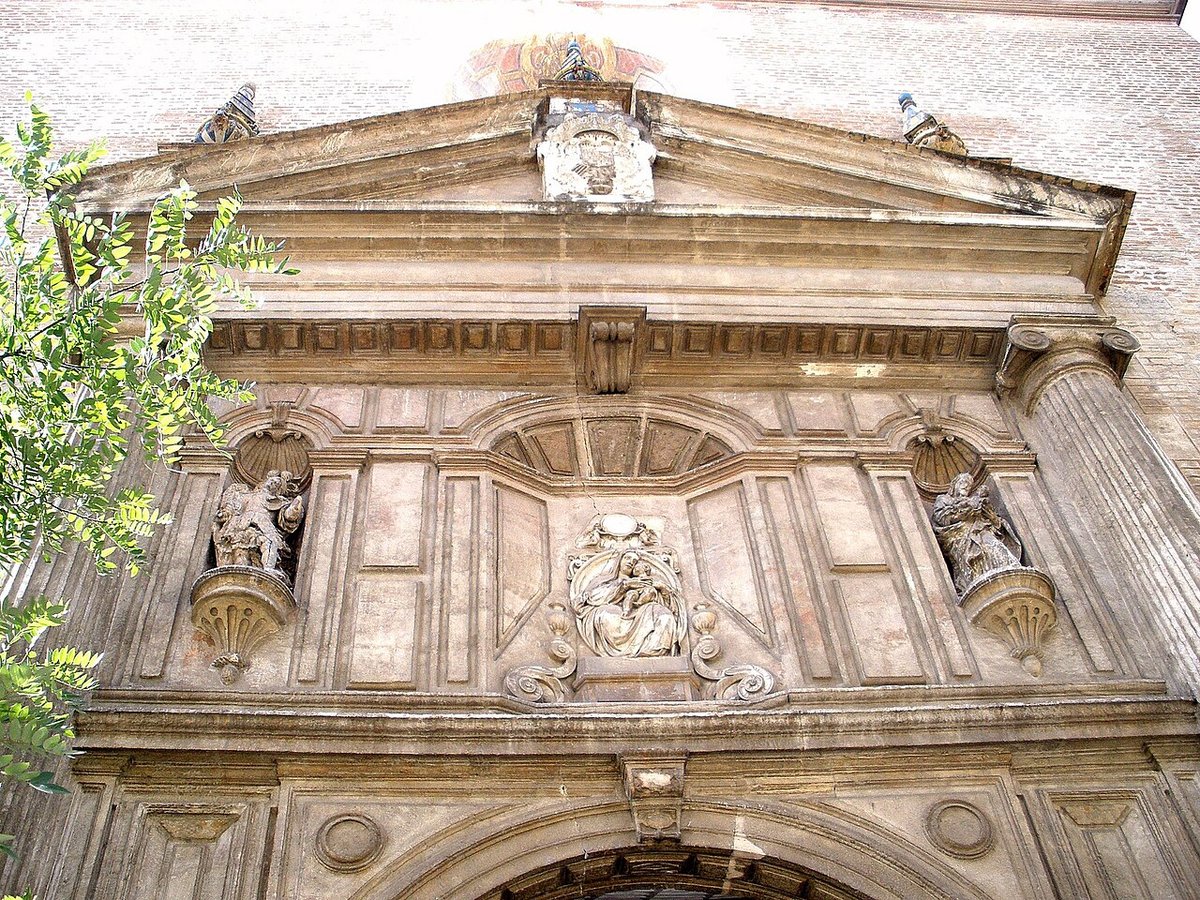
The parish church of Nuestra Señora del Rosario anchors the upper town, its simple facade belying its central role in village life. Inside, the decoration is restrained compared to Andalusia's baroque excesses elsewhere. This reflects Terque's character: practical, unshowy, conscious that display requires wealth the village has never possessed. The building's bell tower serves as navigational aid for anyone who has wandered into the labyrinth of alleys below. From its height, the view stretches across a patchwork of green terraces to the arid hills beyond—a demonstration of how irrigation transforms landscape.
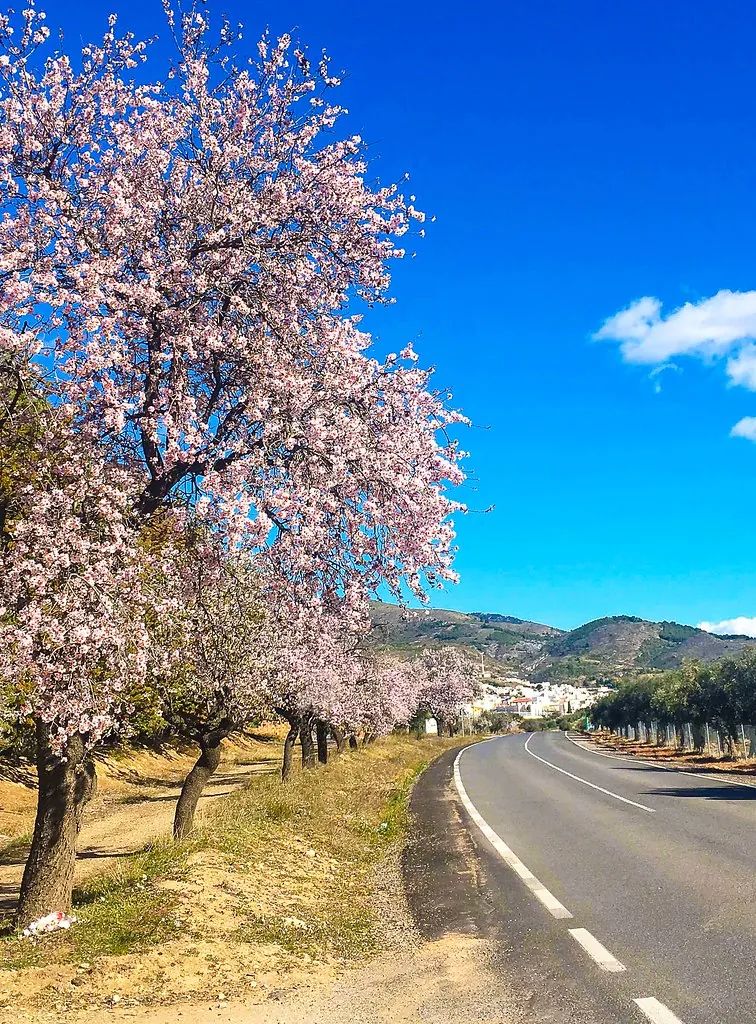
Between February and April, the valley performs its annual magic trick. Almond blossoms transform the terraces into clouds of white and pink, creating a spectacle that draws Spanish photographers but remains largely unknown to foreign visitors. The flowering lasts barely three weeks, timing that varies annually depending on winter rainfall. Local farmers gauge the season by watching bud development, knowledge passed through generations who have learned to read subtle environmental signals.
Walking Through History
Terque rewards those who abandon the car. A network of footpaths connects the village to abandoned water mills and scattered farmhouses, routes that typically require one to three hours rather than demanding full-day expeditions. The tracks follow logical lines—along irrigation channels, across terrace walls, through groves where the undergrowth crackles with dryness during summer months. Occasional waymarking exists, but the philosophy assumes walkers possess basic navigation skills and sufficient Spanish to ask directions when inevitably required.
These paths reveal the valley's archaeology. Ruined mills testify to an industrial past when grain processing occurred locally rather than at distant facilities. Their stone walls, now housing nesting birds rather than grinding mechanisms, demonstrate construction techniques that recycled everything—nothing was wasted in a marginal economy. Similar practicality appears in terrace walls built from field stones cleared for cultivation, creating boundaries that simultaneously solved disposal problems.
The agricultural calendar dictates what's visible. During harvest seasons, families work plots that might measure only half an acre but produce oranges, almonds, and vegetables for household consumption plus modest surplus. Visitors wandering during these periods often find themselves offered fruit by workers taking shade breaks. Accepting requires time—Spanish rural hospitality demands conversation, however limited by language barriers.
When to Arrive, When to Leave
Spring and autumn provide the sensible windows. March through May offers temperatures suitable for walking plus the possibility of catching almond blossom, though exact timing varies annually. October brings the village's patronal festival, centred on Nuestra Señora del Rosario, when the population temporarily swells as former residents return for celebrations that blend religious procession with outdoor dining and amplified music lasting until dawn.
Summer presents challenges that shouldn't be underestimated. Afternoon temperatures regularly exceed 35°C, limiting useful activity to morning hours and late evening. The village provides minimal tourist infrastructure—no hotels, limited restaurant options, shops that close during traditional hours. Visitors requiring constant stimulation or extensive facilities should consider alternative destinations.
Winter brings its own character. At elevation, Terque experiences temperatures significantly cooler than coastal Almería, occasionally dropping low enough for frost that surprises those expecting southern Spain to remain perpetually warm. The village empties further as residents with coastal properties relocate to milder conditions. However, clear winter light transforms the landscape, revealing geological layers hidden during summer haze and creating photographic conditions that professionals appreciate.
The Practical Reality
Access requires planning. Almería airport sits forty-five minutes away by car, with vehicle hire essential—public transport exists but involves multiple connections through larger towns, consuming half-days rather than hours. Driving the final approach reveals why the village remained obscure: the road winds through terrain that discouraged casual visitation even after Spain's tourism boom began during the 1960s.
Accommodation options remain limited. Rural houses offer the primary alternative to daily commuting from coastal hotels, though booking requires Spanish language skills—online systems haven't penetrated Terque's economy. Prices reflect agricultural rather than tourism economics, meaning bargains exist for those prepared to accept basic facilities and the understanding that service follows village rather than international standards.
English speakers remain rare among permanent residents. Basic Spanish proves invaluable, particularly agricultural vocabulary related to crops and weather. However, the village's isolation has preserved customs increasingly rare elsewhere—shopkeepers who know every customer's requirements, neighbours who monitor each other's wellbeing, a pace that allows conversation rather than transaction.
Terque offers no monuments, no beaches, no nightlife. Instead, it provides something increasingly precious: a place where Spain continues functioning according to rhythms established over centuries, largely unaffected by the tourism that transformed neighbouring regions. The village rewards those seeking understanding rather than entertainment, prepared to adjust expectations to local reality rather than demanding international standards. Leave before expecting more than Terque can deliver, or stay long enough to appreciate what mass tourism destroyed elsewhere.