Full Article
about Almegíjar
A small corner of the Alpujarra Alta; it offers traditional tinao architecture and total peace among the mountains.
Ocultar artículo Leer artículo completo
The morning bus from Órgiva wheezes to a halt 812 metres above sea level and deposits exactly three passengers outside Bar La Taberna de Gabriella. One is a German botanist clutching a field guide to Andalusian orchids; the others are locals carrying sacks of almonds they will shell later on doorsteps that double as sun terraces. By the time the bus grinds away down the A-4132, the village has already returned to its default soundtrack: goat bells, distant chainsaws and the soft clatter of irrigation water slipping through stone channels older than any house in sight.
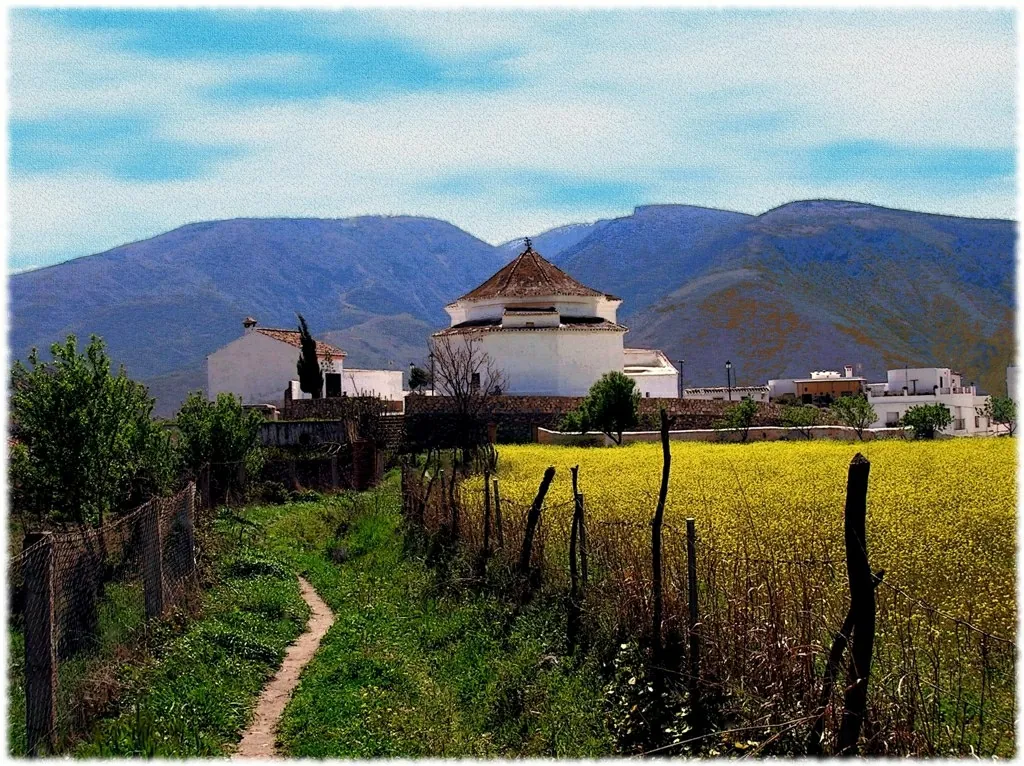
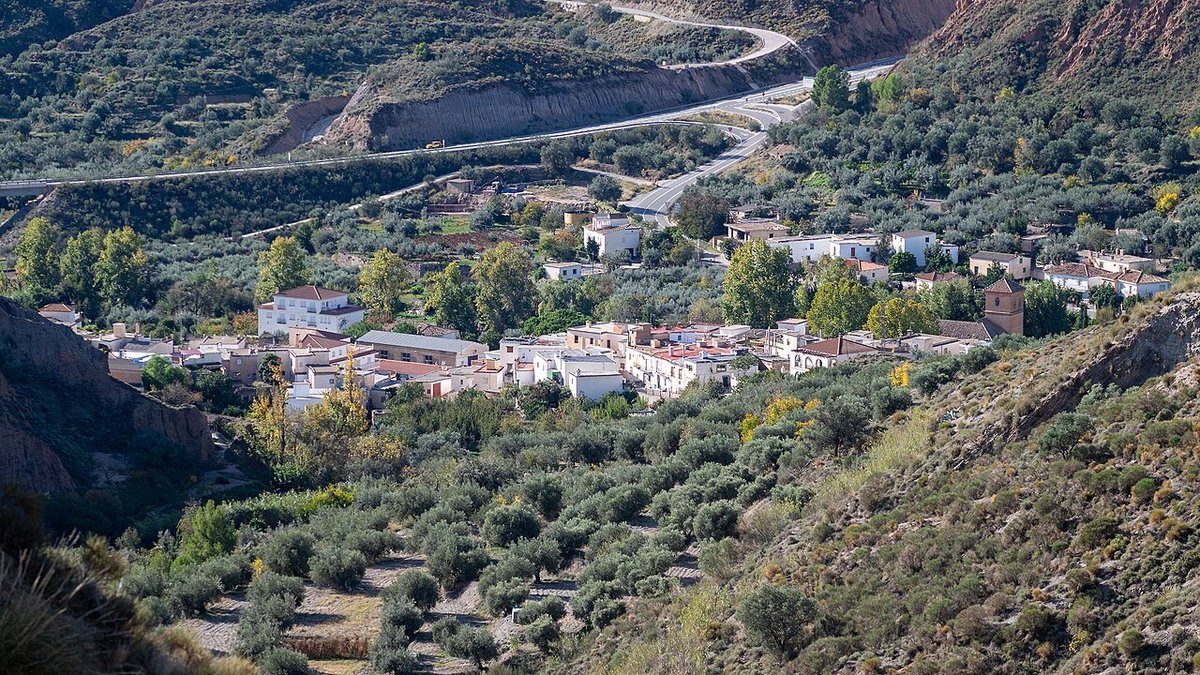
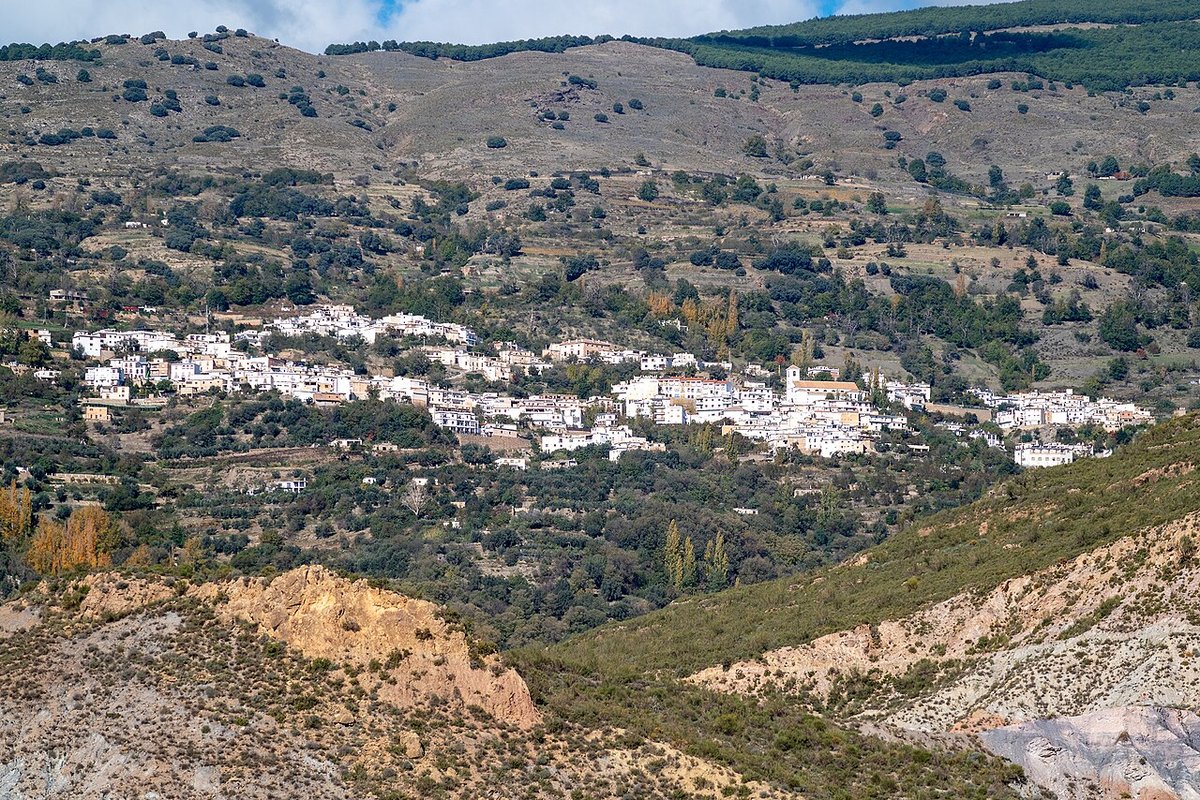
Almegíjar sits on a narrow shelf hacked from the south flank of Sierra Nevada, close enough to Africa for the air to carry a faint whiff of orange blossom even in late October. The ridge opposite is the Poqueira gorge; behind you, Mulhacén’s summit still wears last winter’s snow. At this altitude the climate behaves like two seasons stitched together: mornings sharp enough for a fleece, afternoons that ripen peppers on south-facing walls. Meteorologists call it “micro-climate”; residents simply observe that aubergines grow in the valley below while chestnuts roast up here.
Streets that remember Al-Andalus
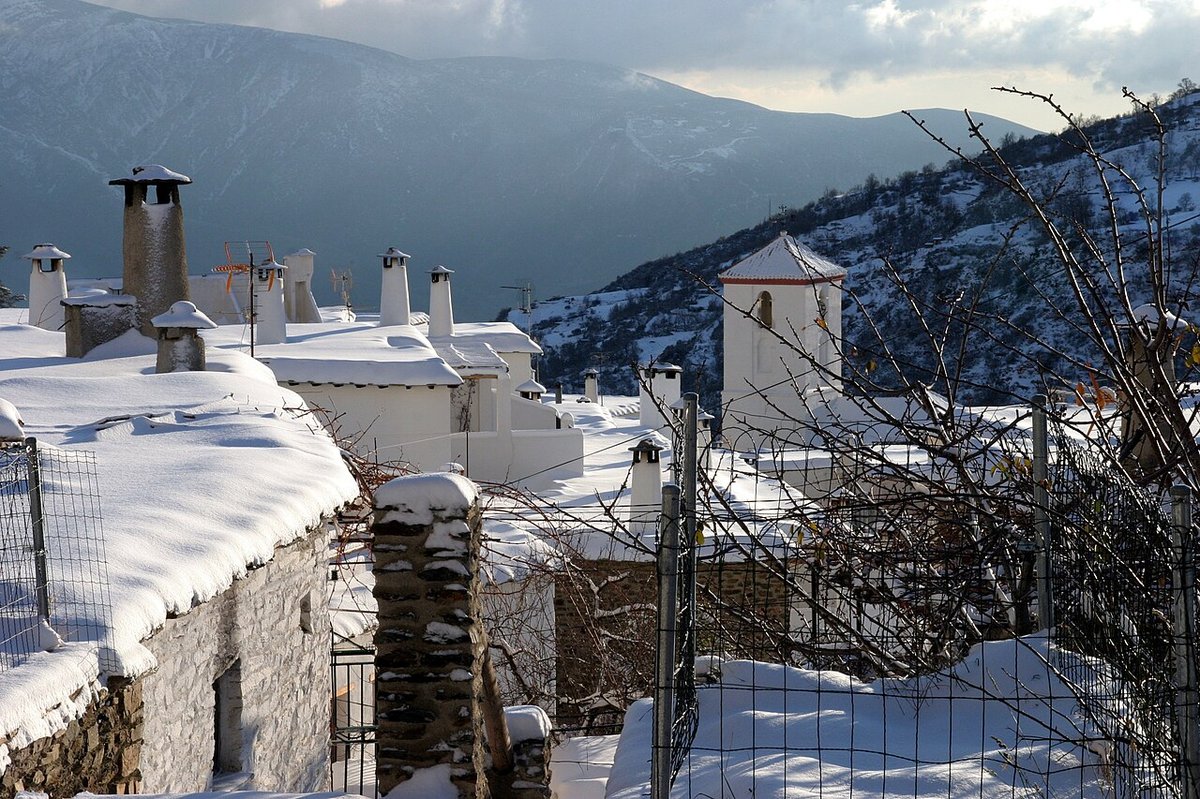
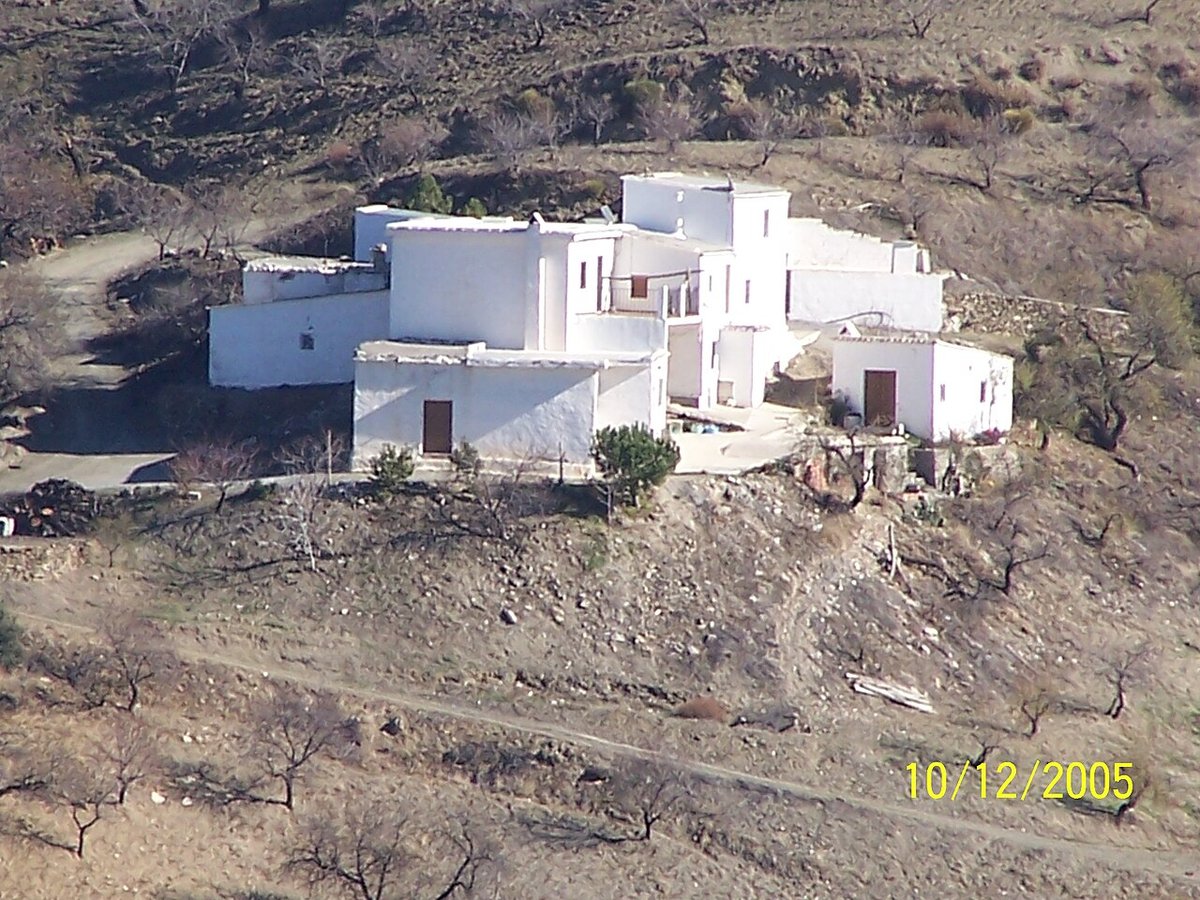
Whitewash here is not postcard icing but weatherproofing, slapped on each spring before the fiestas. The walls are thick, the roofs flat and the chimneys taper like stubby pencils – a North African silhouette that survived the Reconquista almost intact. Narrow lanes climb in flights of staircases so steep that the postman counts them as cardio. House numbers follow no sequence; instead neighbours identify homes by the colour of geraniums or the snore of the resident dog. Public space is whatever lies between door and gutter, which explains why grandmothers mop not only their thresholds but half the street beyond.
The sixteenth-century church of la Encarnación squats at the top of the village, its Mudéjar bell-tower built from the bones of the mosque it replaced. Inside, the ceiling is a wooden jigsaw of star-shaped panels designed to trick the eye into looking upwards – useful when the sermon drifts into dialect. Mass is Sunday at eleven, followed by churros in the bar opposite; turn up late and you will queue behind men who treat coffee as an excuse for loud economics.
Irrigation before Instagram
Walk five minutes past the last house and you meet the acequia mayor, the main irrigation ditch that splits into finger-thin rivulets feeding every terrace on the hillside. Water is allocated by turns, still measured in partes, medieval time slots signalled by church bells. Tourists photograph the system; farmers worry about the level of the reservoir above Busquístar. Abandon the concrete track here and a web of footpaths opens: east to Cádiar along the Río Guadalfeo, west into chestnut forest where wild boar root for acorns, or straight up towards the snowline on a trail that gains 1,200 metres in under eight kilometres. Summer walkers should start at dawn; the sun arrives late but stays brutal until it drops behind the opposite peak at six.
What lands on the plate
There is no menu turístico, only whatever María has decided to cook. Mid-week lunch might be migas – breadcrumbs fried in olive oil with garlic, peppers and the last of last year’s chorizo – served in a dented metal dish that could double as a helmet. Order choto al ajillo and you receive kid goat so tender it slides off the bone, the sauce sharp with mountain garlic and a splash of rough white wine. Vegetarians get olla de castañas, chestnuts stewed with tomatoes and paprika, a dish that tastes like woodland floor meets Sunday roast. Pudding is fresh goat’s cheese drizzled with honey from hives that spend spring among thyme and rosemary. The bill arrives scribbled on the paper tablecloth; expect change from fifteen euros unless you assault the wine list, all three bottles of it.
When the village throws a party
Fiestas are timed to agricultural calendars, not school holidays. The Virgen de la Encarnación is carried through the streets on 15 August while brass bands compete with firecrackers and the scent of plato alpujarreño drifts from every doorway. Semana Santa is quieter: hooded cofradías process by torchlight, the only sound drums echoing off stone and the occasional saeta – a flamenco prayer hurled from a balcony. November brings the matanza, when families slaughter a pig and spend three days turning every gram into chorizo, morcilla and jamón. Outsiders are welcome to watch; vegetarians are advised to go hiking.
Getting there, staying sane
Málaga airport offers more UK flights than Granada and the drive is only twenty minutes longer. Take the A-7 east, swing onto the A-44 towards Motril, then peel off onto the A-348 signed Órgiva. From Órgiva the A-4132 climbs 22 kilometres of hair-pins; meet a bus on a bend and someone has to reverse. Petrol up before you leave the coast – the village pump closed in 1998. Parking is the wide bit at the entrance; anything bigger than a Ford Focus will keep you awake at night.
Accommodation is thin: two self-catering cottages and a room above the bar, all booked by word of mouth. Email the ayuntamiento and they will forward your enquiry to whoever has keys. Bring cash (the nearest ATM is in Cádiar, 12 kilometres down the valley) and a torch – street lighting stops at 23:30 sharp. Mobile signal vanishes inside two-metre-thick walls; step into the square for four bars of 4G and a view that stretches to the Mediterranean on a clear day.
The catch
Almegíjar is not for everyone. The only pool is the concrete trough at the animal watering station, the nearest beach is 45 kilometres away and July temperatures can park themselves above 38 °C for weeks. If you need nightlife beyond the bar’s Tuesday domino league, stick to the coast. But for walkers happy to share a trail with goats, or readers who measure luxury by silence, the village offers a contract: tread lightly, speak softly and you can watch a corner of Europe carry on as if Ryanair never happened. Break the deal – demand soya milk, complain about the church bells – and the mountains will simply swallow the sound.