Full Article
about Bubión
One of Spain’s prettiest villages; perfectly preserved Berber architecture in the Barranco de Poqueira with stunning views.
Ocultar artículo Leer artículo completo
The cats of Bubión appear before the village does. They lounge on warm stone walls, stretch across narrow alleys, and watch from terraos—those flat roofs that crown every white house—like furry sentinels. At 1,300 metres above sea level, this Alpujarran village has earned their approval, and perhaps that's recommendation enough.
Three Villages, One Gorge
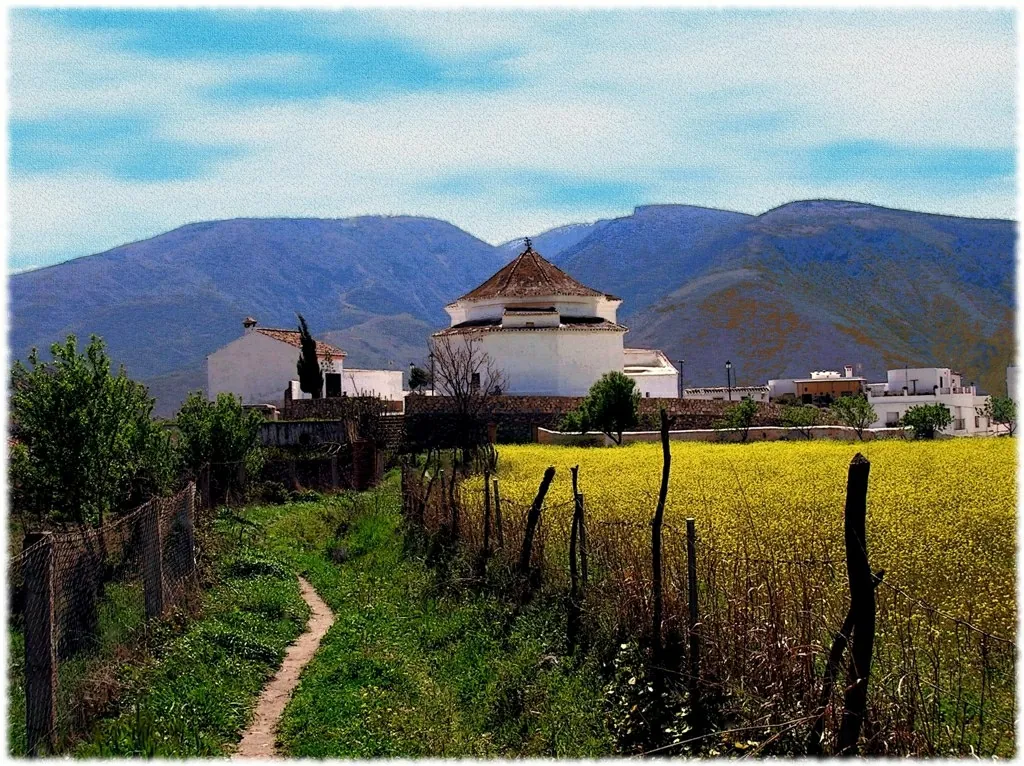
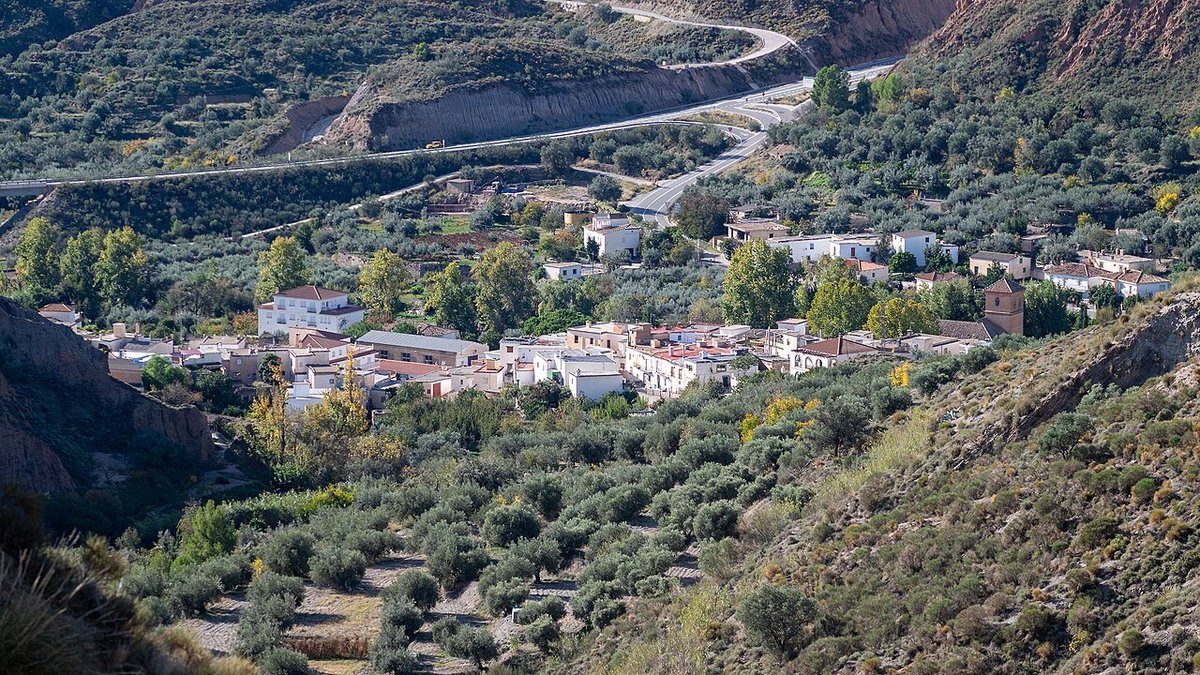
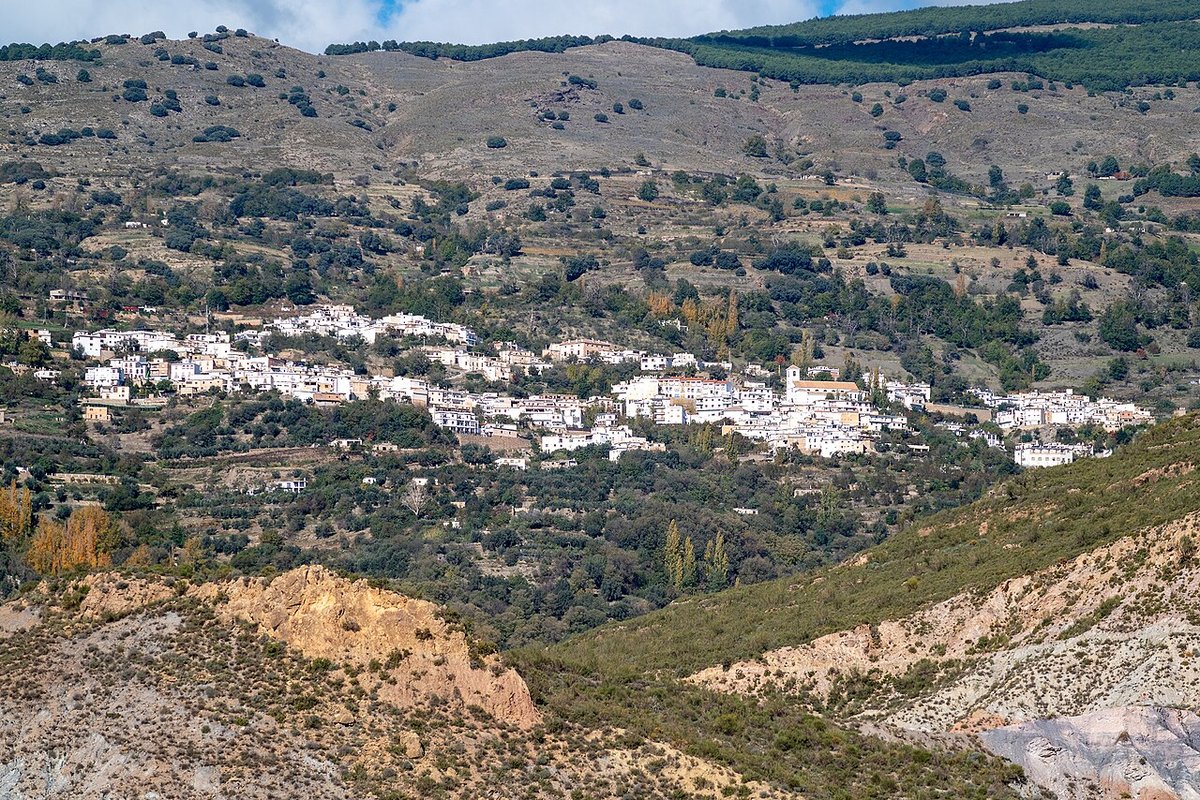
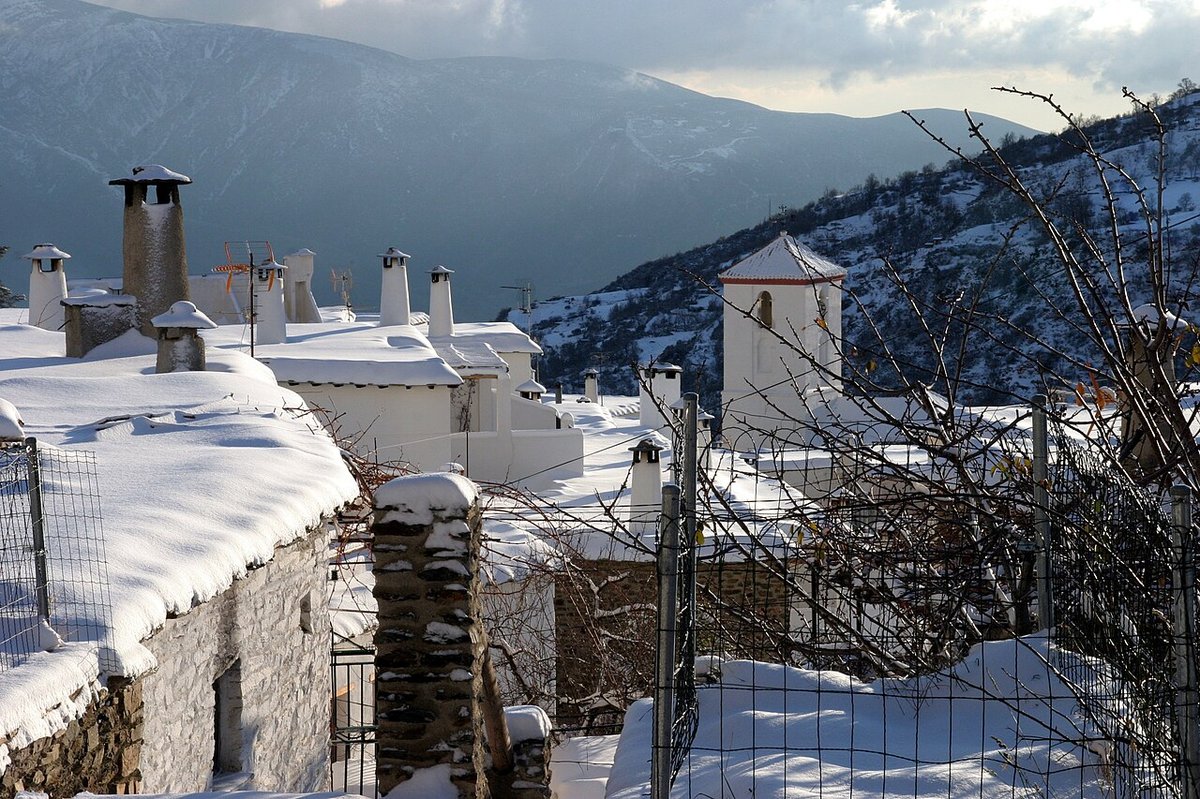
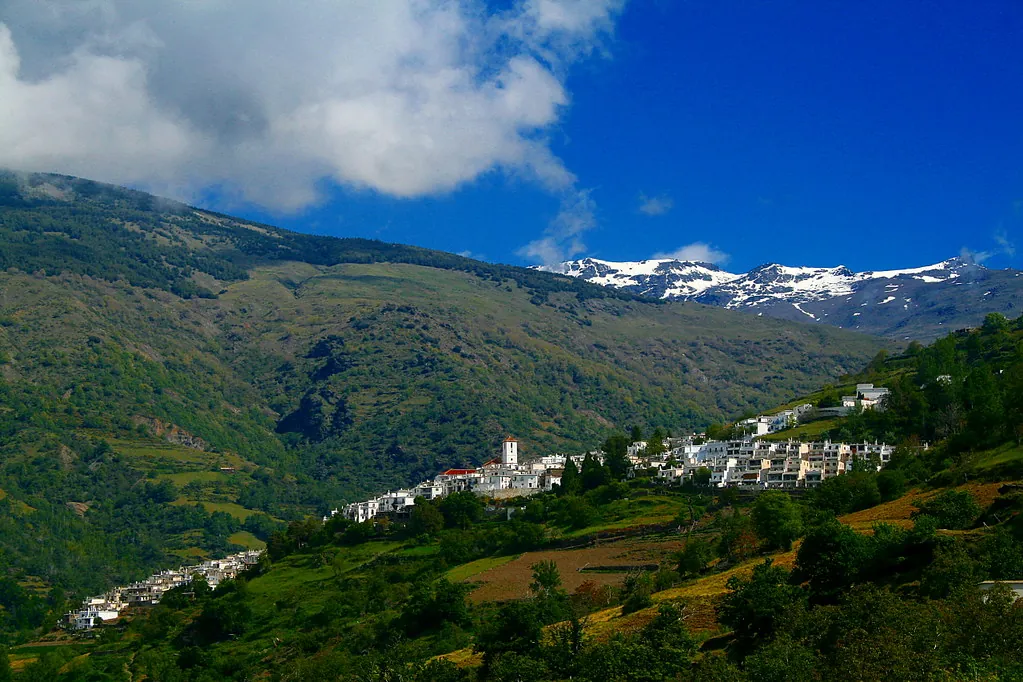
Bubión sits midway between Capileira and Pampaneira in the Poqueira Gorge, a slash in the Sierra Nevada so deep that Mediterranean light seems to arrive by special delivery. The village spills down a south-facing slope in two distinct neighbourhoods—Barrio Alto and Barrio Bajo—connected by streets that would give a mountain goat pause. Houses stack against each other like sugar cubes, their thick walls whitewashed annually, their chimneys tapering into the distinctive truncated cones that betray the area's Berber heritage.
The relationship between these three villages defines daily life here. Locals pop between them for specific shops, particular bars, different festivals. Walking the Senda de los Molinos, an old mill path that threads along irrigation channels, takes forty minutes to Pampaneira or thirty-five upwards to Capileira. No rush. The acequias still run with snowmelt, channeled by Moorish engineers centuries ago, and the ruined mills stand as monuments to when grain mattered more than tourism.
What Passes for a Centre
The Plaza del Rosario measures barely thirty metres across, yet contains Bubión's entire social universe. Elderly men cluster on benches beneath plane trees, women gossip while heading to the tiny Spar shop, and children kick footballs against the sixteenth-century church wall. Inside Iglesia del Rosario, the air smells of wax and centuries. The Mudéjar tower bells ring the hours slightly off-kilter, as if time itself runs differently at altitude.
Evenings see the plaza transform into an informal dining room. Tables from Bar El Cascapeles spill across the stones, their owners serving plates of jamón de Trevélez so thin you could read the Sur in English through them. Free tapas remain genuinely free here—order a caña for €1.80 and receive a plate of migas (fried breadcrumbs with chorizo) substantial enough to postpone dinner indefinitely. The neighbouring bar, La Tahona, competes with potato tortillas the size of cartwheels. Weight-watchers, you've been warned.
Mountain Logic
Walking here requires recalibration. Distances mean nothing; gradient is everything. The GR7 long-distance path passes straight through Bubión, its red-and-white waymarks leading south towards the Mediterranean or north into the high Sierra. Day-trippers favour the gentle 4-kilometre circuit to Capileira via the Camino de los Neveros, where ice-men once hauled snow blocks to coastal cities. Serious hikers stock up on queso alpujarreño and set their sights on Mulhacén, mainland Spain's highest peak, a demanding full-day pull from the village.
Weather operates by mountain rules. July afternoons might touch thirty degrees, but night-time temperatures plummet to fifteen. January brings proper cold—pipes freeze, snow closes the higher paths, and the village cats disappear into haylofts. Spring arrives late but spectacular, when almond blossom foams across terraces abandoned since agricultural subsidies dried up. October delivers the Fiesta de la Castaña, when chestnuts roast in the square and someone inevitably sets fire to a tree. The smoke drifts up towards Veleta, where snow caps gleam year-round like broken teeth.
The Access Tax
Getting here demands commitment. From Granada, the A-4132 twists through Órgiva before launching into forty kilometres of hairpins. The final approach narrows to single-track with passing places—Spanish driving etiquette applies, meaning locals barrel through while visitors reverse nervously towards precipices. Coaches can't manage the final bend, which explains why Bubión remains quieter than its neighbours even in August. Arrive after dark and the village feels medieval; street lighting stops at Barrio Bajo, and GPS signals disappear entirely.
Parking requires strategy. Twelve spaces sit at the top near the main road, another eight halfway down. Miss these and you're committed to streets designed for donkeys, not Fiat Puntos. Accommodation owners will collect luggage in 4x4s, but expect a calf-burning climb back to your car each morning. The upside? Once parked, everything lies within stumbling distance. The downside? That includes several bars serving lethal local grappa at €2 a shot.
Practical Mountain Mathematics
Bubión runs on siesta time. Shops open 09:00-14:00, then 17:00-20:30. The bakery sells out of bread by 10:30. The ATM—singular—frequently displays "sin fondos" on Sunday evenings when weekenders from Granada have drained it. Cash matters. Cards work in hotels and some restaurants, but the bakery, butcher and tiny grocery operate cash-only. Stock up in Órgiva before the climb.
Accommodation clusters in the lower streets, converted village houses with wood-burning stoves and roof terraces offering sunrise over the Contraviesa mountains. Prices range from €60 for a two-person apartment to €140 for boutique houses with plunge pools (optimistic given the altitude). Most places close November-March; those that stay open offer discounts but accept that restaurants may operate limited hours.
Wi-Fi exists, theoretically. The library offers free connections when open, two bars have passwords written on blackboards, but mountain weather disrupts signals like everything else. Consider it a feature, not a bug. The cats certainly approve.
When to Fold
August brings Spanish families and higher prices. Easter swells the village with processions and brass bands practising at 07:00. December through February can feel desolate—beautiful, but desolate. Many restaurants close, hiking trails ice over, and that charming wood-burner suddenly seems insufficient against stone walls designed for summer heat.
Come anyway in winter if you crave solitude. The gorge empties, snow outlines every terrace wall, and the silence feels almost physical. Just pack layers, walking poles and a sense of humour. The cats will still be there, guardians of a village that refuses to hurry for anyone, where the Sierra Nevada meets the sky and time moves to mountain rhythm rather than human clocks.