Full Article
about Cádiar
Commercial hub of the Alpujarra media; known for its wine fountain during the feria and its strategic setting among mountains.
Hide article Read full article
On the edge of the town, on a clear winter morning, the smell of damp earth mixes with fresh bread coming out of an early oven. From there, narrow and steep streets climb towards the church of Santa María la Mayor. Its tower appears and disappears between corners, a reference point people use to find their way. In Cádiar, the day begins slowly: half-open shutters, a parked car beside an acequia, voices greeting each other from one doorway to another.
A hillside town in La Alpujarra
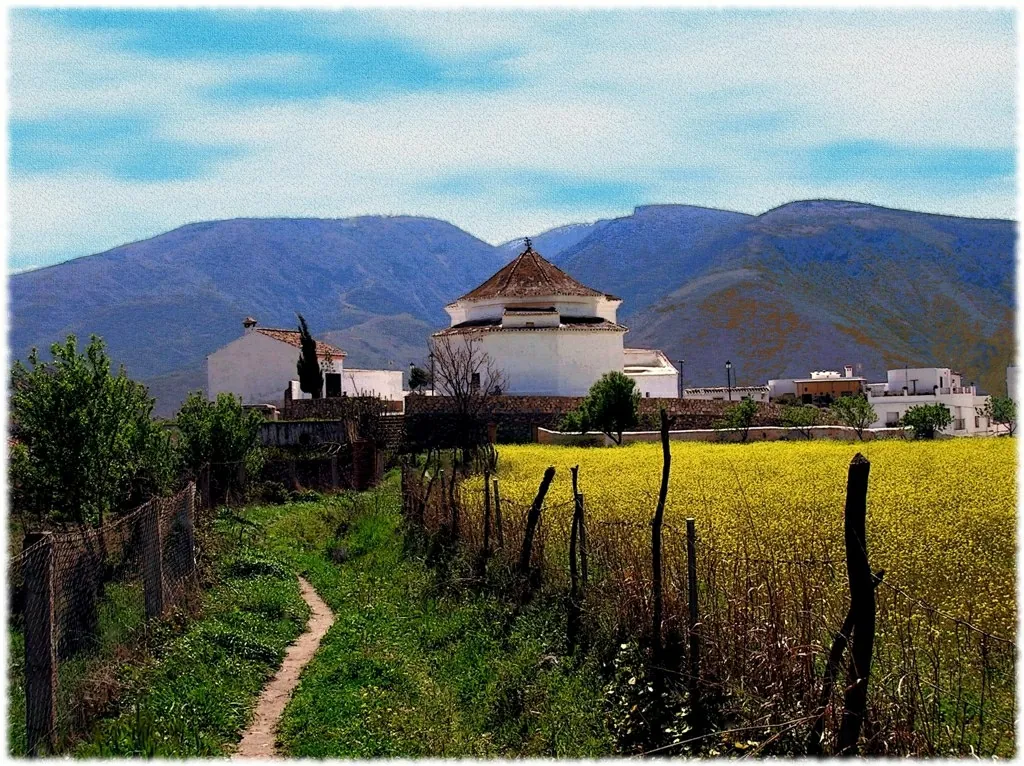
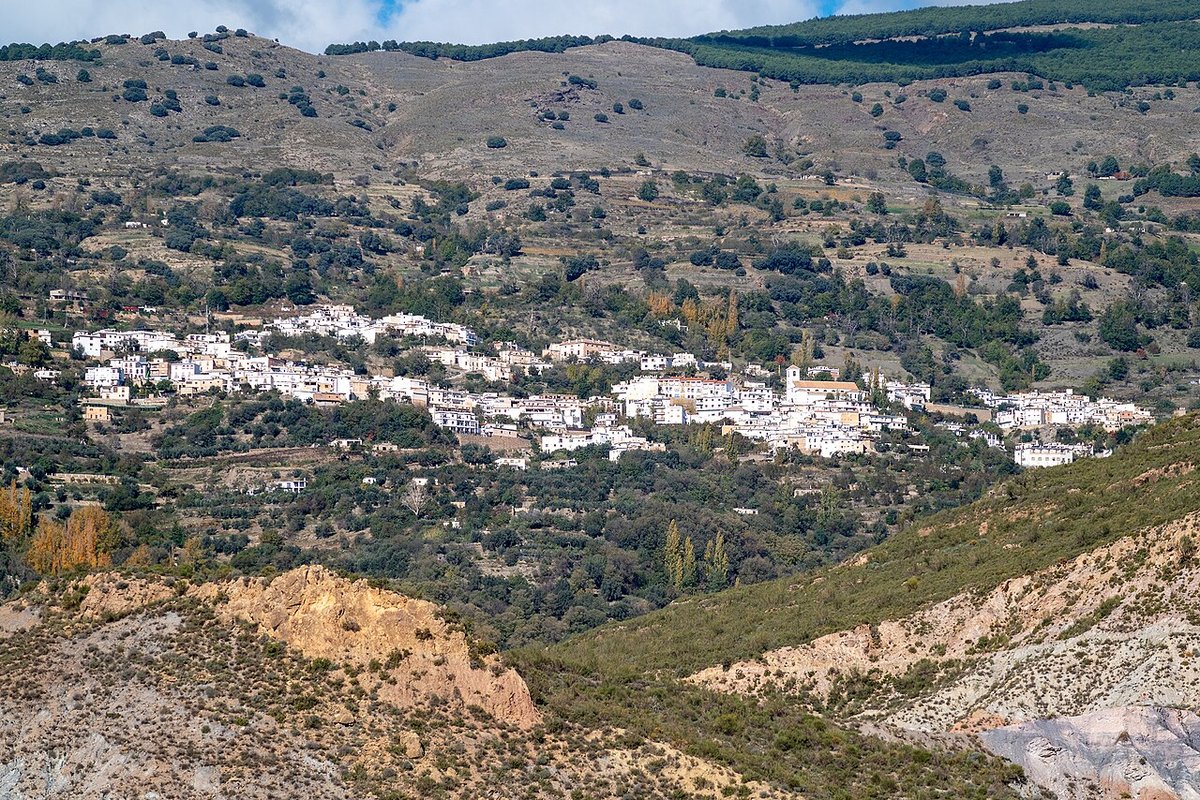
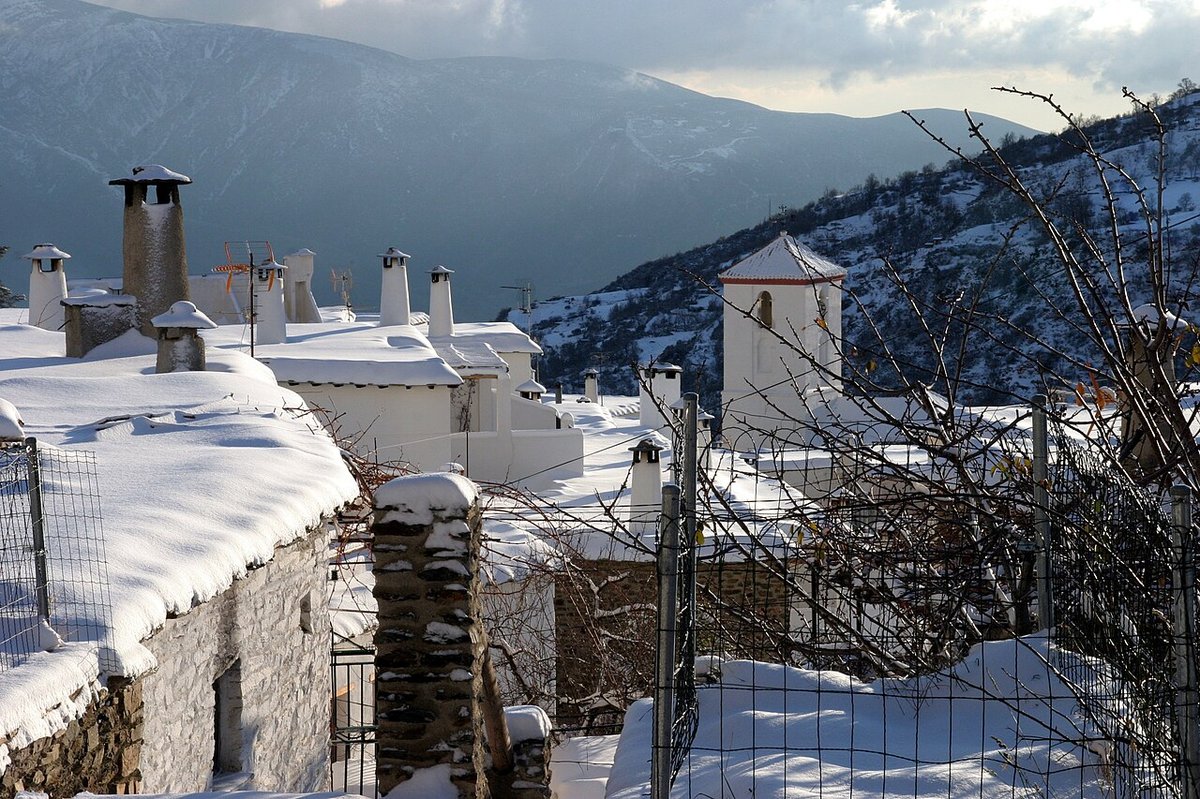
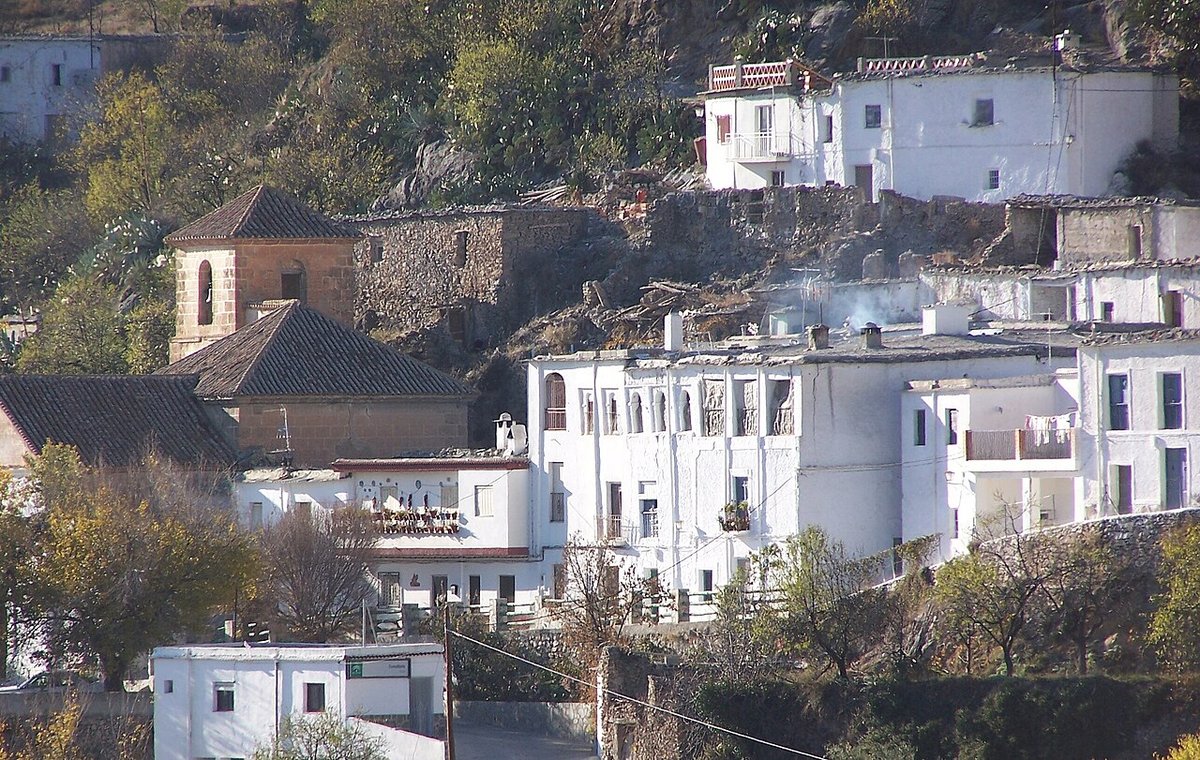
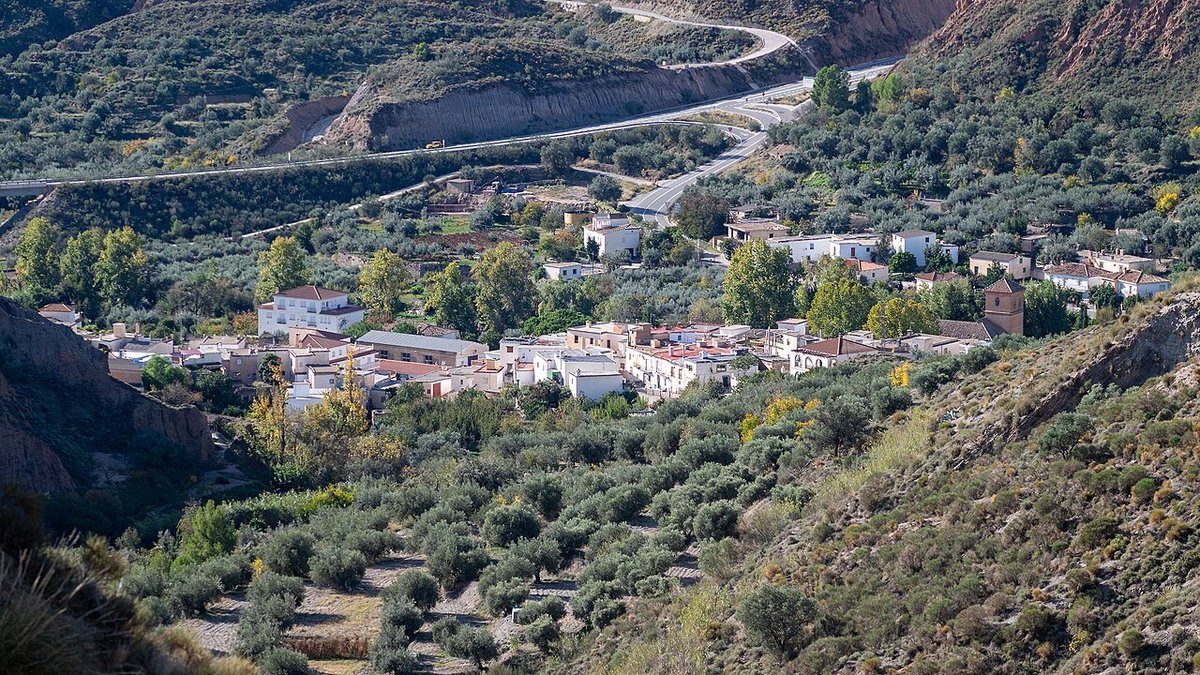
Cádiar spreads across a slope in the Alpujarra Granadina, just over 900 metres above sea level. From a distance, the layout is easy to read: stepped white houses, terraced plots and ravines descending towards the valley of the Guadalfeo. When the sun hits at an angle, the limewashed walls take on a faint golden tone, and the cylindrical chimneys stand out against the sky.
Many homes still show features inherited from Moorish architecture. Flat roofs, small passageways and tinaos, those covered galleries that sometimes cross above the street, create shaded areas that are especially welcome in summer. It is common to see firewood stacked beneath them or tools leaning against a wall.
Around the town, many old terraces are still in use. Almond trees, a few walnut trees and small vegetable plots occupy levels held in place by dry stone walls. These structures have been here for generations. Look closely and each plot reflects the work that has shaped these slopes over time.
The rhythm of the squares
With just over 1,400 residents, Cádiar keeps a steady, unhurried pace even on working days. By mid-morning, conversations gather in the squares or at corners where the sun reaches. The sound of water from a nearby fountain blends into that quiet background murmur found in many towns of La Alpujarra.
Summer brings heat, though the altitude often softens the afternoons. In winter, the cold becomes noticeable as soon as the sun drops behind the mountains. At that time of year, warm clothing is useful even for an evening walk.
Paths along acequias and terraces
One of the clearest ways to understand Cádiar is to walk the paths that surround the town centre. Some follow old acequias of Andalusian origin, still used to channel water to the crops. The sound of running water accompanies much of the route.
These are not long walks, though some stretches are quite steep. Good footwear and some water are usually enough for moving along these paths. In autumn, when chestnut trees begin to shed their leaves, the ground crunches underfoot and the air carries a faint scent of damp wood.
From certain higher points, much of the valley comes into view, along with the cultivated slopes that surround the town. It is a landscape shaped more by agriculture than by monuments.
Seasonal cooking and traditional slaughter
Local cooking remains closely tied to what the land provides and to long-standing customs. In winter, more filling dishes appear, such as migas de pan, often served with products from the matanza, the traditional home slaughter. Cured sausages prepared in households are also common, along with slow-cooked stews.
Goat’s milk has played an important role in the area for a long time, so cheeses with strong, lingering flavours are easy to find.
Festivities that bring people back
In August, during the celebrations dedicated to Santa María la Mayor, the pace of the town shifts. Many families who live elsewhere return for those days, and the streets fill again with familiar faces. There are processions, music and long gatherings in the squares.
In January, San Antón is usually marked with bonfires and the blessing of animals, a custom closely linked to the area’s pastoral past. As night falls, the smell of burning wood lingers in the streets.
Before you go
If visiting Cádiar in the height of summer, it is worth starting the day early to walk through the old centre while the streets are still shaded. From midday onwards, the sun falls directly on many of the slopes.
It is often easier to leave the car in the more open parts of town and continue on foot. Streets in the centre are narrow, and some inclines feel longer than they first appear from below. This is a place best understood at a slow walking pace.