Full Article
about Capileira
The highest village in the Poqueira Gorge; a historic-artistic site with Berber architecture and starting point for Mulhacén.
Hide article Read full article
Early in the morning, while the sun is still climbing over the crest of Sierra Nevada, Capileira sits half in shadow. The whitewashed façades throw back a cool light and the steep streets are almost empty. A door opens somewhere, a broom brushes against stone, and little else disturbs the quiet. This is how many days of tourism in Capileira begin, before cars wind their way up from the bottom of the valley.
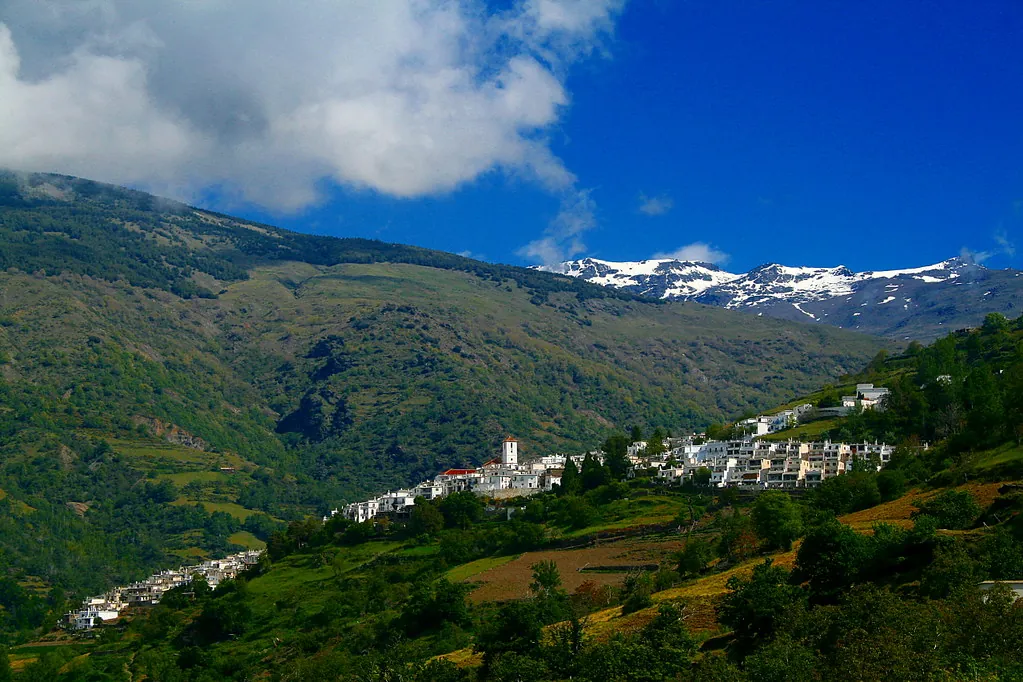
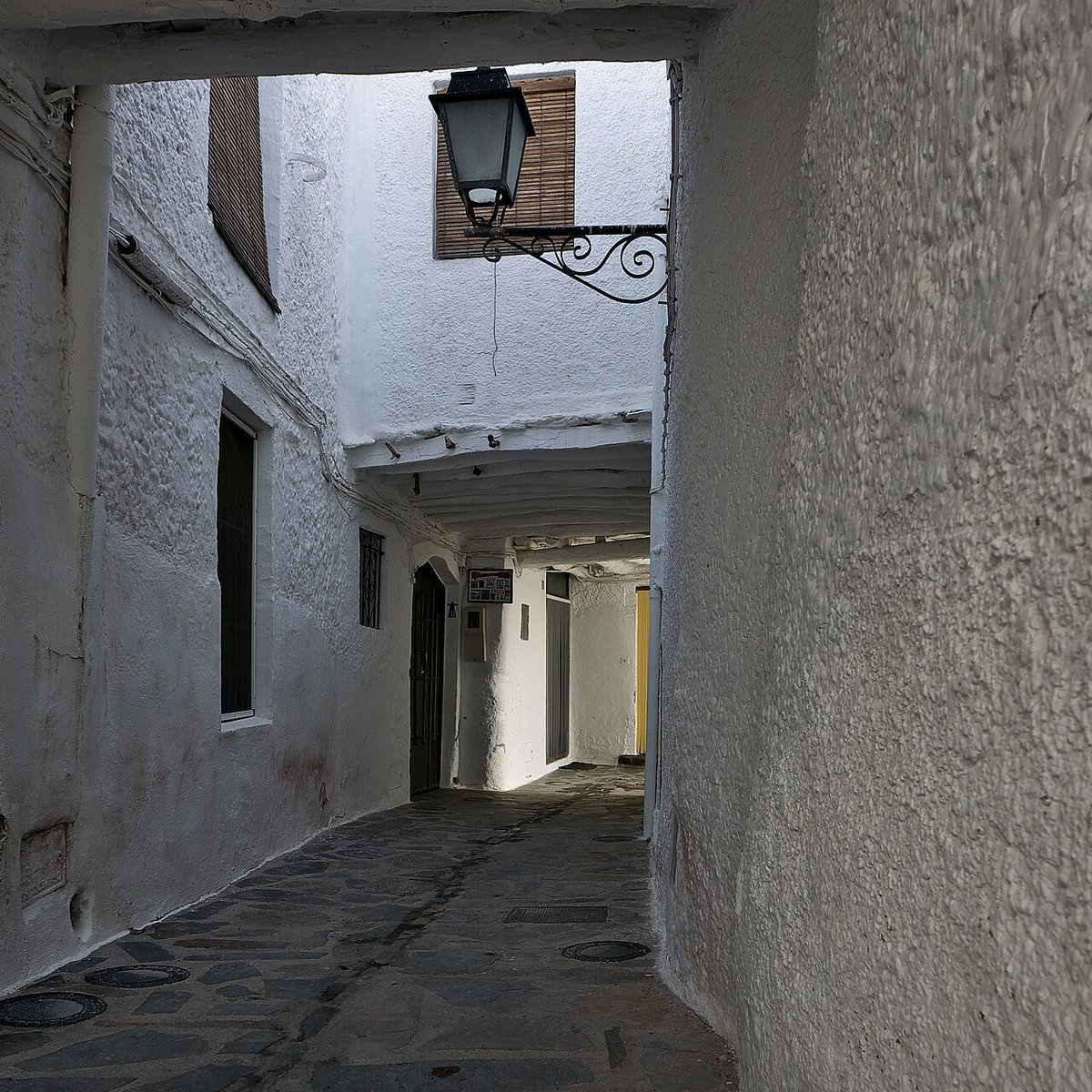
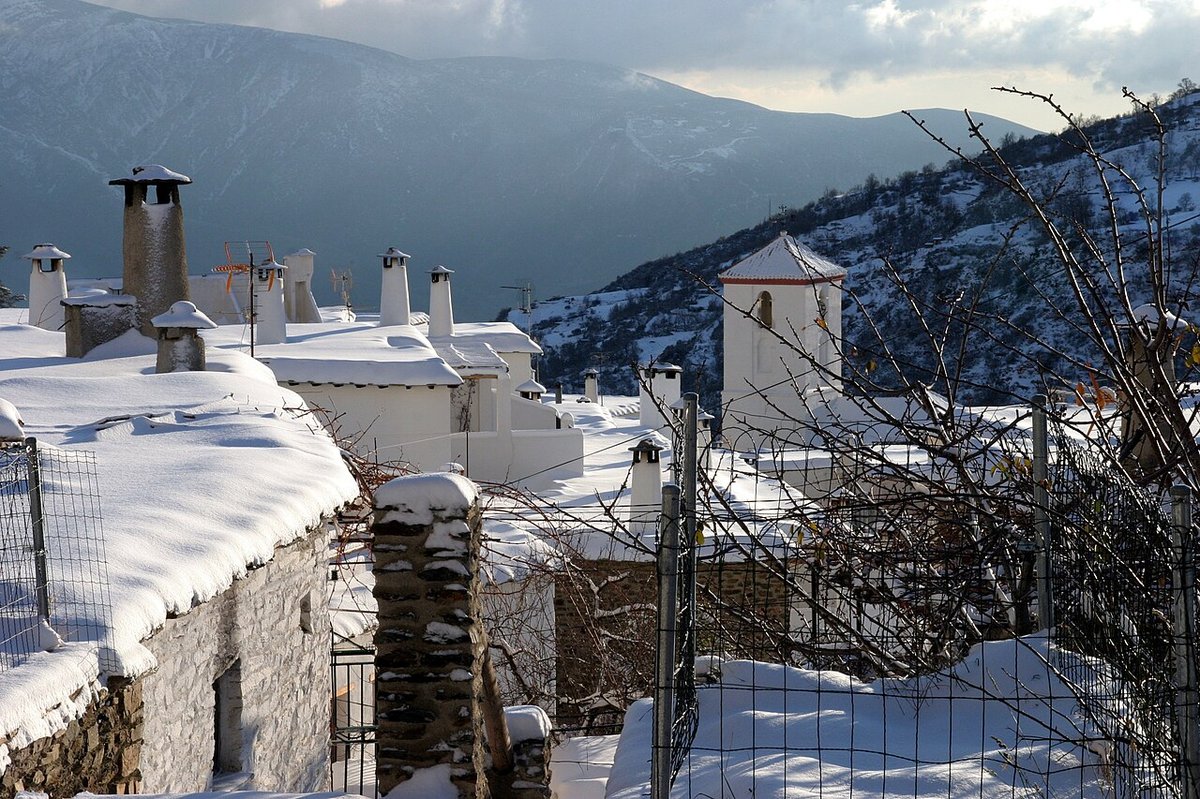
The village stands at 1,436 metres above sea level, clinging to the upper slope that closes the Barranco del Poqueira. The light here is hard and clear. It picks out the rough texture of lime plaster, the dark wooden beams beneath the tinaos, and the flat roofs known as terraos, designed to collect water when the winter rains arrive.
A Village Built on a Slope
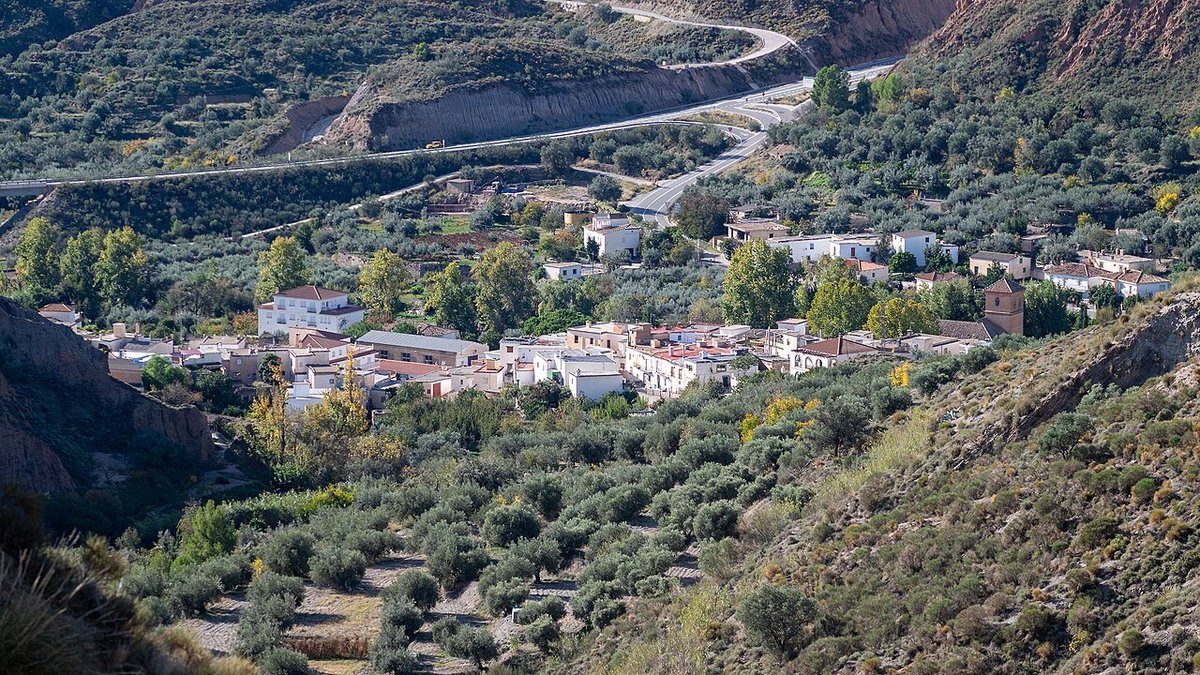
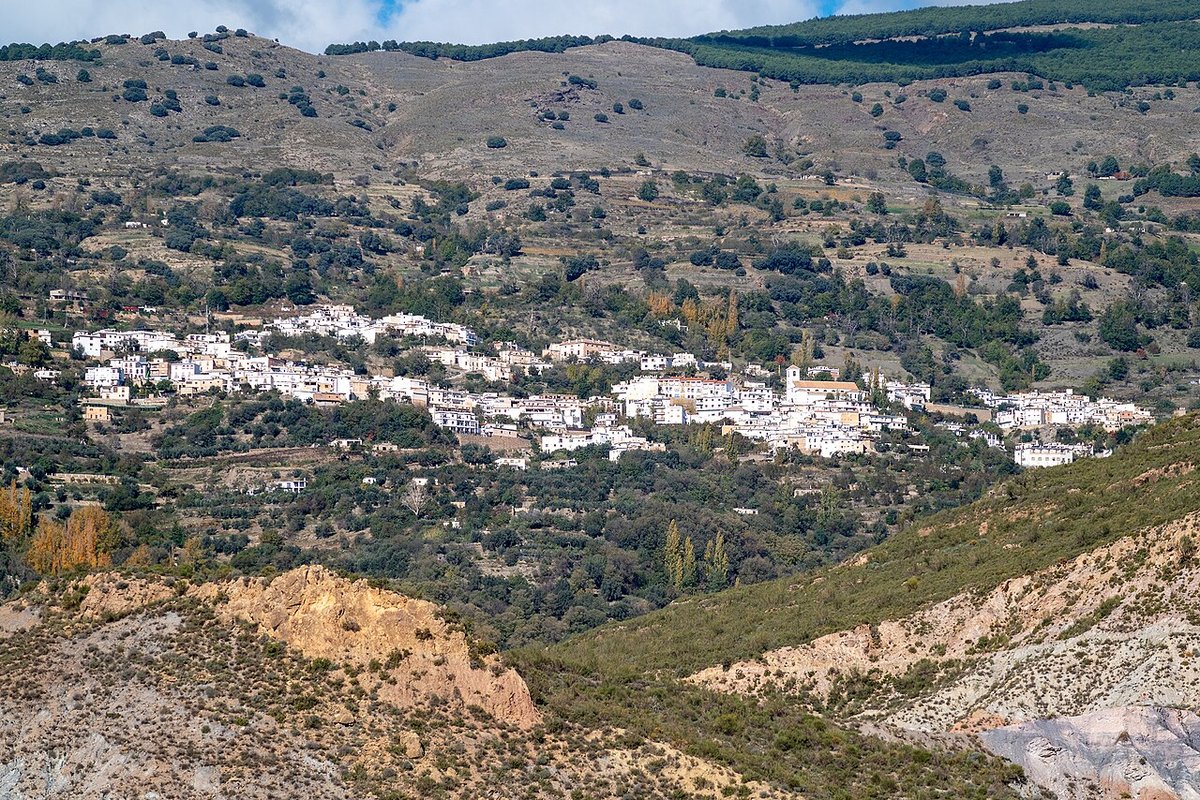
Capileira forms part of the historic ensemble of the barranco, together with Bubión and Pampaneira. The three villages appear staggered along the same hillside, one above the other, following the course of the Río Poqueira.
In the old quarter, the streets are narrow and steep. Some zigzag downhill; others end abruptly at a small viewpoint or a tucked-away courtyard. The houses preserve features typical of Alpujarran architecture: low doorways, small windows to keep out the cold, and cylindrical chimneys rising above the terraos.
Walking here calls for patience. The paving can be uneven and short steps appear without warning. It is a place to move slowly, noticing how the buildings adapt to the gradient rather than trying to resist it.
The arrangement of the three villages along the slope makes their relationship easy to read from a distance. Capileira sits highest, with Bubión and Pampaneira below, their rooftops stepping down towards the river. The setting explains much about daily life here, shaped by altitude and by the long winter that reaches this part of the Alpujarra.
Looking Over the Barranco
At the upper edge of the village lies the Mirador del Calvario. From this viewpoint, the barranco opens out suddenly. Agricultural terraces score the mountainside, and far below lie the roofs of Bubión and Pampaneira.
On very clear days, some say it is possible to make out a faint line of sea to the south. What stands out more immediately is the sense of height. The valley floor lies several hundred metres below, and when the wind drops the silence feels sharply defined.
It is worth coming up early in the morning or towards the end of the afternoon. At midday the light falls almost vertically, flattening the landscape and softening the relief that gives the barranco its character.
From this vantage point, the structure of the land becomes clear: terraces built to hold soil on the incline, paths threading between plots, and the white volumes of the villages contrasting with darker vegetation. The view is not elaborate, yet it conveys the scale of the terrain and the effort required to inhabit it.
Walking Out from Capileira
The walking routes begin almost as soon as the last houses fall away. Many follow ancient acequias, irrigation channels that still carry water from the high sierra down to the orchards in the barranco.
One of the most common routes links Capileira with Bubión and Pampaneira along stone-paved paths used for centuries by farmers and shepherds. The trail crosses terraced fields, small bridges and areas shaded by chestnut trees. The route reflects a time when these paths were essential connections rather than leisure walks.
Longer routes also depart from the area around the village, heading towards the peaks of Sierra Nevada. The ascent of Mulhacén, the highest summit on the Iberian Peninsula, is often organised from this area or nearby points. It is not something to improvise. The difference in altitude is considerable, and weather conditions in the sierra can change quickly even in summer.
Shorter walks descend towards the Río Poqueira. Along the way, small waterfalls appear, open irrigation channels run beside the path, and dry stone walls still mark the boundaries of former cultivated plots. These lower routes give a closer sense of how water has shaped both the landscape and local agriculture.
Whether heading up towards the high mountains or down to the river, the surroundings remain closely tied to traditional land use. The acequias in particular are a reminder that this is a worked landscape, not simply a dramatic backdrop.
Mountain Food
Local cooking is closely linked to the climate and to agricultural work. The dishes are substantial, designed for long days outdoors.
Migas alpujarreñas are frequently on the menu, as is choto al ajillo, kid cooked with garlic. Older methods of preserving and preparing meat are still remembered, including lomo en orza, pork loin stored in seasoned fat to keep through the colder months. After walking through the barranco, these dishes often feel more restorative than expected.
The food reflects practical needs: warmth, energy and ingredients that keep well through winter. It is straightforward cooking with deep roots in the rhythms of the mountain.
Trades and Celebrations
Small workshops still operate in the village, producing textiles, ceramics or forged metal pieces. These are modest spaces, often located on the ground floors of old houses. If the door is open and the artisan at work, it is sometimes possible to glimpse part of the process from the street.
The calendar of festivities remains closely tied to local traditions. The celebration of the Virgen de la Cabeza usually takes place at the beginning of August, bringing together residents and those who return to the village for those days. In autumn comes the season of chestnuts, when the chestnut groves in the barranco begin to change colour and gatherings are organised around the fire.
During Semana Santa, Holy Week in the run-up to Easter, processions move through the cobbled streets without elaborate staging. The religious floats, known as pasos, climb slowly up the slopes, and the clearest sound is often that of shoes striking stone.
Capileira keeps its own pace, shaped by the mountain and by a long winter. The effect is noticeable as soon as one arrives: here, everything happens a little more slowly. In a village suspended at this height above the Barranco del Poqueira, that rhythm feels entirely in keeping with its surroundings.