Full Article
about Juviles
Small Alpujarra town famous for its ham; it preserves the remains of a medieval fort and an unspoiled rural atmosphere.
Hide article Read full article
A place where not much happens, in a good way
Tourism in Juviles feels a bit like visiting a friend in a small village who shrugs and says, “there’s not much here, but it’s nice”. Then you end up chatting for two hours outside their door without once checking the time. That same easy rhythm settles in here.
There are no vast monuments or crowds holding phones aloft. Instead, there are quiet streets, the soft sound of acequias, traditional irrigation channels that run through the Alpujarra, and a kind of silence that has become surprisingly rare.
Juviles is one of those places where the simplest plan works best: walk slowly and see what turns up at the next corner.
A village clinging to the slope
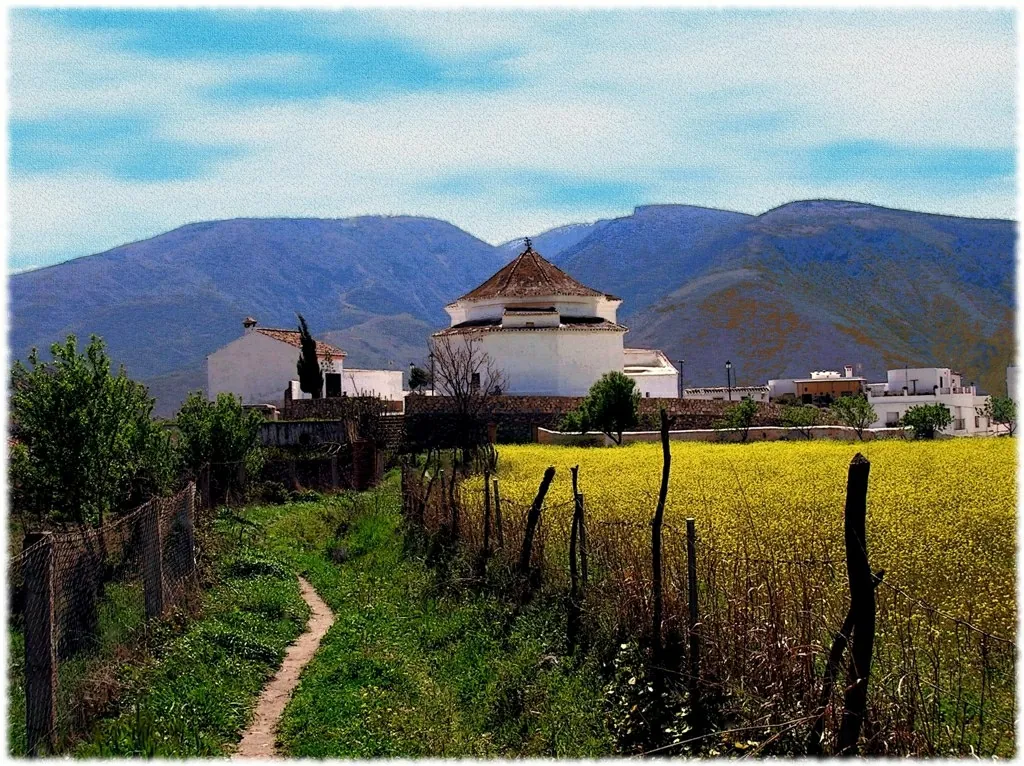
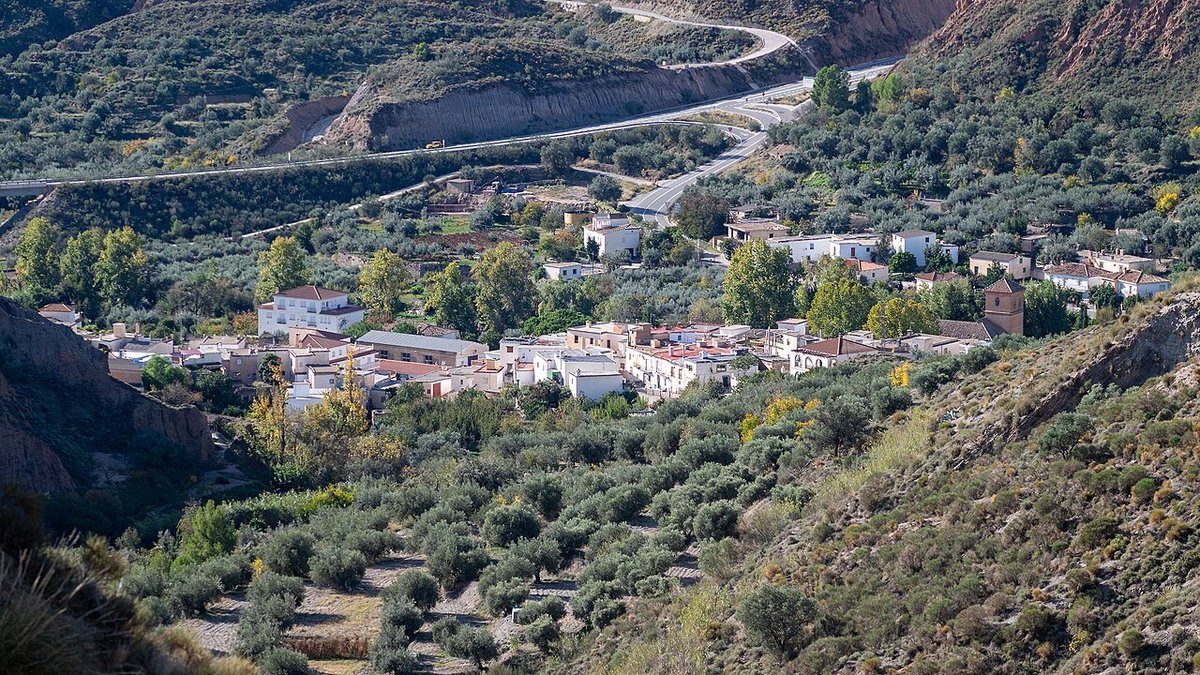
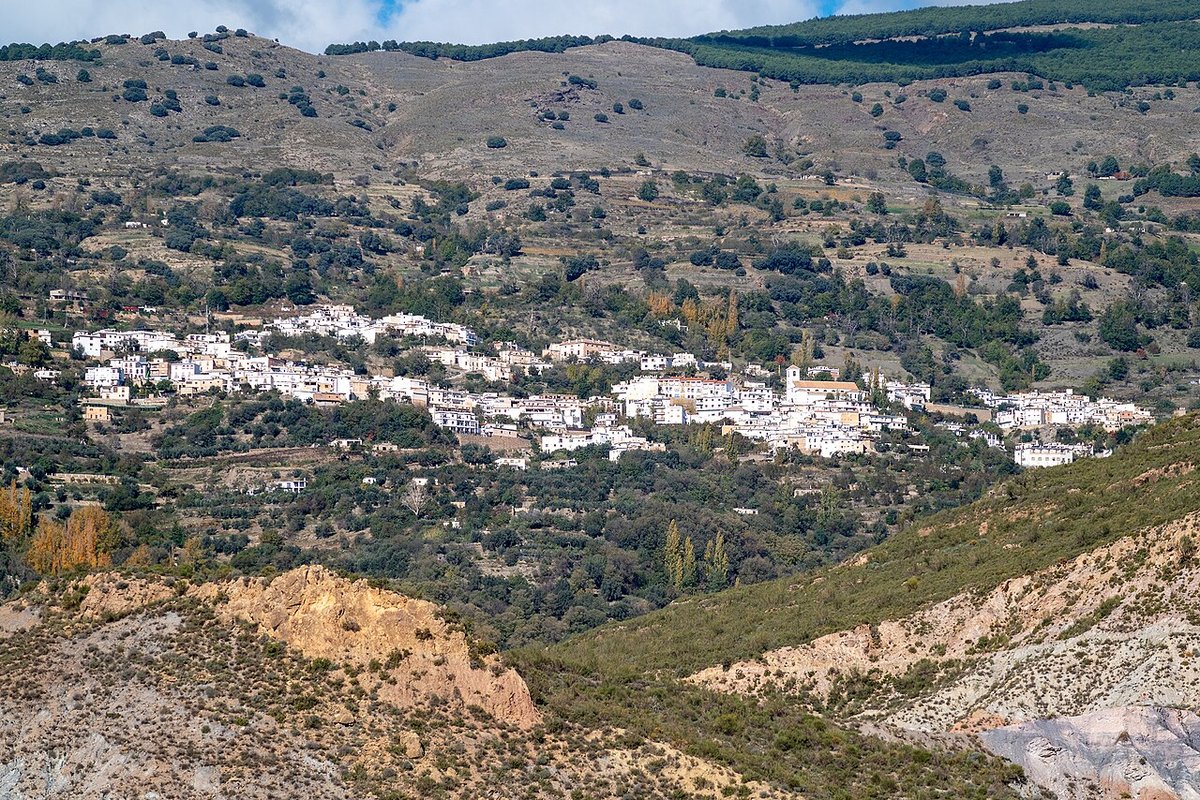
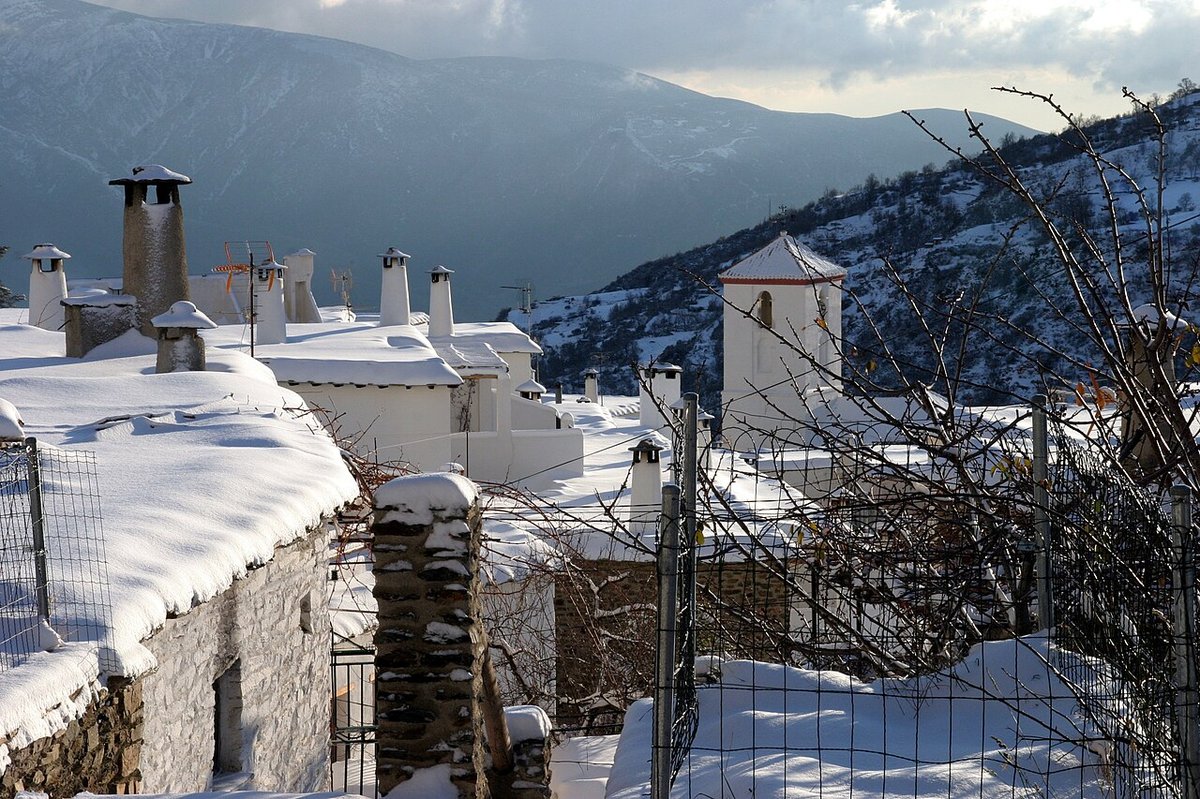
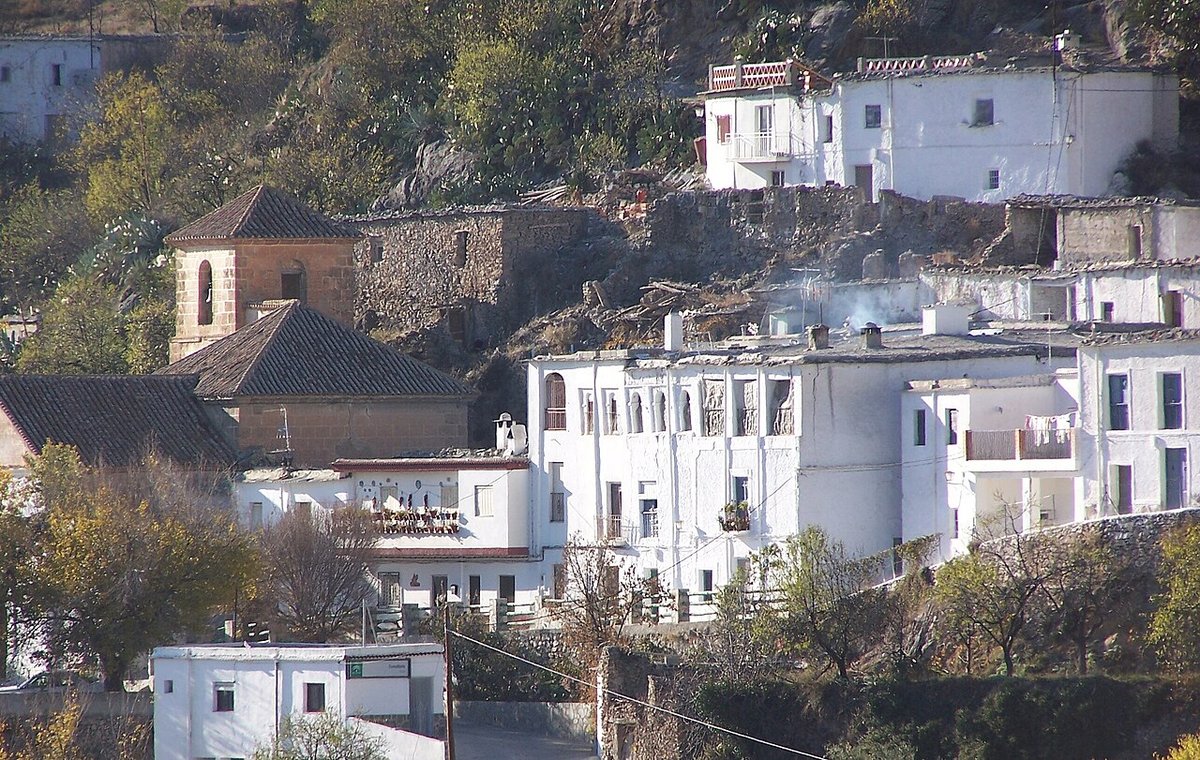
The village sits on the hillside as if it has been carefully balanced there. Everything tilts towards the valley below. Houses stack one above the other, with whitewashed walls, iron balconies and the cylindrical chimneys typical of the Alpujarra.
There are not many streets, and it does not take long to get your bearings. The layout is compact, with cobbled stretches and short alleyways. One moment you step into a small square, the next you find yourself at an improvised viewpoint tucked between houses.
Walking here feels a bit like rummaging through an old storage room. Details keep appearing. A worn wooden door, a vine climbing up a façade, pots of geraniums being watered as evening sets in. Nothing is arranged for display, but that is part of the appeal.
Santa Ana and the heart of the village
The church of Santa Ana acts as a visual anchor. It is not especially large, yet its tower can be seen from different points around the village. It works almost like a reference point, something you keep returning to as you wander.
The area around the church opens up more than the surrounding streets. From here, the cultivated slopes of the valley become easier to read. Terraced fields step down the hillside like the seating of a rural stadium, except here the tiers hold almond trees, small plots and freshly turned earth.
Inside the church, some older elements have been preserved. Nothing overwhelming, but enough to hint at the many historical layers that have passed through this part of Andalucía.
Walking among terraces
For those who enjoy walking, there are several simple paths around Juviles. These routes have long been used by farmers and local residents moving between plots of land.
One of them, known as the Sendero de los Bancales, helps explain how this landscape has been worked over generations. The stone terraces hold the soil in place much like shelves hold books. Without these walls, the slope would struggle to withstand heavy rain.
Signposting should not be taken for granted. In some sections it is limited, and after strong rainfall the paths can change noticeably. It adds a slightly unpredictable edge to what are otherwise gentle walks.
Eating from the surroundings
Juviles is small, very small. Shops are not always open every day, so many visitors arrive with something in their bag or combine the visit with nearby villages.
Across the area, jamón serrano has long been well regarded. There are also cheeses made in small local productions and olive oil from nearby mills.
It is the kind of food that fits naturally after a walk. The sort of simple meal that tastes better than expected once you have spent time outdoors.
Celebrations that bring people back
Festivities here are straightforward and rooted in local life. The fiestas of Santa Ana, usually held in July, bring together many residents, including those who live elsewhere and return for these days.
There are processions, music and shared food. Rather than something designed for visitors, it feels more like a large family gathering where everyone ends up greeting someone they know.
During the summer there are often other celebrations across the wider area. At those times, the usual calm rhythm of the village shifts slightly, becoming more animated without losing its character.
The road into Juviles
The journey from Granada usually takes around an hour and a half, depending on traffic and road conditions. The final stretch involves plenty of bends, the kind of mountain drive where progress slows more than expected.
That approach is part of the experience. As the road climbs, the landscape opens out and the white villages of the Alpujarra appear, clinging to the slopes.
By the time Juviles comes into view, the place begins to make sense. It is small, yes, but it moves at a pace that feels far removed from constant notifications and screens. Here, time seems to loosen its grip, just enough for a slower way of being to take over.