Full Article
about La Taha
Municipality made up of Pitres
Ocultar artículo Leer artículo completo
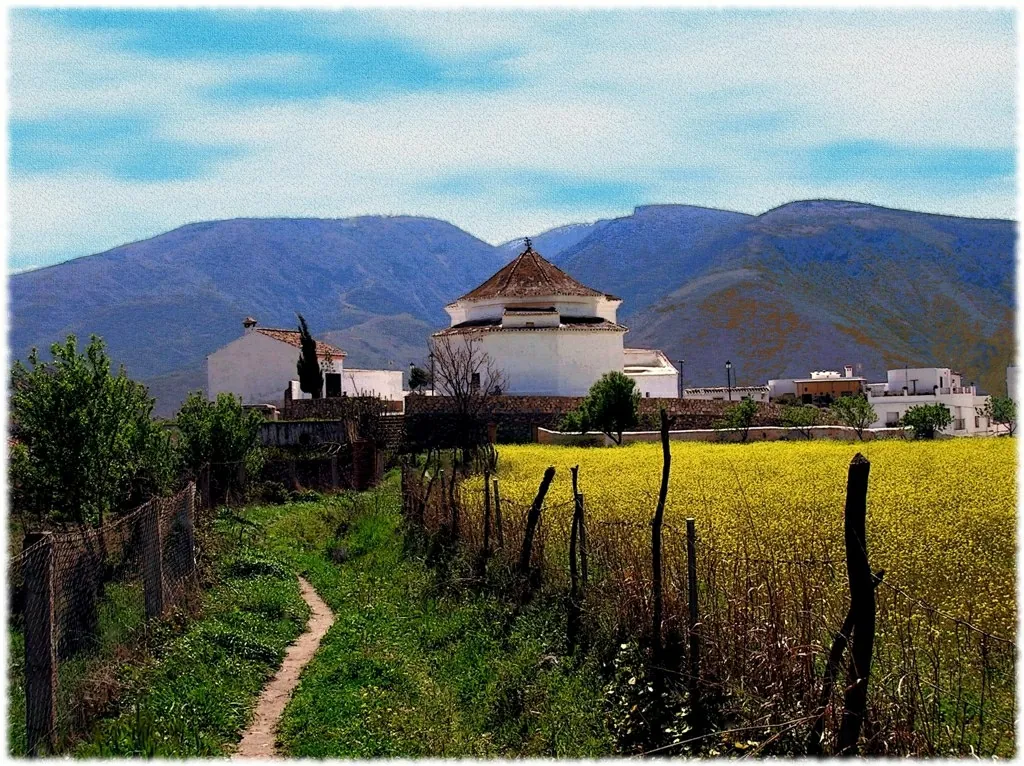
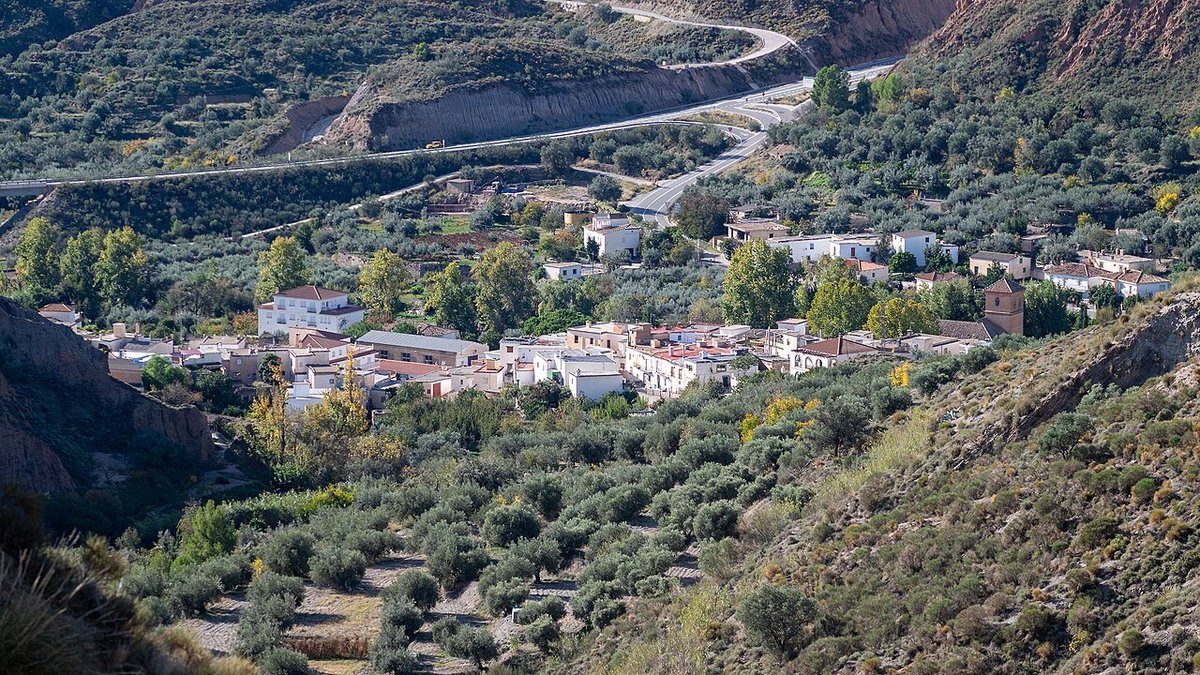
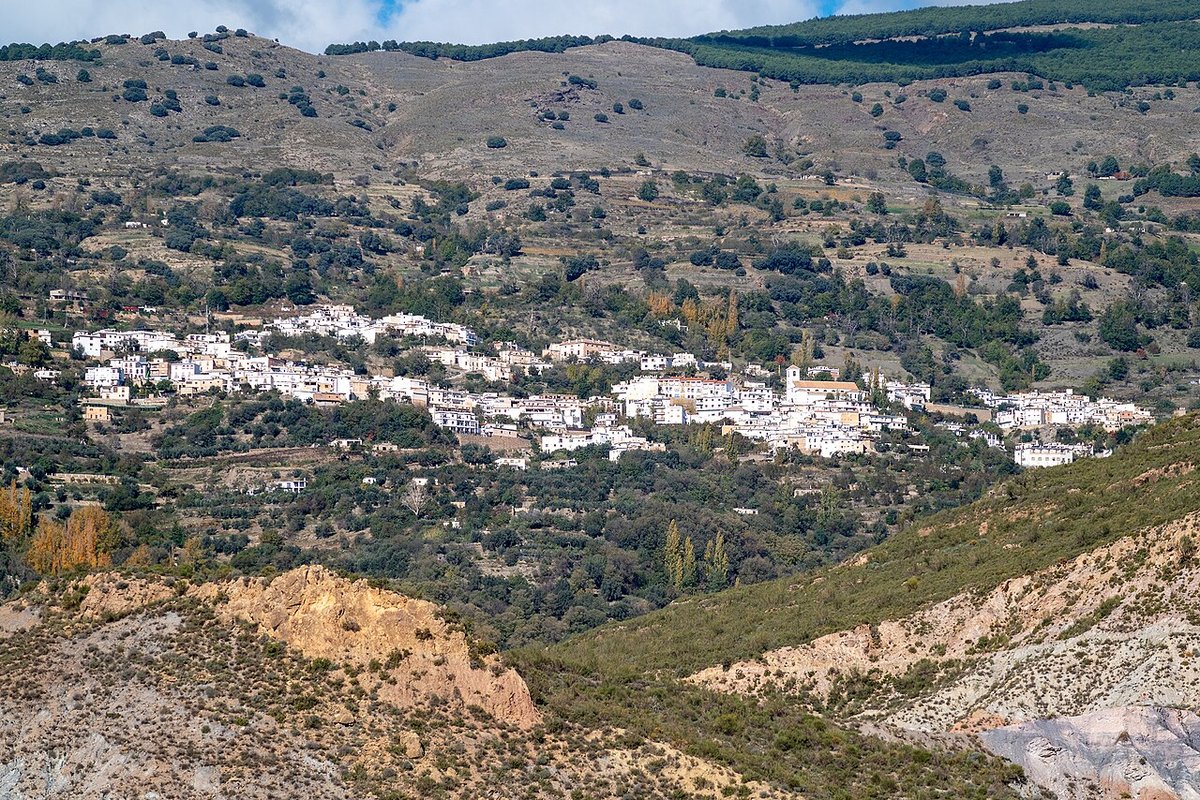
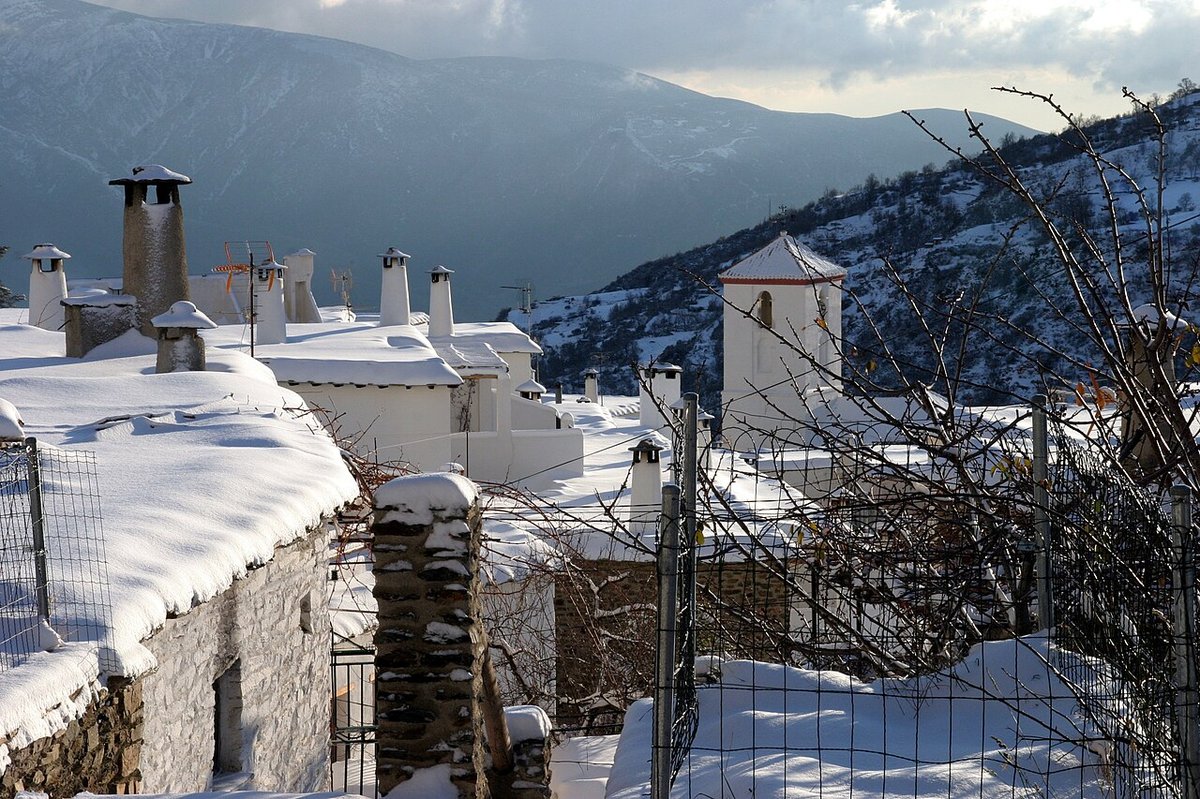
The first thing you notice is the irrigation channels. Even before the white walls of Pitres come into view, water is gurgling beside the road, racing downhill in narrow stone troughs dug by Muslim farmers eight centuries ago. La Taha isn’t a single village but a federation of five—Pitres, Pórtugos, Busquístar, Ferreirola and Atalbéitar—strung along a ridge at 1,200 m where the Sierra Nevada finally tires of being a mountain range and breaks into almond terraces. Together they add up to 757 residents, one bakery, no cash machine and a walking network that lets you breakfast in one village, lunch in a second and be back for dinner without ever using the car.
Why the map looks like a broken necklace
Each hamlet sits on its own promontory, separated by barrancos so deep that the GR7 long-distance path has to drop 300 m and climb again to link them. The result is a day’s hike that feels like interval training: calf-burning descents through chestnut shade, sudden vistas of the Mediterranean, then a steep haul past stone retaining walls that lean outward like old books on a shelf. The whole circuit is 11 km if you merely tick the villages off; double that if you detour to the ruined watermills below Busquístar or the Junta de los Ríos pools above Pórtugos, the local antidote to August heat. Signposts give times that assume you are part-mountain goat: add thirty minutes for photos, another fifteen for the moment you stop to wonder how anyone ever farmed slopes this steep.
A lesson in three-storey living
Ferreirola is the smallest but the best preserved. Houses are still organised the way Morisco builders left them: animals on the ground floor, living quarters above, top loft for drying maize, peppers and jamón. Chimneys taper into crude cones, their tops pinched like pastry bags. Many façades are painted with a rusty ochre wash made from local iron-rich earth—cheap protection against wind that can knife through the gorge at 40 mph in February. The streets are barely shoulder-wide; residents step into doorways to let visitors pass, greeting them with the sing-song accent that turns “gracias” into “grathia”. There is no museum, no ticket booth, just the village itself acting as an open-air manual on pre-industrial life. If you want commentary, track down José Luis in the bar at Pitres; he’ll talk you through the roof carpentry while he pulls your cortado.
Water, ham and the absence of streetlights
Pórtugos celebrates its spring with a ferrous tang. The Roman knew the stuff was good for anaemia; locals now bottle it for visitors who prefer their minerals straight from the rock rather than from a Holland & Barrett tablet. Follow the signed footpath past the fountain and you reach the old laundry slabs where women still scrub rugs on Sunday mornings, slapping them against stone until the whole valley echoes like a drum. Above, almond blossom foams white during the first half of March; by late April the ground is snowing petals. Night-time brings the payoff for the altitude: zero light pollution, the Milky Way spilled across the sky so brightly that you catch yourself ducking under it. Bring a red-filter torch—white LEDs feel almost rude.
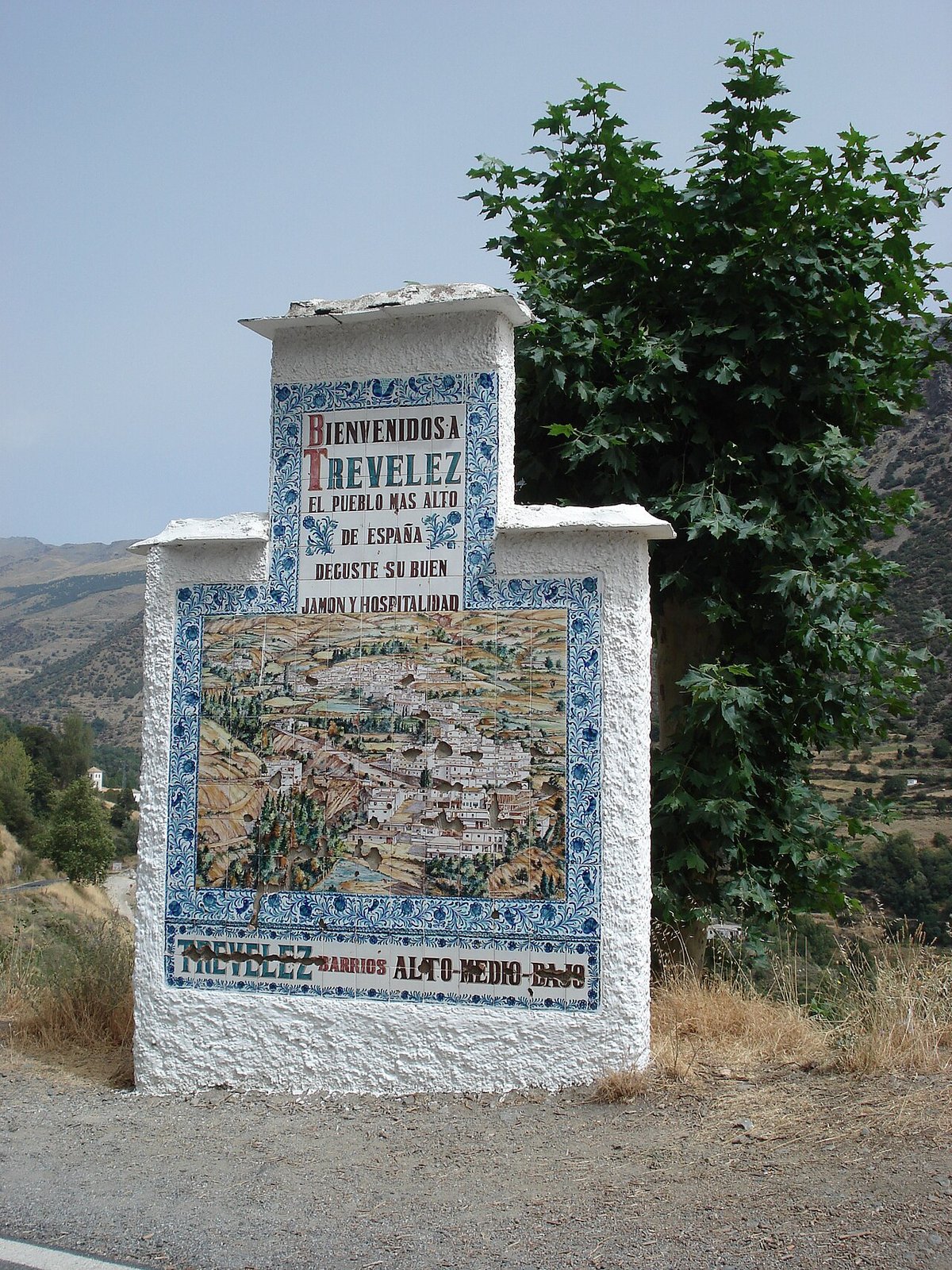
Food is mountain-weight. Migas—fried breadcrumbs laced with garlic, pepper and scraps of chorizo—arrive in portions that could anchor a tarpaulin. Trevélez ham, cured higher up the valley at 1,500 m, is sliced tissue-thin and costs about €8 a plate, half the price you’d pay in Granada’s tapas bars. Vegetarians aren’t abandoned: the same chestnut woods that feed pigs yield mushrooms in October, and every bar will whip out a tortilla de setas if asked before noon. The only culinary let-down is coffee; Spanish roadside espresso is a gamble this far from the coast. Bring a Bialetti if self-catering—most cave cottages have gas rings.
Getting here, and why the sat-nav sulks
Málaga is the simplest gateway: two hours from Gatwick, Bristol or Manchester, then a 90-minute drive east on the A-7 and up the A-4132. The final 20 km beyond Pampaneira switchbacks so tightly that passengers earn the right to claim they’ve been on a white-knuckle ride. Petrolheads should fill up at El Mirador de Poqueira—after that the nearest pump is 35 km away in Órgiva. A hire car is non-negotiable; buses reach Pitres on school-days only and the last return leaves at 14:00. Park on the ridge just above Atalbéitar; most holiday lets are a ten-minute schlep downhill and owners will meet you with a donkey for bags if asked in advance. Phone signal dies the moment you turn off the tarmac—download offline maps before you leave the coast.
Spring and late October are the sweet spots. April brings orchids on the abandoned threshing floors, daytime 18 °C and the first outdoor suppers. By July the valley turns into a solar oven; walkers start at dawn and hide indoors between 13:00 and 17:00 when the thermometer kisses 36 °C. Winter is quiet, often luminous, but night frost is common and the GR7 can ice over in shadow—carry micro-spikes if you insist on January visits.
The things that don’t make the postcards
There is no bank, no pharmacy and, crucially, no shop open on Monday. Bread arrives in a van that toots its horn at 10:30—miss it and you’re on yesterday’s loaf. Wi-Fi is theoretical; even 4G vanishes for hours when the weather sweeps in from the Med. Accommodation is mostly self-catering cave houses: cosy in February, but ceilings can drip condensation if you forget to keep the fire going. The village fiestas are fun if you like brass bands that play until 04:00; light sleepers should check dates before booking. And while the walking is superb, distances between villages are underestimated by fit locals—if your knees object to 400 m climbs, base yourself in Pitres and use it as a hub rather than attempting the full circuit.
Leave before you have to, not when you want to—that regret appears in every visitor’s notebook. The car will be dusty, the calves sore, the phone still stubbornly offline, but the valley will have reset your pulse to irrigation-channel time. Back on the coast motorway, the first service station feels like a different century.