Full Article
about Lobras
One of the smallest, quietest villages; noted for its traditional architecture and the hamlet of Tímar with its mines.
Hide article Read full article
A Small Alpujarra Village Above the Guadalfeo
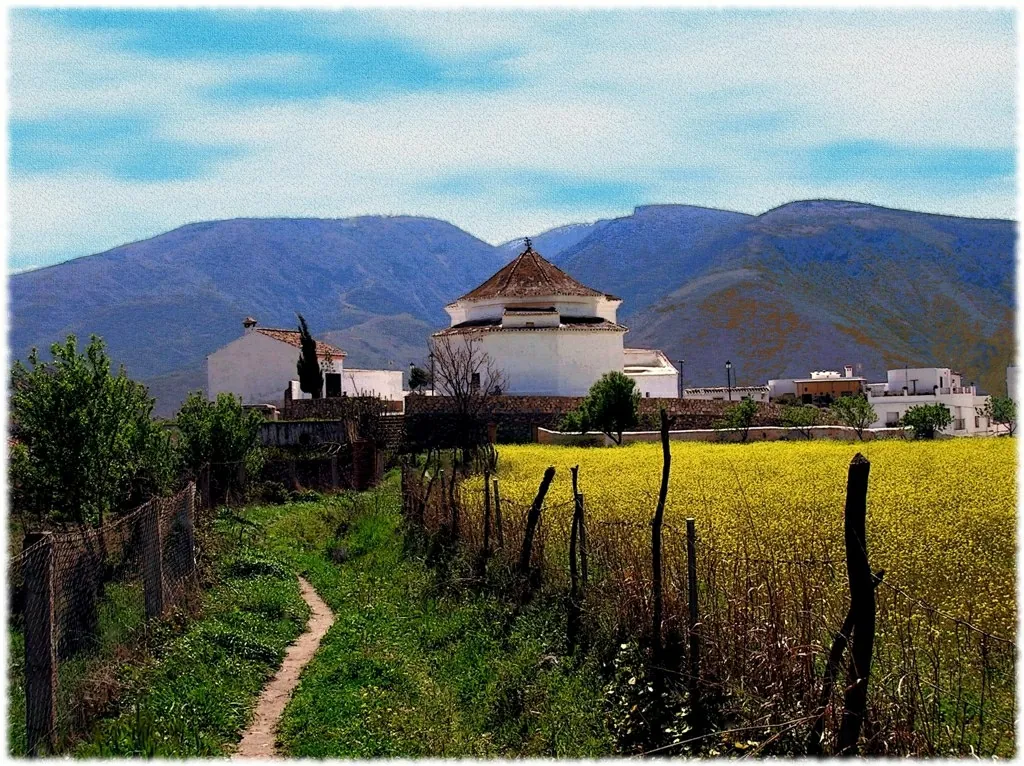
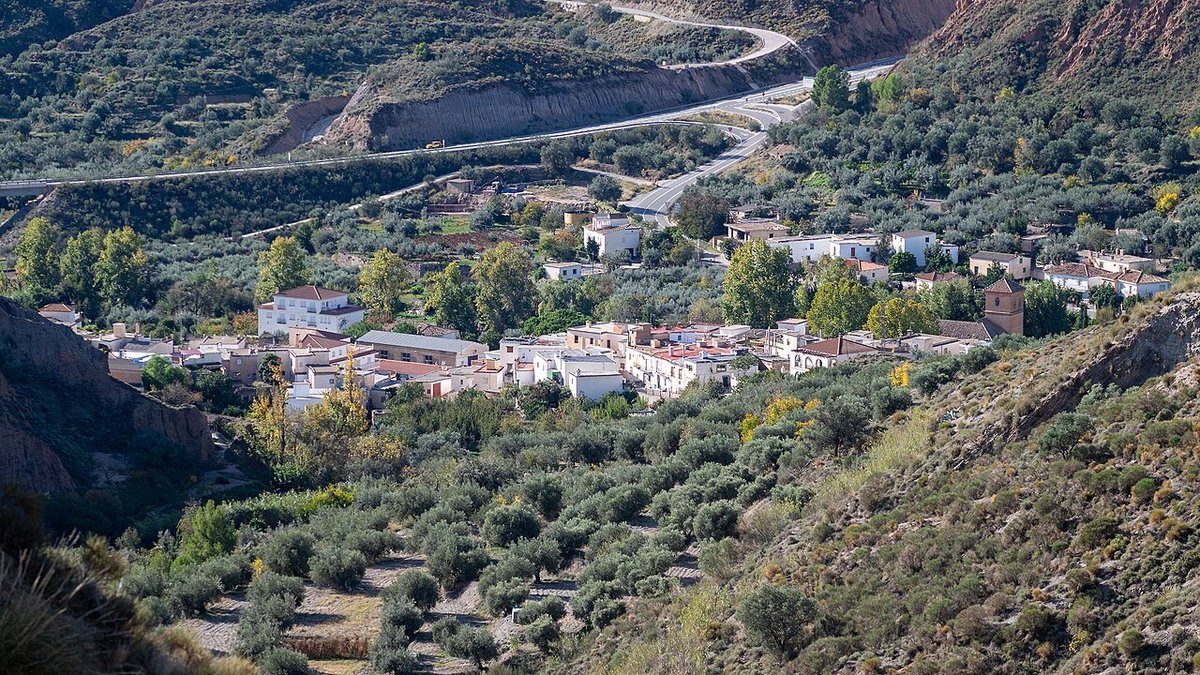
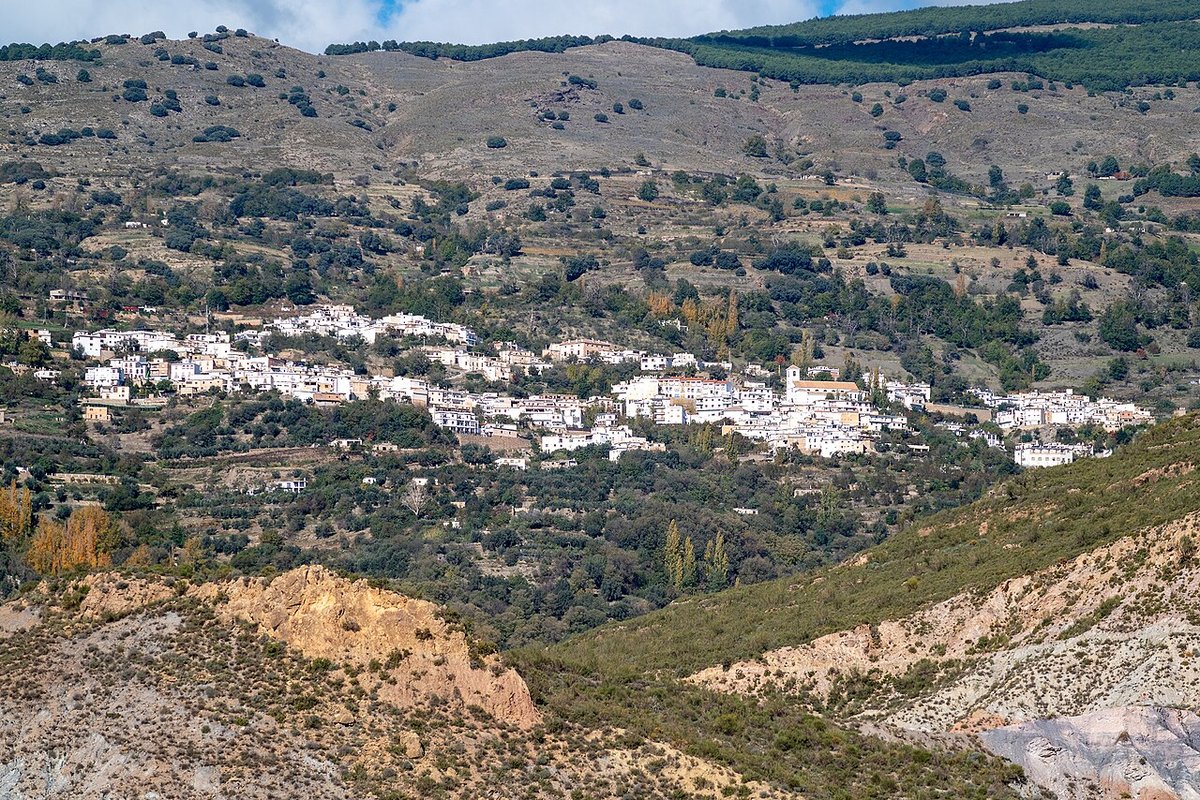
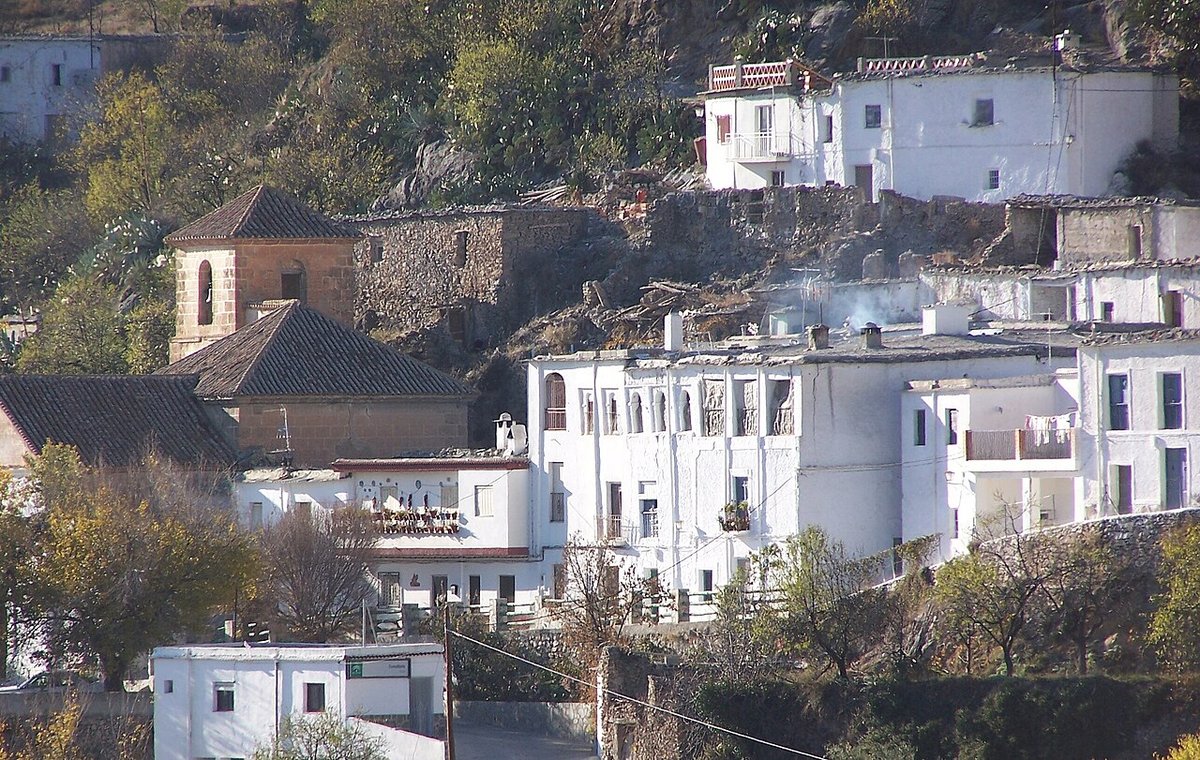
Set on the southern slope of Sierra Nevada at around 935 metres above sea level, Lobras is one of the smaller municipalities in the Alpujarra Granadina. With roughly 139 inhabitants, it preserves the typical layout of these mountain settlements: narrow streets, steep gradients and whitewashed houses fitted into terrain that leaves barely any flat ground.
Lobras shares in the wider history of the Alpujarra, especially the changes that followed the expulsion of the Moriscos at the end of the 16th century. As in many villages across the region, the population was reorganised with new settlers. That period shaped the urban structure still visible today. From the higher parts of the village, the landscape opens out towards the Guadalfeo valley and, on clear days, to the peaks of Sierra Nevada.
Life here unfolds at altitude and at a steady pace. The setting is defined as much by the surrounding mountain as by the built fabric of the village itself.
San Sebastián and a Village Built for the Slope
The parish church of San Sebastián dates from the 16th century and was erected as part of the religious reorganisation that followed the Morisco rebellion. It retains Mudejar features, common in Alpujarra churches of that era. Its architecture is sober and blends naturally into the cluster of houses around it.
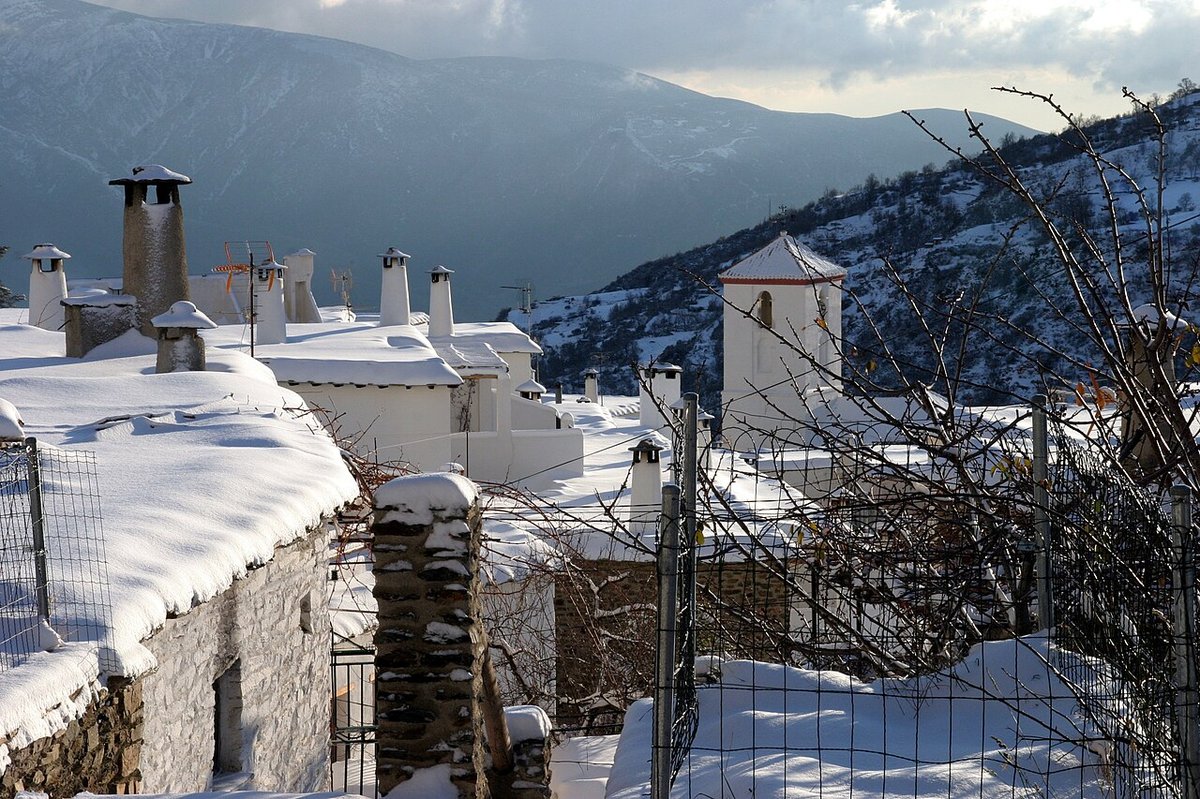
Beyond the church, Lobras is best understood through its layout. The houses still preserve traditional elements such as terraos de launa, flat roofs made with local clay, and tinaos, covered passages that connect homes or span across streets. These are long‑standing architectural solutions designed both to shield from the climate and to make use of every available metre on the hillside.
Many streets are cobbled in sections and notably steep. Their irregular course means the village is explored slowly, following the natural contours rather than any grid. This is architecture shaped by climate and agricultural life, where the interior of the house and small animal pens were as important as the street outside.
Terraces on the Hillside
Around the village centre, bancales supported by dry stone walls mark the landscape. These agricultural terraces are one of the defining features of the Alpujarra. They made cultivation possible on steep mountain terrain and for centuries supported an economy based on small vegetable plots, almond trees, olive groves and some vines.
A number of these walls remain in use. Others are gradually disappearing as farming declines, yet they still structure the territory and reveal how agricultural work was once organised in the area. The pattern of terraces climbing the slopes offers a clear reminder that this landscape was carefully shaped over generations.
Agriculture here was never on a vast scale. It relied on adaptation to the mountain, careful management of water and close attention to seasonal rhythms.
Footpaths Through Mid-Mountain Country
The long‑distance footpath GR‑7 passes through the municipality, linking Lobras with nearby villages such as Tímar and Cádiar. These are mid‑mountain routes. Paths are generally clear, but gradients and stony stretches are typical of the Alpujarra.
Walking in the surrounding area brings you through holm oaks, almond trees and olive groves. There are also small acequias, traditional irrigation channels introduced centuries ago, along with remains of old mills beside watercourses. These flour mills once formed part of the local economy, at a time when cereals still played a role in the region.
The countryside around Lobras reflects a balance between natural vegetation and cultivated land. Even where farming has declined, traces of earlier activity remain visible in the terraces, channels and mill ruins.
Everyday Life in a Village of 139 People
With such a small population, Lobras keeps a very calm rhythm for most of the year. Activity centres on farm work, neighbourly gatherings and festive periods, when relatives who live elsewhere return.
Local cooking follows the hearty traditions of the Alpujarra, designed to sustain long working days. Dishes commonly include eggs, cured meats, potatoes and products from the matanza, the traditional pig slaughter that supplies preserved meats for the year. Honey from the area is also typical, along with certain cheeses made in nearby villages.
A walk through the streets reveals ordinary scenes that define daily life in mountain villages: firewood stacked for winter, small vegetable plots beside houses and washing strung between white façades. These details speak to a community still closely tied to seasonal routines and practical needs.
Festive Dates in Lobras
San Sebastián, the patron saint of Lobras, is celebrated in January with religious events and gatherings among neighbours. The festivities are simple and strongly focused on the local community.
In summer, celebrations usually coincide with the return of many descendants of the village. During those days the atmosphere shifts noticeably compared with the rest of the year, and the streets regain a level of activity otherwise absent.
Semana Santa, or Holy Week, is observed in a restrained manner. Processions move through the village centre, passing along its narrowest streets and reinforcing the close connection between religious tradition and the built space.
Reaching Lobras and Practical Notes
Lobras lies in the eastern part of the Alpujarra Granadina, on the road that connects several villages in the middle Guadalfeo valley. Access is via mountain roads, with the bends and narrow sections typical of the region.
The village itself can be explored on foot in a short time, although the slopes are constant. Anyone planning to follow nearby footpaths should wear suitable footwear and carry water, particularly in the warmer months. Spring and autumn are usually the most pleasant seasons for walking in this part of the Alpujarra, when temperatures are more moderate and the landscape is easier to enjoy at a steady pace.
Lobras does not rely on grand monuments or major attractions. Its interest lies in its setting on the southern face of Sierra Nevada, its 16th‑century church of San Sebastián, the persistence of terraos and tinaos, and the agricultural terraces that still shape the hillsides. For those seeking a clear sense of how small Alpujarra villages were built and organised, Lobras offers a direct view of that mountain way of life.