Full Article
about Murtas
Municipality in the Alpujarra Baja known for its pastries and wines; quiet setting with traditional architecture.
Ocultar artículo Leer artículo completo
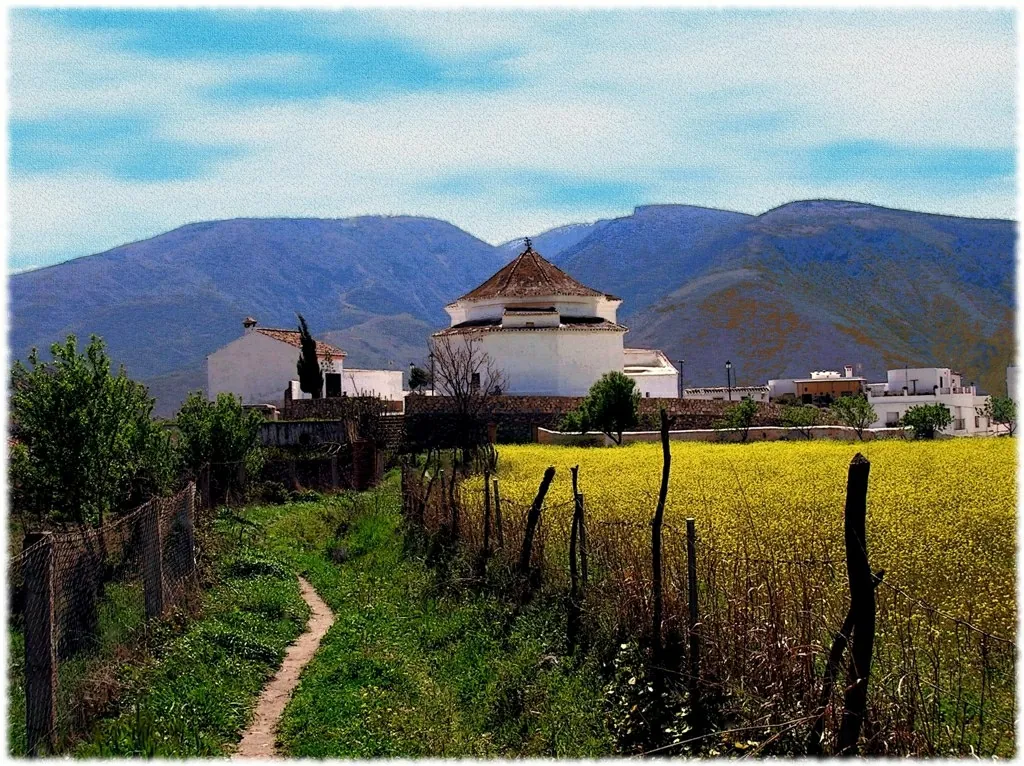
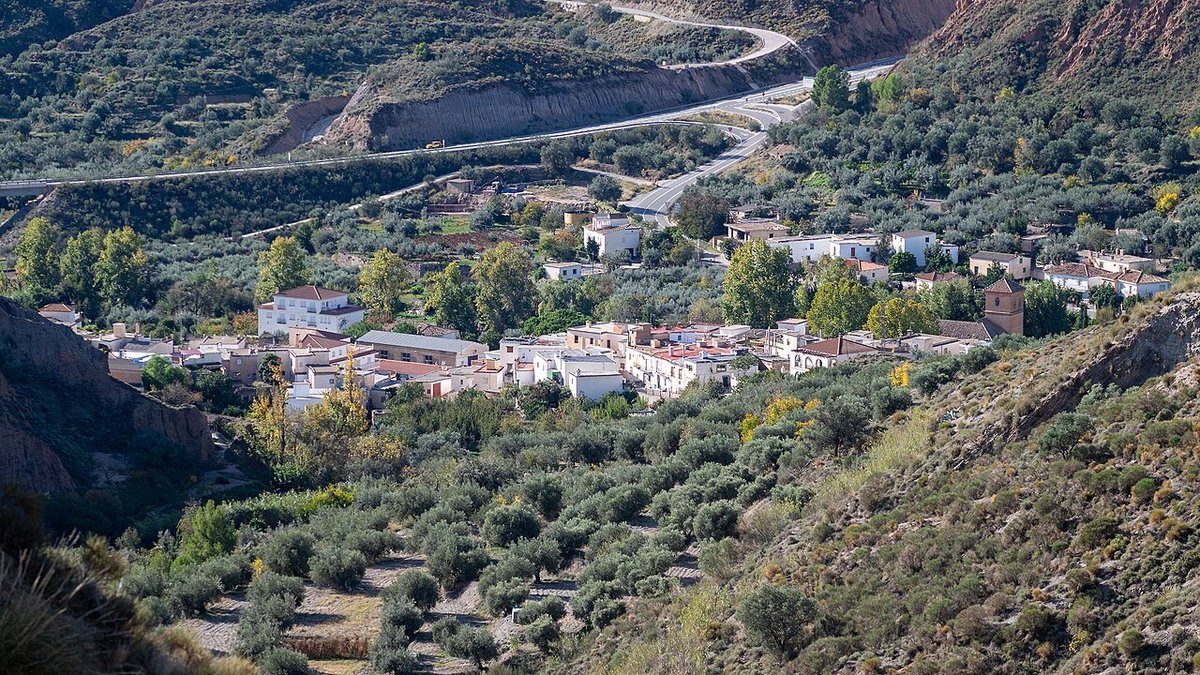
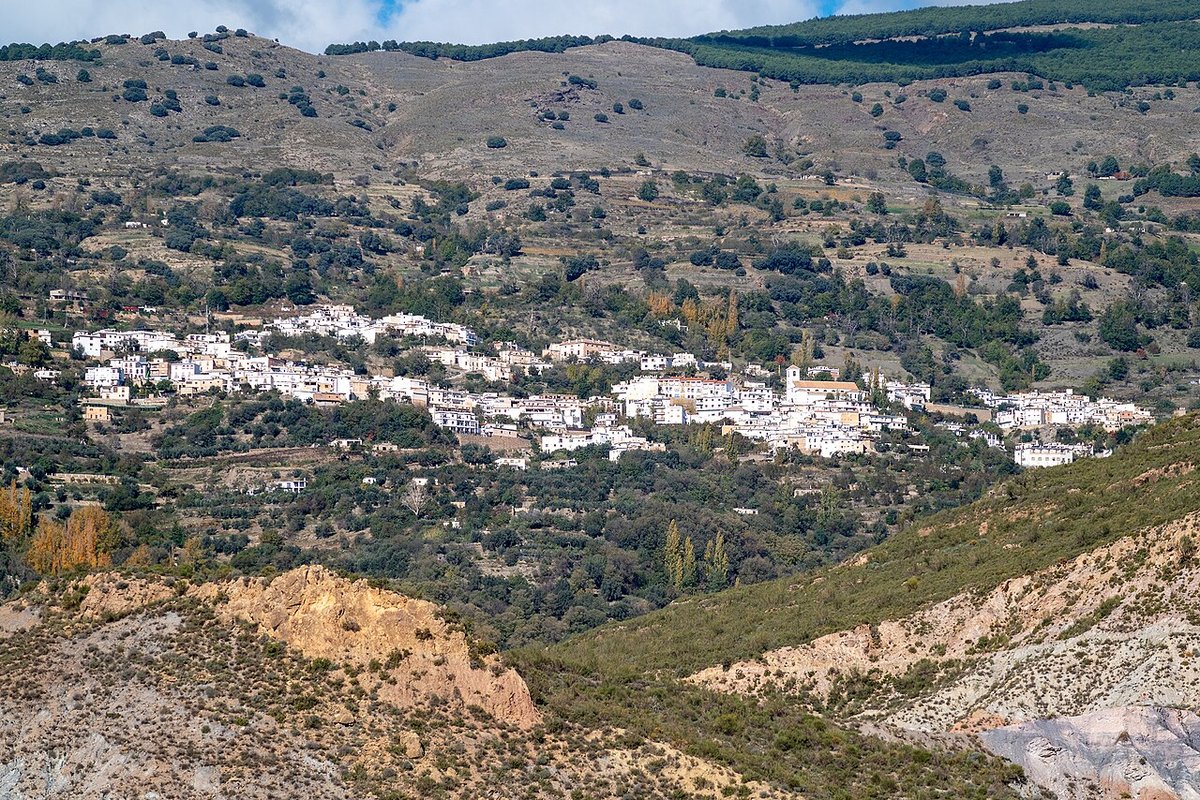
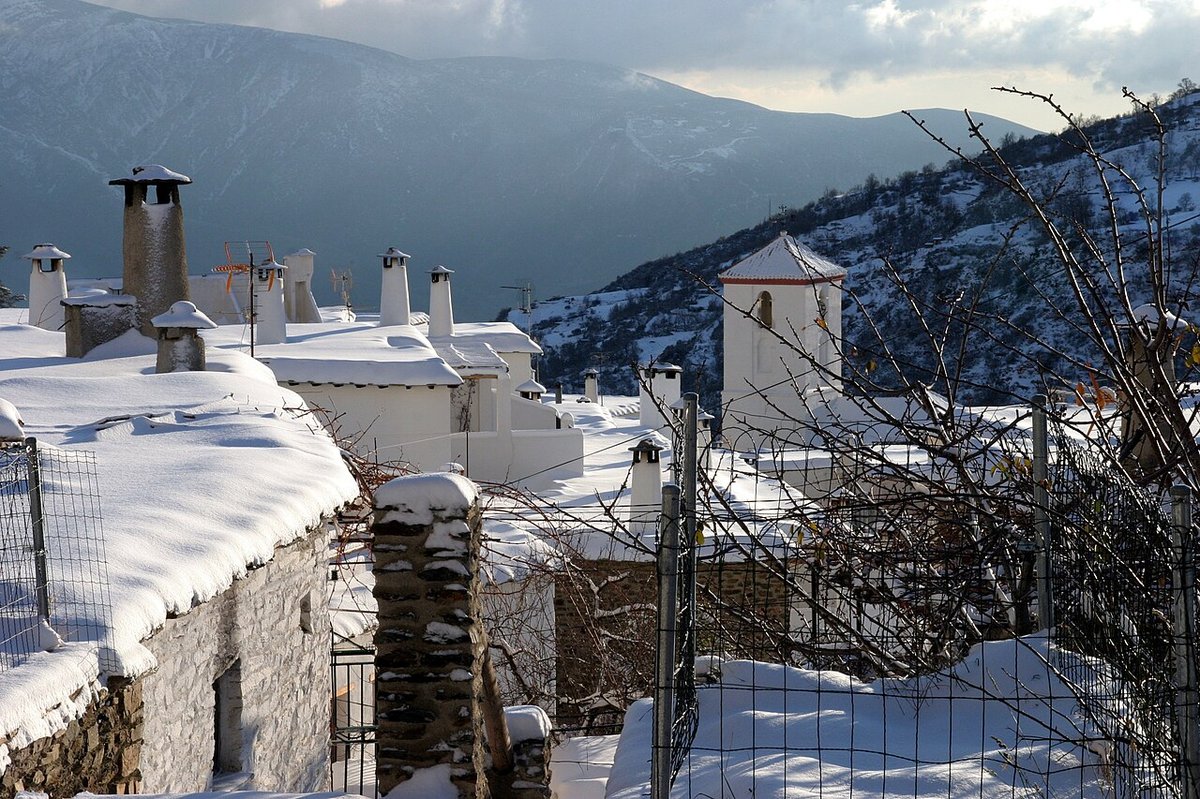
The church bell tolls 13 times at midday. Nobody in Murtas finds this odd—time runs differently at 1,115 metres, where the Sierra Nevada drops into the Alpujarra and the nearest traffic light is 40 kilometres away. Below the bell tower, flat-roofed houses cascade down a ridge so steep that neighbours can shake hands across adjoining terraces while standing on different floors.
This is not the Alpujarra of guidebook spreads. There are no craft boutiques, no yoga retreats, no Instagram-friendly arches of bougainvillea. What you get instead is a village that still dries chestnuts on its rooftops each October, where the bakery opens only when the baker feels like it, and where the evening entertainment is watching goats file past the fountain at seven sharp.
Why the Road Up Feels Like Time Travel
Turn off the coastal A-7 at Salobreña and within twenty minutes the temperature gauge drops eight degrees. Olive terraces give way to almond terraces; then the almonds vanish and you’re in raw mountainside, the Mediterranean a blue memory behind you. The tarmac narrows to a single track just past Torvizcón—if you meet a delivery van, someone has to reverse 200 metres. Petrol warning light glowing? Too late. The last filling station in Ugíjar locks its pumps at 2 p.m. on Saturdays and stays shut all Sunday.
Phone signal dies three kilometres before the village. Download your maps while you still have them, because Google will confidently send you up a concrete ramp that ends in somebody’s back garden. Listen for the church tower instead—it pokes above the ridge like a raised finger and works better than any sat-nav.
A Village That Never Learned to Pose
Murtas grew during the Moorish period, staggered down the slope because flat land was needed for crops, not houses. The layout survives: alleyways barely shoulder-wide, sudden flights of steps, passages tunnelled beneath houses (tinaos) where you walk in cool darkness and emerge blinking into fierce light. Walls are whitewashed, but not photogenically—here a satellite dish, there a PVC window someone ordered from Granada and never quite matched to the stone.
Start at the Fuente de los Tres Caños on the lower edge. Until the 1980s women carried washing here; now villagers fill plastic jugs for drinking water because it tastes better than the tap. Walk uphill past the public laundry slabs, still stained grey by decades of soap. The only directional sign is a ceramic tile arrows pointing to “Castañar” – ignore it, the chestnut forest is an eight-kilometre dirt-road drive and you’ll need a 4×4.
Instead, duck under the tinao linking Calle Real and Calle Nueva. Inside, the temperature falls five degrees and the walls smell of damp earth. You emerge beside the sixteenth-century Iglesia de San Andrés, built on mosque foundations. The door is usually open; if not, ask for the key at Bar La Parra opposite. Inside, a Mudejar ceiling of interlaced pine beams sits above a baroque altar that looks almost embarrassed to be there. Light switches are on the right—don’t expect labels, just press everything until something works.
Walking Tracks Without Gift Shops
Two way-marked routes start from the upper fountain, but the paint fades faster than the council can refresh it. The easier acequias path follows an irrigation channel carved by Moorish engineers a thousand years ago. Flat, mostly shaded, it contours around the hillside for three kilometres to an abandoned threshing circle with views across to the Contraviesa vineyards. Allow ninety minutes return; wear shoes you don’t mind turning orange from the iron-rich soil.
Ambitious? Take the Cerrajón ridge. The first hour is a calf-burning climb on a stony mule track; after that you’re on open crest with drops of 400 metres either side. On clear days you can pick out the rooftops of Ugíjar and, beyond, the Mediterranean glittering like foil. The wind up here is savage even in May—pack a jacket and twice as much water as you think you need. You’ll meet nobody except the occasional Spanish retiree carrying a mushroom knife and unsolicited advice about the weather.
What to Eat When You’ve Walked Off the Hire-Car Breakfast
Back in the village, choices are limited but honest. Bar La Parra does a plato alpujarreño—fried egg, blood sausage, ham, chorizo, potato and a beefsteak the size of your face—for €9. Vegetarians can ask for migas (fried breadcrumbs with grapes) minus the pork, though the landlord will look personally wounded. House wine comes from a plastic barrel behind the bar; at €1.20 a glass it tastes better than anything from the Costa airport lounge.
The only other option is Bodega Cuatro Vientos, open weekends only. They produce young red wine in fibreglass vats and serve it with a saucer of almonds toasted in local olive oil. Six euros buys you three pours and a refill you didn’t ask for but will finish anyway. Buy a bottle to take away (€4) and they’ll rinse out a used one with tap water, stick in a cork by hand, and refuse a carrier bag because “that’s how the planet ends up ruined”.
Seasons: Pick Your Hardship
Spring brings almond blossom and daytime highs of 18 °C, but nights still dip to 5 °C—most houses lack central heating, so keep that extra blanket. Autumn is the sweet spot: clear skies, chestnut woods turning copper, and the annual feria de la castaña when the plaza fills with smoke from roasting trays. A paper cone of chestnuts costs €2; crack them on the church steps and watch the village toddlers chase escaped nuts like marbles.
Summer days can hit 35 °C, yet the mercury plummets after dark. Restaurants drag tables into the street at 10 p.m.; by midnight you’ll be reaching for a fleece while moths kamikaze into the streetlights. August fiestas mean ear-splitting reggaeton until 4 a.m.—light sleepers should book on the valley side of town, away from the plaza sound system.
Winter is not for dilettantes. Southerly winds lift Saharan dust, turn it to mud on contact with the sierra, and plaster every surface. When it rains, the only road down can flood at three fords; carry snacks in case you’re stuck overnight. On the plus side, you’ll have the streets to yourself and the landlord will probably throw in a free chupito of anis to commiserate.
Cash, Cards and Other Fantasy Items
There is no ATM that accepts British cards. The nearest reliable machine is in Cádiar, a 20-minute drive on switch-back roads you won’t fancy doing twice. Bring euros—small notes, because nobody wants to break a fifty for a coffee. The tiny colmado opens 9 a.m.–2 p.m. and stocks UHT milk, tinned tuna and surprisingly good local cheese wrapped in esparto grass. If you need probiotics, gluten-free pasta or oat milk, shop in Órgiva on the way up or go without.
Phone coverage returns sporadically on the ridge above the cemetery—locals call it “Whatsapp Hill”. Stand still, wave your handset in the air like everyone else, and try not to step backwards into a ravine while uploading your victory selfie.
The Honest Verdict
Murtas will not charm you in the conventional sense. It is tiny, frequently inconvenient, and stubbornly indifferent to whether you enjoyed yourself. Yet if you want to see how the Alpujarra functioned before coach tours and yoga mats, this is where the clock stopped. Come prepared—boots, cash, offline maps—and the village repays with silence, star-blitzed nights, and the realisation that “remote” is only an hour from the Costa del Sol. Forget postcards; the memory will be the sound of that bell striking thirteen while swifts wheel above the rooftops and somebody, somewhere, starts practising the trumpet for Saturday’s fiesta.