Full Article
about Pórtugos
Alpujarra village known for the Fuente Agria, a ferruginous spring; surrounded by chestnut trees and traditional architecture.
Ocultar artículo Leer artículo completo
The queue forms at 08:30. Neighbours clutch five-litre jerrycans, squash bottles, anything that seals. They are waiting for the Fuente Agria, a spring that gushes ochre-red water so metallic you can taste pennies. By 09:00 the spillage has already turned the concrete tray rust-colour, a warning to anyone wearing fresh white trainers. This is the daily ritual in Portugos, a scatter of white houses 1,300 m up the southern flank of Sierra Nevada, and it tells you most of what you need to know: life still revolves around what comes out of the ground, not what can be sold to passers-by.
A village that keeps its back to the road
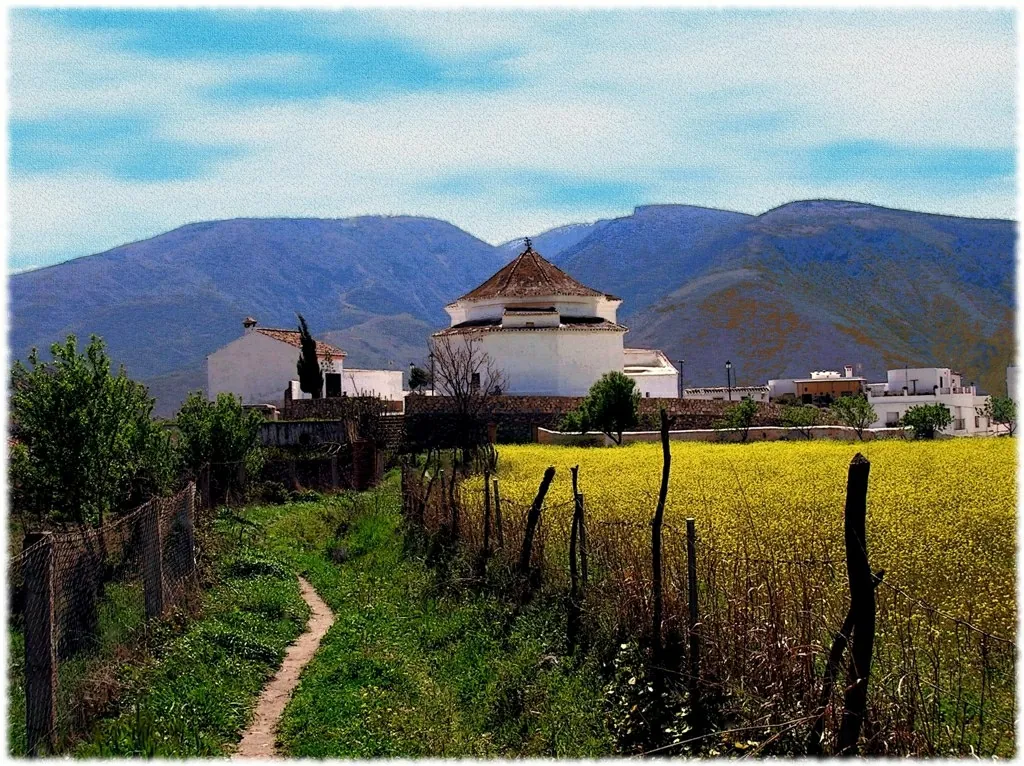
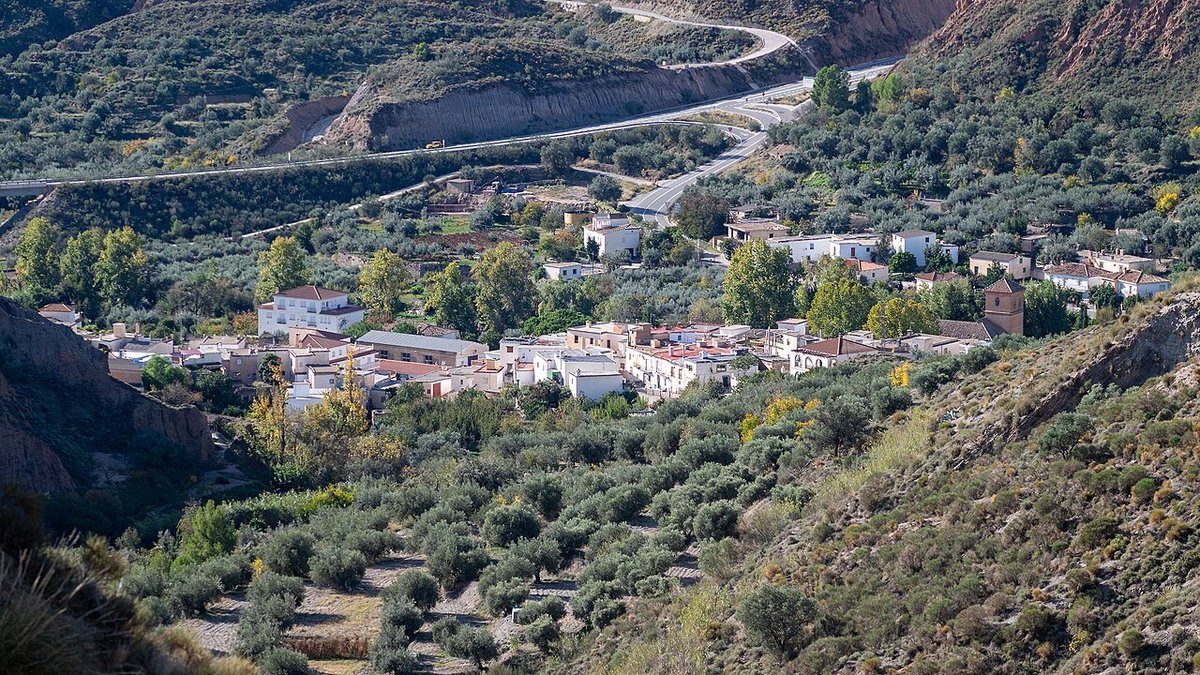
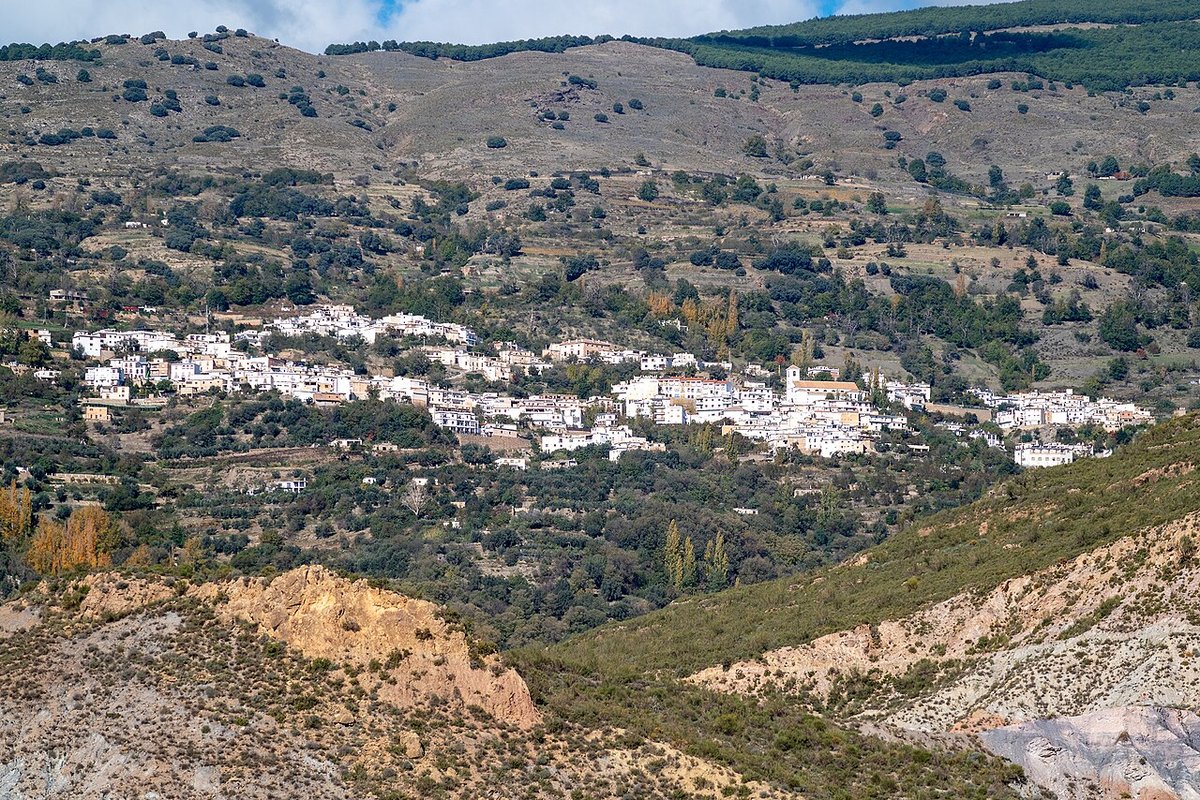
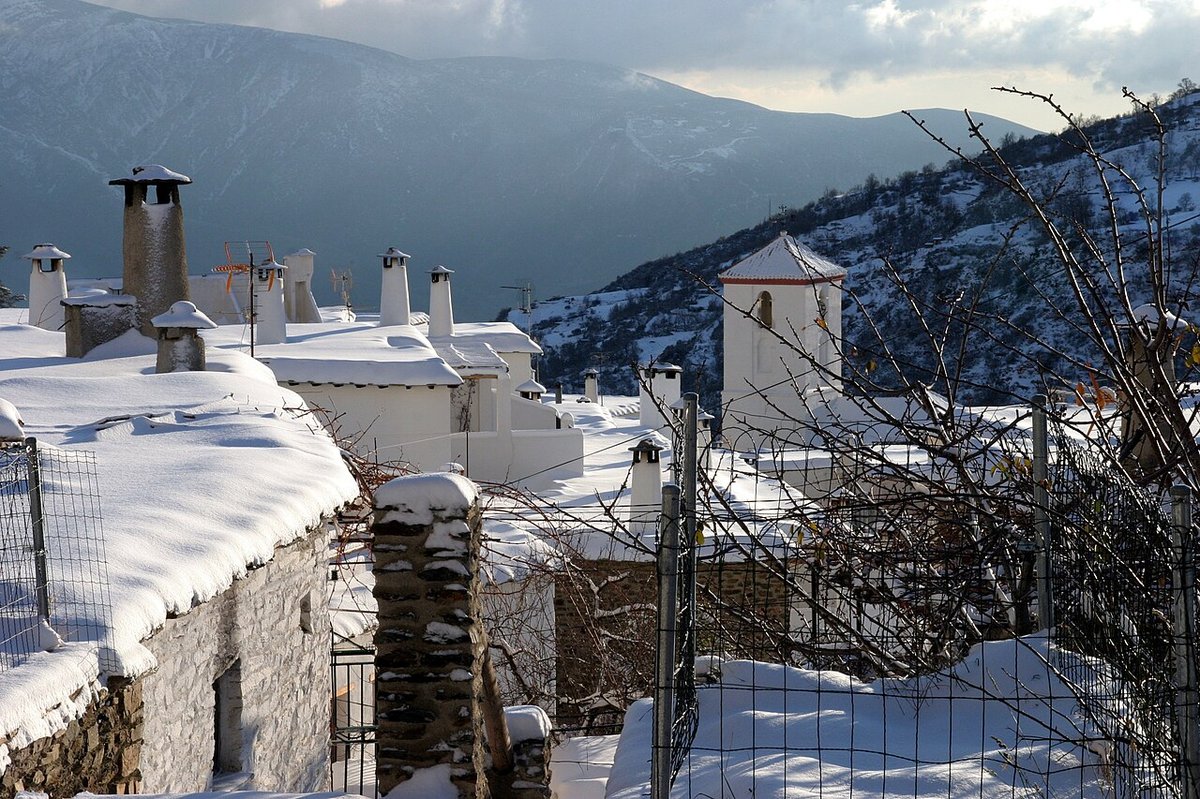
Most drivers shoot past on the GR-421, blink, and wonder if they missed anything. They did. Drop onto the single-lane spur that corkscrews downhill and the village reveals itself in tiers: flat-roofed houses roofed with dark launa slate, conical chimneys wearing little bishop’s-hat caps, and everywhere the sound of water trickling through stone channels. There is no centre, just a widening in the lane beside the 16th-century church of San José. Park here – it is the only level tarmac in town – or you will block the bread van and earn a lecture in rapid Andalusian.
The pay-off for the climb is immediate. Look south-west and the Poqueira gorge unrolls like a crumpled green tablecloth; look north-east and, on the clearest winter days, the white ridge of Mulhacén glints. The Mediterranean is theoretically out there too, but only if the Levante wind has scrubbed the sky – count yourself lucky if you spot a distant metallic stripe.
What passes for sightseeing
Portugos has no ticket office, no audio guide, no fridge-magnet emporium. The “sights” are the sort you notice while walking to buy milk. The Iglesia de San José keeps its tower squint and its doors open; step inside for five minutes of Moorish brickwork reused after the Reconquest and a single baroque retablo that looks almost embarrassed by its own gold leaf. Round the corner, the Casa Alpujarreña is simply a farmhouse restored by the village council. Ground floor: mangers, wine trough, smell of wet stone. Upper floor: low ceilings, chestnut beams, a hearth you could stand inside. You are free to poke around; nobody follows you with a tip basket.
Outside again, follow the water. Tiny springs bubble from cracks in the schist – one tastes of iron, the next of magnesium, the locals swear by both. Fill a bottle at the Fuente Agria but sip first; the mineral load can upset delicate British stomachs. A wooden sign points to the start of the “Ruta de las Fuentes”, a 4 km loop that climbs through holm-oak and abandoned chestnut terraces before dropping back along the Trevélez river. Allow ninety minutes, wear grippy shoes – the slate paths polish to an ice-rink shine after rain – and start early: shade is non-existent above 1,400 m even in May.
Eating: when one plate is enough
There are two places to eat and both close if trade is slow. Bar Fuente, opposite the spring, does the honest plato alpujarreño: jamón, morcilla, chorizo, fried egg, potatoes the colour of late-afternoon sun. One plate feeds two hungry walkers; price €10, cash only, no apologies. Up the lane, Mirador de Portugos opens for lunch and dinner with a terrace that hangs over the gorge. Order choto al ajillo – kid stewed slowly with garlic until it collapses into its own gravy. They serve it with chips instead of the customary mountain beans, a quiet nod to foreign tastes. Pudding is tarta de almendra, damp with nothing more exotic than lemon zest and village eggs. A half-bottle of Trevélez wine costs €7; it is young, peppery and tastes better when the clouds lift enough to reveal the snow-line.
Seasons and the art of turning up on the right day
April and May bring almond blossom and the smell of wet earth; the air is sharp enough to make you zip your fleece at midday. June to August is bone-dry and 28 °C in the shade – not punishing until you start climbing. September softens into gold: chestnut husks split, wild mushrooms appear, and the village fills with quiet Spaniards carrying wicker baskets and knives that would worry UK customs. October can be perfect – 20 °C, no flies, river pools still warm – but check the forecast: when the poniente wind arrives the temperature drops ten degrees in an hour. November to March is properly alpine. Daytime nudges 12 °C, nights hover just above freezing; snow sometimes blocks the GR-421 for a morning and the bar heater becomes the social hub. If you want silence, come now – you will have the gorge to yourself, but bring chains and do not rely on the village shop; it opens when the owner wakes.
The things that go wrong – so you can avoid them
Mobile signal dies 500 m beyond the last house. Download offline maps in the bar while the barman tops your coffee. Petrol: the nearest pump is 20 km away in Trevélez; if the low-fuel light pings on the approach road you have already pushed your luck. Accommodation listings often say “Portugos” when the house sits two kilometres up a concrete track that resembles a dried riverbed; zoom in on the satellite view before you pay. Finally, do not expect a fiesta unless it is fiesta day. San José in March means procession, free cake and one night of guitars. Virgen de las Nieves in August adds a romería where locals hike to a tiny shrine, share cold lomo sandwiches and return by sunset. Turn up twenty-four hours early and you will find only a man hosing the square.
Heading home with orange stains
By late afternoon the day-trippers have gone, the spring queue has evaporated and swallows tilt above the roofs. The iron water you bottled earlier has already left a neat rust ring on the passenger seat – a reminder that Portugos does not sanitise itself for visitors. It offers instead a concise lesson in how the Alpujarra keeps breathing after the coaches leave: wood-smoke at dusk, the clink of goat bells drifting across the gorge, and a bar that will lock up as soon as the last customer finishes his wine. Drink up, start the engine, and try not to scrape the gearbox on the climb back to the main road. If you remember nothing else, remember to fill the tank in Órgiva – the views are free, but running out of fuel here is definitely not.