Full Article
about Soportújar
Known as the village of the witches; magical theme in its streets with sculptures and caves that draw plenty of tourists.
Ocultar artículo Leer artículo completo
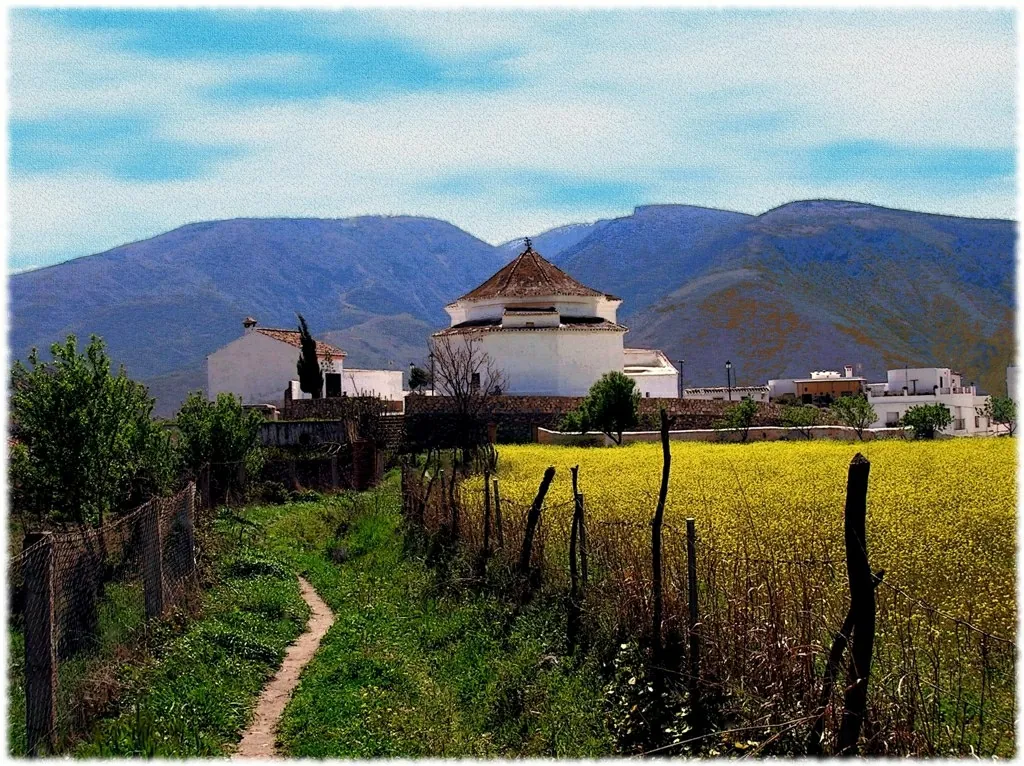
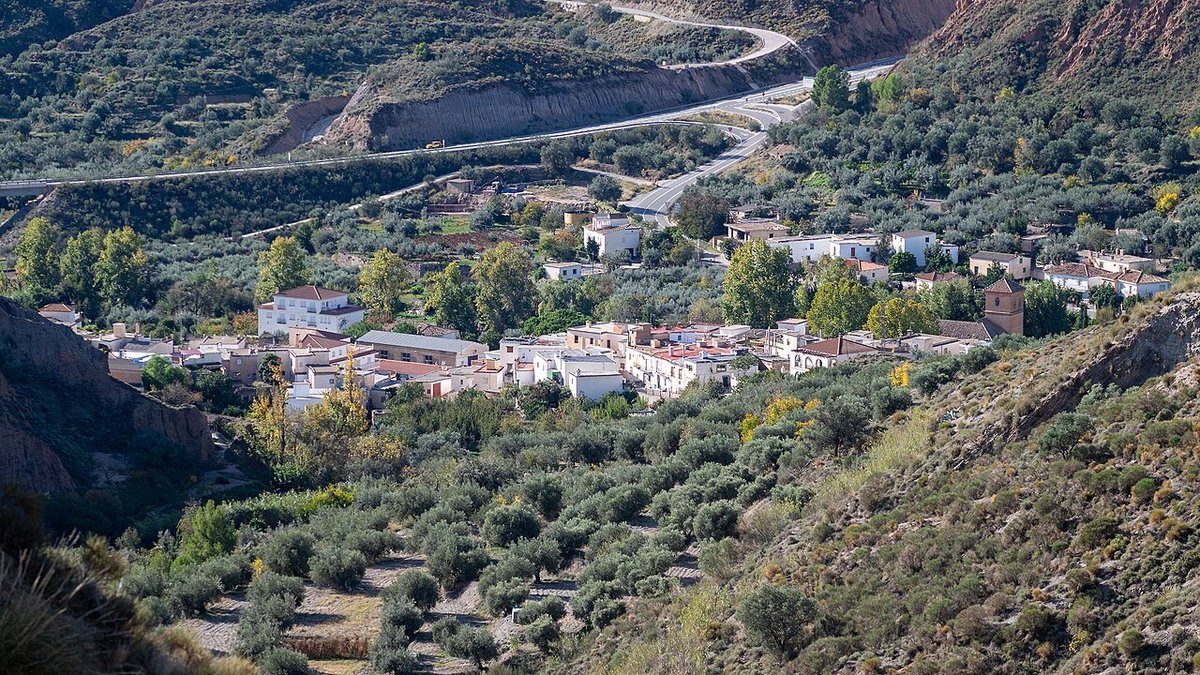
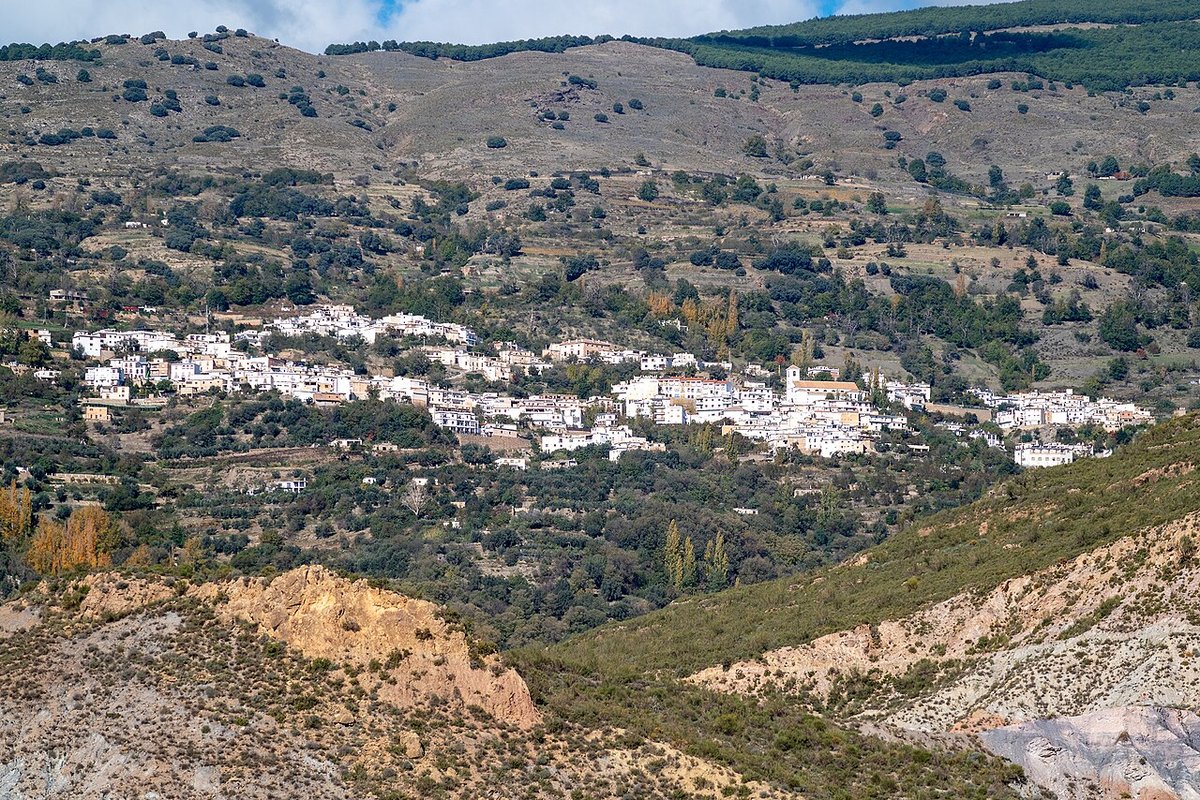
At 940 m the air thins and the temperature drops four degrees below the coast. Soportújar sits on a lip of limestone looking south over the Guadalfeo valley, close enough to smell the Mediterranean on a clear afternoon yet high enough for almond blossom to dust the slopes like late snow. This is the Alpujarra’s upper balcony, and the village has spent the last fifteen years marketing the one thing it was never famous for: witches.
A Theme-Park Past with Moorish Foundations
The story begins in 2006 when the ayuntamiento, desperate to stop day-trippers driving straight to Trevélez, declared Soportújar the “pueblo brujo” of Granada province. Overnight, fibreglass crones appeared on roofs, a three-metre spider straddled the main square and the tourist office started selling pointed hats in adult sizes. Purists scoffed, but the tills rang. What the gimmick hides is a settlement that predates the Reconquista by several centuries. Narrow alleys still follow the Berber grid, houses are stacked like white cubes with flat clay roofs, and the sixteenth-century church of Santa María la Mayor was built squarely on top of a mosque whose minaret forms the lower half of the bell tower. Touch the stonework on the north side and you feel the difference in temperature between Islamic brick and Christian masonry – history you can measure with your palm.
Walking the Switchbacks
Below the witch-shop window displays lie 200 km of agricultural terraces held up by dry-stone walls no mortar has ever touched. A 45-minute loop, the Ruta de los Bancales, threads between irrigation channels still governed by medieval water laws. You’ll share the path with goats, not hikers; the only sound is the click of aluminium irrigation gates opening and closing like metronomes. For something stiffer, the Cerro del Conjuro adds 350 m of ascent through rosemary and prickly pear to a summit scattered with quartzite slabs once used, so the new legend goes, for midnight covens. The reward is a 50-km sightline that picks out the white cube of Salobreña castle and, on very sharp days, the Rif mountains of Morocco.
Come prepared: the GR7 long-distance footpath passes through the village, so the bar terraces fill with boot-drying Germans in spring. Weather can flip in twenty minutes; pack a wind-shirt even when the coast is 28 °C.
What Actually Tastes Local
Forget the witch-shaped biscuits. The real food here is survival cooking: thick migas fried in olive oil with grapes, a plato alpujarreño that is essentially a full English translated into jamón, morcilla and fried egg, and winter gachas – paprika-stained porridge that shepherds ate before central heating. Taberna Romero on Plaza de la Constitución will serve migas as a tapa (£2.80) if you ask, and they keep a translated menu for the one afternoon a week when a cruise coach from Motril turns up. The nearest cash machine is 11 km away in Órgiva; every bar is cash-only and will shrug if you proffer a fifty.
Timing the Visit (and the Drive)
From Granada airport the A-44 spins you down the valley in 75 minutes, but the final 18 km from Órgiva is single-track with passing bays. Meet a delivery van on the tight hairpin above the gorge and someone has to reverse 200 m – hire the smallest car the rental desk has. In high summer the asphalt softens; tyre rubber perfumes the air. Parking is free at the Mirador del Aquelarre if you arrive before 10 a.m.; after that you crawl the one-way loop hoping a local hasn’t claimed the last bay with a wheelie-bin.
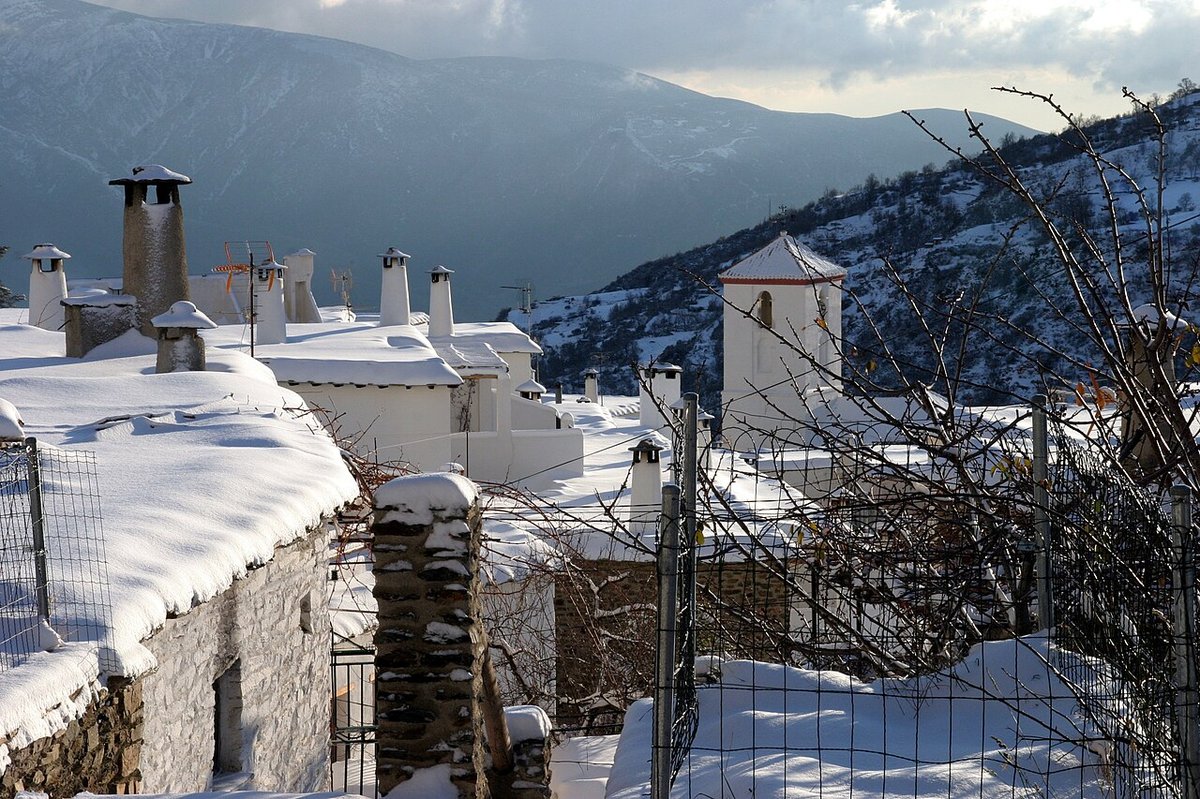
Spanish weekends turn the village into a selfie stage. August 11–12, the Feria del Embrujo, crams 20,000 visitors into streets designed for 400; don’t even try. Late October’s chestnut weekend is busy but manageable, and the nuts are roasted over open fires you can smell three streets away. January and February are silent: cafés shut at 4 p.m., snow blocks the upper pass to Trevélez, but you’ll have the almond blossom and the miradors to yourself. Bring chains if the forecast drops below 4 °C.
Where to Sleep (Spoiler: Not Here)
There are no hotels inside the village. Nearest beds are in rural cortijos scattered across the hillside, reached via 3 km of dirt track that Google Maps cheerfully labels “shortcut”. Casa la Maroma, 7 km north, has underfloor heating and an honesty bar stocked with craft beer from Lanjarón; doubles from €85. Wild camping is tolerated above the irrigation line, but the Guardia Civil will move you on if you pitch in the almond terraces.
The Honest Verdict
Soportújar is half authentic Alpujarra, half film set. The witch kitsch will make you roll your eyes until you notice the 93-year-old olive grower laughing at the cardboard cauldron beside her door. Come for the altitude air and the almond-blossom walks, tolerate the plastic spiders, and leave before the coach parties finish their ice creams. If you need centuries-old mystery, the Moorish water channels are older than any spell.