Full Article
about Turón
Quiet village in the deep Alpujarra; old mining landscape and unspoiled nature near Almería
Hide article Read full article
A hillside village shaped by work
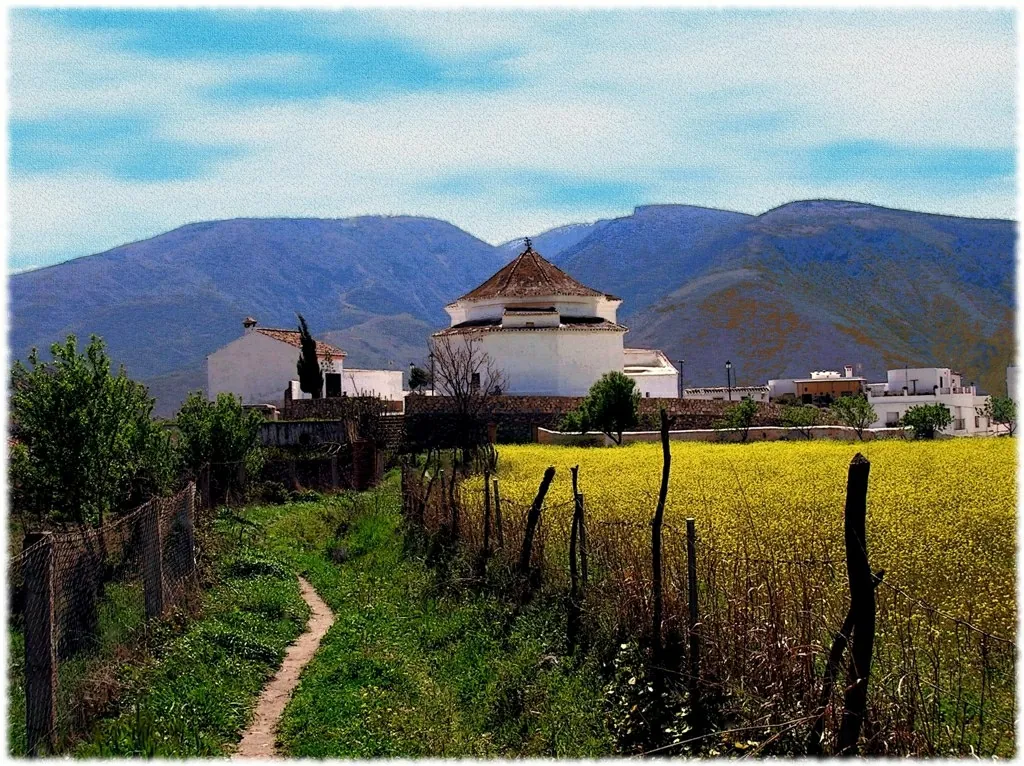
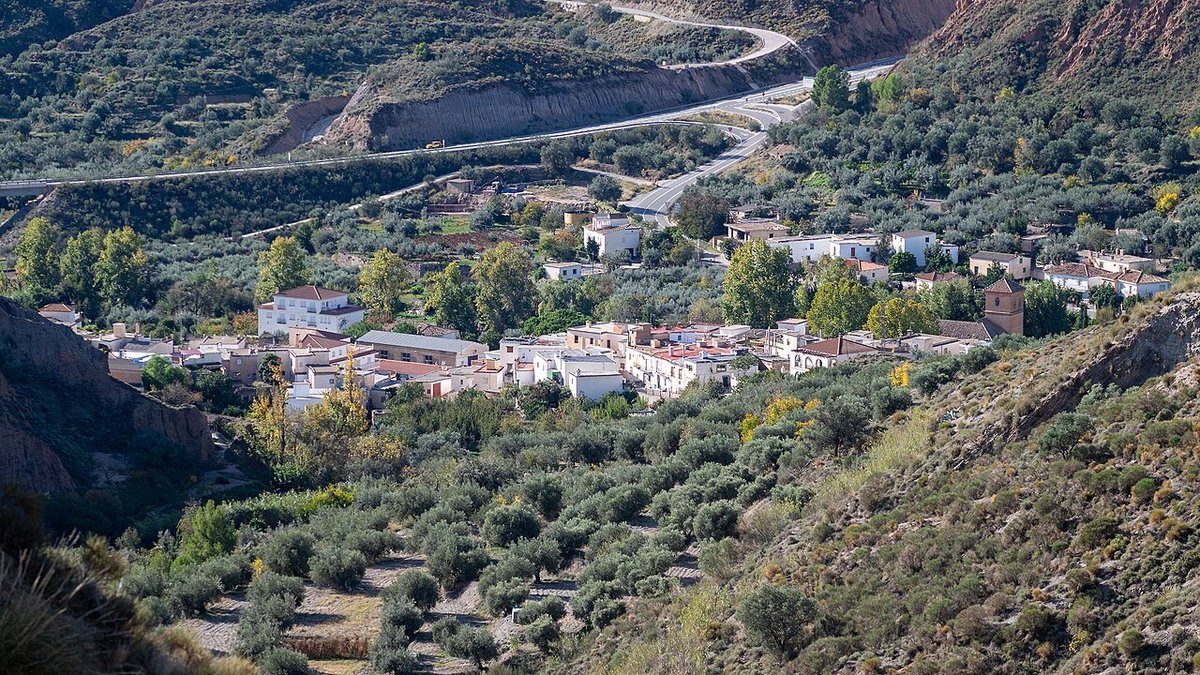
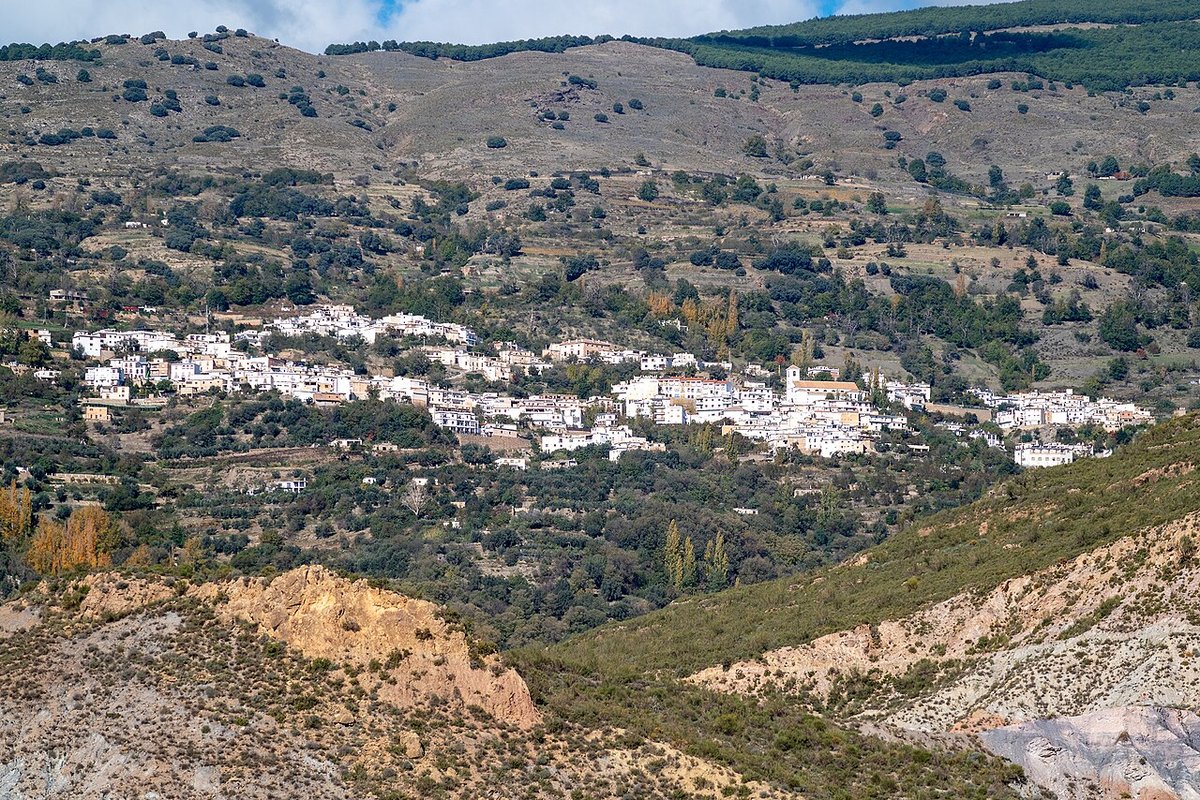
Turón sits in the western part of the Alpujarra of Granada, on a slope that falls towards the Guadalfeo valley. It is small, with just over two hundred residents, and that scale defines the place. Kitchen gardens lie close to the houses, animal pens are still in use, and agricultural tracks begin almost at the edge of the last street. The surrounding terraces of almond trees make it clear that this landscape is not accidental. It has been built up over centuries through careful terracing.
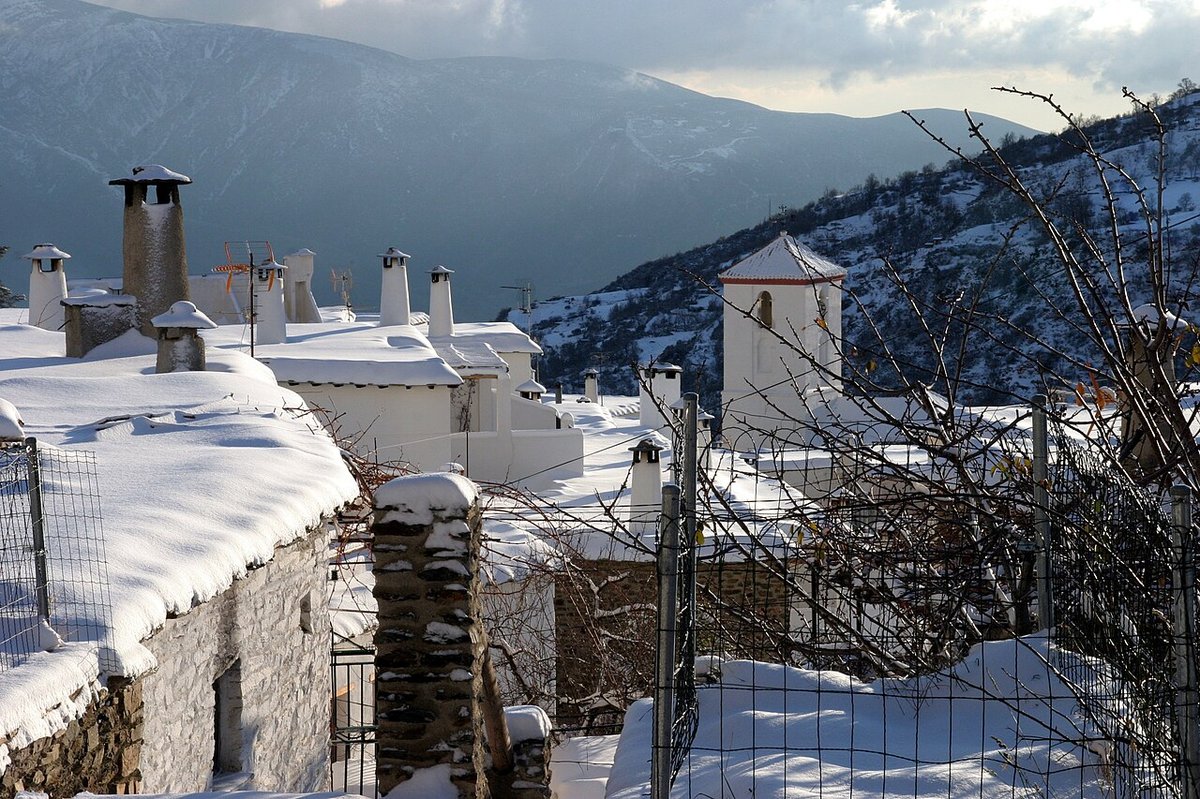
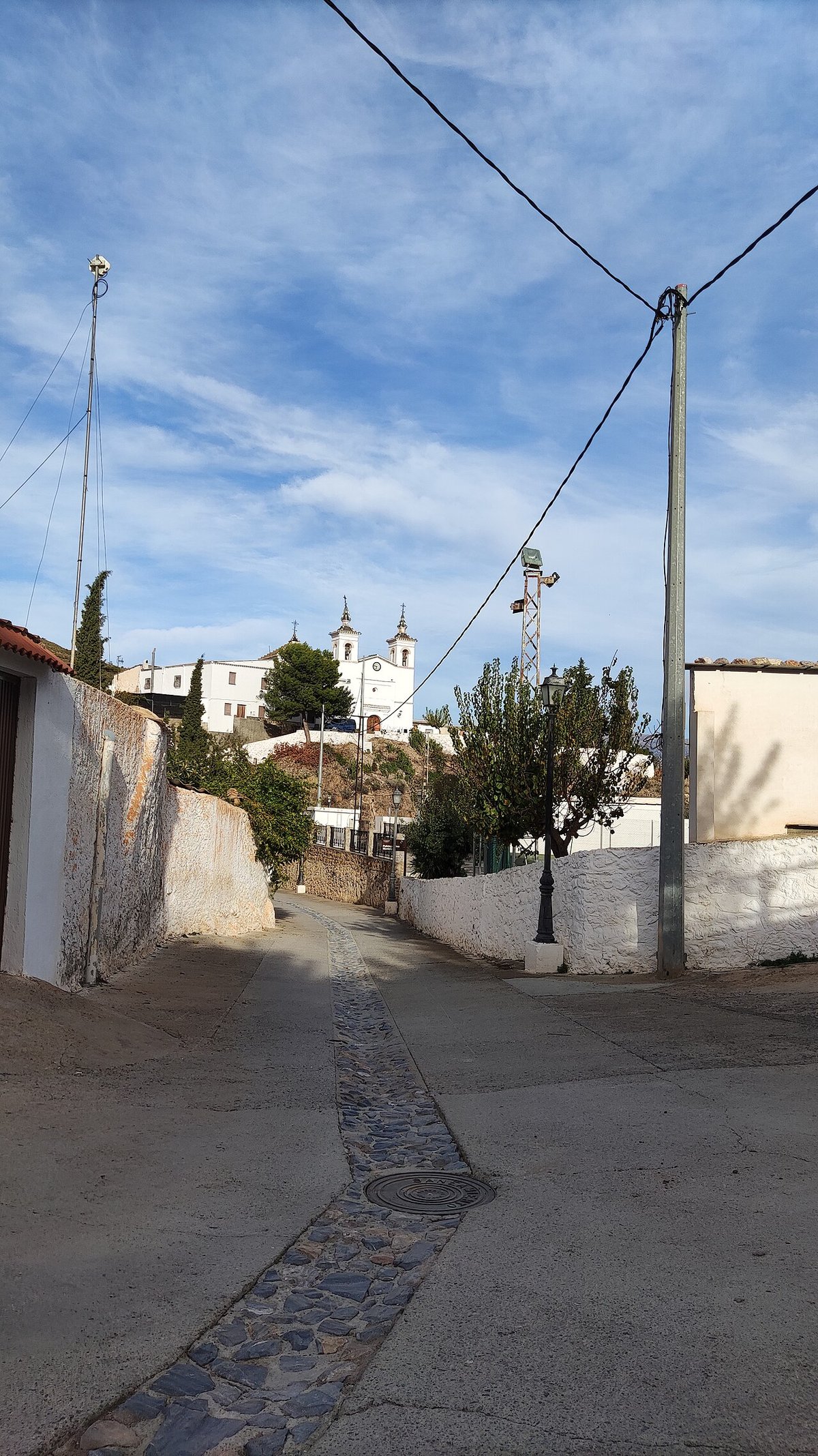
At around 693 metres above sea level, the village occupies a middle band between the valley floor and the first heights of Sierra Nevada. From certain points there are open views towards the Guadalfeo and the rolling hills around it. The white houses, with flat roofs and tinaos, follow the typical Alpujarra style. Tinaos are covered external spaces, often used for storage or shade. Streets are narrow and steep, without a regular grid. Their layout reflects the terrain and building traditions inherited from the Andalusí period.
Traces of history in buildings and water
The Church of the Encarnación stands in a visible position within the village. The current building dates from after the area was incorporated into the Crown of Castile. Like many churches in the Alpujarra, it combines Mudéjar construction techniques with later alterations. Its tower is simple and still works as a visual reference point from different parts of the surroundings.
Interest in the old centre lies more in the overall fabric than in individual monuments. Conical chimneys appear repeatedly, along with iron balconies and small animal enclosures attached to homes. Former washhouses, supplied by irrigation channels that descend from the mountains, point to a system of water management based on shared use. These spaces were once part of daily routines, shaped by collective organisation rather than private supply.
Around the village, agricultural terraces supported by dry stone walls form a key part of the landscape. Locally these are known as tarbenas. They are an old solution for cultivating steep ground. Almond trees dominate, alongside olive trees, fig trees and some other fruit crops. Higher up, the vegetation shifts and holm oaks and cork oaks begin to appear.
Paths, irrigation channels and changing ground
The area around Turón preserves a network of old paths. Many once linked farmhouses, cultivated areas and neighbouring villages. Some are still in use, while others can be recognised by their stone paving or the walls that border them. They are not always signposted, so it is sensible to check their condition before setting out.
The higher irrigation channels, known as acequias, help explain how water has been managed on these slopes. They are channels cut into the ground or built in sections with stone, distributing water to different plots. Along their course there are partidores, small structures that divide the flow, and other simple constructions that regulate how much water reaches each terrace.
Continuing upwards leads into the terrain of Sierra Nevada. Paths become steeper and weather conditions can change quickly. On clear days, from some higher points, it is possible to see the Mediterranean. This is not guaranteed, but it does happen under the right conditions.
Food rooted in climate and work
Local cooking in Turón reflects dishes found across the wider Alpujarra. Migas are common, a dish based on breadcrumbs or semolina, typically associated with rural life. There are also stews made with kid goat, and the plato alpujarreño, a substantial combination of ingredients that has become a regional staple. These recipes are closely linked to agricultural labour and the cold winters of the area.
Cured meats and goat’s cheese are also produced, usually within households or on a small scale. The emphasis is on continuity rather than innovation, with food practices passed down through generations.
Festive moments and seasonal rhythms
The main local celebrations take place in August, dedicated to the Virgen de la Asunción. During these days the pace of the village shifts, as many people who live elsewhere return. There are processions and activities organised by the community itself, reflecting a strong local involvement.
In winter, traditional practices such as the matanza del cerdo, the home-based slaughter of pigs, are still present. This is not a public event but a family one, tied to food preparation for the year ahead. Other key moments in the rural calendar include the almond harvest and the grape harvest, each marking specific points in the agricultural cycle.
When the landscape changes
Spring often coincides with the almond blossom, typically between February and March depending on the year. For a few weeks the appearance of the surrounding terraces shifts noticeably. Autumn also offers good conditions for walking in the area, with milder temperatures.
Summer brings strong heat in the middle of the day, although nights tend to cool down thanks to the altitude. Seasonal contrasts are part of daily life here, shaping both work and movement through the landscape.
Turón can be explored quickly in terms of distance. What takes longer is understanding the relationship between the village, the acequias and the terraces that surround it. That connection explains how life has been sustained on these slopes over generations, through systems that balance terrain, water and time.