Full Article
about Bujalance
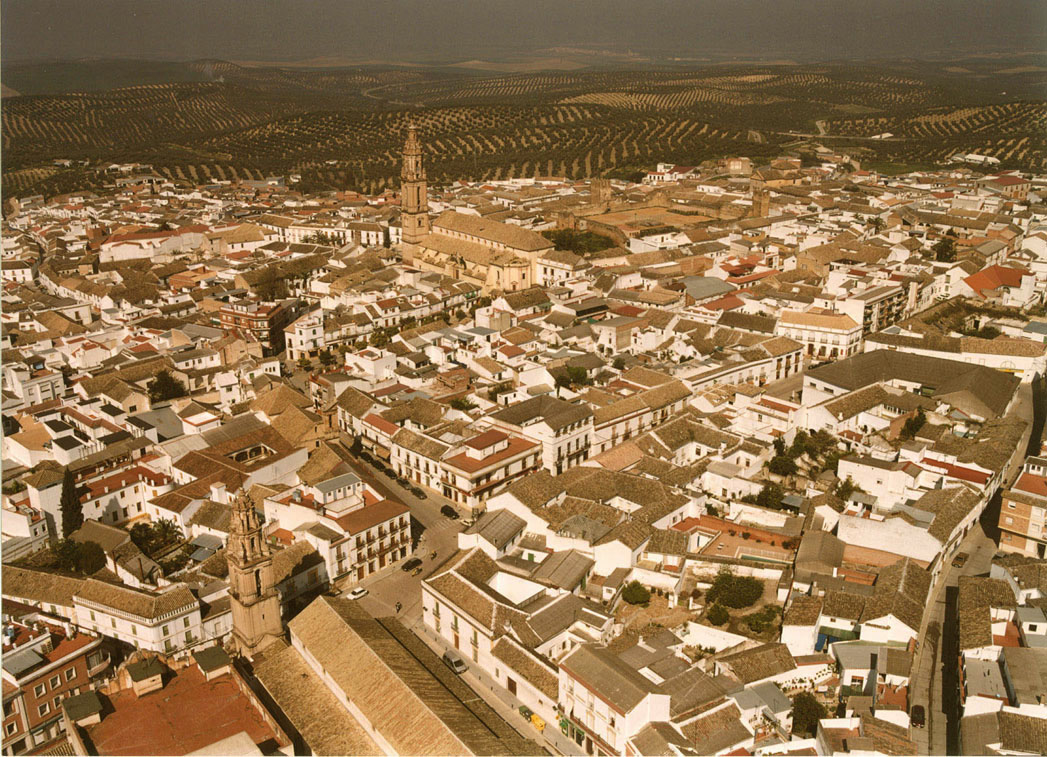
Historic-artistic ensemble ringed by olive groves, dominated by a towering caliphal castle and an old quarter where Córdoba baroque splendour shows in churches and manor houses.
Hide article Read full article
A tower that refuses to fall
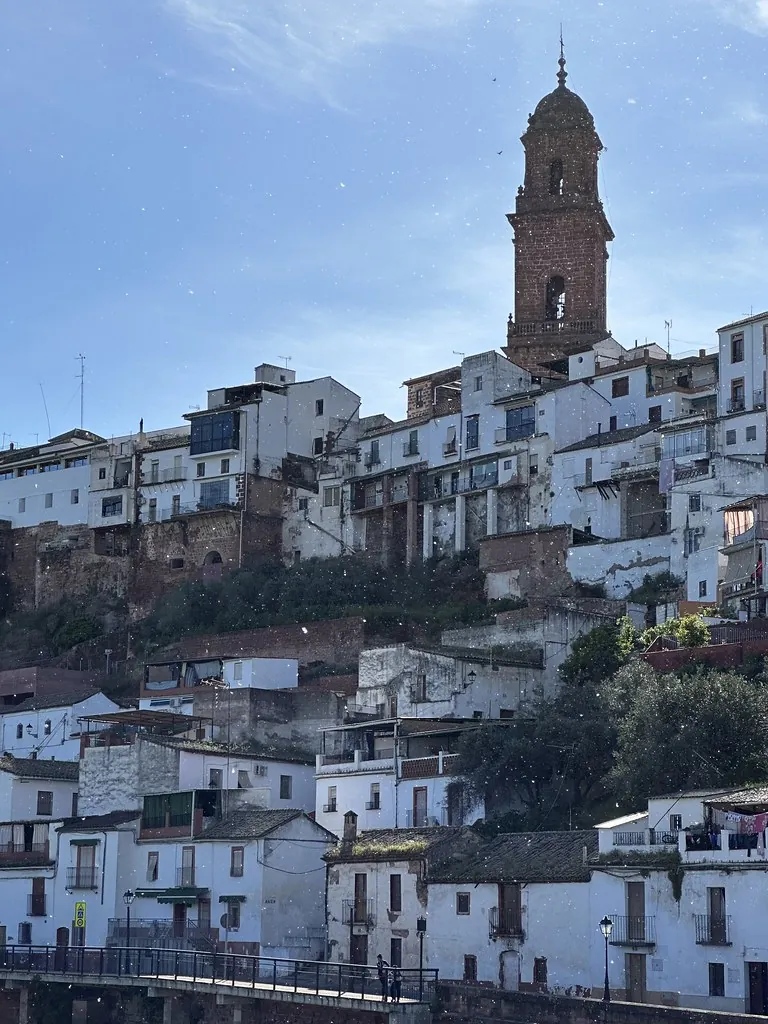
Some places make you slow down without planning to. Bujalance does that. Driving along the A‑4 towards Córdoba, a tower suddenly appears, slightly off line, as if the builder wrapped things up in a hurry. It is not an illusion. This is the tower of the Asunción, and it sets the tone for a visit: eyes up, wondering how it is still standing.
The tower of the church of the Asunción has a visible tilt that gets people reaching for their phones. It is not subtle. Built in the 16th century, it has kept that small deviation ever since.
It is possible to go up, although it is not the most comfortable viewpoint. There are plenty of steps and some narrow stretches along the way. At the top, the reason becomes clear. The countryside opens out in every direction, with rows of olive trees that seem to go on indefinitely. A little further away, the castle marks the skyline and hints at a past shaped by frontiers.
Some locals talk about a light effect that happens on certain summer days, when the sun lines up as it enters the church. The exact date shifts depending on who you ask, but it remains one of those stories that bring early risers out of bed.
A castle that keeps its edge
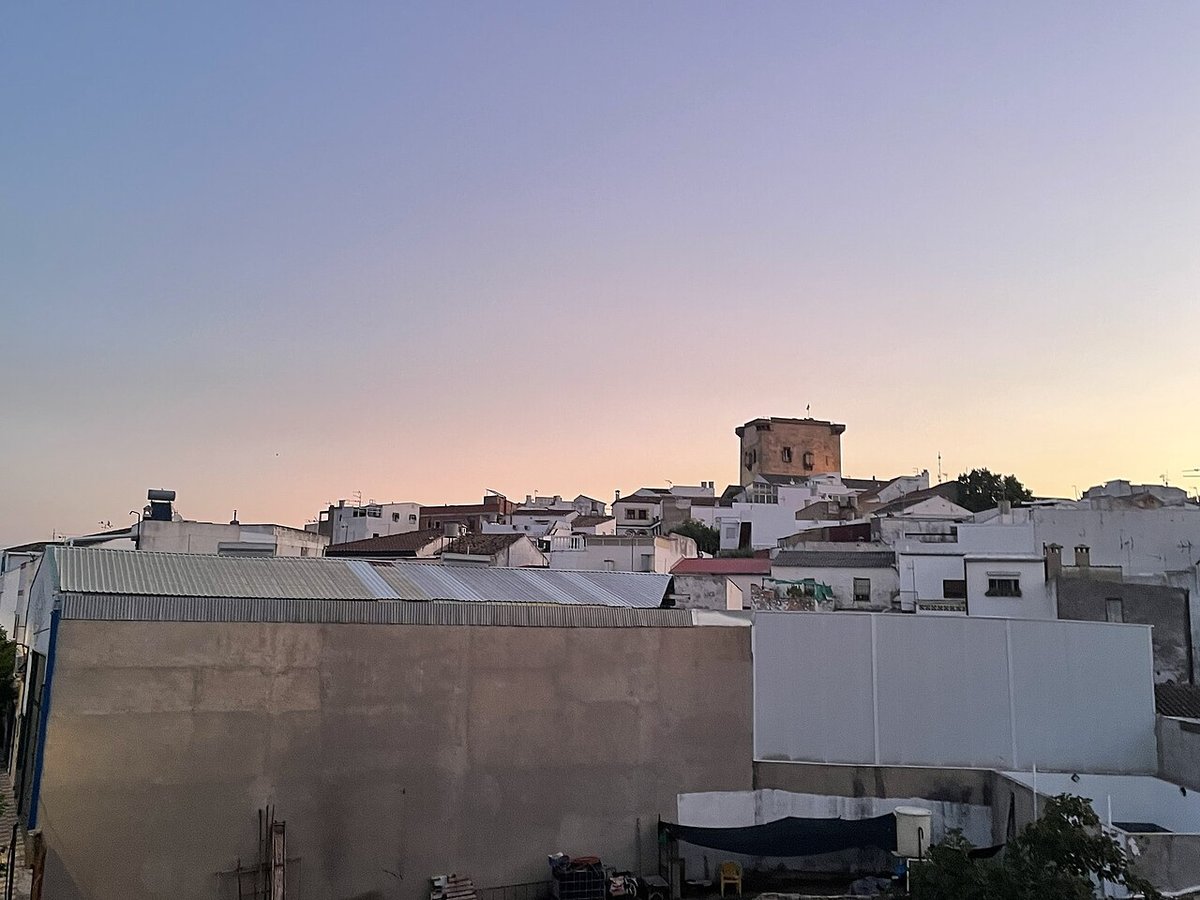
The castle of Bujalance has a welcome quality: it does not feel like a staged medieval setting. It is an Andalusi fortress, built in the time of Abd al‑Rahman III, and it still carries the weight of a defensive structure.
Its walls and towers define the outline of the old town. Walking inside gives a quick sense of its scale. It is not small. The parade ground is broad and, when the weather warms up, it is sometimes used for cultural activities.
When the wind comes in from the countryside, it makes itself known. Air moves through the space between the walls, a reminder that this place was designed for watching over the territory, not for comfort.
How it became a city
Bujalance has an unusual historical detail. For centuries it was one more town in the countryside of Córdoba, until in the 17th century it was granted the title of city by the crown. It did not come cheaply. The municipality had to gather a considerable sum in ducats to secure it.
A simple comparison would be paying for a special registration and then having to live up to it. Since then, the label of “city” has stayed attached to the town, something still mentioned here with a degree of pride.
The local economy has long been tied to the land. In the past, cereals and trade routes crossing the region played their part. Today, the landscape sets the tone: olive groves in every direction.
Early mornings in Bujalance
In summer, there is talk of dawn walks and small gatherings around the tower on specific dates. Activities are often organised to watch the sunrise from the surroundings of the town.
The idea is simple. Walk before daybreak, wait for the light, then head down towards the centre as the heat begins to build. At that hour Bujalance is half asleep, and the sound of swallows carries more than that of traffic.
As the day advances, the rhythm shifts in the way it does across much of Andalucía in hot weather. Quiet streets through the morning, then life returns in the late afternoon.
Flamenquín and everyday life
Flamenquín comes up in almost any conversation about food in the countryside of Córdoba, and Bujalance is no exception. It is large, crisp on the outside and filling. There is no mystery to it, and it does not try to have one.
It fits neatly into the pace of a day here. A walk through the centre, a few uphill streets, a look down the lanes that branch off from the main square, then time to sit down for something substantial.
Towards the end of summer, the town usually holds its feria. It is the kind of celebration lived more by residents than by visitors. The fairground is not vast, so it does not take long to start recognising faces, even if you arrived that same day.
Before you move on
Bujalance is not a place that reveals itself in five minutes. It does not rely on a single striking image. Spend a little time walking, climb the tower or head to the castle, and it begins to make more sense.
If you are passing along the A‑4 and have an hour to spare, it is worth the detour. A whole morning is better. The feeling at the end is of having stopped somewhere that carries on at its own pace, even with the motorway running just a few kilometres away.