Full Article
about Pedro Abad
Town by the highway and the Guadalquivir River, home to a modern Ahmadiyya mosque and historic religious heritage.
Hide article Read full article
A name shaped by a crossing
Pedro Abad appears in 13th-century documents under the Latin form Petrus Abbas. The name points to an abbot called Pedro, linked to a small religious enclave beside a crossing of the Guadalquivir. This stretch of the river was once one of the easier places to ford before reaching Córdoba. The settlement grew from that practical detail: a crossing point, a roadside hospital and a handful of houses by the riverbank.
By the 19th century, when Rafaela María Porras was born here, the town was still largely an agricultural community rooted in the fertile plain of the river. She would later found the Esclavas del Sagrado Corazón, yet the setting she came from remained defined by farming and the steady presence of the Guadalquivir. That connection still shapes both the landscape and daily life.
From river crossing to settled town
After the Christian conquest of Córdoba in the 13th century, the Crown needed to secure the Guadalquivir crossings and the routes linking the countryside with the city. Within that context emerges Abbot Pedro de Meneses, associated with the foundation of a small hospital and a religious community next to the ford. Over time, what had been a stopping point began to take on the character of a permanent settlement.
In the 16th century, the town came under the lordship of El Carpio, which reorganised the surrounding agricultural land. One reminder of that period is the old Pósito Municipal, built in the 18th century to store grain and ensure reserves in years of poor harvest. It is a building that reflects the local economy with unusual clarity: a public granary designed to support an agricultural community.
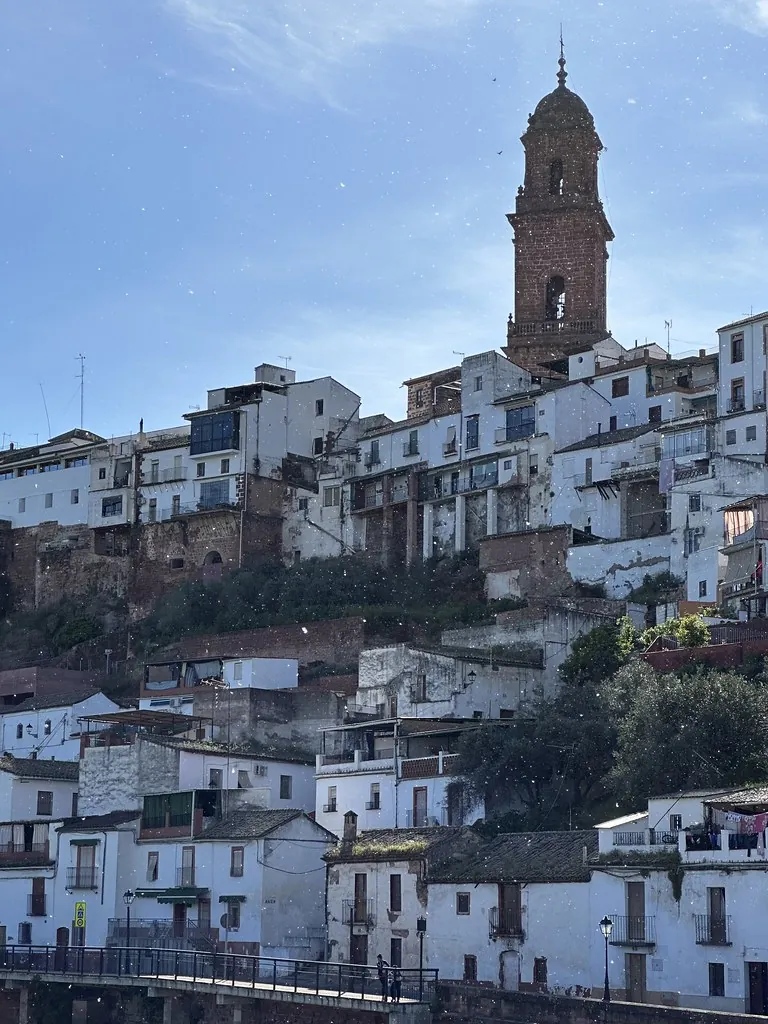
Traditional houses follow a similar logic. They are low, whitewashed and arranged around interior patios. These spaces served as the centre of domestic life during the hot months, while also functioning as areas for storing tools or working plant fibres such as esparto grass.
The rhythm of the Guadalquivir
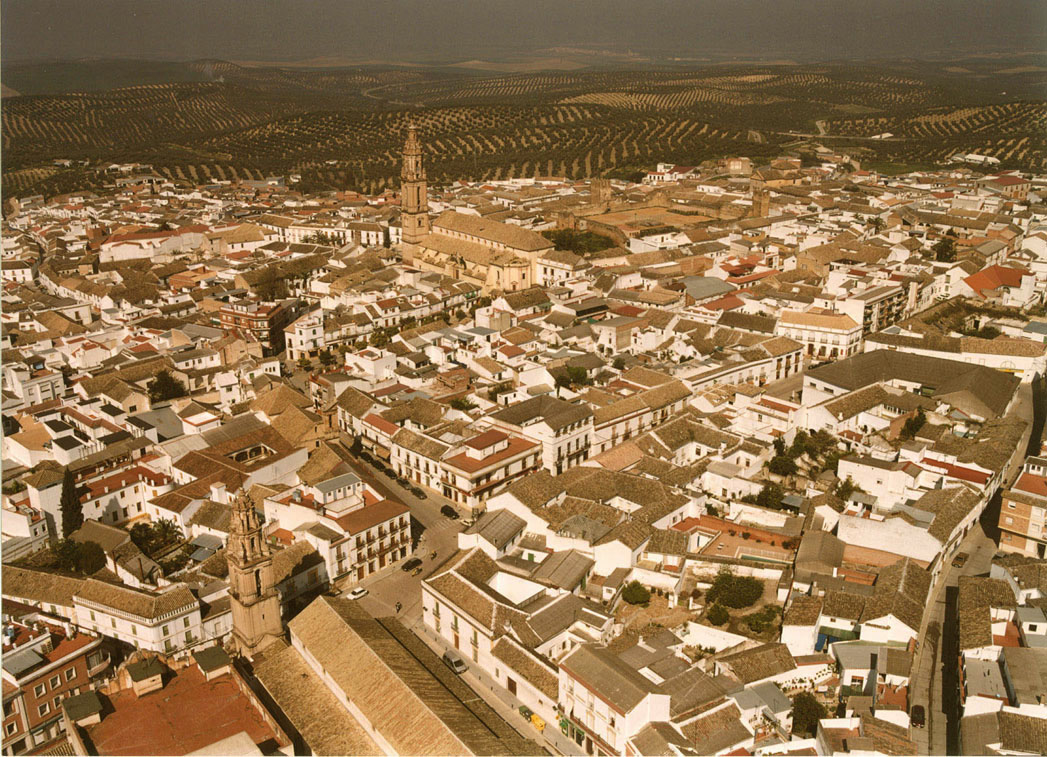
In Pedro Abad, the Guadalquivir is more than a nearby river. The fertile plain, known as the vega, has shaped crops and agricultural rhythms for centuries. Olive groves cover much of the municipality, while irrigated areas support market gardens and cereal plots. This is possible thanks to the river and to historic irrigation channels that distribute water across the land.
Walking along the tracks that cross the vega reveals how closely tied the town is to this environment. The soil is deep and fertile, formed by sediments deposited by the Guadalquivir over time. In certain stretches, the river forms broad meanders, accompanied by riverside vegetation where water birds are a common sight.
For residents, this landscape is not unusual or distant. It is part of everyday experience. Floods, dry spells and the seasonal arrival of different birds are woven into local memory in the same way as harvests and planting cycles.
Devotion and shared traditions
The strongest local devotion centres on the Santo Cristo de los Desamparados, kept in a hermitage on the outskirts of the town. According to tradition, the image is taken out in an extraordinary procession only once every century. The dates most often recalled are 1735, 1835 and 1935, and attention is already turning towards the next expected occasion in 2035.
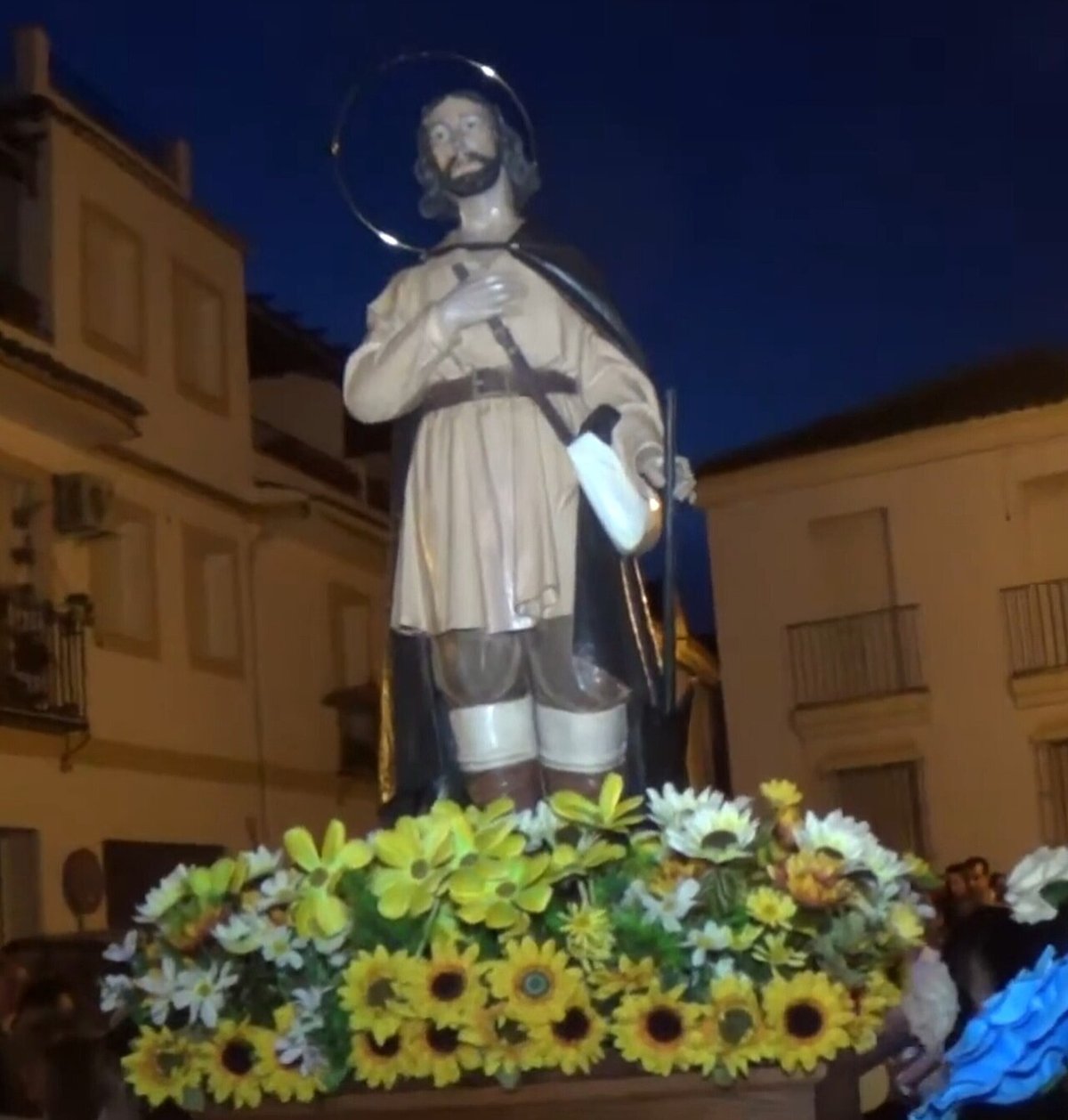
In the meantime, religious life is marked by more regular events. Each September, a novena dedicated to the Cristo brings together the local community. During the summer, a romería, or pilgrimage, takes place to the hermitage. It usually begins early in the morning, when temperatures still allow for walking across the vega.
Between olive groves and a mosque
One of the most distinctive features of Pedro Abad is the presence of the Ahmadiyya Muslim community. In the early 1980s, the Basharat Mosque was built here, regarded as the first newly constructed mosque in Spain after centuries without purpose-built Islamic temples.
The building stands out in the landscape. Its exposed brick minarets rise among the olive groves on the edge of the town, visible from a distance. Each year, the community organises a large religious gathering that brings together worshippers from different countries. Over the decades, this presence has become part of everyday life in the municipality.
That meeting of traditions is also reflected in home cooking. Seasonal dishes remain simple and closely tied to the land. When broad beans are tender, gazpacho de habas is prepared. Wild asparagus gathered in the countryside often appear in omelettes. Chickpea stews with vegetables from the vega are another staple, rooted in the rhythms of the agricultural year.
Moving around Pedro Abad
Pedro Abad lies a short distance from Córdoba, beside the main road that runs through the Guadalquivir valley. The town centre is compact and easy to explore on foot.
A path leads from the centre towards the hermitage of the Santo Cristo, crossing part of the vega along the way. It is not a long walk, though in summer it is best done early in the day, as there is little shade along the route.
There are also agricultural tracks near the river that can be followed on foot. The landscape shifts with the seasons: bright green in spring, drier tones towards the end of summer and, at times, low-lying mist that settles over the fields.