Full Article
about Villa del Río
Riverside town with a Roman bridge and a castle that houses the town hall, known for its cultural activity and furniture industry.
Hide article Read full article
A place that reveals itself slowly
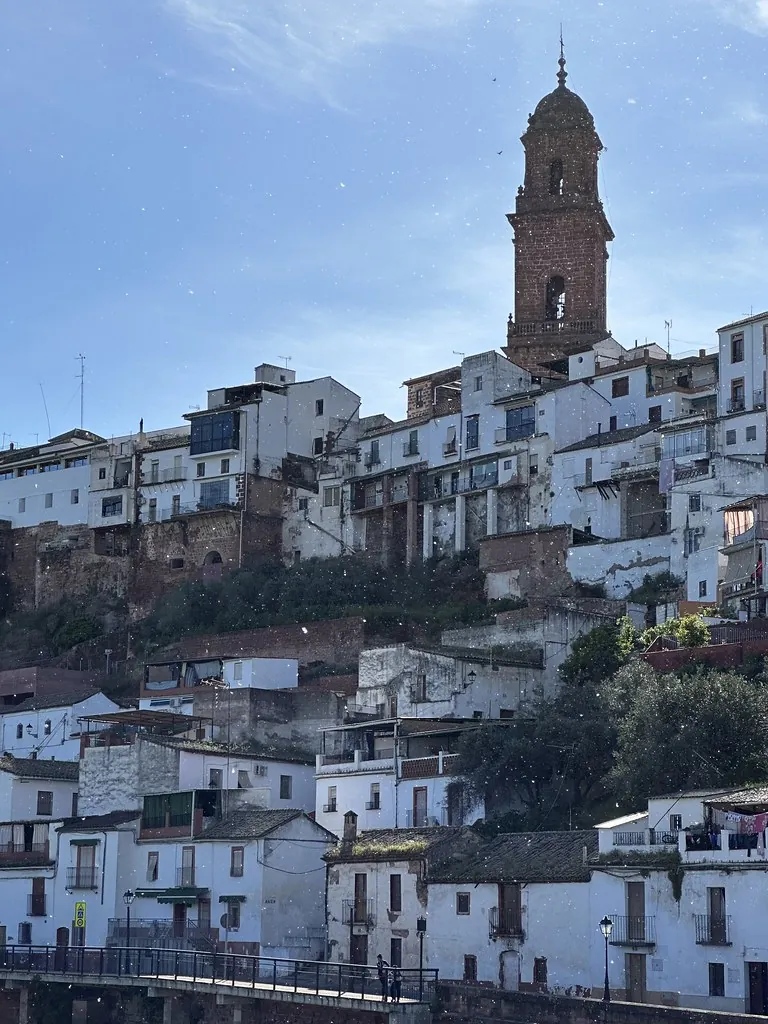
Villa del Río has the feel of somewhere you arrive at by accident. The sort of town that appears when a satnav sends you along a secondary road, where you stop for a quick stretch and end up staying longer than planned. There is a bridge to cross, a quiet centre to wander through, and then the gradual realisation that this is not just a passing stop.
That old bridge turns out to date back to Roman times. The streets, at first glance unassuming, carry more history than they let on. Villa del Río does not present itself loudly. It unfolds in layers, each one tied to a different period, each one still visible in the way the town is laid out today.
From fortress to town hall
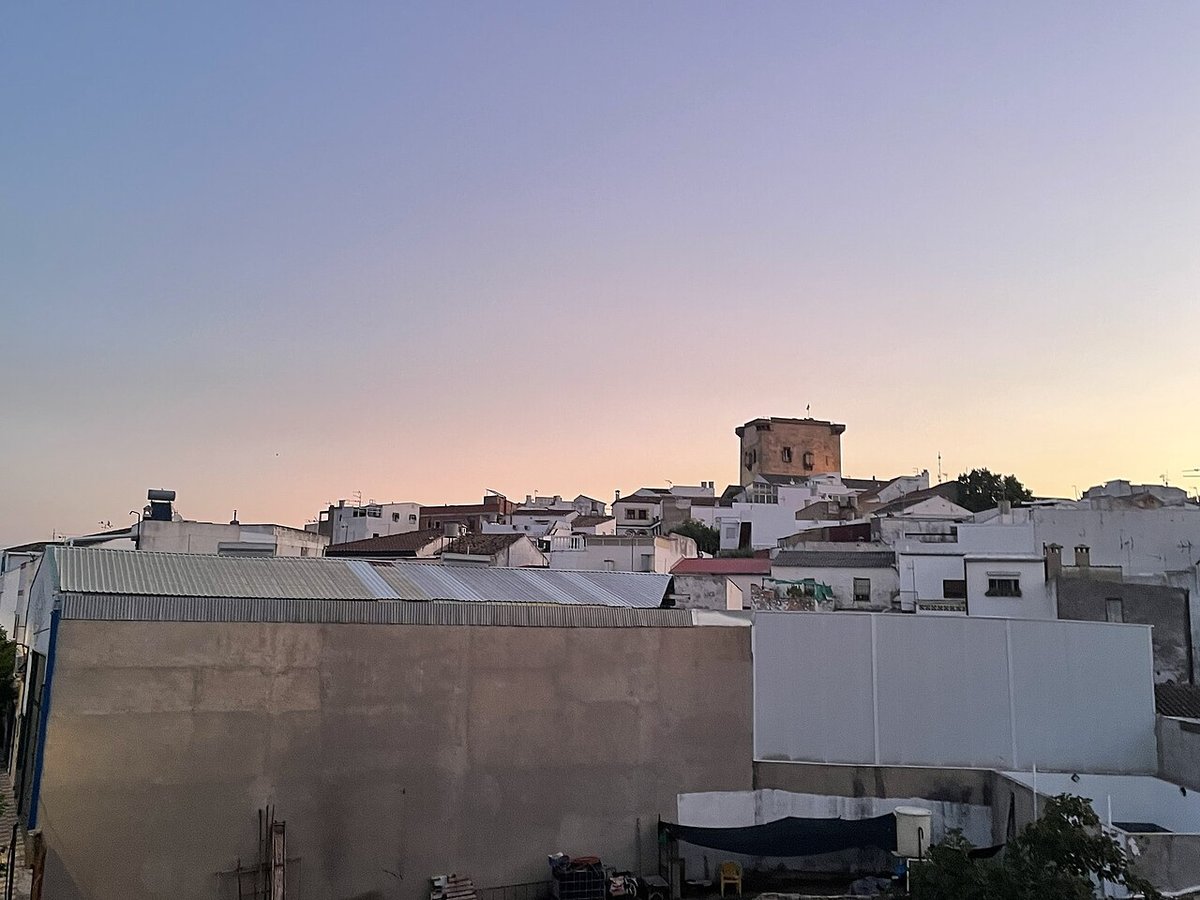
The most curious building sits at the top of the town. Today it serves as the town hall, but its story stretches much further back.
Its origins are usually linked to an Andalusí fortification. Over time, like many buildings in this part of Andalucía, it adapted to changing needs. In the 16th century it was transformed into a church, part of a wider pattern in which former defensive structures were absorbed into everyday life. The project involved Hernán Ruiz I, an architect also connected with major works in Córdoba.
Its role shifted again in the 20th century, when it functioned as a market hall for many years before becoming the town hall. On paper that sequence of uses may seem a little chaotic, but it reflects a practical logic. Towns make use of what they already have. A structure that has survived centuries of conflict and renovation can just as easily house fruit stalls or municipal offices.
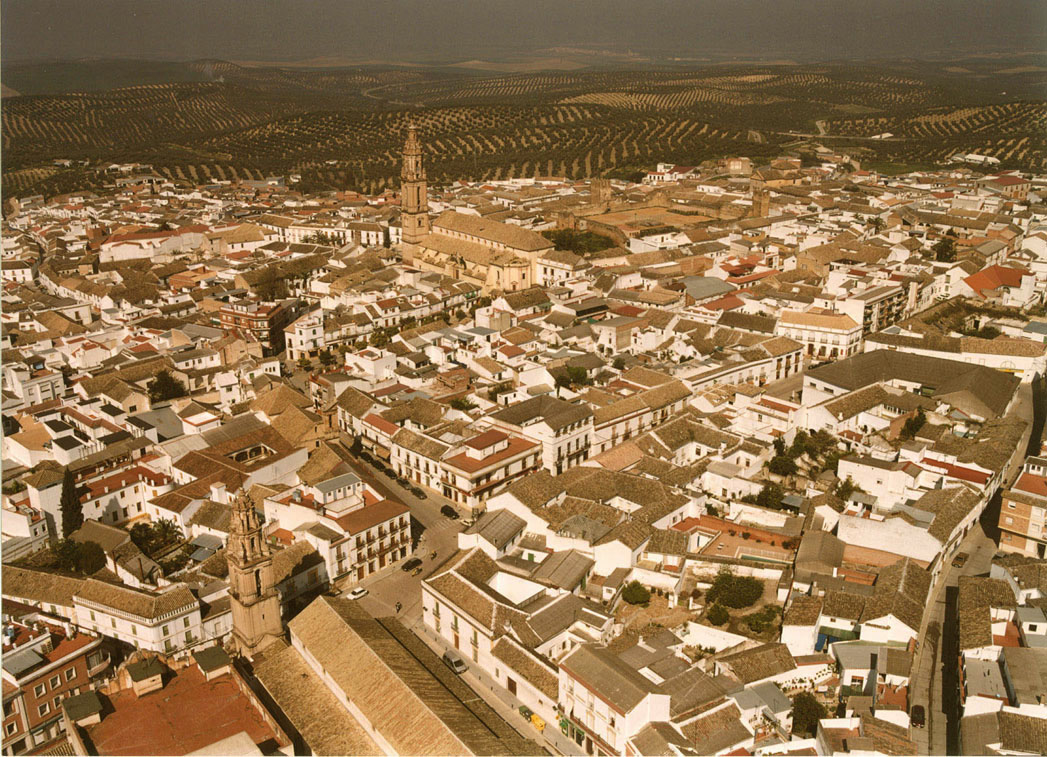
Climbing up to this building also gives a sense of orientation. From here the layout of the streets becomes clearer, along with the surrounding landscape of olive groves that defines this part of the Alto Guadalquivir.
The Roman bridge and the Arroyo Salado
On the outskirts stands the Roman bridge over the Arroyo Salado. It once formed part of the Vía Augusta, the major Roman road that ran along the Mediterranean coast and across much of southern Iberia.
This is not a monumental bridge on the scale of those found in larger cities, yet it has a quiet appeal. The large stone blocks, the arches, and the overall solidity give the impression of something built with time in mind. It has, in fact, endured remarkably well.
From the town, reaching the bridge is usually a short walk. It is the kind of route taken without much planning, more about getting some fresh air and taking in the surroundings than following a marked hiking trail.
The name of the stream can be misleading. Although it is called Salado, meaning salty, the water itself is not.
A house with royal privilege
In the centre of Villa del Río stands the Casa de las Cadenas. Local tradition holds that this house hosted Carlos III when he was still an infante, during one of his journeys through Andalucía in the 18th century.
Following that visit, the building was granted a royal privilege. Among other things, it held the right of asylum. Anyone who entered the house would be under its protection for a period of time. Today that idea might sound almost like a game, similar to the notion of a safe base where no one can touch you, but at the time it carried real legal weight.
The building now houses the municipal historical museum. Inside are objects linked to the town’s past, along with works by artists connected to the area.
Food shaped by the countryside
The cooking in Villa del Río reflects its surroundings. This is a landscape of olive groves and farmland, and the dishes follow that rhythm.
Migas are a regular presence when the weather cools. They are made from stale bread, olive oil and a variety of accompaniments that change from one household to another. Sometimes grapes are added, sometimes chorizo or peppers. It is a dish rooted in making use of what is available, something that has gradually become a tradition in its own right.
Another well-known dish is the olla de San Antón, a hearty stew associated with January celebrations in many Andalusian towns. It is filling, seasonal, and closely tied to the colder months.
Gazpacho with cod also appears on local menus, which can surprise those expecting the cold tomato soup typically associated with summer. Here it takes on a different form.
To finish, there are sweets such as roscos de vino, a common feature of homemade baking in the area.
When to come and how to approach it
Spring is often the most comfortable time to explore this part of the Alto Guadalquivir. The countryside is green, temperatures are milder, and walks around the river are more enjoyable.
Summer brings higher temperatures, as across much of Córdoba province. It is also when the town’s main festivities take place, and the streets feel livelier, especially in the evenings.
Winter is quieter. For those who prefer fewer people around and an excuse to settle in with warming dishes, it has its own appeal.
Villa del Río is not a place for ticking off a long list of landmarks. It works better at a slower pace. A walk through the centre, a climb up to the former castle that now serves as the town hall, and a short stroll out to the Roman bridge are enough to form a clear impression.
After that, the choice is simple. Continue exploring the Alto Guadalquivir, with Montoro close by, or head home with the sense of having come across somewhere that was not part of the original plan. Sometimes those unplanned stops leave the strongest impression.