Full Article
about Villafranca de Córdoba
A town on the Guadalquivir known for its water park and riverside pastureland, perfect for family outings.
Hide article Read full article
The bells of Santa Marina ring early, their sound rising briefly towards the hills before settling again over the rooftops. At that hour, Villafranca de Córdoba is still moving slowly. From the terrace of the old butcher’s shop, now a library, there is a clear view of the Guadalquivir opening out across the fertile plain. Green maize, lines of olive groves and, further off, drier farmland. Three landscapes within sight, without going anywhere.
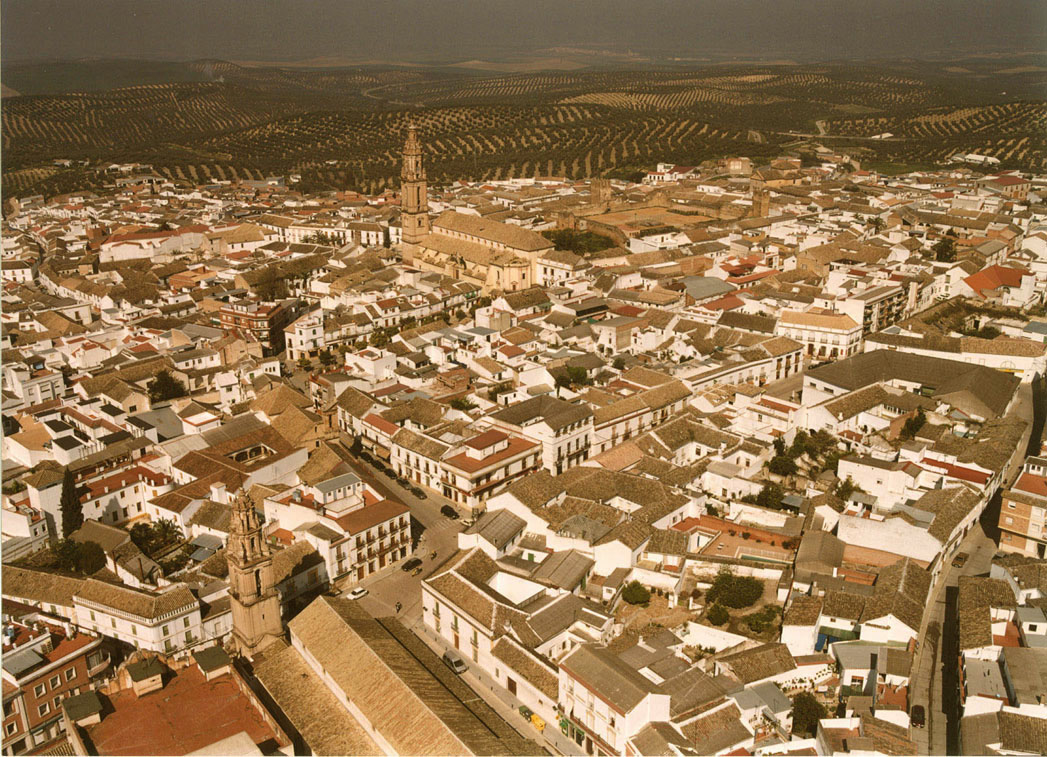
Villafranca de Córdoba lies just a few kilometres from the provincial capital, in the Alto Guadalquivir area. It is a town of just under five thousand people, where the river still sets the rhythm of both farming and the seasons.
Towers that keep their own time
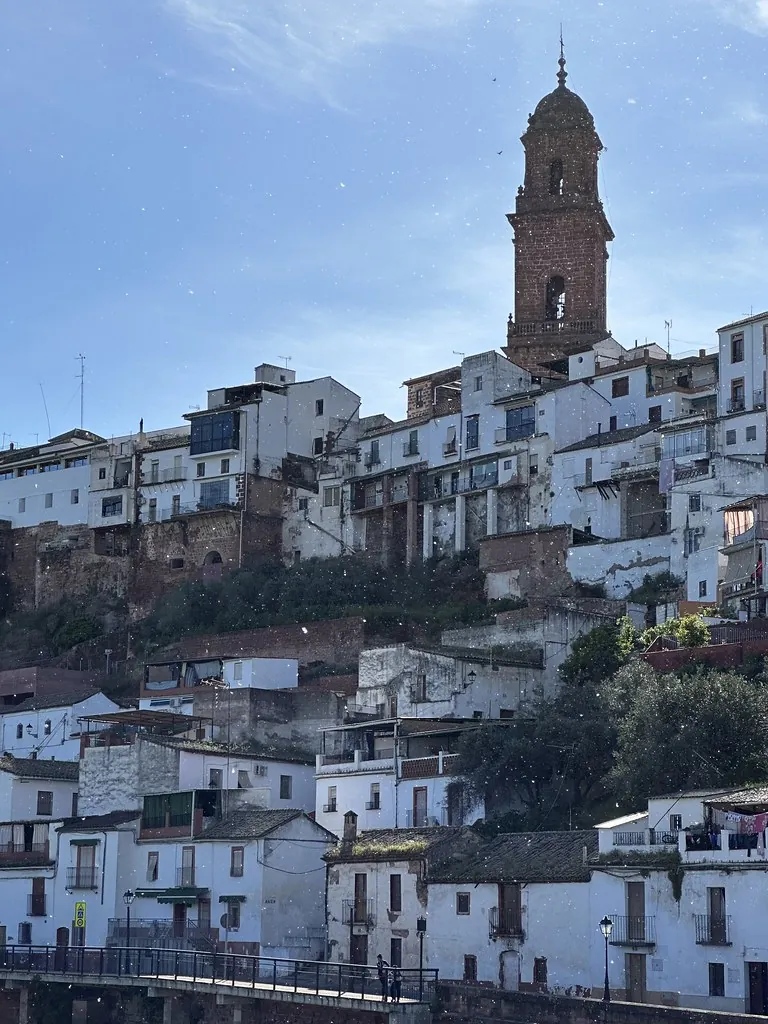
Halfway between the city and Sierra Morena stand two brick towers that shape the town’s skyline.
The Torre del Reloj began to rise in the 16th century. Over time, additional sections were added to accommodate the clock mechanism, as if the building had grown around it. From below, it appears taller than it really is. Its proportions are simple and steady, the kind of construction intended to last.
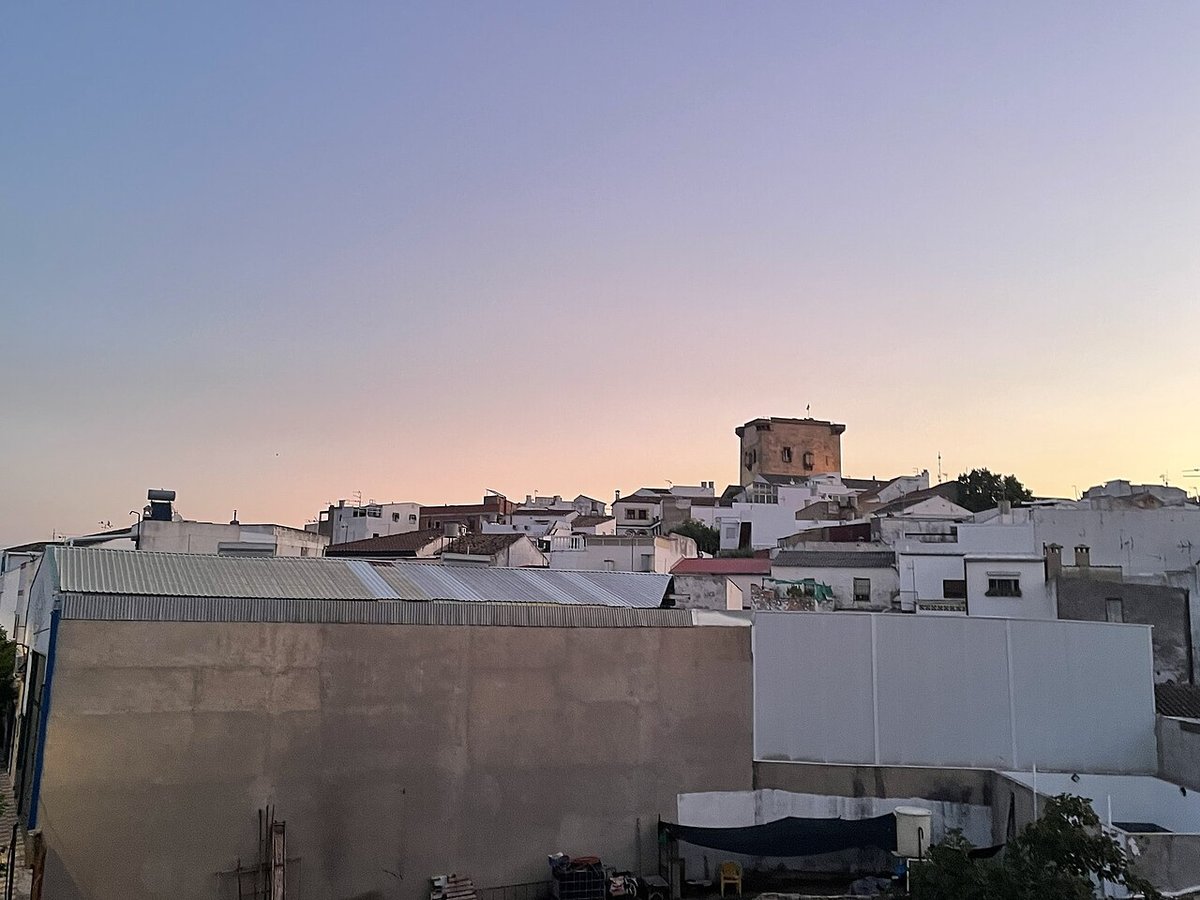
A short distance away stands the Torre de San Miguel. It is all that remains of a vanished church. A pale cylinder of lime and brick, it now works almost as a visual marker for finding your way through the streets of the centre.
Between the two towers stretches a small maze of narrow streets. By mid-morning, the smell of bread drifts out from some houses. There is no need for a detailed plan here. The old quarter can be explored calmly in less than an hour.
Water below, voices above
Water appears in several corners of Villafranca. There is a route known locally as the Ruta del Agua, linking traditional fountains and ending at the Fuente Agria.
The Fuente de los Dos Caños was built between the late 18th and early 19th centuries. One story is told again and again: the town council wanted to stop young women from going down to the river to wash clothes. Too many conversations gathered there, along with the occasional romance. Bringing water closer to the centre was their solution.
The Fuente Agria is still in use. Its water has a mineral taste, slightly iron-like. It is common to see people filling large bottles to take away.
When the air smells of sardines and tortilla
There are days when the scent of Villafranca changes completely.
During the festival of La Candelaria, bonfires are lit in different neighbourhoods. The smoke from grilled sardines mixes with that of migas cooked in large pans. Migas is a traditional dish made from breadcrumbs, often prepared outdoors for sharing. People gather around the fire, talking as night falls.
Around San Isidro, a collective tortilla is prepared, well known in the surrounding area. It is cooked in the street, with many hands working around the pans. Afterwards, it is shared out in pieces of paper and eaten standing up, in small groups where conversations tend to circle back to the orchards or the river.
From the plain to the hills, on foot
To the north, the land begins to rise towards Sierra Morena. From the Puerto de la Higuera, a path leads through old olive groves and small patches of scrubland. The route reaches an area known as La Huertezuela, where the San Isidro pilgrimage traditionally takes place.
There is no need to wait for that occasion to walk it. On cooler days, the path can be followed without difficulty. About halfway along are the remains known as Los Torreones. These are stone foundations that point to very old settlements, reused over centuries.
The landscape is open. At times, the only sounds are the wind moving through the olive trees and the sudden flight of a partridge.
Before you arrive
Spring is usually the most comfortable time to explore Villafranca de Córdoba. The plain is green, and the air carries the scent of orange blossom from nearby orchards. In summer, the heat builds quickly from mid-morning, so earlier starts are advisable.
If your visit coincides with carnival weekends, the atmosphere changes noticeably. Chirigotas, satirical singing groups typical of Andalusia, and competitions fill the streets late into the evening. Anyone looking for quiet will notice the difference.
It is easiest to leave the car on the wider roads at the edge of town and continue on foot. The centre is compact, and the streets are narrow.
Many people carry an empty bottle when passing by the Fuente Agria. The water is drinkable and, after a walk, it has a distinctly fresh, mineral quality.
On the road back towards Córdoba, open fields stretch alongside for several kilometres. At certain times of year, sunflowers or tall cereals move with the wind. Behind you, the outline of the two towers remains visible above the town for some time, standing straight until they finally disappear around a bend.