Full Article
about El Granado
Border town on the Guadiana with the river port of La Laja; known for its wind farm and revival of traditional crafts.
Ocultar artículo Leer artículo completo
A Village that Doesn’t Need Your Attention
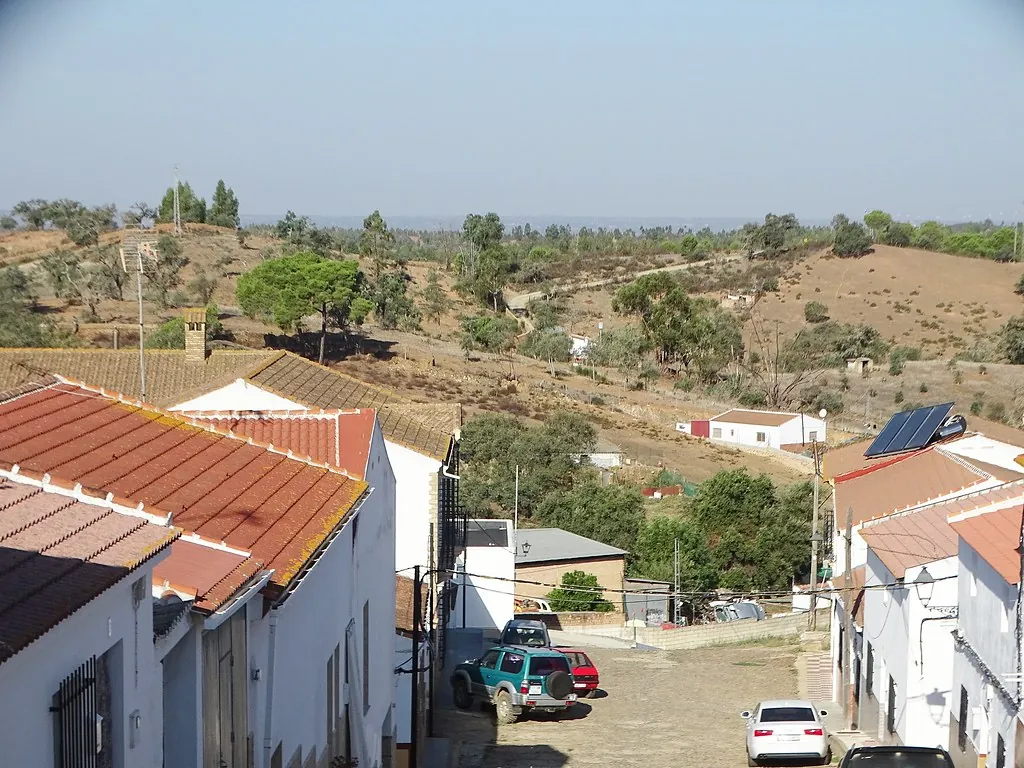
The first thing you notice is the quiet. Not the postcard hush of a tourist trap between coach parties, but the real, agricultural silence of a place where tractors outnumber cars and the loudest noise at midday is the church bell counting to twelve. El Granado sits 146 metres above sea level on the western fringe of Andalucía, 35 minutes from the Portuguese bridge at Ayamonte and roughly halfway between Seville and the Algarve coast. Most British travellers flash past on the A-49, bound for beach apartments or city break hotels. The ones who peel off at exit 75 usually arrive by accident—GPS recalculating after a missed turn—and stay just long enough to wonder why they hadn’t heard of the place before.
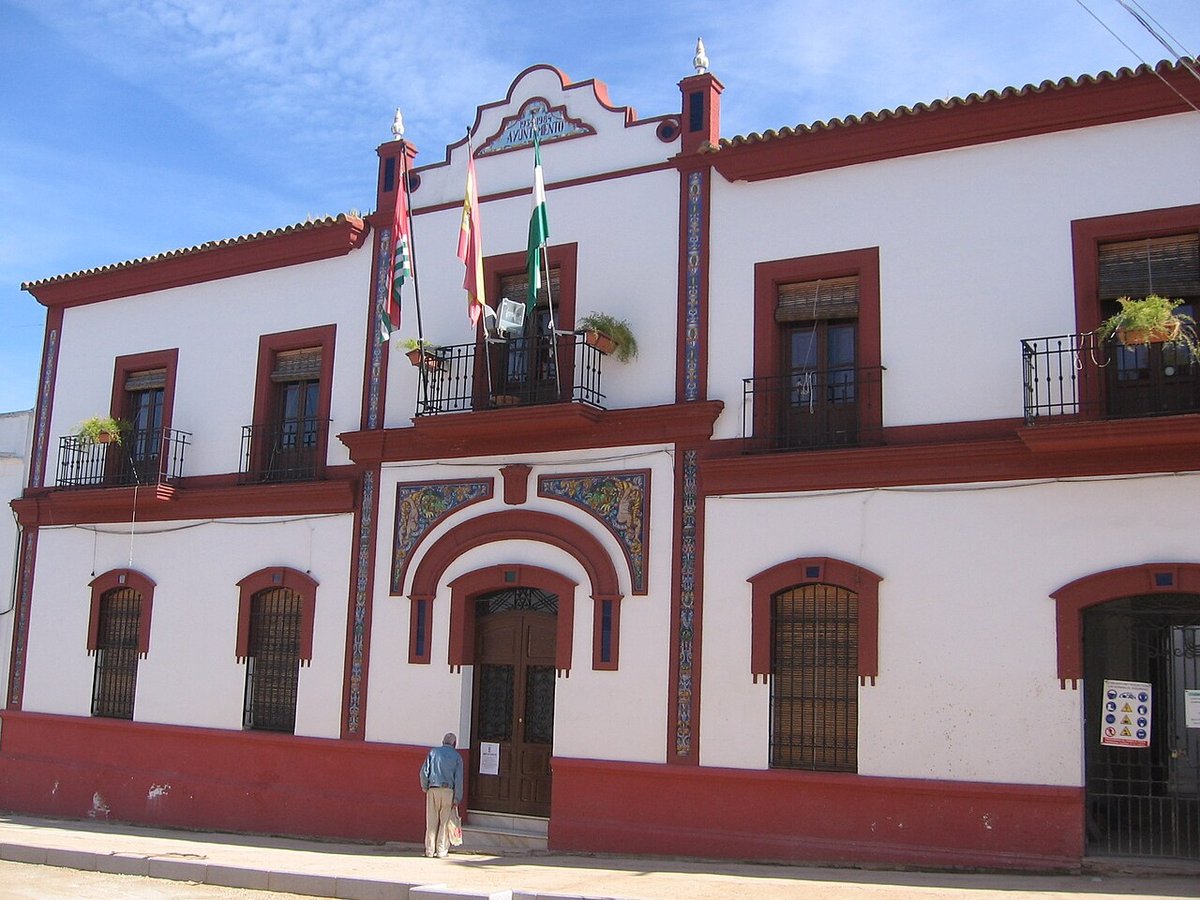
There’s no medieval fortress, no Renaissance plaza, no Instagram-ready mirador. What the village offers is simpler: a grid of whitewashed houses, a single church with a modest baroque tower, and a bar that still serves coffee for €1.20. The till is a wooden drawer; the waitress writes the bill on the paper tablecloth. If you ask for Wi-Fi she points to the square and says, “Try by the town hall—four bars when the wind blows right.”
The Working Landscape
El Granado is surrounded by dehesa, the open oak pasture that produces jamón ibérico. Black pigs graze under holm oaks; their haunches hang in a brick outbuilding behind the butchers, curing for two winters. The road west is flanked by olive groves whose silver leaves flash like fish scales in the sun. In March the blossom drifts across the tarmac like fine snow; in November the harvest convoy of tractors and plastic bins clogs the lane for days. This is not scenery arranged for visitors—it’s a farm that happens to have a village in the middle.
Walking tracks strike out from the last streetlamp into the scrub. They are farm tracks rather than signed footpaths: wide enough for a Land Rover, dusty in summer, gluey ochre after rain. A 40-minute loop north-east brings you to an abandoned threshing circle where stone walls still bear the scars of Roman plough shares. Take binoculars: booted eagles perch on the electricity pylons; hoopoes pick over the cow pats. Iberian lynx have been photographed within five kilometres, but you’re more likely to spot a mongoose darting across the road. The village tourist office—one desk open on Friday mornings—will lend you a laminated map, but the farmer at the first gate can tell you which route is underwater after last night’s shower. He’ll also tell you when to turn back if the sky purples: flash floods here are sudden and waist-deep.
Food that Follows the Plough
Lunch is the engine of the day. Kitchens fire up around 13:30 and close sharply at 16:00; miss the window and you’ll wait until 20:30 for anything hotter than a packet of crisps. The daily set menu—three courses, bread, wine—costs €11 at Bar Juan opposite the church. Monday might bring cocido de conejo, rabbit stew thick with bay and pimentón; Thursday is usually migas, fried breadcrumbs studded with chorizo and grapes. Vegetarians get a plate of pisto (Spanish ratatouille) and a lecture on the iron content of spinach. Pudding is arroz con leche, chilled rice pudding freckled with cinnamon, or poleá, a semolina porridge sweetened with honey from the Sierra.
There are no souvenir shops, but the butcher sells vacuum-packed lomo that survives the flight home in hold luggage. The bakery opens at 07:00 and sells out of olive-oil tortas by 10:00; locals bring their own cloth bags, visitors get a cardboard box that slowly leaks sesame seeds into the hire-car footwell. If self-catering, stock up in Villanueva de los Castillejos before you arrive—the village supermarket is the size of a London corner shop and shuts for siesta at 14:00 sharp.
When the Village Turns the Volume Up
For fifty-one weeks of the year El Granado murmurs. Then, in mid-September, the fiesta mayor detonates. The population quadruples as emigrants return from Barcelona and Germany. Brass bands march through streets strung with paper lanterns; sherry is served in plastic measuring jugs until the barrel runs dry at 03:00. The highlight is the toro de fuego—strictly a papier-mâché bull with fireworks strapped to its horns, pushed through the crowd by teenagers wearing England football shirts bought from a charity shop in Huelva. British visitors who stumble into this are welcomed, fed, and lectured on the proper way to pour fino (tilt the glass, bottle almost touching the rim). Accommodation is impossible unless you booked the previous January; most overnight guests sleep in cars or are adopted by families who notice the GB sticker and remember cousin Charo in Coventry.
Easter is quieter: two processions, no bands, hooded penitents carrying candle-powered floats that smell of hot wax and orange blossom. Even if you’ve seen Seville’s mega-cofradías, the intimacy here is disarming—Mary’s float wobbles as she’s manoeuvred through a doorway only centimetres wider than her platform, and the only soundtrack is the shuffle of rope-soled sandals and the occasional sob from an aunt in the front row.
Getting There, Getting Stuck, Getting Out
El Granado lies 94 km west of Seville airport, 60 km from Faro if you’re coming from the Algarve. The final 12 km are single-carriageway country road: straight enough for locals to treat it as a runway, bendy enough to keep adrenaline high. Hire cars return dirty; white paint from village walls stripes the wing mirrors of vehicles wider than a Fiat Panda. There is no petrol station—fill up in Sanlúcar or Ayamonte. Buses from Huelva run twice daily except Sunday, when the service is replaced by a taxi that leaves when all seats are sold. The driver will stop at the bakery if you ask nicely and pay for his coffee.
Mobile coverage is patchy inside the older houses; step into the square for 4G. The cash machine vanished during the 2008 crisis; the nearest is ten minutes away in Villanueva, beside a pharmacy that stocks Marmite for homesick expats. English is rarely spoken—learn the Spanish for “medium rare” (hecho a puntito) and “no tripe” (sin callos) and you’ll eat better.
Should You Bother?
El Granado will never feature on a “Top Ten Hidden Villages” list because it has no desire to be discovered. It offers no postcard racks, no sunset viewpoints, no artisan ice cream. What it does give travellers is a calibration check: a place where lunch is still the main event, where the barman remembers how you like your coffee after two visits, where you can stand in the middle of the road at midnight and hear only a dog barking two kilometres away. Come if you need reminding that Spain extends beyond the Costas and the Camino. Stay a night, buy the ham, walk the farm tracks, leave before the fiesta if you value sleep. And don’t tell anyone else—unless you fancy queueing for your €1 coffee.