Full Article
about La Zarza-Perrunal
Young municipality split from Calañas with a strong mining identity; noted for its industrial heritage and the open-cast mine.
Hide article Read full article
A quiet arrival in the Andévalo
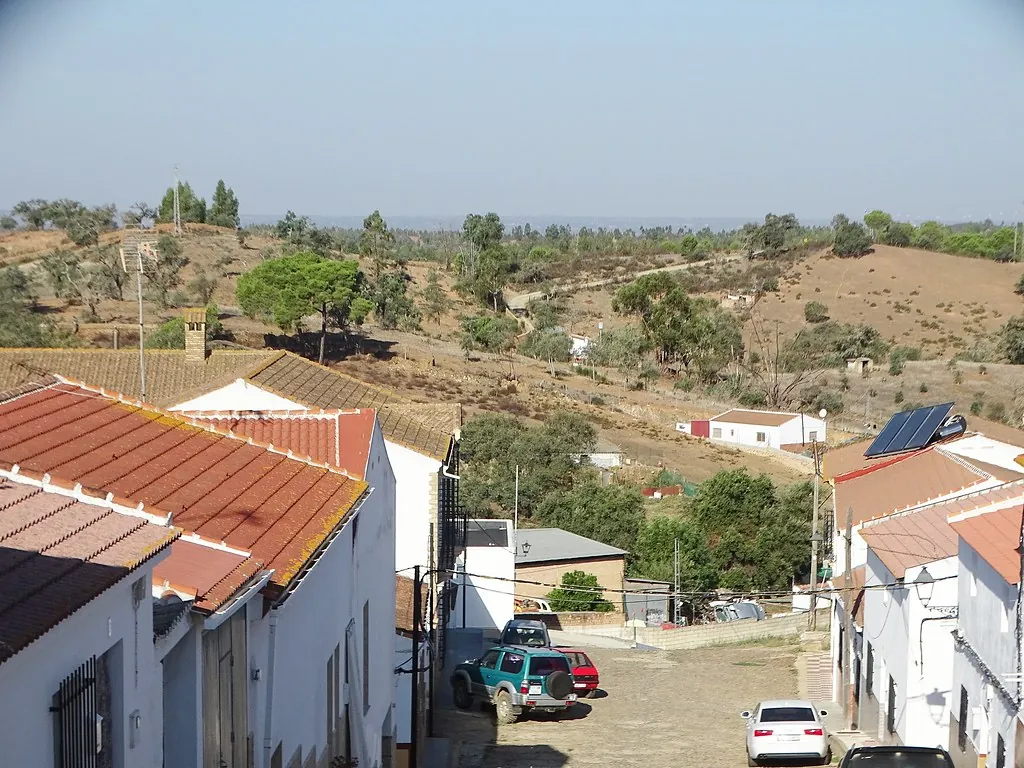
Some villages try to catch your eye from the road. Others, like La Zarza-Perrunal, simply appear once you are already deep in the Andévalo, in western Andalucía, where the landscape begins to repeat itself: holm oaks, open estates, the occasional cortijo in the distance. Then the houses come into view and the pace shifts. Life here moves calmly, as if urgency never quite took hold.
La Zarza-Perrunal has around 1,200 inhabitants and sits in a part of the province of Huelva where the countryside outweighs any formal tourist plan. For decades, local work revolved around nearby mining and the land itself. That background still shapes the atmosphere today. The settlements are small, the streets straightforward, and daily life continues to revolve around agriculture and livestock.
This is not a place that reinvents itself for visitors. It carries on as it always has, and that continuity is part of its character.
Two small centres, one municipality
The most visible building in La Zarza is the parish church of Nuestra Señora de la Concepción. Its simple tower rises above the whitewashed houses and can be seen from most streets. The façade is plain, the structure modest, and for decades it has marked the centre of local life.
The urban layout follows the pattern common to inland Huelva: whitewashed homes, short streets, and a handful of small squares where conversations naturally unfold. Spectacular architecture is not the point. Interest lies in the overall feel and in the way the village functions day to day.
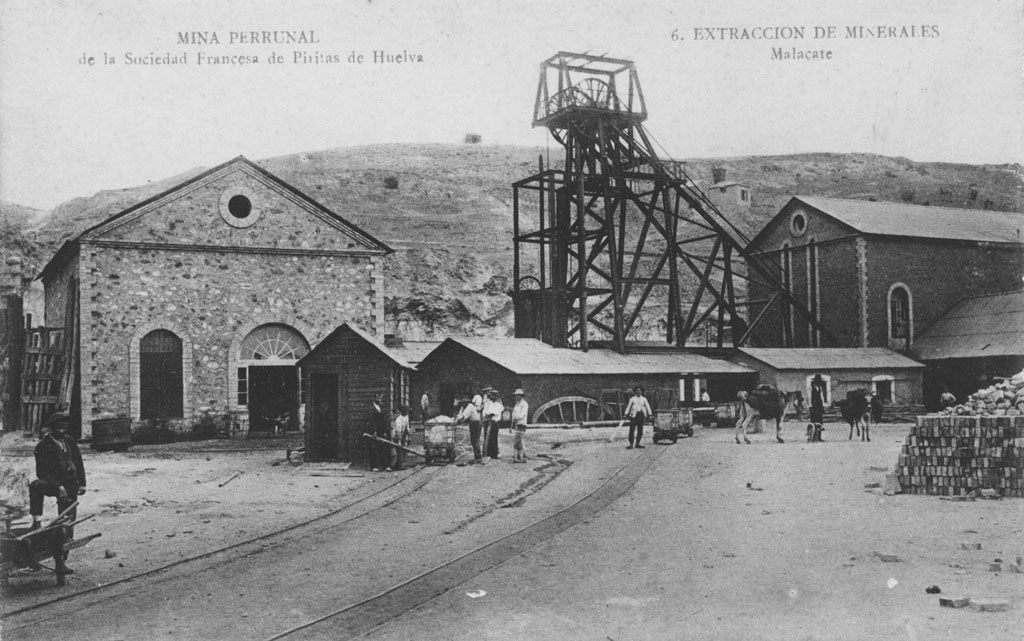
A few kilometres away stands Perrunal, which forms part of the same municipality. Perrunal developed in close connection with the area’s mining activity and still retains the air of a separate settlement. It has its own church dedicated to San José and a simple street plan that can be explored in a short walk. The scale is small, the atmosphere unhurried.
Together, La Zarza and Perrunal reflect a history shaped by rural work and mining, without grand monuments or headline attractions. They do not need them.
Across the dehesa: tracks, shade and open land
The surrounding landscape is typical of the Andévalo: open dehesa dotted with holm oaks and cork oaks, rockrose along the edges, and dirt tracks that link one estate to another. A dehesa is a traditional Iberian landscape of scattered trees and grazing land, used for livestock and forestry. It defines much of this part of Huelva.
Waymarked trails with interpretive panels are not the norm here. These are working paths that have always been in use. People walk them, cycle them, or drive along them as part of everyday life.
Several rural tracks connect La Zarza and Perrunal. They can be covered on foot or by bicycle if you prefer an easy ride. The sun can be intense, especially in the warmer months, as this is inland Huelva. At the same time, stretches of old holm oaks provide welcome shade in places.
Wildlife is the kind you would expect in open countryside: partridges, rabbits, livestock grazing steadily. Now and then, someone in the village mentions the Iberian lynx, as its population has recovered in parts of the province. Sightings are not common. This is working countryside, not a wildlife park.
Silence forms part of the experience. The dominant sounds tend to be wind through trees, distant animals, or the crunch of tyres on dry earth.
Food rooted in the land
In La Zarza-Perrunal, what appears on the table reflects what is raised nearby. Iberian pork plays a central role in local cooking, especially in traditional stews and in cured sausages that many families still prepare during the annual matanza, the winter slaughter season that remains an important rural custom.
Summer calls for gazpacho served very cold. Here it is often thick enough to eat with a spoon, more substantial than the smoother versions found elsewhere. When temperatures drop, heartier dishes take over. Migas, made from fried breadcrumbs, and other spoon-based stews become common at the table.
If autumn brings rain, some residents head out into the countryside to look for wild mushrooms. Foraging is fairly common in rural Andalucía, but it is usually done in the company of someone experienced. Improvisation with mushrooms is rarely wise.
Meals here are not about novelty. They follow the rhythm of the seasons and the availability of local produce.
Dates that still shape the year
The main celebrations in the municipality remain closely tied to religious tradition and to reunions with neighbours who live elsewhere and return for the occasion.
In December, La Zarza celebrates festivities in honour of Nuestra Señora de la Concepción. Processions and community events draw residents and visitors from nearby villages.
In summer, usually in August, Perrunal holds its festivities dedicated to San José. These days bring temporary marquees, music and family gatherings. The atmosphere reflects that of many Andalusian villages, where conversations stretch on and social circles overlap easily.
Semana Santa, or Holy Week, is observed in both centres. Simple processions move through the narrow streets, maintaining customs shared across much of southern Spain. As is common in many Andalusian towns and villages, these dates also come with homemade sweets such as torrijas, slices of bread soaked and fried, and pestiños, small pastries flavoured with anise or honey.
The calendar here still revolves around these moments. They provide structure to the year and a reason for people to return.
Reaching La Zarza-Perrunal and choosing your moment
From the city of Huelva, the drive takes a little over an hour. The usual route follows the A-49 before turning towards Valverde del Camino and continuing along regional roads that cross the Andévalo. The final stretch runs along quiet inland roads with gentle bends and little traffic.
A car is the practical way to arrive and to move around. Anyone planning to explore rural tracks around the village will appreciate comfortable footwear and water, especially during hotter months. Shade in this landscape comes and goes rather than offering constant cover.
As for timing, spring often feels most rewarding. The countryside turns green and the dehesa changes noticeably after the rains. Summer brings long days and strong midday heat, so walks tend to suit early morning or late afternoon.
Each season reveals a slightly different version of the same place. La Zarza-Perrunal does not transform itself dramatically throughout the year. Instead, it continues at its steady pace, shaped by the land, local traditions and the quiet continuity of rural life in the Andévalo.