Full Article
about Puebla de Guzmán
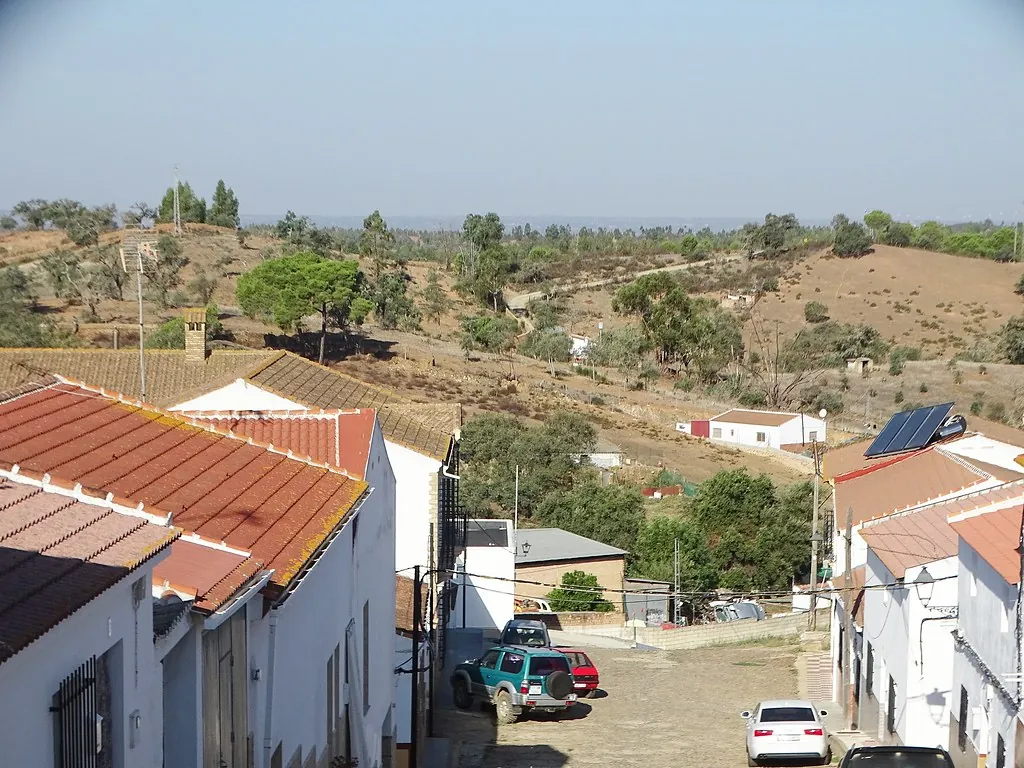
Heart of western Andévalo, known for the Romería de la Peña; white village on a hill with panoramic views and a strong equestrian tradition.
Hide article Read full article
A slow start beneath Santa Cruz
At eight in the morning, the bells of the church of Santa Cruz mark the hour with a slightly metallic sound. The centre of Puebla de Guzmán is still half asleep. In winter, the air often carries the smell of damp firewood and freshly made coffee drifting through half-open doors. Mist rolls in from the Guadiana valley, and the reddish soil of the Andévalo darkens to a deep, almost burgundy tone.
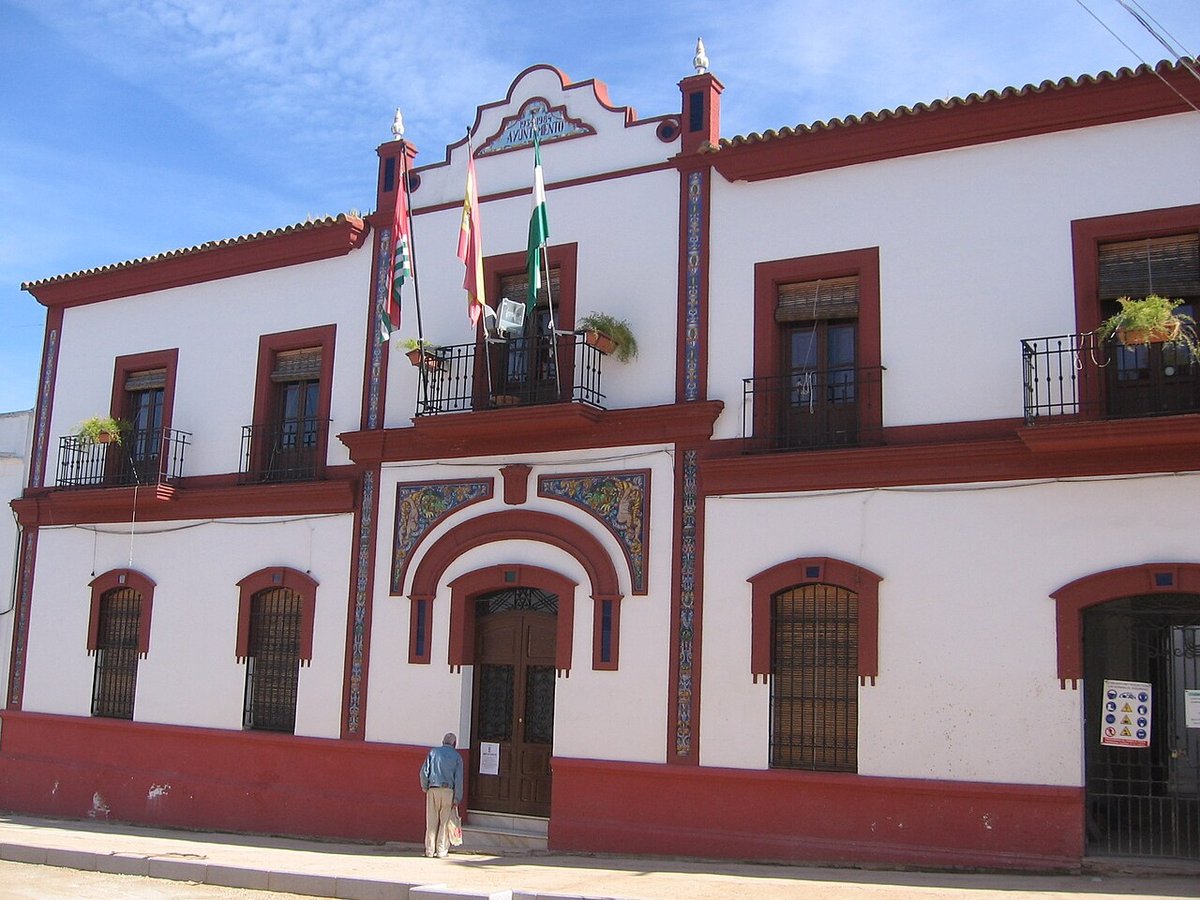
A car pulls up near the town hall, its headlights lingering a moment longer than necessary. Someone walks past carrying a large container of wine, greeting people along the way with an easy familiarity: “Buenos días, how’s the family?” Conversations tend to begin like that here, as though everyone already shares a history.
The square where everything meets
Puebla de Guzmán stands on an old settlement. The alquería of Juan Pérez is mentioned in records from the late 15th century. Still, it is the main square that tells most of the story. The paving stones are worn and slightly uneven, polished by decades of footsteps.
On one side rises the church of Santa Cruz. Its appearance is somewhat defensive, with a battlemented tower that hints at its origins as a Muslim structure. Opposite sits the convent of María Auxiliadora, its white façade simple and austere. At midday it reflects the light so strongly that even in January it feels almost like summer.
Between the two stands a small bandstand that now seems more decorative than functional, along with several stone benches. Locals gather there when the sun reaches the square. Around that time, the pace slows. Someone arrives carrying bread tucked under their arm. A motorbike climbs the slope, its sound echoing off the buildings. Swallows fly low once the air begins to warm.
Inside the church, the atmosphere shifts. The nave feels more intimate than the exterior suggests. The scent is a mix of wax, dampness and old wood. Hanging above the crossing is a dark Christ figure. People in the town say it arrived long ago from the Americas, sent by a local man who built a career in the Church across the ocean. The church is not always open, so it is worth passing by without rushing and seeing if the door happens to be unlocked.
Walking and tasting the countryside
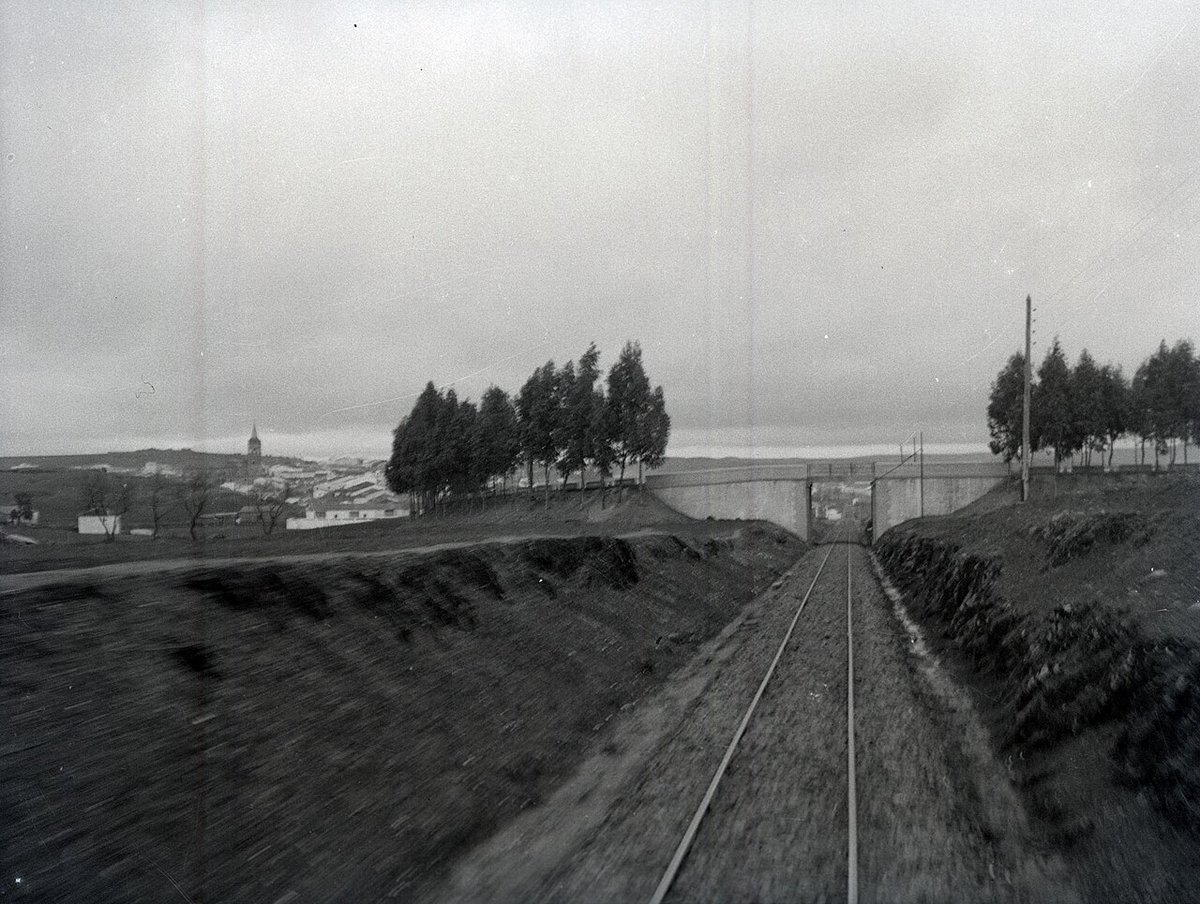
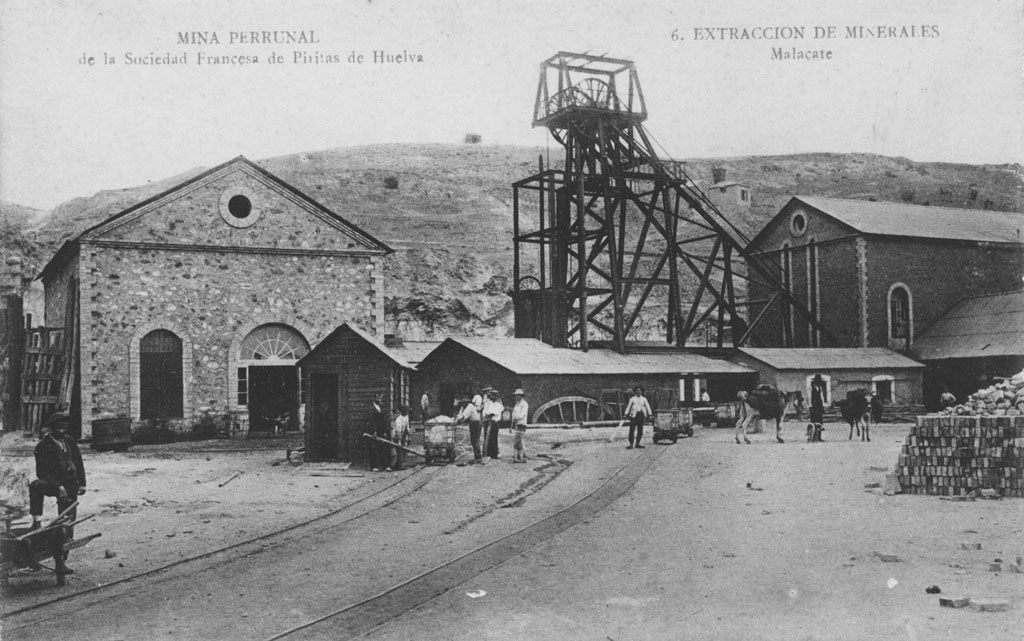
Leaving the town, the asphalt begins to give way. The road becomes a track, and the track narrows into a path. This is where the Vía Verde del Guadiana runs, following the route of an old railway that once carried mineral towards the river.
The path stretches out mostly straight. Some sections are covered in fine gravel, while in others the original ballast still shows through. On either side grow rockrose, scattered pines and patches of rosemary. After the first autumn rains, the scent becomes especially strong. Closed footwear is a good idea, as the red soil turns sticky when wet.
Every so often, windmills from the 19th century appear along the way. These circular stone structures stand on the gentle hills of the Andévalo. From a distance they look like low towers watching over the route. Their sails barely move most of the time, yet when the wind picks up the sound carries as a slow creak.
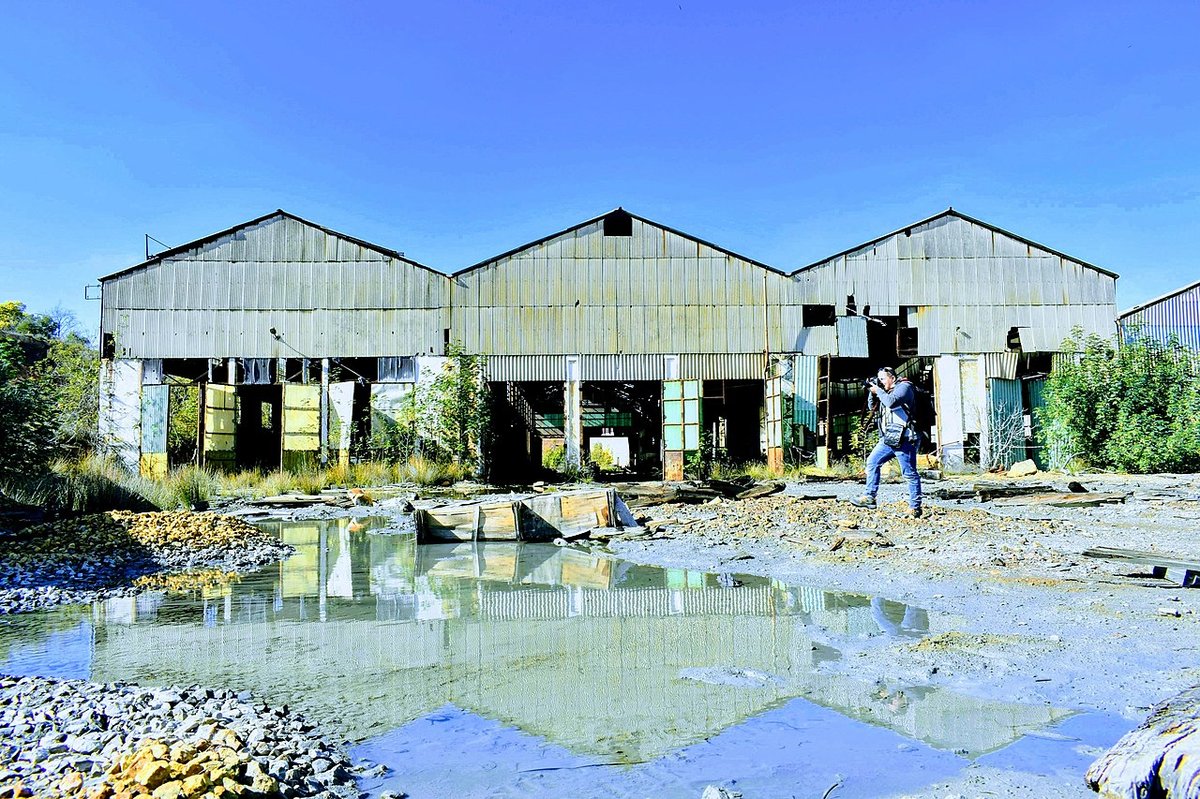
The route leads to the Puerto de la Laja, an old mining dock beside the Guadiana. The water is usually an olive green and appears quite still, although the river’s currents can be deceptive. Signs advise against swimming. There are few services in the area, so most people return along the same path or plan ahead by leaving a car at one of the access points.
In winter, it is common to see flocks of cranes crossing the sky at dusk.
When life moves outdoors
At the end of January, a different set of smells takes over the town. Smoke from holm oak fires mixes with crushed garlic and oregano. It is the season of the matanza, the traditional preparation of cured meats for the year ahead. In many homes, the custom continues. Work begins early in courtyards where long wooden tables are set out.
This is not organised as a visitor attraction. It remains a domestic task shared among family and neighbours. Even so, arriving in Puebla de Guzmán at that time can lead to being handed a warm plate and drawn into a conversation about how the meat mixture is prepared.
Spring brings the Romería de la Virgen de la Peña, a pilgrimage with strong roots across the Andévalo. The image of the Virgin is kept in a stone sanctuary on a nearby hill. During these days, the route between the town and the hermitage fills with carts, horses and people walking through dust and music.
The atmosphere shifts completely. There is more noise, more food eaten outdoors, and long nights spent around open fires. The quiet rhythm of winter gives way to something livelier and more communal.
Reaching Puebla de Guzmán
From the city of Huelva, the journey takes a little over an hour by car. The A‑49 covers much of the distance before giving way to the smaller regional roads of the Andévalo. These roads wind gently through dehesa landscapes and low hills.
It is worth planning ahead before setting out. Not all services are consistently available in the town itself, and it is common to make any necessary stops in nearby places before heading into this part of the region.
Early spring is often considered the best time to come. The dehesa turns green, and the surrounding countryside feels at its most open and alive.