Full Article
about Santa Bárbara de Casa
A town in western Andévalo with significant megalithic remains; a landscape of dehesa and windmills on a borderland frontier.
Hide article Read full article
Morning light over the Andévalo
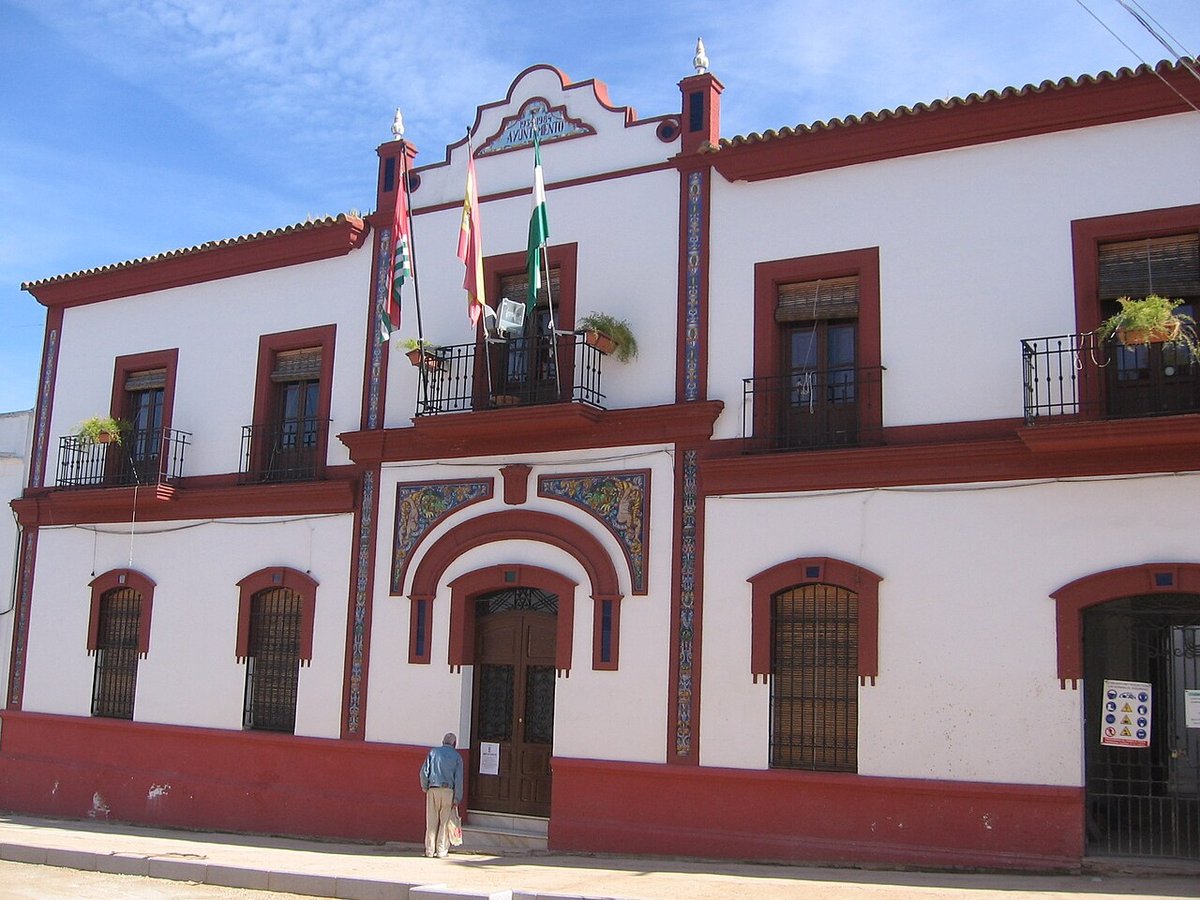
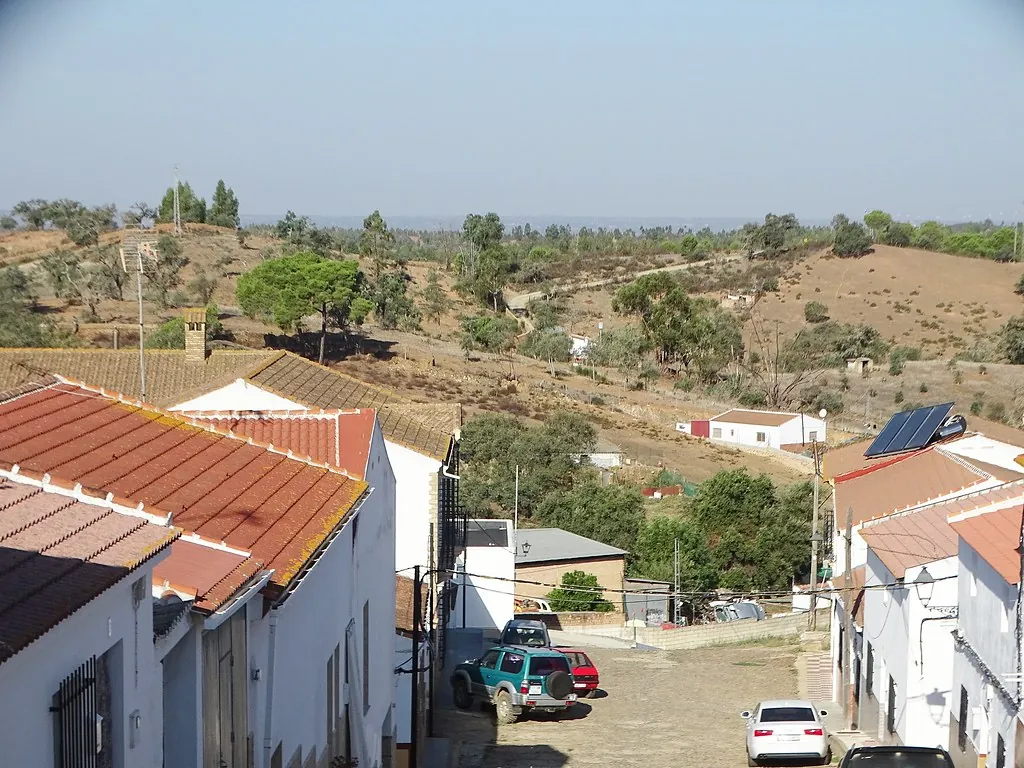
Early in the day, before the sun has fully warmed the land of the Andévalo, Santa Bárbara de Casa feels almost silent. The air often carries a dry scent of fine dust and holm oak, and the streets hold little more than the sound of a door opening or a car heading out towards the countryside. The village appears suddenly among low, rolling hills, its white houses gathered around a central square.
With just over a thousand residents, life here moves at an unhurried pace. The streets in the centre are narrow, and the ground underfoot shifts in places from asphalt to stone or older cement. At the heart of the square stands the parish church dedicated to Santa Bárbara. Compared with other churches in the province, it is relatively recent, yet its bell tower still marks the passing hours, its sound reaching across much of the town.
Wandering the centre
The town centre can be covered quickly, though it rewards a slower walk. At midday, the whitewashed façades reflect the light intensely, while shadows cling to the tightest streets. The houses show practical features shaped by the climate: small windows, simple iron grilles, and wide doors designed to let air move through during the heat of summer.
There are no major historic landmarks or museum collections drawing attention. Interest lies instead in the layout of the streets, in glimpses of inner courtyards behind metal gates, and in everyday life that remains visible rather than tucked away.
Summer changes how the place is best experienced. Walking is more comfortable early in the day or later in the evening, when the light softens. Around midday, heat tends to settle between the white walls, making even short distances feel slower and heavier.
The dehesa beyond the houses
A few hundred metres beyond the edge of the village, the landscape opens into dehesa, a traditional form of countryside in southern Spain where scattered holm oaks and cork oaks stand over gently undulating ground. The colours shift with the seasons. Spring usually brings a green cover with patches of poppies, while summer turns the grass a dry, straw-like shade.
Livestock are often visible grazing on nearby land, and on still days the sound of cowbells can carry across surprising distances. Birdlife forms part of the scene as well. Birds of prey circle high above, corvids move among the trees, and smaller species keep to the scrub.
This setting is not arranged for spectacle. It unfolds gradually as you move away from the centre, with wide views that change subtly depending on light and season.
Easy routes through the Andévalo
Several rural tracks begin around Santa Bárbara de Casa. Many are still in everyday use for farming and livestock, so gates should be left as they are found. These are not routes defined by steep climbs or long-distance challenges. They suit a slower pace, the kind of walking that follows the contours of the land rather than pushing through it.
On clear days, higher points reveal the rolling profile of the Andévalo stretching in all directions. The terrain rises and falls gently, and the wind moves freely across these hills, becoming one of the constant sounds of the landscape.
Walking here is less about reaching a specific destination and more about noticing changes: the shift in ground underfoot, the spacing of the trees, the way sound carries across open land.
Traces of mining nearby
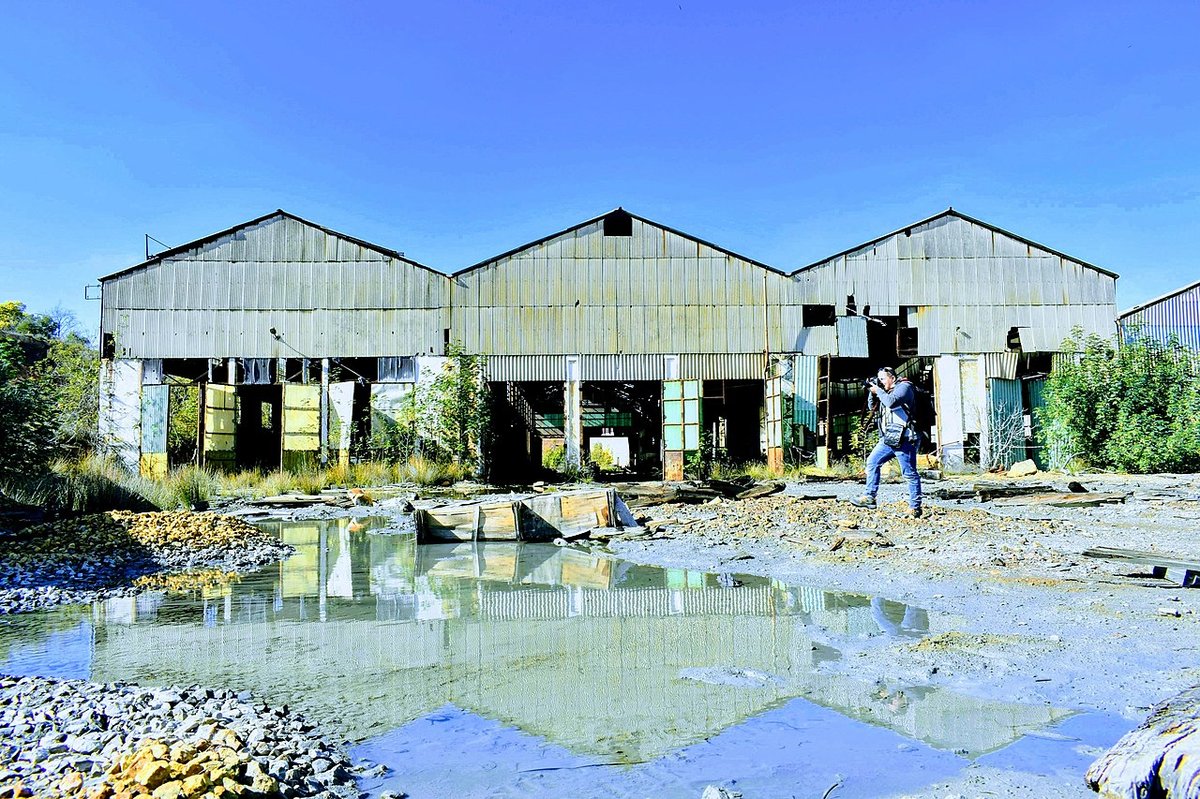
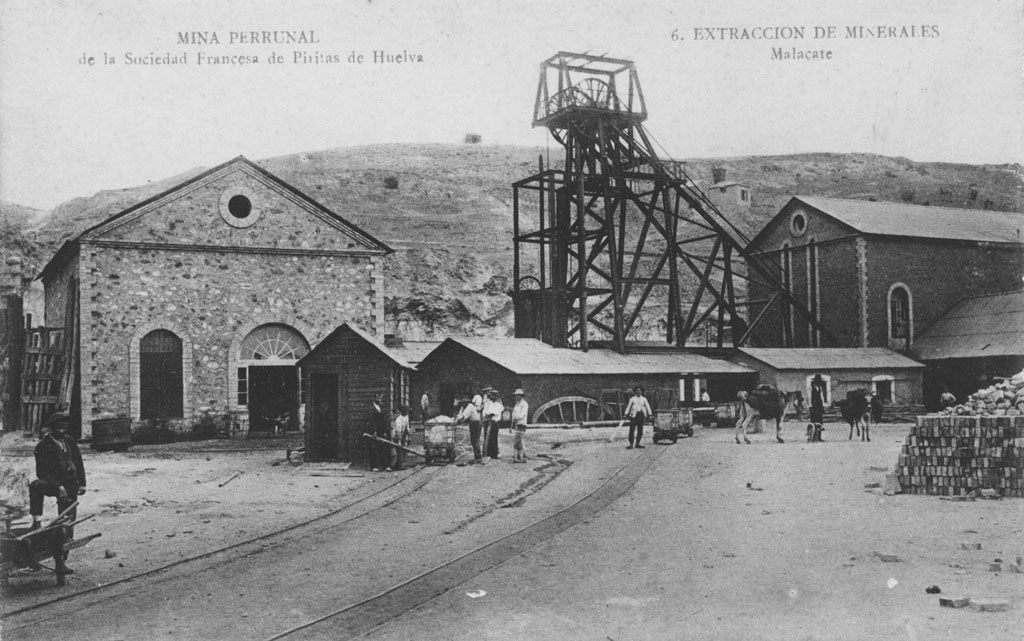
Although Santa Bárbara de Casa itself is small, the wider area bears marks of a mining past. A short distance away lies Tharsis, where remains of extractive activity still stand. For decades, mining shaped the economy of this part of Huelva, and its legacy can be seen in industrial structures, spoil heaps, and land stained by mineral deposits.
Not all of these areas are prepared for visitors. Some spaces require care, and it is advisable to be cautious when approaching them. The remains are part of the landscape rather than formal sites, and they give a sense of how the region has changed over time.
Moments that shape the year
In December, celebrations in honour of Santa Bárbara bring a noticeable shift in the village. These days act as a meeting point for residents and for those who return for the occasion. The streets fill with more people, cars appear in places that are usually quiet, and conversations stretch out across the square.
Summer brings its own change of rhythm. Evenings become livelier, with more activity once the sun drops and the air cools. During the day, the pattern is different. Shade becomes the preferred place to be, and time seems to move more slowly, following the same pace many locals adopt when the heat settles over the Andévalo.
Santa Bárbara de Casa does not rely on large attractions or tightly planned itineraries. Its character emerges in small details: the sound of bells, the texture of the streets, the gradual transition from village to open land. It is a place where movement is gentle, and where the surroundings shape how each part of the day is lived.