Full Article
about Villanueva de los Castillejos
Regional center of western Andévalo, known for its ham and livestock fair; a landscape of dehesa and sausage-making tradition.
Hide article Read full article
Villanueva de los Castillejos does not rush to impress. Before anything else, there is the practical matter of the car. A few parking spaces sit around the main square, but not many. Arrive mid-morning and you may need to circle the surrounding streets once or twice. The town has around 3,000 residents and lies in the Andévalo area of Huelva province, between the city of Huelva and the Portuguese border. The access road is in good condition. Once there, everything moves at its own pace.
A Small Town, Plainly Stated
Almost everything is concentrated along the main street: a couple of supermarkets, a pharmacy, several bars and little else. Daily life unfolds here without fuss.
The Iglesia de la Purísima Concepción stands on higher ground. Built in the 18th century from brick and local stone, it is a straightforward parish church, solid rather than ornate. There are no grand decorative gestures, just a building that has served its purpose for centuries.
About two kilometres away, set among country estates, is the Ermita de Piedras Albas. If you go on a Sunday morning, it may well be closed. It tends to open only at certain times of the year, linked to specific dates rather than a regular timetable.
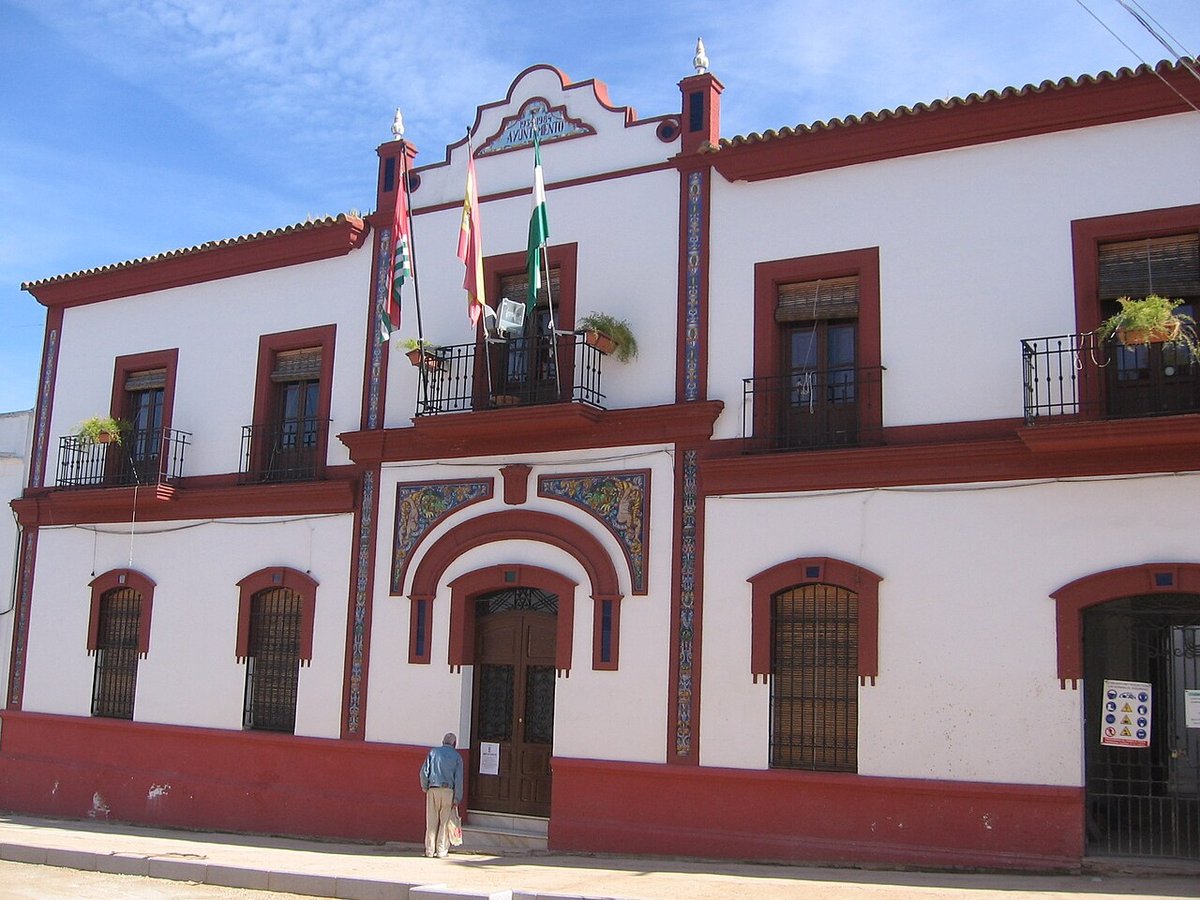
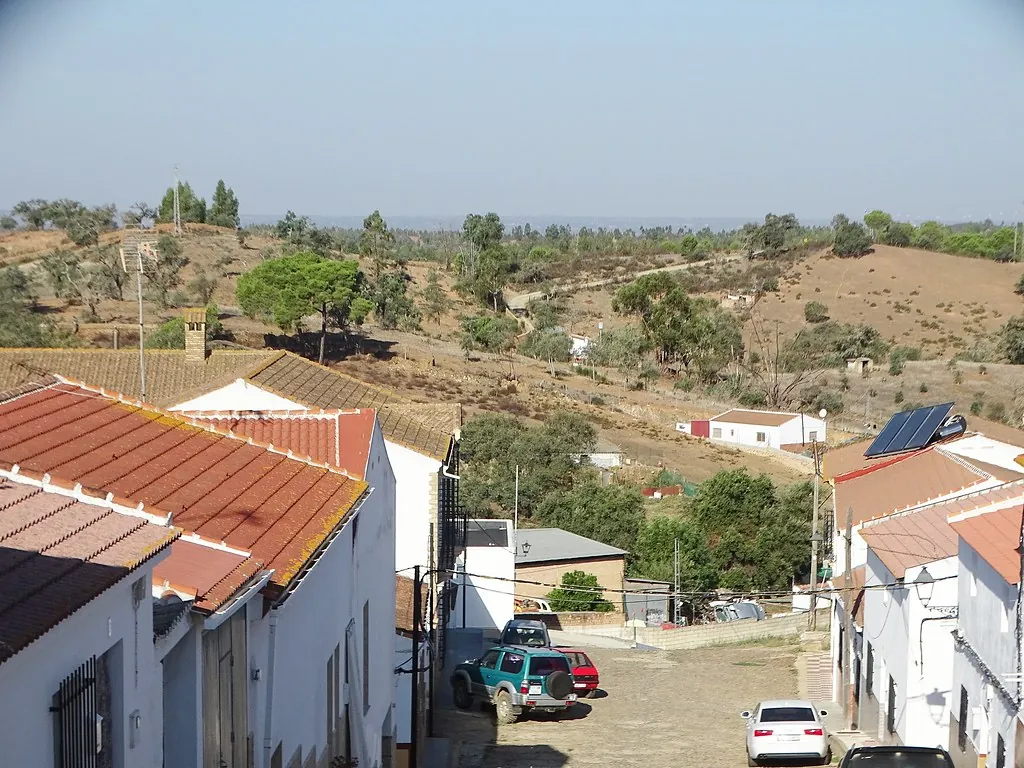
The urban centre can be covered quickly. Allow twenty minutes at an easy pace and you will have seen most of it. There are low houses, whitewashed façades and a few half-abandoned dovecotes. On one wall, the coat of arms of Felipe IV is still visible. It was this king who granted the settlement the title of villa, a royal recognition, in the 17th century. During the Peninsular War, known in Spain as the Guerra de la Independencia, French troops were present in the area. Today, little remains to mark that period beyond occasional references in municipal buildings.
Sierra Abuela, the Shape on the Horizon
From a distance, the Sierra Abuela is easy to recognise. Its outline resembles a woman lying down, a detail locals point out without ceremony. At just over 300 metres high, it counts as a notable elevation in this part of Huelva.
A signposted trail leads to the summit through reforested pine woodland. The route is around six kilometres there and back, with no steep gradients. On clear days, a wide stretch of the Andévalo opens up from the top. Griffon vultures sometimes circle overhead, along with other birds of prey. There are no fountains along the way, so it is sensible to carry water.
From time to time, a mountain race is organised that links Villanueva de los Castillejos with neighbouring El Almendro. The two towns are so close that they are almost visible from one end to the other. Outside those events, the path is usually quiet.
The sierra gives the town a sense of orientation. It is the backdrop to daily life, visible from the streets and fields, and a reminder that open countryside begins almost at the edge of the last houses.
Meringues and Other Traditions
Ask about Villanueva de los Castillejos and someone will eventually mention the merengues. These are meringues made from whipped egg whites, sugar and a touch of lemon, then dried in the oven for hours. The result is light and quick to dissolve.
They are not always available. Many bakeries prepare them mainly at weekends. During the week, it depends on the day.
Other traditional sweets appear too: yemas, egg yolks gently cooked in a bain-marie, and piñonate with almond. These are long-standing recipes, made without modern twists. They work equally well with a coffee or a cold beer in the middle of the afternoon.
Food here is not presented as a culinary revolution. It is familiar and rooted in habit. If you are hoping for elaborate displays, you will not find them. What you will find are flavours that have stayed much the same for generations.
Choosing the Right Moment
Winter tends to be the easiest season. In summer, the heat presses down and there is no nearby beach to balance it out. January and February often bring clear days, and the surrounding countryside turns green.
If your visit coincides with gurumelo season, you may notice cars parked along rural tracks and people carrying baskets. Gurumelos are highly prized wild mushrooms in this part of Andalusia. Those who know where to find them rarely share their spots. Many have been returning to the same places for years.
The annual feria takes place around September, after the grape harvest. Temporary marquees are set up in the square and the atmosphere is that of a local celebration, straightforward and unpretentious. It is a gathering for residents first and foremost, rather than a spectacle designed for outsiders.
A Brief Stop, On Its Own Terms
Villanueva de los Castillejos does not require a long itinerary. Walk in, spend some time in the streets and head up to the Sierra Abuela if you feel like stretching your legs. A morning is enough to form a clear impression.
If you plan to buy merengues, it is wise to ask first whether any are left. And in summer, avoid the central hours of the day. The streets empty out and the heat takes over.
This is a place defined by scale and rhythm. Nothing feels hurried, and nothing tries too hard. Between Huelva and Portugal, in the Andévalo, Villanueva de los Castillejos remains content with its routines: a main street that holds most of what you need, a church on the rise, a hill shaped like a resting figure, and sweets that sometimes, but not always, wait behind the counter.