Full Article
about Casabermeja
Known for its unique cemetery, declared a national monument, and as the gateway to the Montes de Málaga.
Hide article Read full article
The bells of the church of El Socorro strike eight just as the sun begins to touch the first graves in the cemetery. From the hilltop, the valley wakes under a light mist scented with thyme and fresh bread from a nearby house. In Casabermeja, the dead enjoy better views than the living. Their small white tomb houses with blue doors line up like a miniature village within the village, facing south towards the hills that signal Málaga.
A village founded twice
Local tradition says that Queen Juana signed twice the charter that granted this place the status of a town, first at the start of the 16th century and again a few years later. The story appears in many accounts of Casabermeja and, beyond the precise historical detail, it captures something essential. Life here tends to move slowly.
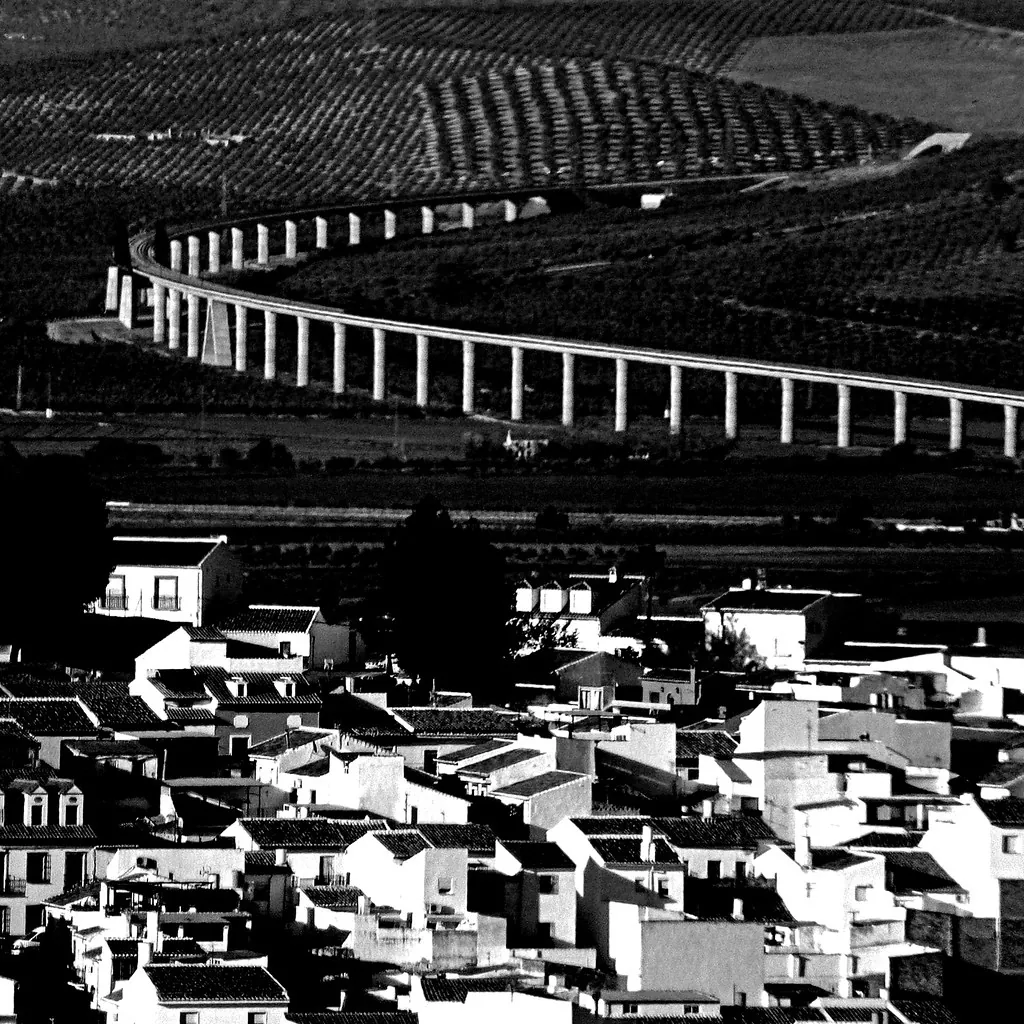
Walk the steep streets and it becomes clear. In many stretches the ground is stone. The houses cling to the hillside as best they can, whitewashed, with slightly rusted window grilles and pots of geraniums breaking up the glare of limewash. By mid-morning the light bounces off the façades and makes you squint.
In the square, an older man empties a bucket of water over the pavement and pushes it downhill with a broom. No one seems in a hurry. The only sounds are the occasional motorbike climbing towards the upper neighbourhood or pigeons hopping from cable to cable.
In August the mood shifts. It is feria time, the annual fair, and there are more people out on the streets. Even then the village keeps something of its everyday rhythm. Mornings carry the smell of coffee and firewood. In the afternoon, half-lowered blinds and the thick silence of siesta take over.
The cemetery that looks like a small town
The cemetery of San Sebastián is the first thing that catches the eye on arriving in Casabermeja. It is not a typical burial ground. Instead, it is arranged like a neighbourhood of white houses, some two or three storeys high, separated by narrow stepped lanes.
From this unusual layout comes one of the most repeated myths about the village: that people here were buried standing up. They were not, but the vertical tombs help keep the story alive.
The cemetery was declared a National Monument in 1980 and later recognised as a Bien de Interés Cultural, a protected cultural site. Despite these titles, the atmosphere is simple and everyday. Plastic flowers have faded in the sun. Oval portraits sit behind glass. Small keys hang from some of the iron grilles.
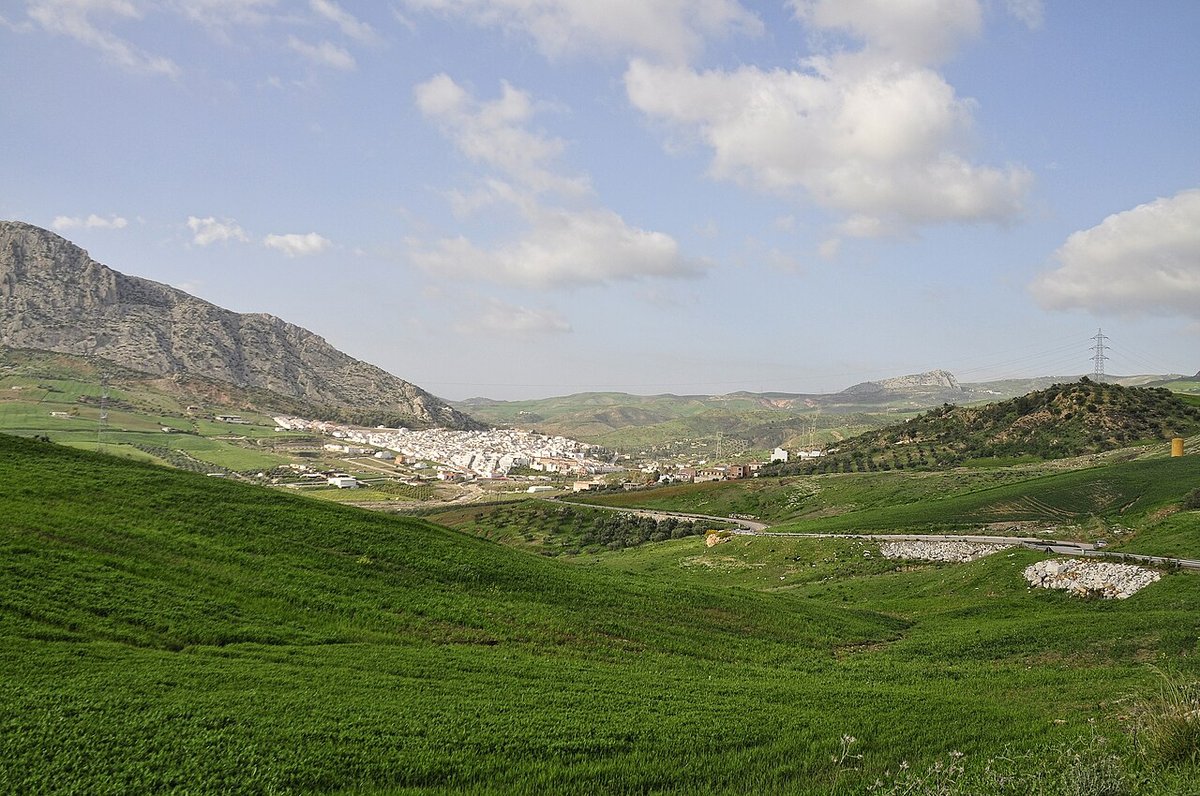
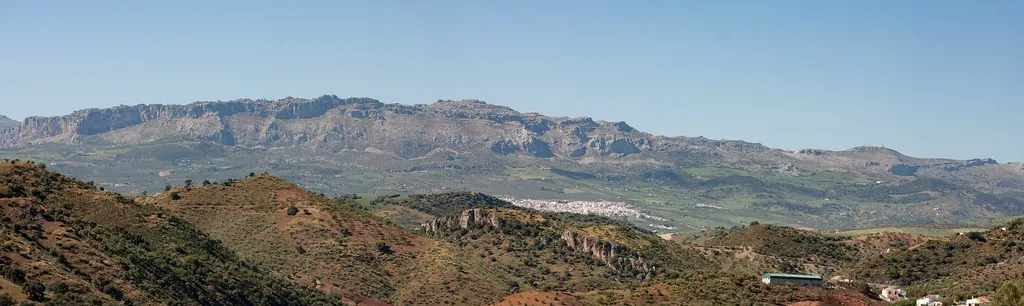
From the highest point, the whole of Casabermeja spreads out below, and beyond it the sierra. When the wind blows, it slips between the white walls and produces a soft whistling sound that lingers for a few seconds in the air.
Food rooted in the countryside and the goat
Around midday the scent of paprika and garlic drifts through several streets at once. Cooking here remains closely tied to the countryside. The so-called plato de los montes, a hearty combination of potatoes, cured sausage, pork belly and fried egg, tends to appear when the weather turns cooler.
Porra, thick and yellowish, is served with pepper and tuna on top. Salmorejo, slightly lighter here than in other parts of Andalucía, is made with tomatoes from nearby market gardens and olive oil from cooperatives in the surrounding area.
Chivo al ajillo, goat cooked with garlic, is another regular presence on local tables. The aroma of garlic browning in the pan clings to clothes when stepping back out into the street after lunch.
On Thursdays there is usually a market in the village. Among the clothes and vegetables, there is sometimes a stall selling local goat’s cheese, wrapped in paper. Its strong smell is noticeable even before tasting it.
Ancient traces among holm oaks
About four kilometres from the centre lie the Peñas de Cabrera, a rocky area with shelters that preserve prehistoric cave paintings. Visiting independently is not always straightforward. In many cases the caves are protected with metal grilles. Even so, the path that crosses the area is worth walking.
The trail passes between holm oaks and strawberry trees. In autumn the ground fills with red leaves. The silence is almost complete, broken only by wind slipping through cracks in the rock.
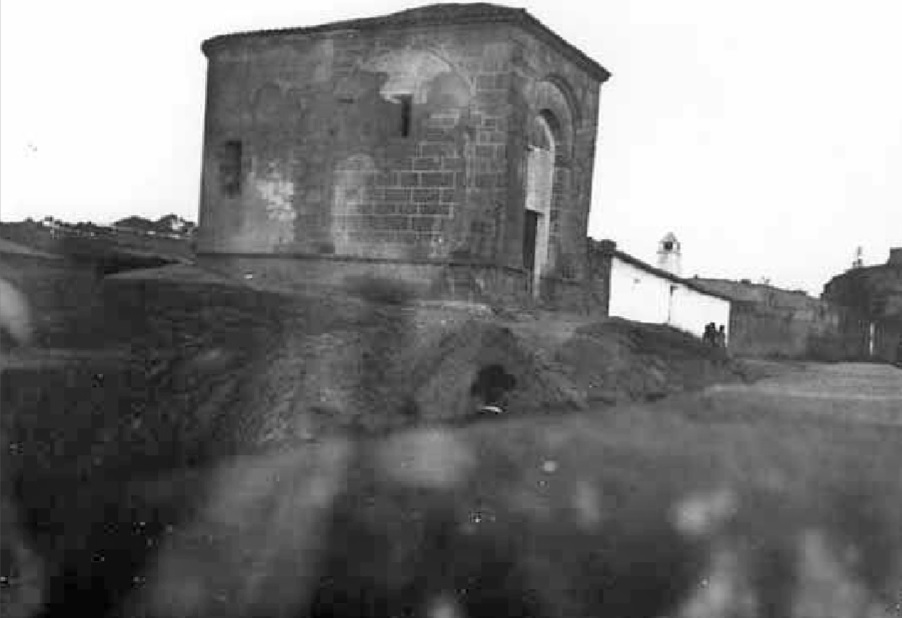
Closer to the village stands Torre Zambra, an old watchtower from the Andalusí period that once guarded the natural route towards Antequera. It is a stone cylinder set on an open hill.
To reach it, it is best to leave the car near the ermita del Chorro and continue on foot along a dirt track. The walk is a couple of kilometres with little shade, so in summer it is wiser to go early or later in the afternoon.
At the top, the landscape opens out: terraced olive groves, scattered cortijos and the outline of the village in the distance.
When to go and what to bear in mind
In the days around Corpus Christi, between late spring and early summer, the village often decorates balconies and sets up small altars along some streets. The evenings are long and the strongest heat has not yet arrived.
Autumn brings a different mood. At times the fog becomes trapped between the hills in the morning, and the smell of damp firewood drifts through the streets.
If travelling from Málaga at the weekend, it is worth avoiding Sunday afternoon. The road back towards the coast tends to become busy.
Casabermeja does not try to impress. Its pace is unhurried, its streets steep and bright. The cemetery looks out over the valley as it has for generations, white walls catching the light. Between the scent of thyme on the hillside and garlic in the kitchens, the village keeps to its steady rhythm, doing things in its own time.