Full Article
about Fuente de Piedra
Internationally known for its salt lagoon that hosts the largest colony of pink flamingos on the Iberian Peninsula.
Hide article Read full article
A Village Shaped by a Lagoon
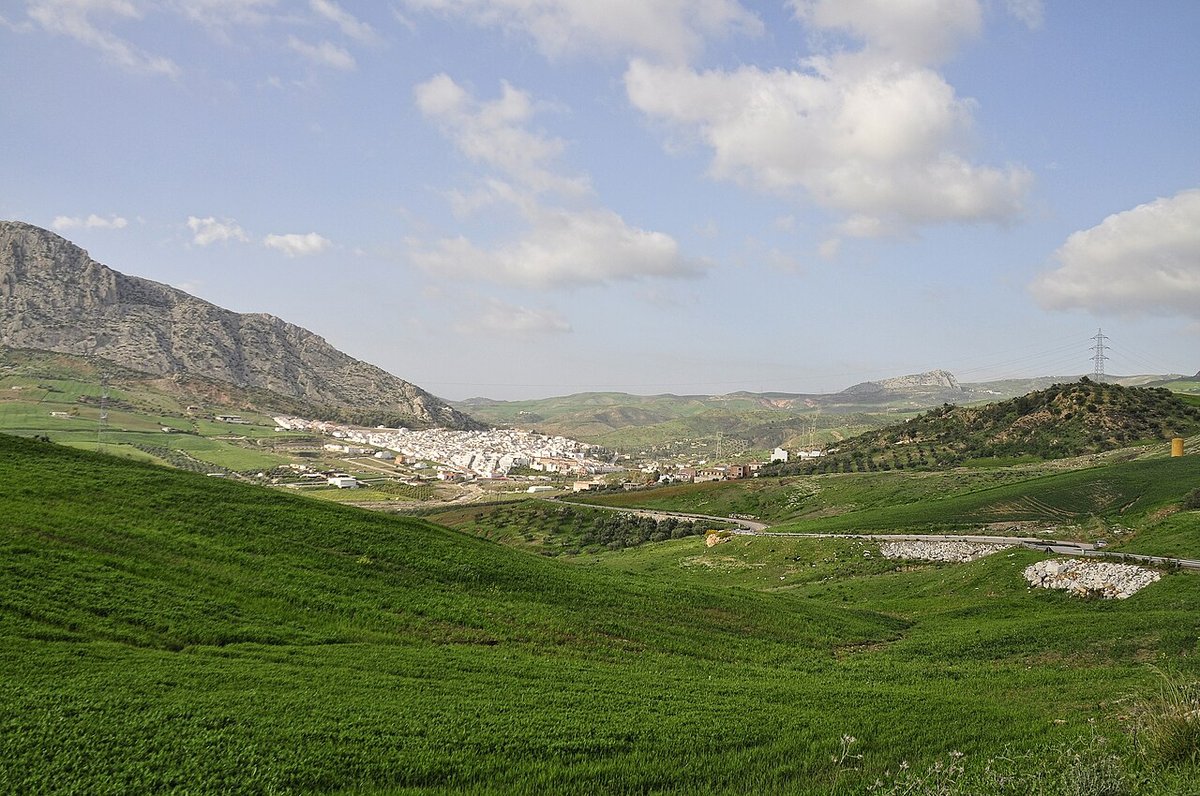
The lagoon of Fuente de Piedra explains almost everything about this small town in the north of Málaga province. It is a vast, shallow saline basin that has shaped local life for centuries. When the water stagnated it brought disease, yet it also gave fame to a mineral spring that eventually lent its name to the settlement. Today the municipality remains tied to that delicate balance between underground water, salinity and migratory birds that return each spring to breed on the lagoon.
The presence of water has always been double‑edged here. The same environment that encouraged wildlife also created conditions for mosquitoes and illness. Over time, the community adapted to this landscape rather than trying to transform it completely. Fuente de Piedra still revolves around its lagoon, both ecologically and culturally.
The Spring and the Origins of the Settlement
The name Fuente de Piedra refers to a mineral spring that has risen in this area since ancient times. People traditionally attributed healing properties to its waters, particularly for relieving what was known as mal de piedra, or kidney stones. References to the spring appear as early as the Roman period, although the precise organisation of any settlement here at that time remains unclear.
The village itself developed later. After the Castilian conquest of the territory, these lands were sparsely populated for a long period. The proximity of the lagoon encouraged mosquitoes and diseases such as malaria, a problem frequently mentioned in documents from subsequent centuries. Only in the early modern period did a more stable settlement begin to take shape around the spring and the surrounding agricultural land.
During the nineteenth century the population grew and Fuente de Piedra eventually became an independent municipality. The reputation of the medicinal water spread across Andalucía. People arrived hoping to ease kidney stones, drawn by word of mouth and popular belief. Local memory still preserves stories of cures associated with the spring, where practical remedies and religious faith often overlapped.
The spring has never been a grand spa complex. Its significance lies instead in continuity. For generations it has been part of daily routines and local identity, linking present‑day residents with a past shaped by both hardship and hope.
The Lagoon and Its Flamingos
The lagoon of Fuente de Piedra ranks among the most important wetlands in the southern Iberian Peninsula. In winters with sufficient rainfall, a broad sheet of water spreads across a wide surface area, though it rarely becomes deep. Shallow water combined with high salinity creates a very specific habitat.
This environment supports the largest colony of greater flamingos in the Iberian Peninsula. The birds usually arrive towards the end of winter. If water conditions are favourable, they build mud nests in areas furthest from the shore. In spring the colony can number in the tens of thousands, forming broad pink swathes that are visible even from designated observation points.
The lagoon’s behaviour varies sharply from year to year. In dry seasons the water disappears early. In wetter years it remains for months. Management of the wetland seeks to maintain a balance that protects the flamingo colony as well as other bird species that use the area as a stopover or breeding site.
The scale of the spectacle depends entirely on rainfall. Some years offer an expansive lagoon alive with birds. In others, the exposed salt flats and cracked mud dominate the view. Both states reveal something essential about the place: a landscape defined by water’s presence or absence.
The Parish Church and Village Life
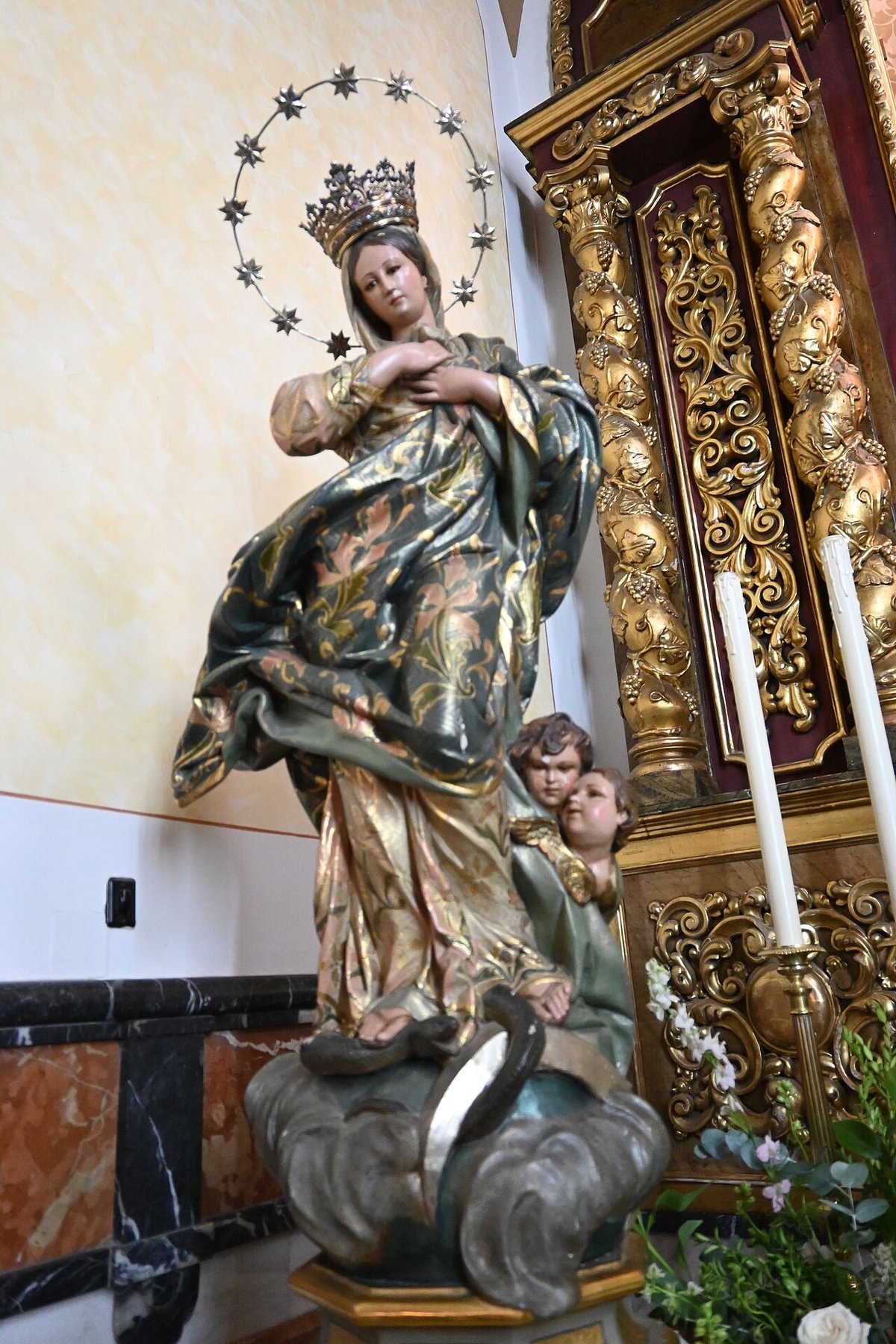
The church of the Inmaculada Concepción stands near the centre of the town. Most of the current building dates from works carried out between the eighteenth and nineteenth centuries, with later alterations adapting it to the needs of the community.
It is not a monumental church. Its interest lies in what it reveals about the growth of rural settlements across the Andalusian countryside. The square and the atrium long functioned as spaces for meeting and organising public life. Religious and civic routines overlapped here, reflecting the close ties typical of small agricultural towns.
Inside, the church preserves simple devotional objects. Some ex‑votos relate directly to the tradition of the medicinal water. These small offerings commemorate illnesses overcome or favours attributed to religious intercession. They provide a tangible link between belief and the spring that gave the town its name.
The Cereal Plains of the Interior
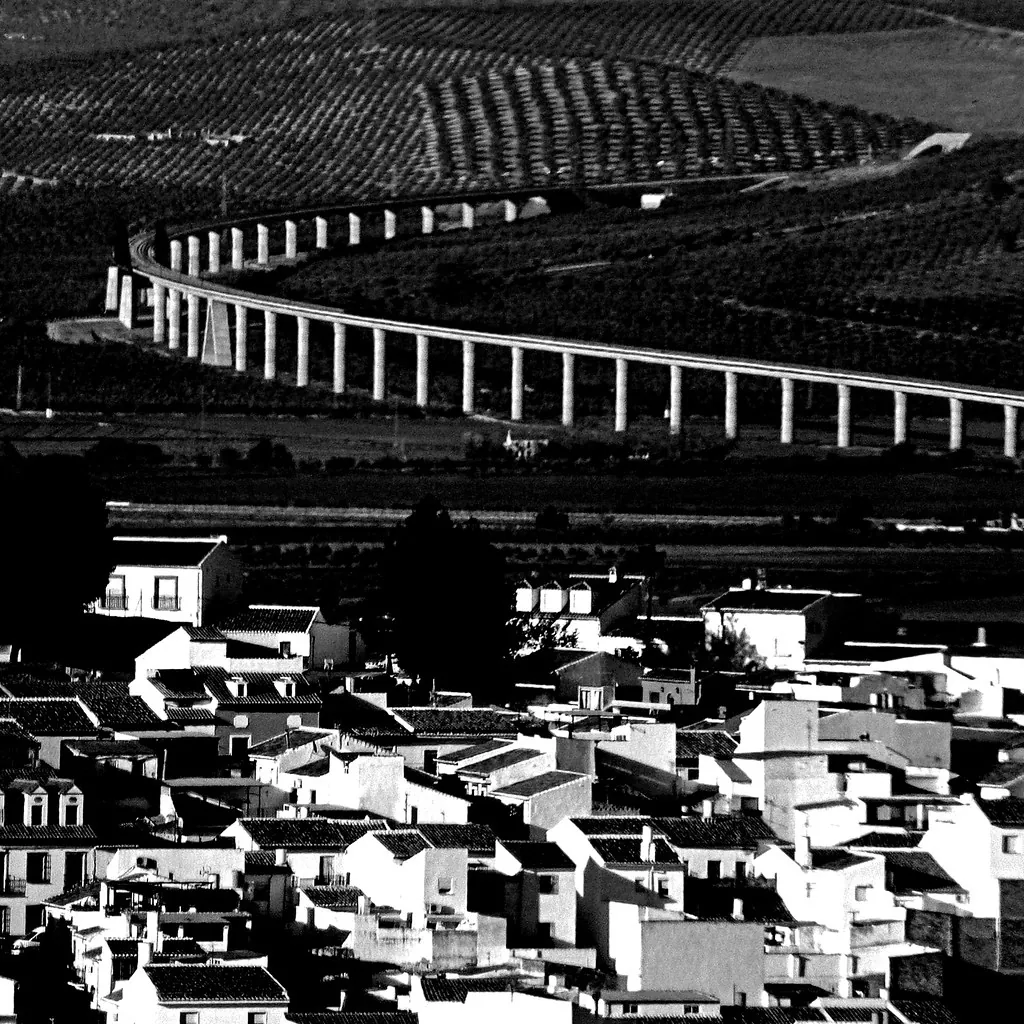
Beyond the houses stretches the cereal‑growing countryside of inland Málaga. Open fields, gentle undulations and farm tracks connect scattered cortijos, the traditional rural farmsteads of southern Spain. On slightly higher ground, vineyards and olive groves appear, crops that have been present in the Antequera region for centuries.
The landscape feels expansive. The terrain is largely flat and vegetation remains low, so the horizon stays open in every direction. Walking along the paths around the lagoon helps make sense of the setting. Fields and wetland merge visually, with birds often moving between the two. At certain times of year flocks can be seen crossing from farmland to water, emphasising how closely these environments interact.
Seasonal change alters the scene dramatically. Spring may bring water, nesting flamingos and intense activity. Summer brings early heat, and many parts of the lagoon dry out. Even then, the saline terrain and cracked mud hold their own stark appeal. The absence of water does not empty the place of meaning.
Planning a Visit
Fuente de Piedra is small and easy to explore at an unhurried pace. Most visitors come for the lagoon and the bird observation points positioned around its perimeter. Binoculars are useful, as breeding colonies are generally viewed from a distance to avoid disturbance.
Spring is often the most active period in the wetland, although everything depends on winter rainfall. Summer heat can be intense from early in the day, and large areas of the lagoon may dry out. Even so, the patterns left by salt and mud offer a different perspective on this changing ecosystem.
The spring that gave the town its name remains part of everyday life. Some residents still visit to fill large water containers, maintaining a custom that, in one form or another, has endured for several centuries. In Fuente de Piedra, water continues to shape the rhythm of the town, just as it always has.