Full Article
about Coria del Río
Historic Guadalquivir port known for the Keicho Japanese expedition and the surname Japón among its residents.
Hide article Read full article
A River That Carries the Sea
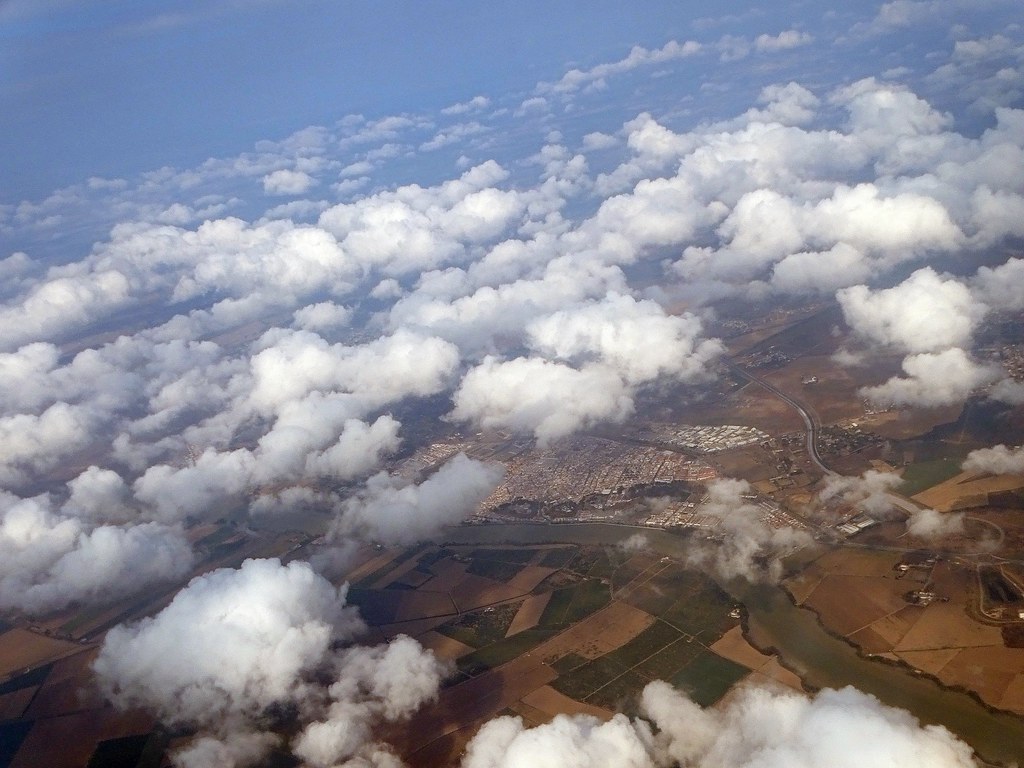
In Coria del Río, the Guadalquivir carries a faint scent of the sea, even though the coast lies some thirty kilometres downstream. It is a light, salty trace, mixed with algae clinging to wooden pilings and the warm earth of the fertile plains. Those arriving in the early hours often notice it first, when mist drifts in from the Guadiamar and settles over the water. The soft splash of a fishing boat cuts through the quiet, along with the calls of egrets returning from the rice fields.
The town’s rhythm follows this river. It moves slowly, wide and brown, connecting inland Andalucía with the Atlantic. Life here has long unfolded along its banks, shaped by the steady pull of the current.
Where Surnames Tell a Story
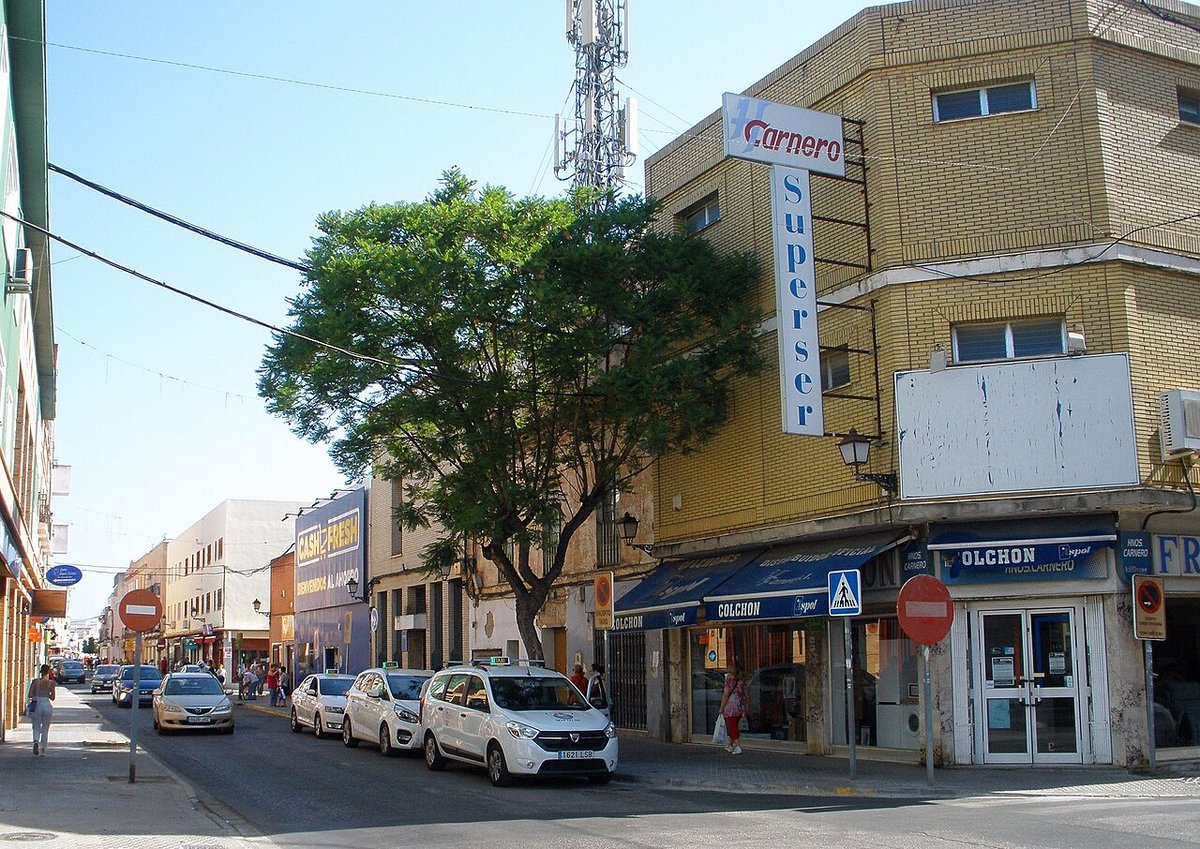
On Calle Japón, low houses line the street, their green-painted window grilles and geranium pots spilling out over the pavement. In one of them lives a man whose surname is Japón, the same as his father and grandfather. In Coria, that name barely raises an eyebrow.
Local tradition traces it back to 1614, when a Japanese expedition travelled up the Guadalquivir and passed these shores. Some of those men, samurai from what is known as the Keichō embassy, decided to stay. Over the centuries, their legacy blended into everyday life. The surname appears on letterboxes, car registrations and school lists.
In Parque Carlos de Mesa stands a statue of Hasekura Tsunenaga, the samurai who led that diplomatic mission. Cast in dark bronze, he faces the river. Not far from there, another historical moment is recalled: the expedition of Magellan passed this way in 1519, when the Guadalquivir served as a gateway to the Atlantic. Coria has long looked towards this waterway, aware of where it leads.
The Quiet Hours by the Water
At three in the afternoon in July, Coria falls almost silent. Dogs stretch out beneath the shade of orange trees along the Paseo de la Ribera, while many shutters sit half-closed against the heat. The river, though, keeps its slow pace, carrying its brown water towards Sanlúcar.
From the La Canoa pier, the meeting point with the Guadiamar comes into view. The water shifts in colour there, and sandbanks appear, reshaped slightly each winter by the current.
On a terrace near the promenade, a group of retired men play cards beneath a fan turning lazily overhead. Their conversation drifts between the rice harvest, whether water will be scarce this year, and the mosquitoes that arrive at dusk. The Japanese connection surfaces now and then, though it is spoken of as something ordinary rather than remarkable. A butcher’s surname, a secondary school teacher, a Japanese flag occasionally displayed alongside the Andalusian one at local events. From time to time, cultural activities linked to Japan take place here, small gatherings or workshops that revisit that distant connection.
When the River Glows
In mid-August, during the celebrations of the Virgen, the river often fills with small points of light. Paper lanterns are set afloat on the Guadalquivir, following a Japanese tradition known as toro nagashi. Inside each one is a candle and sometimes a written wish.
From the bridge, they can be seen drifting slowly with the current. Children run along the bank trying to keep pace until the darkness swallows the lights downstream. Some say that now and then one has been found intact near the river’s mouth, many kilometres away, though such stories tend to shift depending on who tells them.
Spring brings a quieter scene. A few cherry trees planted in the park come into bloom, their pink flowers lasting only a handful of days before the wind scatters them. Occasionally, visitors from Japan arrive out of curiosity about this small link between two places. They sit on the grass, take photographs without hurry, and move on.
Along the Vega and Through the Seasons
March is often a good time to walk in the area. The heavy rains have usually passed, and the heat has not yet settled in. The rice fields begin to flood, turning into reflective surfaces that mirror the sky.
The Vega path runs for about eight kilometres over compacted earth, following the river as far as the mouth of the Guadiamar. Along the way, traces of earlier times appear: a rusted waterwheel, the walls of old mills now reused as homes, and the occasional hut recalling when waterfowl hunting was common here.
Conditions shift with the seasons. In summer, the sun reflects sharply off the flooded fields and shade is scarce. In winter, mud becomes the main obstacle, clinging to shoes and making each step heavier.
During Semana Santa, many locals suggest coming on Maundy Thursday in the afternoon. On that day, the Cristo de Coria is carried down from the ermita de la Vera Cruz along a staircase that seems longer than it is once the procession begins. It moves through narrow streets where people wait seated on folding chairs, with bags of sunflower seeds and children who sometimes fall asleep in their arms.
August can feel intense, both for the heat and the flow of cars arriving from Sevilla and nearby towns. September tends to bring slightly cooler nights, easing the pace again.
Coria del Río does not present itself with grand gestures. Its character lies in the steady presence of the Guadalquivir, in the way distant histories settle into daily life, and in small details that repeat from season to season.