Statue madonna child 17th-century Cathedral Seville Spain.jpg
Andalucía · Passion & Soul

Sevilla

The Guadalquivir River slides past Seville's centre at a lazy eleven metres above sea level, carrying cargo boats that still connect the city to th...

689,423 inhabitants · INE 2025
11m Altitude

Why Visit

Cathedral and Giralda Monumental tour

Best Time to Visit

year-round

April Fair (April) abril

Things to See & Do
in Sevilla

Heritage

  • Cathedral and Giralda
  • Royal Alcázar
  • Plaza de España

Activities

  • Monumental tour
  • Flamenco tablaos
  • Walk along the Guadalquivir

Festivals
& & Traditions

Fecha abril

Feria de Abril (abril), Semana Santa (marzo/abril)

Las fiestas locales son el momento perfecto para vivir la autenticidad de Sevilla.

Full Article
about Sevilla

Capital of Andalucía and a world-class tourist destination, home to the largest Gothic cathedral and the Real Alcázar.

Ocultar artículo Leer artículo completo

A city that refuses to be a museum

The Guadalquivir River slides past Seville's centre at a lazy eleven metres above sea level, carrying cargo boats that still connect the city to the Atlantic seventy kilometres away. This isn't some preserved relic of Andalucia's past – it's a working city of 680,000 people where medieval walls share pavements with bike lanes and Deliveroo riders. The morning rush hour starts at eight, not ten, and the traffic lights change for buses carrying university students to the Reina Mercedes campus, not horse-drawn carriages full of tourists.

Yet the layers remain visible. Roman columns poke through the pavement near the Alfalfa district, their marble worn smooth by centuries of feet. The Giralda tower – once a minaret, now a bell tower – still calls the faithful, though the call has changed from the adhan to church bells. Walk east from the cathedral and you'll find yourself in Santa Cruz, the former Jewish quarter where narrow alleys twist between orange trees and whitewashed walls. The scent of azahar (orange blossom) hits hardest in April, when the city's 25,000 bitter orange trees bloom simultaneously.

The cathedral that ate a city block

Seville's cathedral occupies the site of a 12th-century mosque, though you wouldn't know it from the exterior. The builders kept the mosque's courtyard – now the Patio de los Naranjos – but demolished everything else to create what remains the world's largest Gothic church by volume. Inside, the scale becomes almost comical: the central nave rises 42 metres, tall enough to fit a twelve-storey building lying on its side. Christopher Columbus's tomb sits on four shoulders – literally, four kings in bronze carry his coffin through the transept. Whether those bones are really his has been debated since 1898, when they arrived from Cuba along with a rather convenient label.

The Giralda offers the city's best panorama, though the climb surprises most visitors. Instead of stairs, thirty-four ramps wide enough for two mounted guards ascend to the belfry. The design wasn't considerate – it was practical. When this was a minaret, the muezzin rode a donkey to the top five times daily. Now tourists huff and puff their way up, emerging to find Seville spread below like a map: the Alcázar's gardens to the south, the bullring to the east, and the distant Sierra Norte mountains marking the horizon.

Palaces and patios: when the heat hits

The Real Alcázar sits across from the cathedral, its walls concealing a labyrinth of courtyards that provided the backdrop for Dorne in Game of Thrones. The ticket queue starts forming before 9 am; book online or resign yourself to an hour's wait in direct sunlight. Inside, the Palace of Pedro I showcases Mudejar craftsmanship at its most obsessive – every surface carved, painted, or gilded until the effect becomes almost overwhelming. The gardens offer respite, their pools and fountains designed for evaporative cooling that actually works. Temperatures here regularly exceed 40°C in July and August; locals treat the Alcázar as their own air-conditioned living room, complete with resident peacocks that scream like cats at dusk.

Summer in Seville demands a strategy. The siesta isn't romantic – it's survival. Shops close from 2 pm to 5 pm, metal shutters clanging down like a city-wide curfew. Smart visitors follow suit, retreating to hotel rooms or the shaded cafes of the Alameda de Hércules. The latter, a tree-lined boulevard in the Macarena district, fills with students and locals who've figured out that beer tastes better when you're not sweating pure salt. Come 7 pm, the city reanimates. Families emerge for paseo, the evening stroll that serves as Seville's social network long before Facebook.

Across the river: where tourists fear to tread

Triana lies on the Guadalquivir's west bank, connected by the Isabel II bridge built in 1852. Technically part of Seville, it feels like a separate village where ceramic workshops still operate from ground-floor storefronts and flamenco clubs occupy former coal bunkers. The neighbourhood produced half of Spain's bullfighters and most of its gypsy singers; walk past Calle Castilla at midnight and you'll hear guitar music spilling from bars that don't advertise in English. The food here costs thirty percent less than Santa Cruz, and the tapas bars serve carrillada (pork cheek stewed until it collapses) alongside more familiar jamón ibérico.

The Mercado de Triana occupies a former castle, its Moorish foundations visible through glass panels in the floor. Morning shopping runs from 9 am to 2 pm; arrive early for the best selection of seafood hauled upriver from Sanlúcar. The fishmongers speak rapid Andaluz, their Spanish clipped and half-swallowed, but they'll slow down if you ask about the difference between gambas and langostinos. Neither translates to "prawn" in the British sense – gambas are larger, pinker, and cost twice as much per kilo.

When the city loses its mind

Semana Santa transforms Seville into something approaching organised chaos. From Palm Sunday to Easter Sunday, 52 brotherhoods process through the streets carrying floats that weigh up to a tonne. Each paso requires sixty men underneath, their ankles wrapped and shoulders padded, walking in synchronized steps learned since childhood. The processions start at midnight and continue until dawn; traffic snarls, hotels triple their rates, and finding a restaurant reservation becomes harder than getting Glastonbury tickets. Yet witnessing a float emerge from the darkness at 3 am, its carved Christ figure illuminated by hundreds of candles while a brass band plays mournful music, provides one of those rare travel moments that actually justifies the cliché about goosebumps.

April Fair follows immediately after Easter, though "fair" undersells the transformation. The Real de la Feria becomes a temporary city of 1,050 casetas (marquee tents), each belonging to families, trade unions, or political parties. Entry requires knowing someone; tourists can access about fifteen public tents, but the real action happens in private spaces where Sevillanos dance sevillanas and drink manzanilla until their mothers drag them home at dawn. The women wear traje de gitana, elaborate flamenco dresses that cost upwards of €600 and get worn exactly once yearly. Men stick to the uniform of short jacket and tight trousers, looking like extras from a spaghetti western filmed by mistake in southern Spain.

Practicalities for the unprepared

Walking remains the best way to see central Seville – the historic core measures barely two kilometres across. The tram system helps for longer distances; buy a rechargeable Tarjeta Multiviaje from any machine for €1.50, then load it with ten trips for €8. Taxis charge a minimum €3.62 fare, but drivers will attempt the "tourist route" unless you specify the direct way. Learn to say "por la calle más corta, por favor" – by the shortest route, please.

Eating requires timing. Breakfast happens at 10 am, lunch at 3 pm, dinner at 10 pm minimum. Try to order food at British hours and you'll find kitchens closed or staff looking at you like you've requested breakfast in the middle of the night. Good tapas bars to start: Bodega Santa Cruz (no seats, order at the bar), Las Teresas (Calle Santa Teresa, ham hanging from the ceiling), and Casa Morales (family-run since 1850, wine served from dusty barrels). Expect to pay €2.50-4 per tapa; anything more suggests you're in the wrong place.

The heat kills phones faster than you'd expect. Carry a portable charger and water – fountains marked "Agua Potable" are safe to drink, despite what cautious hotel receptionists claim. From November to March, temperatures drop to a civilised 15-20°C, making winter arguably the best season for British visitors. Just pack a light jacket; Sevillanos consider 18°C winter weather and dress accordingly in coats that would suit a Newcastle November.

Seville doesn't need selling. It needs experiencing, preferably slowly, definitely with stamina, and absolutely without expecting it to behave like a heritage attraction. The city works, studies, argues, celebrates, and occasionally explodes into fiesta with a commitment that makes British reserve look like a minor personality disorder. Come prepared for noise, heat, and schedules that make no sense north of the Pyrenees. Leave understanding why half of Spain considers Andalucians slightly unhinged – and why they wouldn't have it any other way.

Key Facts

Region
Andalucía
District
Area Metropolitana
INE Code
41091
Coast
No
Mountain
No
Season
year-round

Livability & Services

Key data for living or remote work

2024
ConnectivityFiber + 5G
TransportTrain station
HealthcareHospital
EducationHigh school & elementary
Housing~8€/m² rent
CoastBeach nearby
Sources: INE, CNMC, Ministry of Health, AEMET

Official Data

Institutional records and open data (when available).

  • Real Alcázar de Sevilla
    bic Monumento ~0.9 km
  • Catedral de Sevilla y Giralda
    bic Monumento ~0.9 km
  • Archivo de Indias
    bic Monumento ~1.1 km
  • Plaza de España de Sevilla
    bic Monumento ~1.3 km
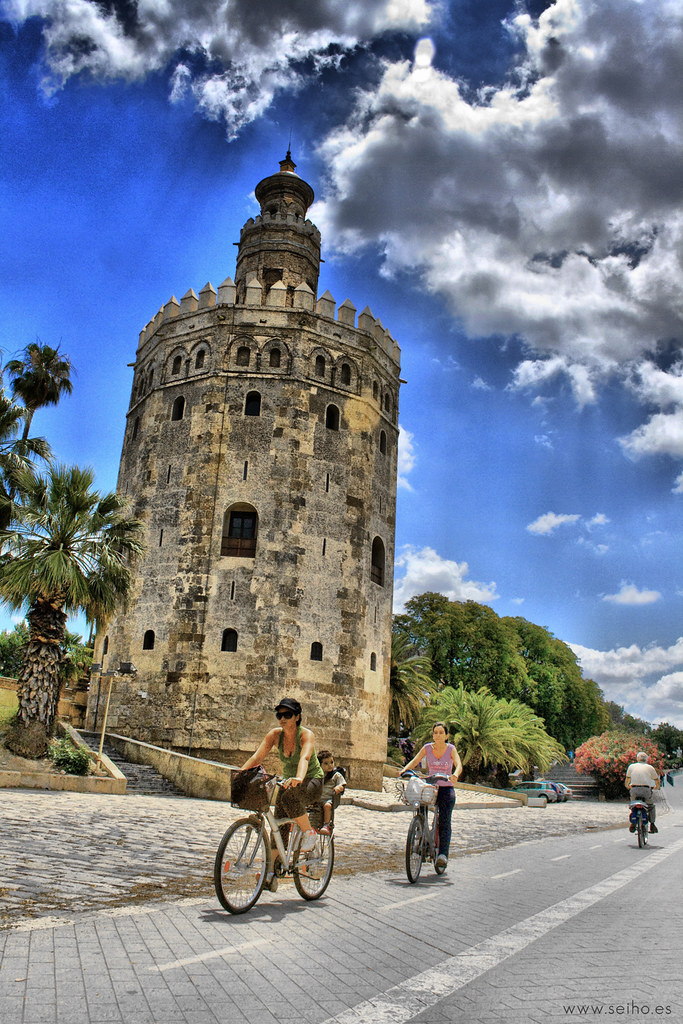
  • Torre del Oro
    bic Monumento ~1.4 km
  • Baños de la Reina Mora
    bic Monumento ~1.6 km
Ver más (318)
  • Edificio de la Antigua Universidad Literaria
    bic Monumento
  • Cuartel de la Gavidia
    bic Monumento
  • Palacio de la Diputación Provincial
    bic Edificio Civil
  • Palacio Miguel de Mañara
    bic Edificio Civil
  • Casa de los Pinelo
    bic Edificio Civil
  • Casa de los Condes de Casa-Galindo
    bic Edificio Civil
  • Casa en Calle Fabiola, nº 1
    bic Edificio Civil
  • Palacio de las Dueñas
    bic Edificio Civil
  • La Buhaira
    bic Monumento
  • Palacio de la Condesa de Lebrija
    bic Edificio Civil

Planning Your Visit?

Discover more villages in the Area Metropolitana.

View full region →

Day trips near Sevilla

Giralda, Alcázar, Feria de Abril y pueblos de…

Villages near Sevilla →

More villages in Area Metropolitana

Traveler Reviews