Full Article
about Alfarnatejo
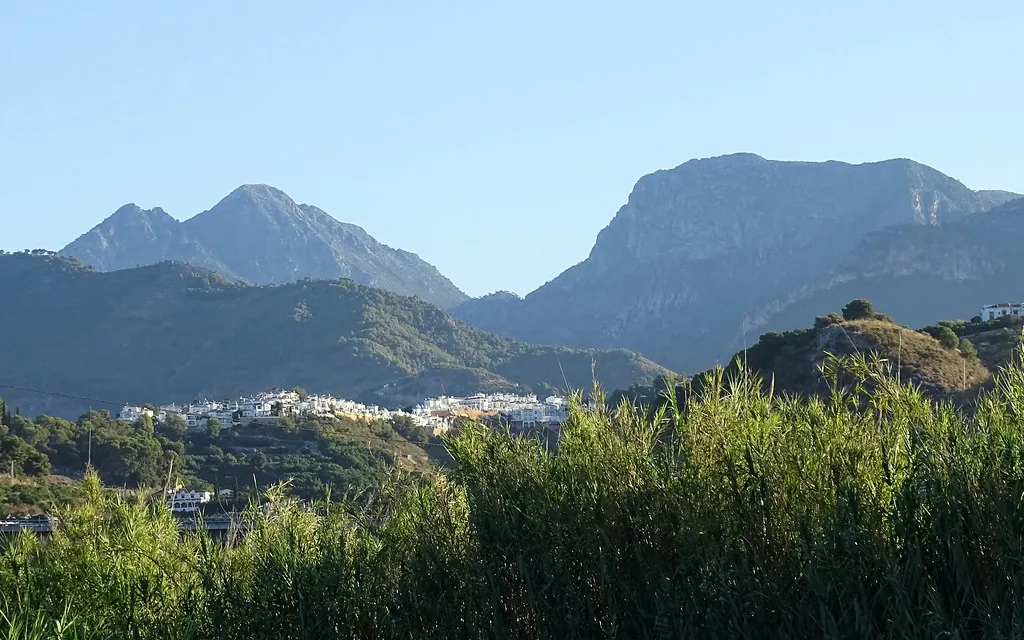
Small mountain village known as the Pirineos del Sur for its rugged peaks and striking geological scenery.
Hide article Read full article
A village above the Axarquía
At close to 900 metres above sea level, Alfarnatejo sits at the highest point of the Axarquía, where the first folds of the sierra begin to break up the softer landscape of the region. Tourism here remains secondary in a municipality that barely exceeds 350 inhabitants. Daily life is still closely tied to the land, especially to dry-farmed olive groves that cover much of the surrounding hills.
The scale of the village explains its appearance. There was no rapid expansion and no pressure from development. Houses were built as needed, using straightforward solutions: whitewashed walls, interior patios and wooden doors that are still in everyday use. From some of the higher points in the village, the strip of the Mediterranean can be seen when the air is clear, which often comes as a surprise given the real distance to the coast.
Altitude also shapes the climate. Summer heat is usually more bearable than in other parts of the Axarquía. In winter, the north wind can significantly lower how cold it feels.
The shape of the village
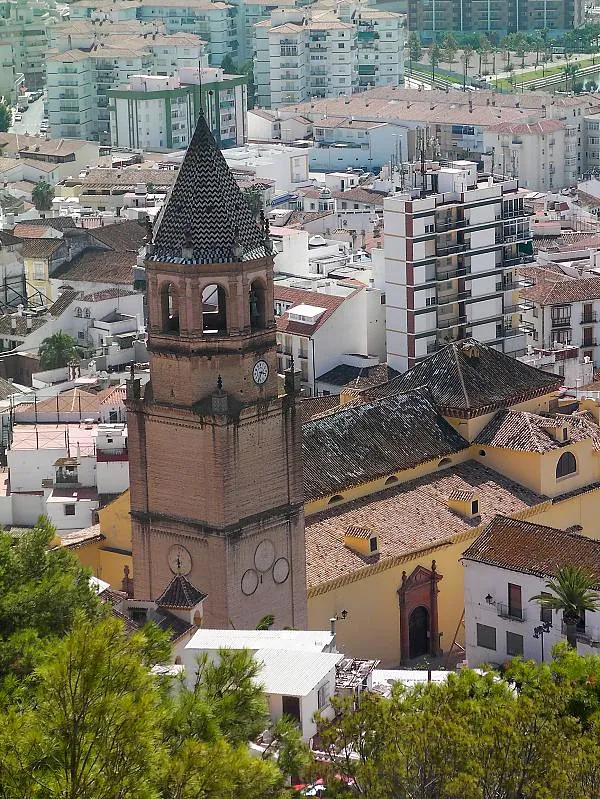
Alfarnatejo is organised around the parish church of the Santo Cristo. The building is neither large nor especially ornate. It follows the logic of many rural churches built for small communities. Its almost bare white façade blends in with the rest of the houses.
The oldest part of the village gathers around this centre. Streets are narrow and irregular, typical of settlements that inherited their layout from the Andalusí period, although later alterations have changed that pattern in many places. Here, that way of adapting to the terrain is still noticeable.
Attention tends to fall on modest details rather than grand monuments. Hand-forged iron window grilles, old doors layered with paint from different periods, and small patios barely visible from the street all contribute to the overall feel. There are no major historic buildings. The interest lies in the whole.
At the edges of the village, a few viewpoints open out onto the inland Axarquía. Cultivated hills stretch away, dotted with almond trees, while the terrain becomes more rugged towards the north where the sierra rises.
Fields, paths and working land
The area around Alfarnatejo belongs to a mid-mountain landscape shaped over centuries by agriculture. Olive groves occupy many slopes, sometimes supported by old stone terraces. Almond trees bring a different rhythm to the scenery, especially at the end of winter when they begin to flower.
Agricultural tracks lead out from the village, linking it with nearby settlements and scattered cortijos, or rural farmhouses. Some of these paths are now used for walking or cycling, although they still serve as working routes for local people. Certain stretches can be steep, so it is worth understanding the terrain and planning distances carefully.
Local cooking reflects this agricultural setting. Olive oil, almonds, honey and seasonal produce form the basis of simple, substantial dishes, the kind traditionally prepared to sustain long days of physical work in the fields.
Small-scale crafts still exist in some cases, such as basket-making and pottery. They do not always operate with fixed opening times or regular access for visitors. Activity depends largely on the daily routines of the people who continue these trades.
Night falls with noticeable darkness. Public lighting is limited and there are few large settlements nearby. On clear evenings, many stars are visible from the outskirts of the village, something that has become less common in more densely populated areas.
Traditions through the year
Festive life in Alfarnatejo remains closely tied to religious celebrations and the agricultural calendar. In May, the village holds festivities dedicated to the Santo Cristo. These include processions and gatherings that spread across several streets.
During summer, activity often shifts outdoors as the day cools. Open patios, long conversations and informal meetings between neighbours form part of the seasonal routine.
Autumn brings the olive harvest, a task that still involves many families in the municipality. In some years, activities are organised around this agricultural work, although they are not always set up as events specifically aimed at visitors.
Alfarnatejo is small and generally quiet. It can be explored quickly, yet it rewards a slower look. Its story is not told through major landmarks, but through the shape of the land and the rhythm of everyday life. That is where its interest lies.