Full Article
about Árchez
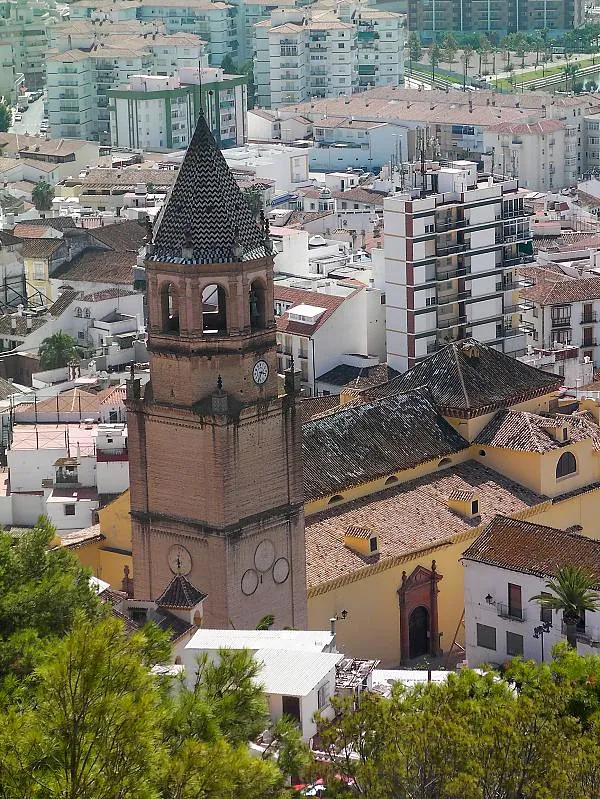
Mudéjar gem of the Axarquía, known for the tower of its church, a 14th-century Almohad minaret.
Hide article Read full article
First Light in the Axarquía
Early in the morning, before the sun clears the hills of the Axarquía, the streets of Árchez are almost silent. A shutter scrapes open somewhere. Sparrows perch on overhead wires. Footsteps echo against the cobbled ground. The scent in the air shifts with the seasons: damp earth after rain, almond blossom at the end of winter, freshly gathered olives in autumn.
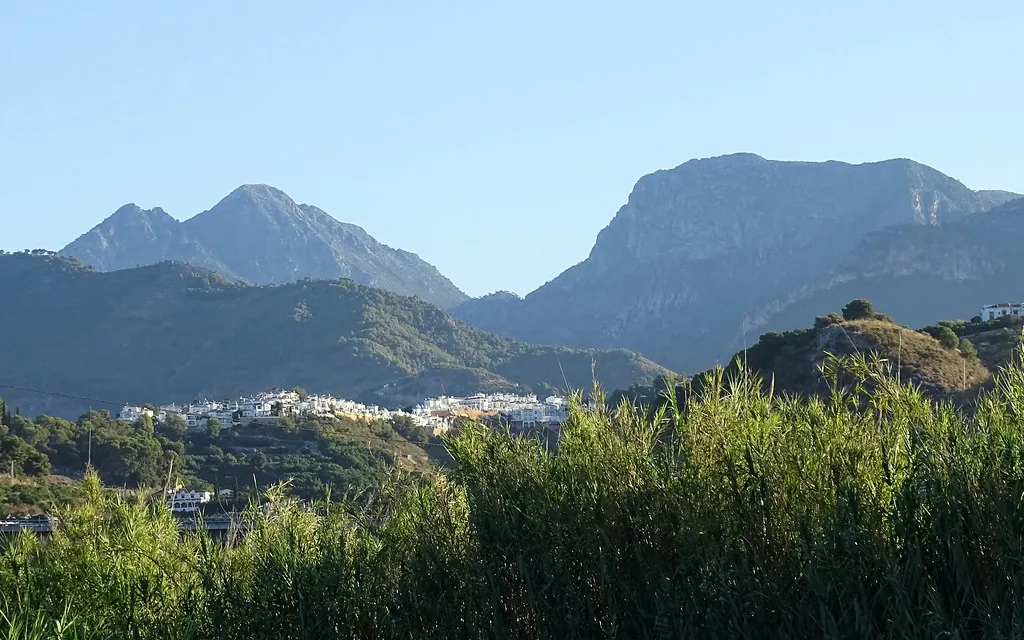
Tourism in Árchez tends to begin in this unhurried way, wandering without a fixed plan through a small village of just over four hundred residents. Life here continues at its own pace on a hillside about 435 metres above sea level. Whitewashed houses lean into one another and look out across a landscape that is largely given over to olive and almond trees.
Time does not stand still in Árchez, but it does not rush either. Open doorways, neat rows of flowerpots set against walls and the steady sound of water in a fountain all point to a daily rhythm shaped by the land and the seasons.
A Village Shaped by Its Past
The centre of Árchez is arranged around the church of Nuestra Señora de la Encarnación. It was built in the 16th century on the site of a former mosque, something that happened in many villages in this part of Málaga after the Christian conquest. The brick tower draws the eye first. It is a well-preserved example of Mudéjar architecture, a style developed by Muslim craftsmen working under Christian rule, with geometric decoration that shifts in tone as the light changes.
Inside, the air remains cool even in summer. Wooden coffered ceilings and the simplicity of the interior reflect the practical nature of these rural churches, built with local materials and by hands steeped in long-standing building traditions.
Around the church, the old quarter keeps an irregular layout of narrow streets that climb and dip without any obvious order. There is a reason for this. Such a design offers protection from the summer sun and allows air to circulate between the houses. Many doorways are still made of dark wood, worn smooth by years of use. In the late afternoon, metal window grilles cast thin shadows across the white façades as the sun drops to one side.
On the edges of the village, a short walk is enough to reach agricultural tracks. From there, the inland Axarquía comes into view: rounded hills covered in olive groves, scattered almond trees and small plots of land that change colour as the year moves on.
Walks Among Olives and Almond Trees
The surroundings of Árchez are best explored on foot and without elaborate plans. Rural paths link the village with its neighbours and cross through olive and almond farms. Some stretches are almost flat, others involve a gentle climb, and most are bordered by stone walls and terraced slopes.
One commonly used route connects Árchez with Sayalonga, a few kilometres away. The path alternates between dirt tracks and rural tarmac. At certain points, wide views open over the valley. In summer it makes sense to set out early or later in the day, as the sun can be intense and there are sections with little shade.
February and March transform the landscape. Almond trees burst into white and pale pink blossom before their leaves appear. For a short time, the hills seem to be covered by a low cloud of flowers.
Local cooking remains closely tied to what is grown nearby. Ajoblanco, a thick chilled soup made with ground almonds, is commonly served cold in hot weather, sometimes accompanied by grapes or melon. Slow-cooked stews of goat or lamb are also typical, dishes designed for long days of agricultural work. Almonds from the area find their way into traditional sweets that are still prepared in many homes.
Those who walk at a relaxed pace will notice small details that define Árchez: peeling paint on a blue door, a vine climbing up a façade, the metallic sound of a bell marking the hour in mid-afternoon.
Traditions Rooted in the Land
The village festivals follow a calendar similar to that of other municipalities in the Axarquía, though each place has its own variations. At the beginning of February, San Blas is usually celebrated with a romería, a traditional pilgrimage and countryside gathering in the surrounding area. Residents take part alongside people from nearby villages.
During Semana Santa, or Holy Week, processions pass through the narrow streets of the old centre. Religious floats move slowly, sometimes brushing close to balconies, while the sound of drums reverberates against the white walls.
August brings festivities dedicated to the Virgen de Fátima. Music, family gatherings and activity in the main square mark these days, when the village becomes livelier than usual.
Autumn signals the start of the olive harvest and another change in the landscape. Large sheets are spread beneath the trees and trailers loaded with olives travel along the tracks. Some agricultural producers in the area explain how olive oil is made, although organised visits are not always available. Much depends on the harvest and the demands of the work in the fields.
Reaching Árchez
Árchez lies in the eastern part of the province of Málaga, within the Axarquía region. The approach is through a landscape of hills and cultivated terraces that reflects the agricultural character of the area.
Arriving is straightforward by road, and the final stretch leads into a village that has grown gradually along the slope rather than according to a strict plan. The setting, the scale and the pace of life all remain closely linked to the surrounding countryside.
In Árchez, travel is less about ticking off sights and more about paying attention. Morning light on brickwork, the pattern of tiles on a roof, the scent of almonds in bloom. The village reveals itself in fragments, shaped by history, agriculture and the steady routines of those who live there.