Full Article
about Benamocarra
Birthplace of musician Eduardo Ocón, an inland village with a strong musical and cultural tradition, surrounded by farmland.
Hide article Read full article
Arriving where the air changes
There is a point, just after leaving the motorway and starting up the roads of the Axarquía, when the air shifts. It is hard to pin down whether it comes from avocado trees, moscatel grapes or lemon groves, but the car suddenly fills with the smell of damp earth and cultivated land. That moment tends to coincide with arriving in Benamocarra.
Set in this eastern corner of Málaga province, the village does not announce itself loudly. It appears gradually, in step with the landscape, as the road bends and climbs. By the time you reach it, the pace has already slowed.
A place that carries on as it is
Benamocarra feels like the colleague who never tells jokes but always laughs at yours: easy to overlook at first, yet quietly engaging once you pay attention.
There are no souvenir shops or coaches dropping off groups every half hour. What you find instead is a place that functions on its own terms. Bars open early for breakfast before people head out to work the land, there is a pharmacy, long-established bakeries, and a supermarket where people greet each other by name.
The key is to get out of the car. Cerro de la Jaula may promise wide views over the Axarquía, but it is worth walking through the centre first. Plaza de la Constitución works as the village’s living room: stone benches, a few trees that are especially welcome in summer, and a bandstand that sometimes feels more decorative than practical.
Here you also come across the bust of Eduardo Ocón. In Málaga city, the conservatoire bears his name. In Benamocarra, he is remembered more simply as “the one who made music”, like a neighbour who left for the capital and ended up leaving a mark.
A fountain with more than one story
Behind the Fuente de los Caños sits a small Arab bath. It is not presented as a museum piece, and there are no explanatory panels guiding the visit. What you see is a simple stone space, with a basin that could easily be mistaken for something from a rural farmhouse unless you stop and look more closely.
Its structure and construction hint at its age, commonly described in the village as dating back to the Andalusí period. Over the years, it has also served as a communal washhouse. These two layers coexist: the memory of an old hammam and the more recent history of generations washing clothes there.
That quiet blending of past and present runs through Benamocarra. Explanations are not laid out for visitors. Things reveal themselves as you walk. You might notice that many doorways and lower walls are painted in a reddish tone known locally as almagre, made from earth found in the area. Or you may see someone filling a large water container at a fountain and learn that natural springs are still used, even if they are not marked on any sign.
Cooking that follows no calendar
Food here does not depend much on the season. One of the most distinctive dishes is gazpachuelo. On paper it sounds unusual: a fish soup thickened with mayonnaise. Described like that, it can seem experimental, but once it arrives at the table, opinions tend to shift quickly.
In cooler months, more substantial spoon dishes take over. Sopa de ajo comes with a strong, direct flavour that wakes the senses. Then there are migas and the so-called gazpacho frito, which has little to do with the chilled tomato soup many associate with gazpacho. This version is based on bread, garlic, paprika and whatever happens to be in the pan that day.
These are dishes shaped by rural life, from a time when cooking relied on what was available and meals needed to sustain a full morning of outdoor work.
Local celebrations that stay local
Festivities in Benamocarra still feel rooted in the village itself. The Fiestas del Santísimo Cristo de la Salud take place in autumn and bring the atmosphere of a traditional fair. There is music in the square, rides for children and stalls selling sweets that tend to disappear quickly.
The romería de San Isidro draws people from across the surrounding area. The saint is taken out on a cart, and the day ends in the countryside with improvised tables, portable coolers and families who have been repeating the same routine for years.
There is also a day dedicated to music in memory of Eduardo Ocón. Concerts are usually held in the church or in the square, but what follows is often more revealing. Musicians linger, conversations stretch on, and sooner or later someone brings out an instrument. At times the combinations are unexpected. An accordion and an electric guitar once played together, not perfectly, but with a certain charm.
Looking out from Cerro de la Jaula
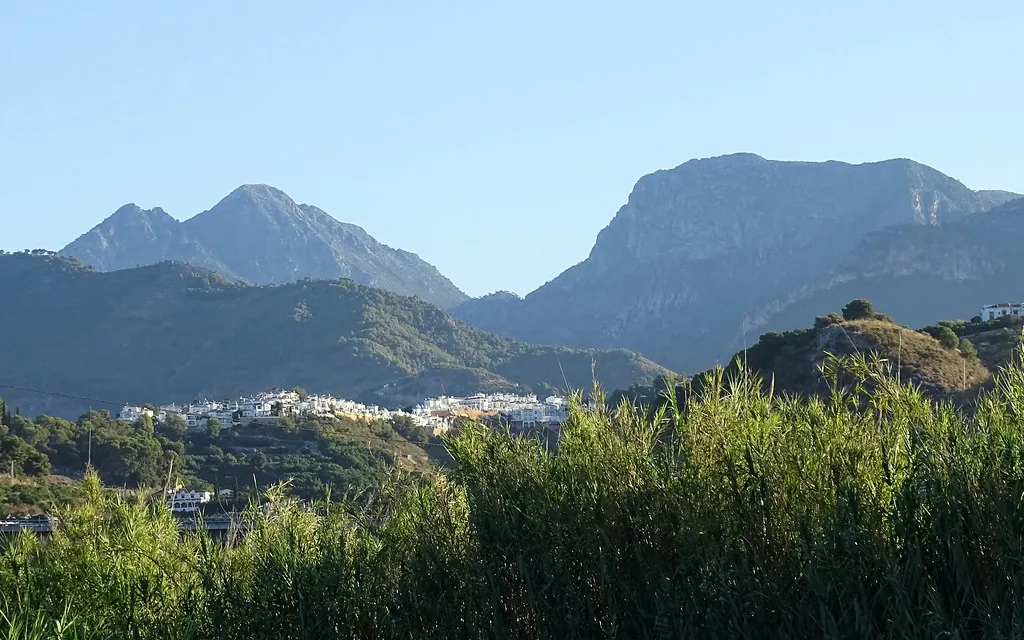
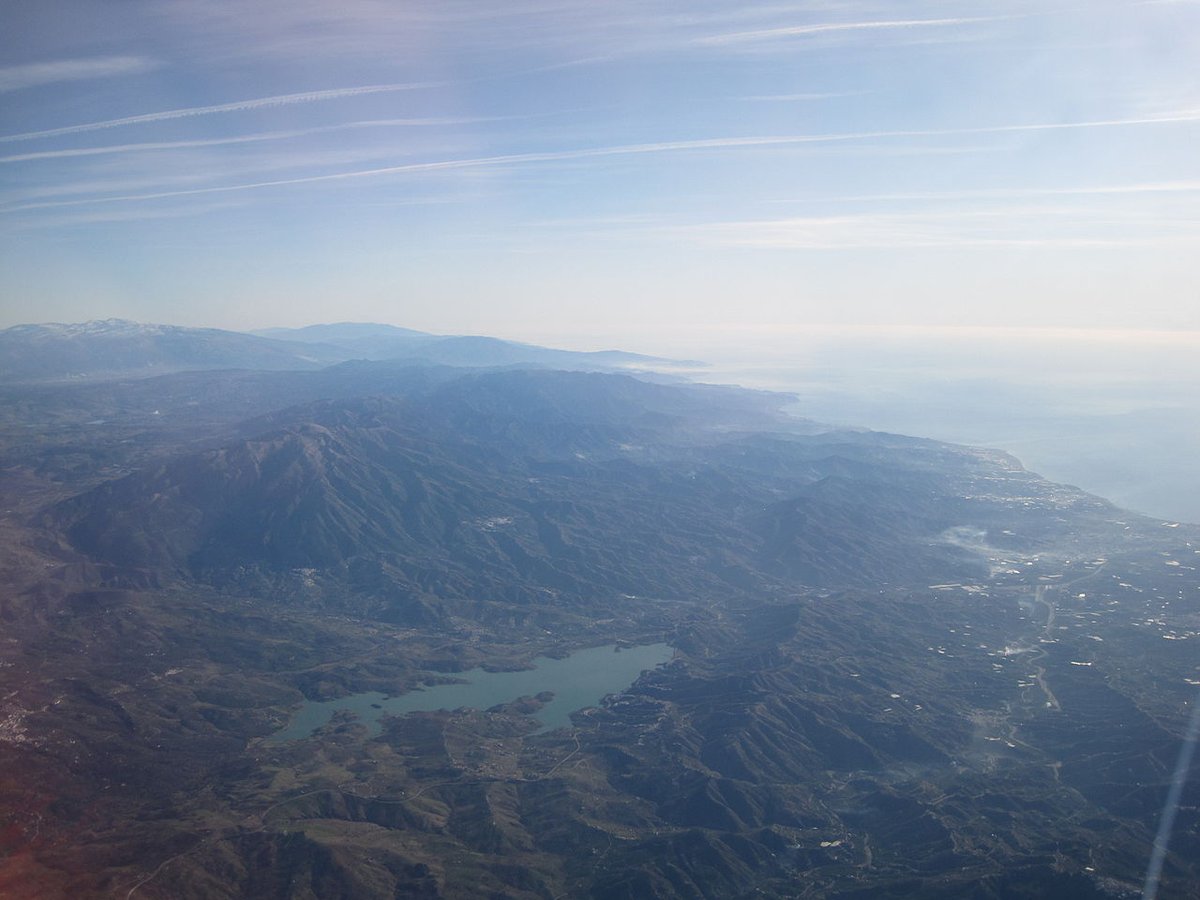
For a slower view of the landscape, Cerro de la Jaula is best reached early. The road climbs steadily, and at the top the Axarquía opens out in full: the sea in the distance, terraced olive groves, greenhouses catching the light, and white villages scattered along the hillsides.
From here, paths lead down towards the surroundings of the río Benamargosa. Along the way, old irrigation channels appear, still carrying water to the orchards. Some are considered heirs to Andalusí irrigation systems that continue to shape this part of Málaga.
Back in the village, the rhythm settles again. A coffee in any bar, a seat for a while, and the morning passing by at its own pace. No one treats you as if you have just arrived. Conversations come easily, as though you have always been around.
In the end, that sums up Benamocarra quite well: a place that does not try to draw attention, yet often persuades people to stay a little longer than they intended.