Full Article
about Canillas de Albaida
Mountain village at the edge of the Natural Park, with winding streets and perfect surroundings for quiet hiking.
Hide article Read full article
Getting there and first impressions
Access sets the tone for a visit to Canillas de Albaida. From Vélez-Málaga, the route follows the MA‑4103. It is a narrow, winding road, and the journey takes just under an hour. The approach already hints at what comes next: a small settlement shaped by the hillside rather than by modern planning.
Parking needs a bit of thought. It makes sense to leave the car in the lower part of the village or near the entrances to the centre. Streets inside are very tight, and in summer it becomes more difficult to move around by car.
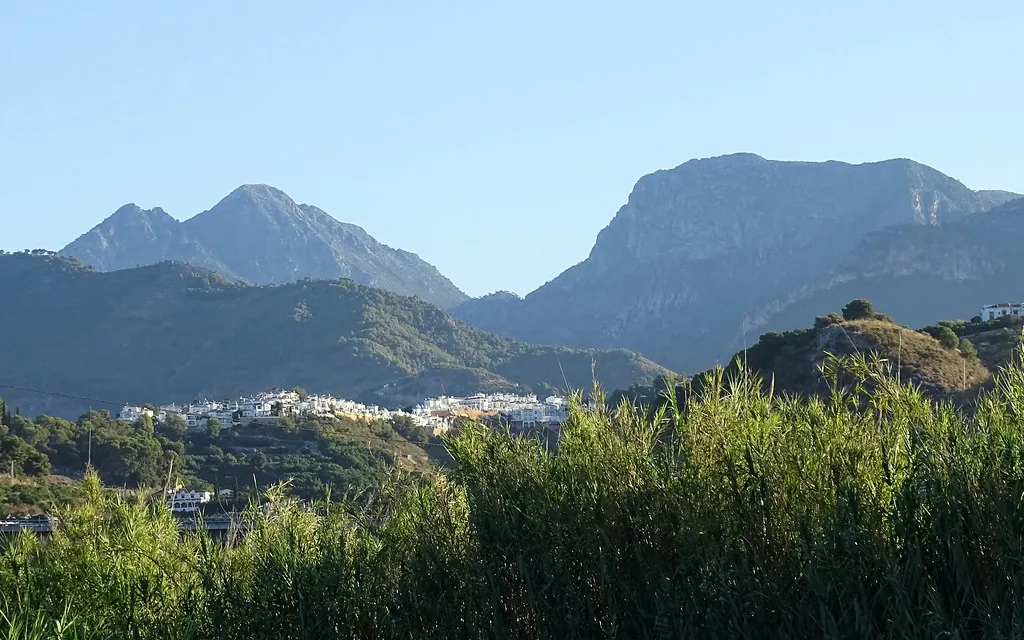
The village sits on a slope, and that is immediately noticeable. Streets are short and often steep, with frequent turns. Many are paved with stone or rough cement, which adds to the sense of an older layout that has not changed much. Whitewashed houses dominate, with small windows and iron balconies. There are no major landmarks or dramatic contrasts. This is an agricultural village that has remained largely the same over time.
Santa Ana and the village centre
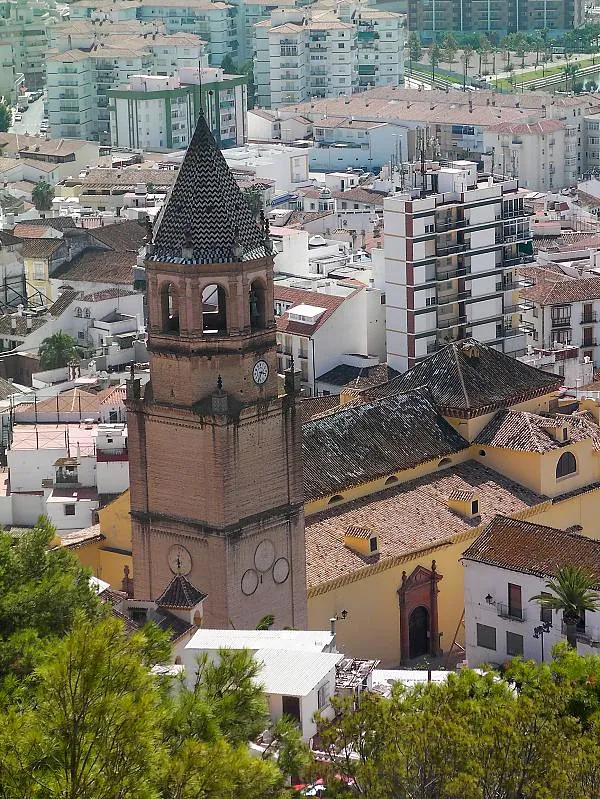
The parish church of Santa Ana stands in the central area. It dates back to the 16th century and has been altered on several occasions since then. From the outside, the building is quite plain. Inside, there are usually traditional religious altarpieces and carvings, in line with what is commonly found in small Andalusian churches.
The surrounding streets form the busiest part of Canillas de Albaida. Even here, the layout stays compact. Short slopes connect tight corners, and some streets simply come to a dead end. Movement through the centre feels more like passing through than settling in one place. The main square works in that way too, more of a point you cross than somewhere to linger for long.
Walking the old streets
The old quarter is easy to cover in a short visit. About an hour is enough to walk through it without rushing. The appeal lies in the small details rather than in any single highlight.
Balconies with potted plants appear here and there, and some façades are carefully maintained. That look is typical of this part of the Axarquía, the eastern area of Málaga province where villages often share similar features. Seasonal changes add a slight variation. Spring brings more flowers and colour, while the structure of the streets stays the same throughout the year: narrow routes that rise and fall without much order.
The sense of space remains consistent. Corners come quickly, and views open and close within a few steps. It is not a place for long, straight walks or wide perspectives. Instead, it offers a compact layout that reveals itself gradually as you move through it.
Countryside and walking routes
Just beyond the edge of the village, the landscape opens into farmland. Olive groves cover much of the nearby hillsides and define the surroundings. Almond trees also appear in the area. When they blossom towards the end of winter, provided the weather allows it, the scenery changes noticeably.
Several walking paths start from Canillas de Albaida. Some head towards the Albarracín river, others towards the sierras of Tejeda and Almijara, mountain ranges that frame this part of Andalucía. These routes vary in difficulty, but certain sections include loose stones and steep gradients. Proper walking shoes are advisable rather than light trainers.
The transition from village to countryside happens quickly. A few minutes of walking can take you from narrow streets to open slopes with wide views. The agricultural character remains present even outside the centre, with the olive groves continuing across the terrain.
Local life and celebrations
Life in Canillas de Albaida follows a steady rhythm linked to the seasons. The main festivities take place around Santa Ana, usually in summer. These are simple celebrations, typical of a small village: a procession, music, and a local atmosphere where most people know each other.
Other activities appear throughout the year, often connected to farming and especially to the olive harvest. The exact nature of these events depends on the season, but they reflect the agricultural roots of the area rather than large-scale tourism.
There is no sense of a place built around visitors. Daily life continues at its own pace, and any events or gatherings feel closely tied to the local community.
How long to spend
Canillas de Albaida does not require a full day. The centre can be seen fairly quickly, and the experience remains compact. A visit makes more sense as part of a wider route through nearby villages, or if combined with a walk along the surrounding paths.
A practical tip stands out: park outside the centre and continue on foot. The streets are too narrow to search for a space comfortably. Arriving early also helps. As the morning progresses, movement increases and getting around becomes less convenient.
The village offers a straightforward experience. It is defined by its setting on the hillside, its agricultural background, and its compact layout. Anyone coming here should expect a short visit focused on walking, simple architecture, and the surrounding landscape rather than major sights or long itineraries.