Full Article
about Cútar
A town on the Ruta de la Pasa, known for the Fuente del Paraíso and for preserving the Qur’an of Cútar.
Hide article Read full article
At sunset on Calle Mayor, golden light slips into the patios of whitewashed houses and bounces off walls still rough with lime. The village grows quieter when a flock passes on its way out of town, bells echoing between the façades. The air carries the smell of damp earth and grape must. In that moment, tourism in Cútar makes more sense as a slow rhythm that follows the slopes, rather than a checklist.
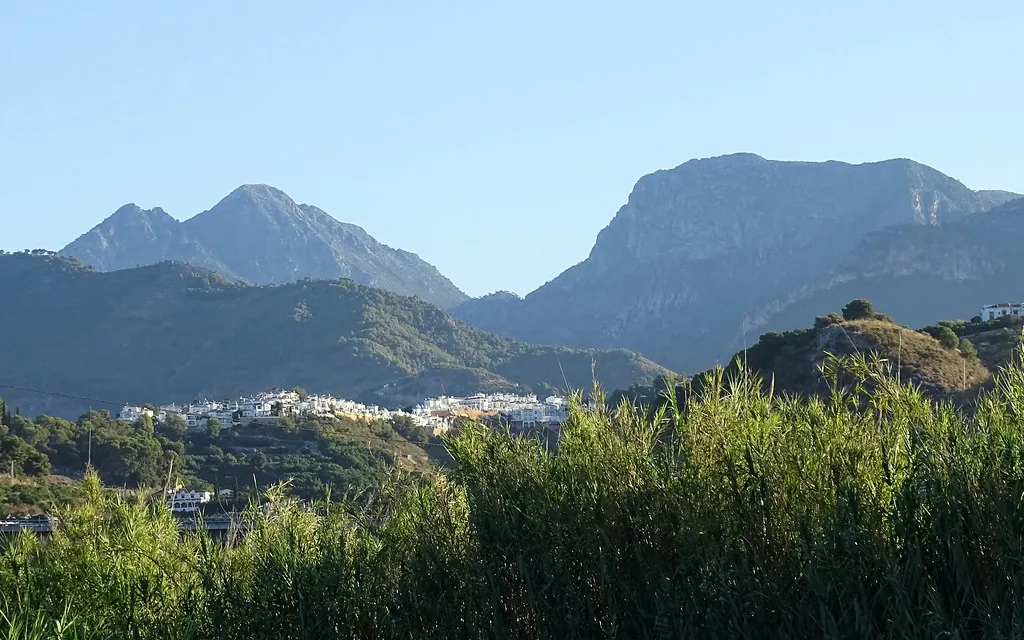
Cútar, with just over five hundred residents, sits at around 330 metres above sea level in the Axarquía region of Málaga. Many families remain linked to dryland farming, known locally as cultivos de secano. Muscat grapes and raisins still shape part of the agricultural calendar, especially on the stepped plots that ring the village. Dry-stone terraces hold the vines on slopes that demand patient work with light tools.
A street plan shaped by Al-Andalus
The old centre keeps its irregular layout from the Andalusí period, the centuries of Muslim rule in southern Spain. Streets are narrow and winding, edged by white houses with dark metal grilles and pots that release the scent of jasmine on summer nights.
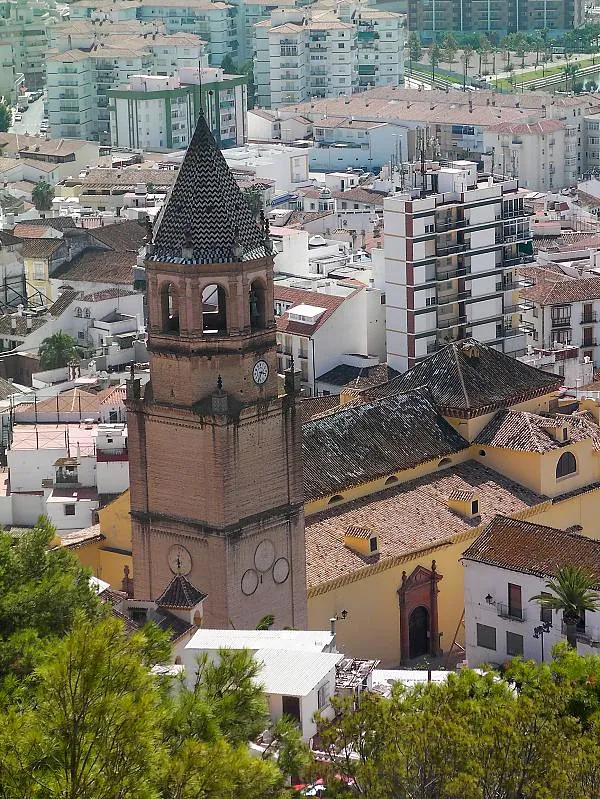
The church of Nuestra Señora de la Encarnación stands in one of the most visible spots. It was built in the 16th century on the site of a former mosque, something seen across many Axarquía villages after the Castilian conquest. From the nearby square, much of the clustered housing can be seen stepping down the hillside.
Walking here means stopping often. A restored lagar, once used for pressing grapes. A worn wooden door. A small viewpoint appearing between two houses. Some of these lagares have been brought back into use and, at certain times of year, show how Muscat grapes were traditionally processed.
A practical note: the historic centre includes short but steep climbs. If arriving by car, it is usually easier to park at the edges of the village and continue on foot.
Paths through vines and almond trees
Just a few minutes from the centre, rural tracks begin. They thread through olive groves and almond trees before opening onto the rounded hills of the Axarquía. In February, when the almonds blossom, white patches spread across the reddish soil. By September, attention shifts to the paseras, the open drying areas where grapes are laid out to become raisins.
Some paths link up with longer routes towards Comares or the valley of the river Vélez. They are not especially difficult, though the ground can be uneven and carrying water is advisable in hot weather. In summer, the sun is strong from mid-morning.
Among the vines, small agricultural structures still stand, and simple tools rest against low walls. During the grape harvest, usually towards the end of summer, it is common to come across people working the plots.
Muscat wine and the cooking of the Axarquía
Muscat wine is part of local identity. Around the village there are small, family-run setups where sweet wine is made using inherited methods. Some can be visited at certain times of year, generally by prior arrangement.
On local tables, the food reflects a dry, sunny landscape. Ajoblanco, a cold, thick soup made with almonds, often appears when the heat builds. Chivo al ajillo, goat cooked with garlic, is also common. At weekends, long breakfasts may include molletes, soft bread rolls served with olive oil from the surrounding area.
Festivities tied to the seasons
Several celebrations mark the rhythm of the year. The patron saint festivities in honour of the Virgen de la Encarnación usually take place in August, filling the streets with music, processions and shared meals.
In September, once the grape harvest ends, Cútar often organises activities around raisins and Muscat wine. During those days, the village smells of ripe fruit and fresh must.
The romería of San Isidro Labrador is held at the beginning of May, linked to the agricultural world. Nearby tracks fill with carts, horses and groups spending the day among the olive trees.
Cútar is a small place, with steep streets, quiet hours and open countryside on all sides. It suits an unhurried visit, early in the morning or towards evening, with the understanding that life here still follows the land and the seasons.