Full Article
about El Borge
Raisin capital, ringed by vineyards on near-vertical slopes and birthplace of the bandit El Bizco de El Borge.
Hide article Read full article
A village shaped by vines and sun
By mid-morning, in a quiet corner of the village, the scent of grapes laid out to dry drifts through open windows and lingers in the warm air. In El Borge, in Málaga’s Axarquía region, that aroma is part of everyday life when the heat sets in and the paseros begin to fill. These sloping platforms, spread across the hillsides, are where Moscatel grapes are dried in the sun to become raisins.
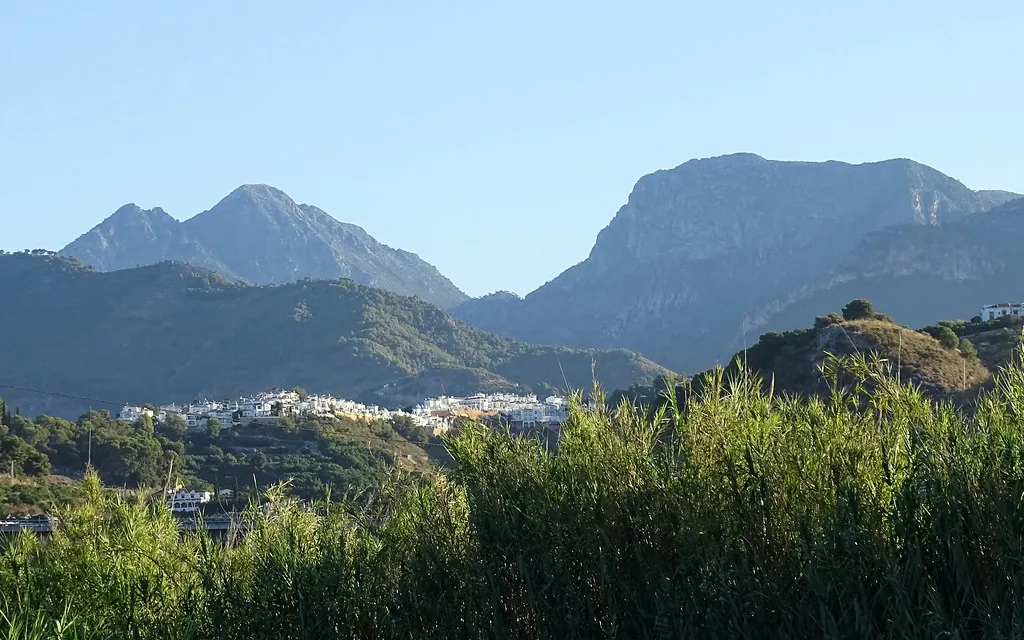
Life here still turns around olive groves and vineyards that carpet the slopes. The landscape is defined by muted green olive trees, pale, dusty soil and a sky that is often clear. El Borge has fewer than a thousand inhabitants and keeps the steady rhythm of a place where working the land remains central and the seasons still set the pace of the year.
The streets rise and fall gently, cobbled in places, leading to small squares where the shade shifts as the day goes on. Whitewashed houses with dark iron grilles and pots of mint or basil in their patios reinforce the sense that this is, above all, an agricultural village. Everything feels scaled to daily life rather than display.
In summer, early morning or late afternoon are the best times to walk. At midday the sun hits the slopes directly and there is little breeze between the narrow streets.
Stone, wood and traces of Al-Andalus
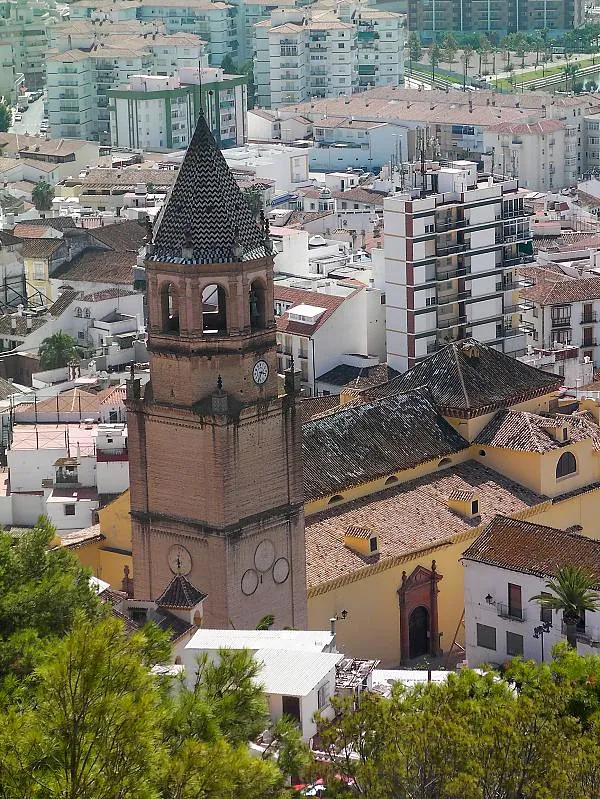
At the centre of the village stands the parish church of Nuestra Señora del Rosario. Its origins are usually placed in the 16th century. From the outside it is restrained, with pale walls, simple stonework and a tower that rises above the surrounding rooftops. Inside, wooden altarpieces and small religious images reflect a devotion tied closely to local life. The atmosphere is intimate rather than monumental.
The layout of the old quarter still reveals the village’s Andalusí roots, referring to the period of Muslim rule in southern Spain. Narrow streets intersect without any obvious order. Tight corners and houses appear to adapt to the terrain instead of imposing upon it. Some façades display old coats of arms; others show humbler details such as wrought-iron grilles or heavy wooden doors darkened with age.
The so-called Casa de los Cura, an 18th-century building, now houses a small ethnographic museum. Inside are agricultural tools, presses and utensils linked to the cultivation of vines and olives. It is modest in size, yet it helps to explain the type of work that has sustained the village for generations.
There is also a fountain of Arab origin, which for centuries provided water for residents and nearby orchards. From certain high points in the urban area, particularly at the end of some streets, broad views open out over slopes covered in olive trees and vineyards. On clear days the outline of the inland sierras is easy to make out in the distance.
Paths through the Axarquía countryside
Several rural tracks lead out from the village into the Axarquía countryside. Some are signposted and pass ancient olive trees or steep vineyard plots where much of the work is still done by hand.
Certain routes follow old agricultural paths once used to reach mills or scattered cortijos, traditional rural farmhouses dotted along the hillsides. These are not routes of dramatic cliffs or vast panoramas. The interest lies in the details: dry-stone walls, narrow irrigation channels and stepped plots that shift in colour as the seasons change.
One of the most distinctive features of the area is the network of paseros. Seen from a distance, these inclined drying floors create geometric patterns across the hills. It is in late summer and early autumn that they are at their busiest, covered with Moscatel grapes laid out carefully under the sun.
The terrain is demanding. Anyone arriving by bicycle will encounter serious climbs and dirt tracks that require a steady pace.
From field to table
In El Borge, cooking remains closely tied to what the land provides. In many homes, simple dishes dominate the table: salads made with seasonal vegetables, migas on cooler days, or gazpacho that sometimes includes Moscatel grapes, adding a gentle sweetness characteristic of the area.
Raisins and sweet wines made from the same grape variety form a central part of the village’s agricultural identity. Some family-run wineries in the surrounding area open their doors at certain times of the year, particularly during the grape harvest or events connected to raisin production.
Food here reflects continuity rather than reinvention. Recipes are shaped by harvest cycles and by what can be grown on these steep slopes.
A calendar rooted in rural life
The festive calendar remains closely linked to the countryside. In January, San Antón is celebrated with the blessing of animals, a tradition that recalls the role they played for centuries in agricultural work.
Holy Week is marked in a restrained way. Processions move through narrow streets where the sound of footsteps and music echoes off white façades, creating an atmosphere that is solemn and close-knit.
In summer the village becomes livelier as families return for a few days. Towards September, the Feria de la Pasa takes place, dedicated to the area’s most representative product. Activities revolve around the traditional drying of grapes, reinforcing the connection between community life and the raisin harvest.
Practical notes for visiting
El Borge lies around three quarters of an hour by car from Málaga city. The approach winds into the hills of the Axarquía, where the road begins to trace the same slopes that support vines and olive trees.
This is not a destination built around large monuments or a long list of attractions. Its appeal rests on continuity: agriculture still shapes the landscape, the streets preserve their Andalusí pattern and the scent of drying grapes returns each year with the heat. For those willing to slow down and follow the rhythm of the land, El Borge offers a clear view of rural life in this part of Andalucía.