Full Article
about Frigiliana
Considered one of Spain’s most beautiful villages for its impeccably preserved Moorish quarter and sea views.
Hide article Read full article
At eight in the morning in Frigiliana, the air smells of warm molasses. It is not a figure of speech. The scent comes from the sugar mill when the furnaces are lit to cook the cane. From the upper square, where lemon trees shade stone benches, you can sometimes see white smoke rising from the old chimneys. The village has not quite woken up. Green shutters are half closed, and the only sounds are the water from the fountain and, far away, the sea that cannot yet be seen.
Tiles that remember a war
Climbing through the Moorish quarter means following a thread of jasmine mixed with fresh whitewash. The streets narrow until outstretched arms almost touch both sides. Every so often there is a small landing where you can pause, and on the walls a series of blue and white ceramic tiles tell a story. They recount the rebellion at the end of the 16th century, when the Moriscos, Muslims who had been forced to convert to Christianity, took refuge on the Peñón.
The conflict ended badly, as wars tend to do, yet the panels focus on particular moments: families fleeing uphill, soldiers advancing among rocks, women carrying children. Many people pass without reading them. They sit at eye level, fixed to the walls, like a story the village chose not to erase.
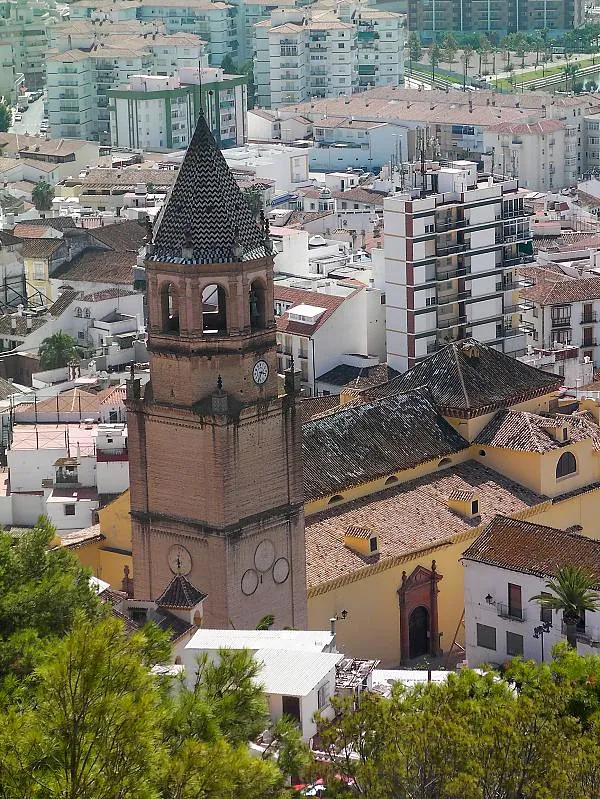
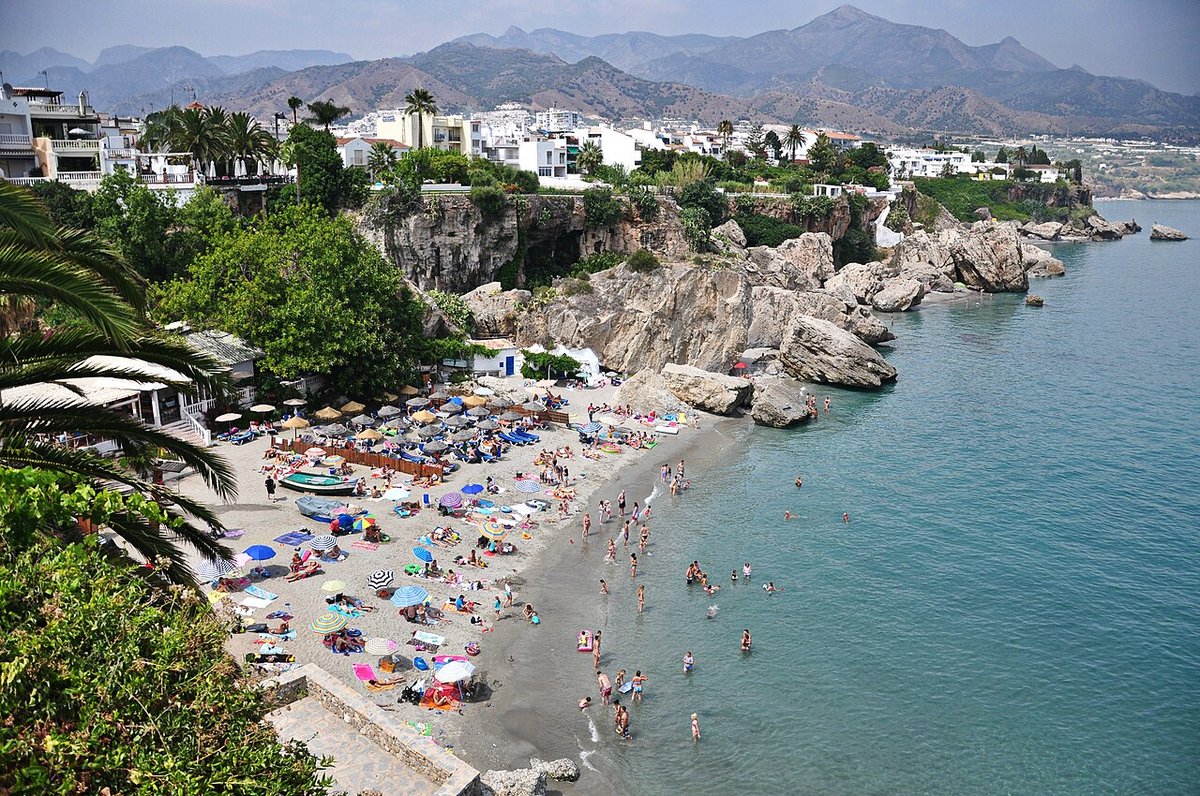
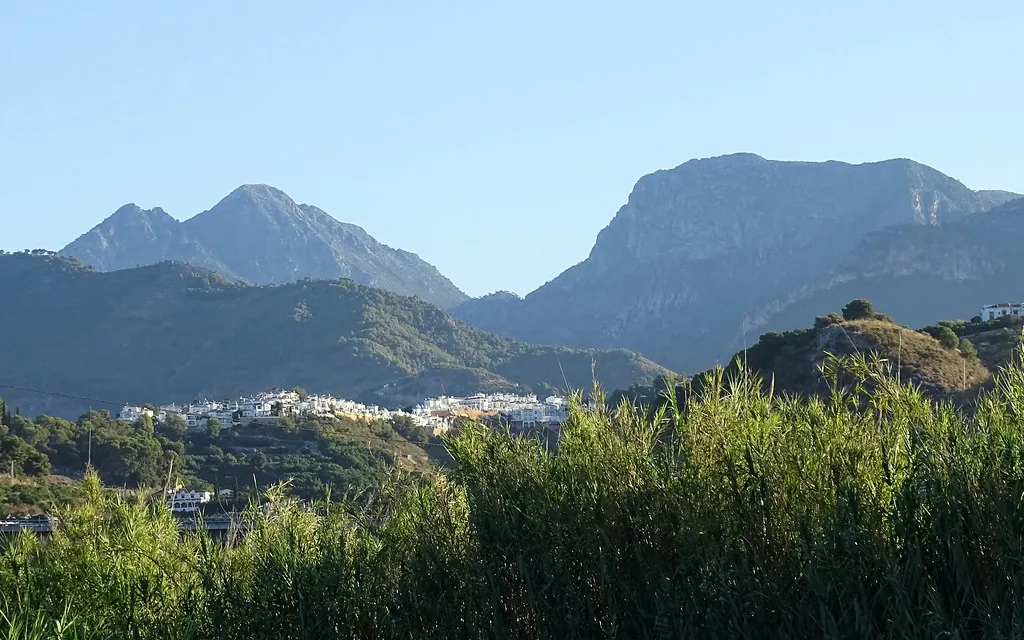
The climb ends at a viewpoint where the houses open out all at once. Below, the roofs with traditional Arab tiles form a red and white patchwork that spills into the valley. Beyond, the Higuerón river draws a green line through small plots, olive trees and a few custard apple trees. Behind that, on a clear day, the sea appears as a thin silver strip between the darker hills of the sierra.
A sweetness with a hint of smoke
In the old sugar mill, the village still produces its well known miel de caña. Despite the name, it is not honey but a thick molasses made from sugar cane. Inside, the smell arrives first: toasted cane, dark sugar and damp smoke that clings to clothes.
Wheels and rollers turn slowly as they press the stalks. What comes out is a very dense syrup, almost black, with a flavour that balances sweetness and a slight bitterness. People say this is the last place in Europe where it is made in this way, with pressed cane and long cooking times.
Tasted fresh, the first sensation is heat, followed by a lingering note of raw sugar that stays on the tongue. The process, the smell and the taste all feel tied to another pace of work, one that has not quite disappeared here.
Candles and quiet during Semana Santa
Semana Santa, the week leading up to Easter, is marked across Andalucía with religious processions. In Frigiliana it is smaller in scale than in the regional capitals. The floats are more compact, and the narrow streets mean each turn must be taken carefully.
On Good Friday night, some of the streetlights in the old quarter are switched off, and the procession moves mostly by candlelight. Yellow light reflects off whitewashed walls, and shadows slide across the façades. Silence holds for long stretches, broken only by the beat of a drum or a saeta, a flamenco style lament sung from a balcony.
Later, in the lower square, the atmosphere shifts gradually. Bowls of cold ajoblanco appear, a chilled soup made from almonds, with raw almond pieces floating on the surface. At some point someone brings out a guitar. It does not feel organised, more like a quiet way of letting the night continue.
Down towards the river
By midday, the sun falls directly onto the steep streets and the old quarter empties out. It is a good time to walk down towards the Higuerón river along one of the paths that start in the upper part of the village.
The route winds between pine trees, mastic shrubs and the occasional wild fig tree. It leads to spots where the water has carved small pools into the rock. During the week, it is easy to find them almost empty. At weekends, especially in summer, people tend to arrive from the coast with cool boxes and music, and the atmosphere changes noticeably.
The return climb is uphill, and you feel it.
Back in the village, the morning smell of molasses has almost gone, the furnaces long since cooled. On tables, plates of choto al ajillo continue to circulate. This dish of young goat is cut into small pieces and fried with garlic and chilli. It arrives in earthenware pans that still hiss when they are set down.
If you come in August, earlier in the day and during the week tends to be calmer. In summer the village usually hosts a festival dedicated to the three cultures, with stalls, music and paper lanterns filling the streets. The atmosphere is lively and draws a crowd, though the version of Frigiliana on those days is quite different from the quiet mornings of any other month.