Full Article
about Macharaviaya
The little Madrid, known for its ties to the Gálvez family and its role in U.S. independence
Hide article Read full article
An Eighteenth-Century Echo in the Axarquía
At sunset, the white façades of Macharaviaya’s old quarter reflect a soft light that seems to cling to the limewashed walls. The village falls quiet. Now and then there is the sound of a wooden door closing or footsteps brushing across the cobbles. In the Axarquía region of Málaga province, slightly set back from the coast though the sea is still relatively near, this small settlement holds on to many traces of the eighteenth century.
Much of that history is linked to the Gálvez family. Their surname appears again and again once you begin to notice the details: on buildings, coats of arms and commemorative plaques. For a place of just over five hundred inhabitants today, the reach of its past can feel unexpectedly wide.
Macharaviaya does not announce itself with grand monuments or a packed calendar of events. Its appeal lies elsewhere, in the texture of its streets and in the sense that its scale does not quite match the breadth of its story.
A Compact Old Quarter
The layout of Macharaviaya remains compact and orderly. Narrow streets run between white houses with wrought-iron balconies. Here and there, a façade reveals a more elaborate stone doorway than you might expect in a village of this size. That contrast says a great deal about the period when the town prospered, thanks to commercial links with the Americas.
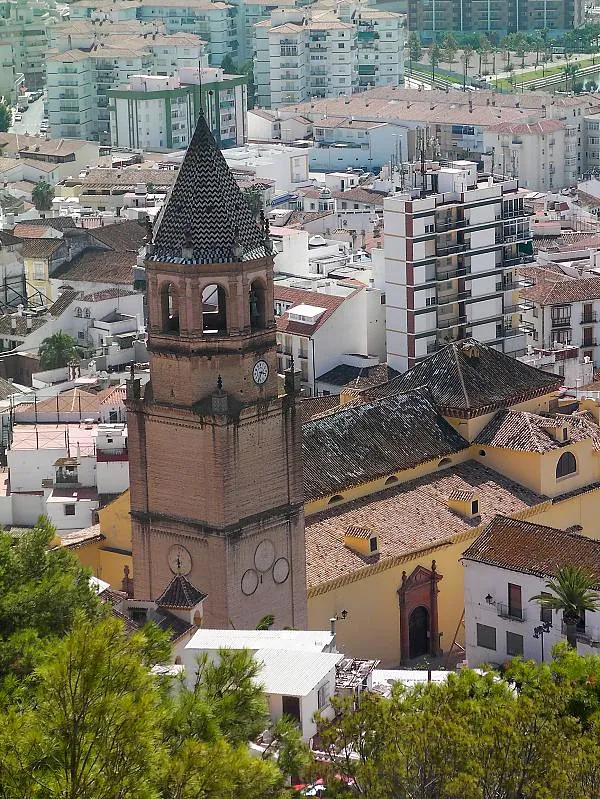
At the heart of the village is the square where the church of San Jacinto stands. It is not large. Like many Andalusian squares, it has an intimate proportion, everything close at hand: the church frontage, a handful of historic buildings, and the echo of conversation when someone passes through. The exterior of the church is sober, defined by clear volumes and stone that turns golden in the late afternoon light. Inside, the baroque style is restrained, more rural than monumental.
Walking without a fixed route brings small discoveries. Carved coats of arms above a doorway. Old iron grilles. Patios glimpsed through half-open entrances. These details hint at a more prosperous past than the village’s present size might suggest. The eighteenth century is not displayed in dramatic fashion, yet it lingers in the fabric of the place.
The atmosphere is unhurried. Streets are short, distances minimal. It does not take long to cross from one end of the old quarter to the other, but there is enough architectural nuance to reward slow exploration.
Beyond the Last Houses: Olives and Open Hills
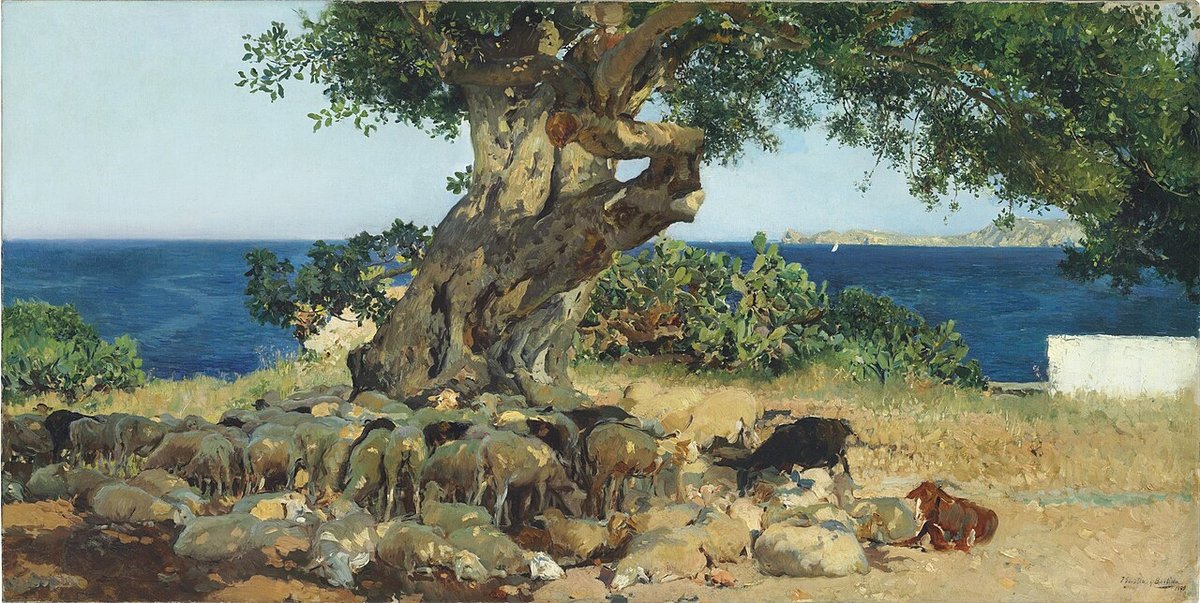
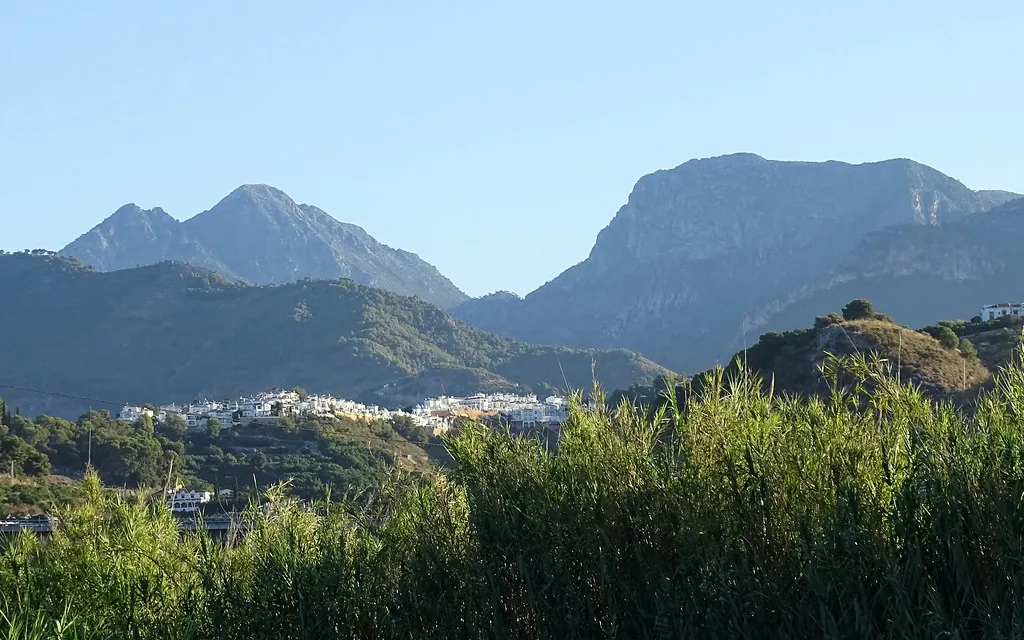
A few steps beyond the built-up area and the landscape opens out. Gentle hills covered with olive groves and almond trees stretch across this part of the Axarquía. Some olive trunks are twisted and ancient-looking, their wood deeply fissured. When a breeze rises, the silvery leaves shift tone constantly, flashing pale and dark as they turn.
Near the cemetery on the outskirts stand mausoleums with a neoclassical air. They recall a time when Macharaviaya had connections far broader than one might assume today. It is not a grand site, yet it is intriguing if you are trying to understand the historical dimension the village once reached.
Several agricultural tracks run between the olive groves in the surrounding countryside. Many local residents use them for a walk towards the end of the day. In spring the fields are greener, and the air carries the scent of damp earth and, when the almond trees blossom, a faint sweetness that drifts across the slopes.
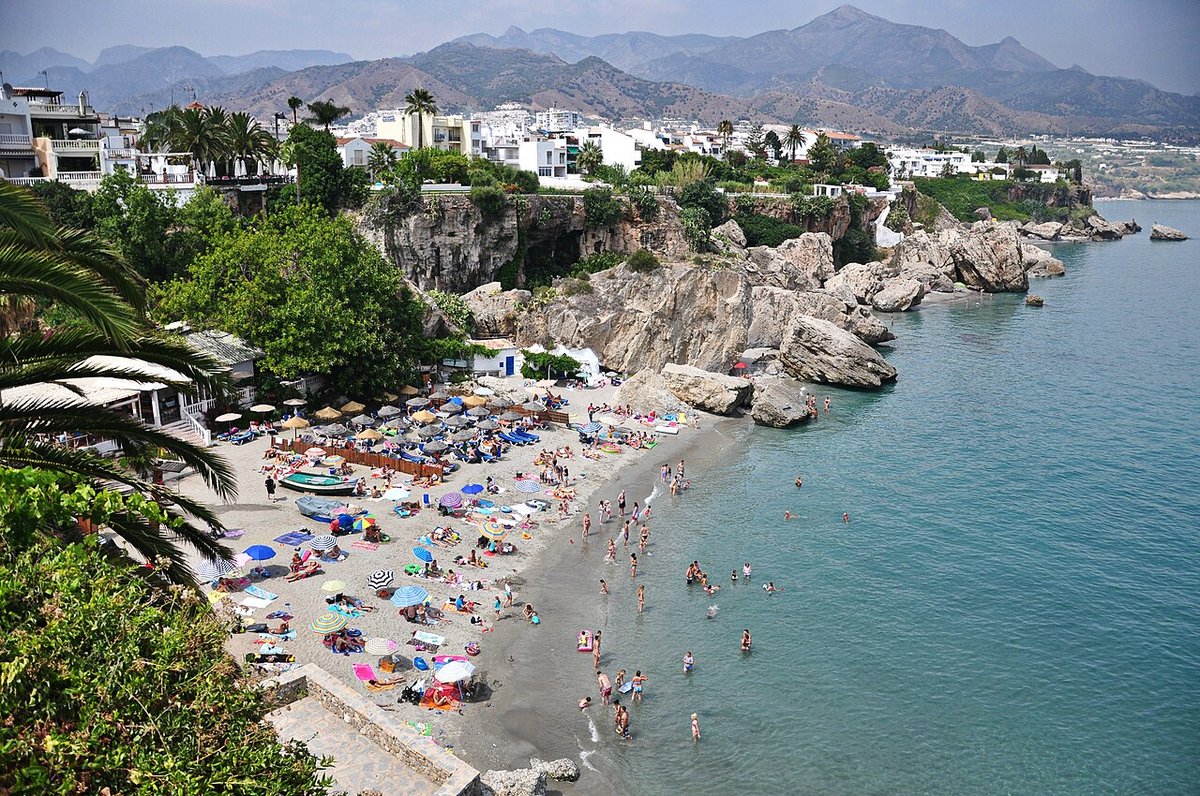
The proximity of the sea is sensed more in light and climate than in direct views. Although the coast is relatively close, Macharaviaya feels set apart from it, anchored instead in the rhythms of the inland hills.
Olive Oil and Simple Dishes
Olive oil sets the tone here. In many households, the year’s harvest is still discussed as an almost inevitable topic of winter conversation. Production shapes both the landscape and the kitchen.
Local cooking revolves around straightforward dishes: hearty stews eaten with a spoon, bread dipped into freshly pressed oil, and traditional sweets such as roscos de vino. These small, ring-shaped biscuits, flavoured with wine, tend to appear during celebrations or family gatherings.
Visitors should not expect a wide culinary offering. Macharaviaya is small and moves at a different pace. Eating here is less about variety and more about continuity with what has long been made at home.
The link between what is grown and what is served remains direct. Olive groves are not a backdrop but a working presence, and that connection is reflected in everyday conversation as much as in the food itself.
Light, Heat and Local Festivities
The early hours of the morning and the end of the afternoon are when Macharaviaya feels most distinctly itself. Light enters the streets at an angle, and façades cast long shadows across the cobbles. At those times the village’s quiet character becomes more pronounced.
In high summer, it is wise to avoid the middle of the day. The heat in this part of the Axarquía can be intense, and many streets offer little shade. The same white walls that glow at sunset can reflect the sun sharply at noon.
Throughout the year, a handful of local festivities bring a change of mood. In summer there is usually a feria dedicated to San Jacinto, the village’s patron saint. In spring, the romería of San Isidro takes place, a traditional rural pilgrimage and celebration common in many parts of Spain. These are village-scale events, shaped more by residents than by visitors, and during those days the atmosphere shifts noticeably.
Outside those occasions, life returns to its steady rhythm. Macharaviaya does not rely on spectacle. Instead, it offers streets where time seems to move more slowly, a history unexpectedly expansive for a settlement of little more than five hundred people, and that feeling at dusk that each stone has witnessed far more than it lets on.
For travellers exploring inland Málaga province, it provides a pause from the coast and a reminder that small places can hold stories that reach well beyond their boundaries.