Full Article
about Riogordo
Known for its living Passion play and an ethnographic museum amid olive groves.
Hide article Read full article
At nine in the morning, sunlight filters through the vine-covered pergola in the square and scatters circles of shade across the zinc-topped tables. Tourism in Riogordo often begins like this, with the smell of freshly brewed coffee drifting through half-open doors and bakers unloading boxes that still hold the warmth of the oven. Outside, Calle Real climbs steeply between whitewashed façades where, if you walk slowly, you can still spot small wall niches holding plaster figures worn down by dust and time.
This is a village that reveals itself at its own pace. The slopes are short but constant, the corners tight, the details easy to miss unless you look up from the ground and let your eyes wander.
A Village in Two Tones
Riogordo is divided into two areas that face one another across the hillside. Above, El Cerrillo clings to the incline, its narrow streets and houses angled towards the light. Below lies the flatter part of the village, gathered around the main square. Between the two, as the late morning sun begins to press down, the scent of dried oregano and freshly turned earth drifts through the air.
Walking here means climbing and descending in equal measure. A turn in the street might suddenly reveal a courtyard lined with plant pots, or a stone wall where wild nasturtiums have taken root. There is no grand route to follow, only a series of small discoveries stitched together by cobbled lanes.
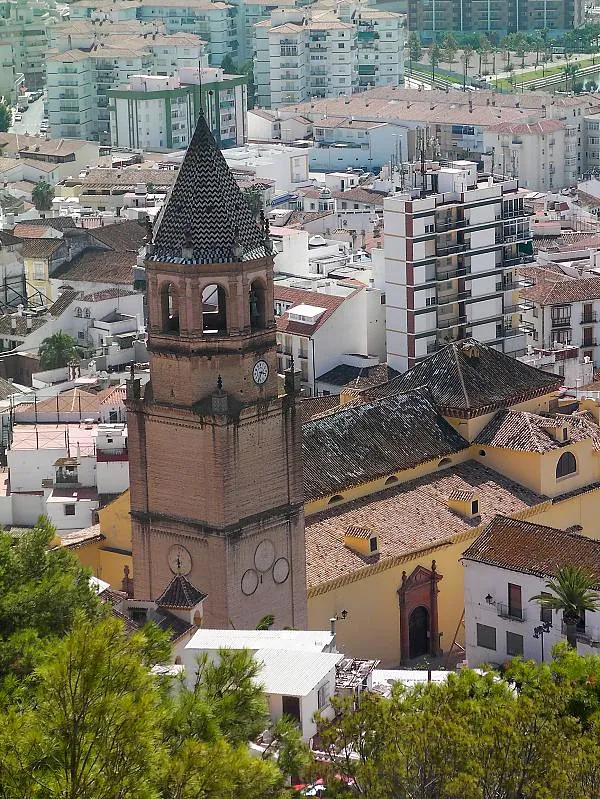
At the highest point of the historic centre stands the Iglesia de Nuestra Señora de Gracia. The current church was built at the end of the 15th century, although it has been altered over the centuries. At midday the bell tower marks the hour with a dry sound that echoes across the surrounding hills. In the afternoon, as the sun drops towards the mountains, the façade casts long shadows over the paving stones. The door is often open, and inside there is that familiar blend of candle wax, old wood and cool stone found in many village churches.
Devotions in the Walls
Scattered across the façades are more than a dozen small niche chapels, according to local accounts. There are no signs pointing them out. They are found by chance. One sits on the corner of a pink-painted house, half hidden by a purple bougainvillea. Another, in the lower part of the village, shelters a plaster Virgin with flaking features. Before Semana Santa, neighbours clean them and replace faded carnations with fresh flowers.
A few minutes’ walk away stands the Ermita de Jesús Nazareno. From the outside it is plain and white, but inside a gilded Baroque dressing room appears once your eyes adjust to the dim light. The chapel was built in the 17th century and still keeps antique furniture in the sacristy. If you ask a local resident, you may sometimes be shown pieces that are not permanently on display. Here, many keys still pass from hand to hand, and access often depends on conversation rather than opening hours.
When the Village Becomes a Stage
During Semana Santa, the rhythm of Riogordo changes completely. The Paso de Riogordo is a large-scale representation of the Passion of Christ performed by the villagers themselves. Dozens of residents take part, dressed as Roman soldiers, apostles and biblical figures. Rehearsals usually begin months in advance.
On certain winter evenings, if you pass near the old municipal slaughterhouse, now used for preparations, you might hear voices reciting lines and someone calling out stage directions. What is elsewhere a solemn religious commemoration becomes here a community production in which generations take part.
The rest of the year is far quieter. In May, a fair linked to livestock and rural life is usually held. For a few days, horses and mules appear, along with temporary pens set up near the village. In August, the patron saint festivities bring music at night and streets busier than usual, especially as many people return for their holidays. At the beginning of September, the Noche de las Candelas takes place. Neighbours light bonfires at different points around the village and accompany the image of the Virgin through the streets, singing verses that echo old ballads.
Olive Oil and the Kitchen
Riogordo lies within the olive-growing area of the Montes de la Axarquía. Here, the olive tree is not simply part of the landscape but a source of work and routine. In autumn, the sound of mechanical shakers can be heard from the road, and the smell of freshly harvested olives lingers in the air.
Many families continue to take their olives to small local mills. If you arrive during the harvest and ask respectfully, you may sometimes be allowed to watch the beginning of the process. The new oil emerges thick and an intense green, often tasted simply with bread. It catches slightly at the back of the throat and leaves a flavour of fresh grass.
Local cooking reflects that pantry. Ajoblanco, a cold almond and garlic soup typical of southern Spain, is served chilled with grapes or raisins. When in season, snails are stewed with mint and cumin. Porra campesina is thicker than salmorejo and is often eaten with a fork rather than a spoon. Hornazo, a baked bread filled with cured meat and egg, tends to appear when people head out to spend the day in the countryside.
Walking Outwards
Spring is usually a good time to explore the surrounding area on foot. The trails of the Zubia fill with rockrose in bloom, and in some ravines water still runs after the rains. In wetter years, the Salto del Negro at least allows you to dip your feet.
August feels different. The village grows busier because of the festivities and the return of families on holiday. Those looking for quieter streets may prefer to visit during the week or outside those dates.
Riogordo does not present itself with grand statements. It is found in the echo of a bell across the hills, in a plaster figure tucked into a wall, in the first taste of new olive oil on bread. Its attractions are woven into daily life, and that is precisely what gives them weight.