Full Article
about Salares
Small Arab-heritage spot with a perfectly preserved Almohad minaret and a Roman bridge.
Hide article Read full article
A village that clings to the hillside
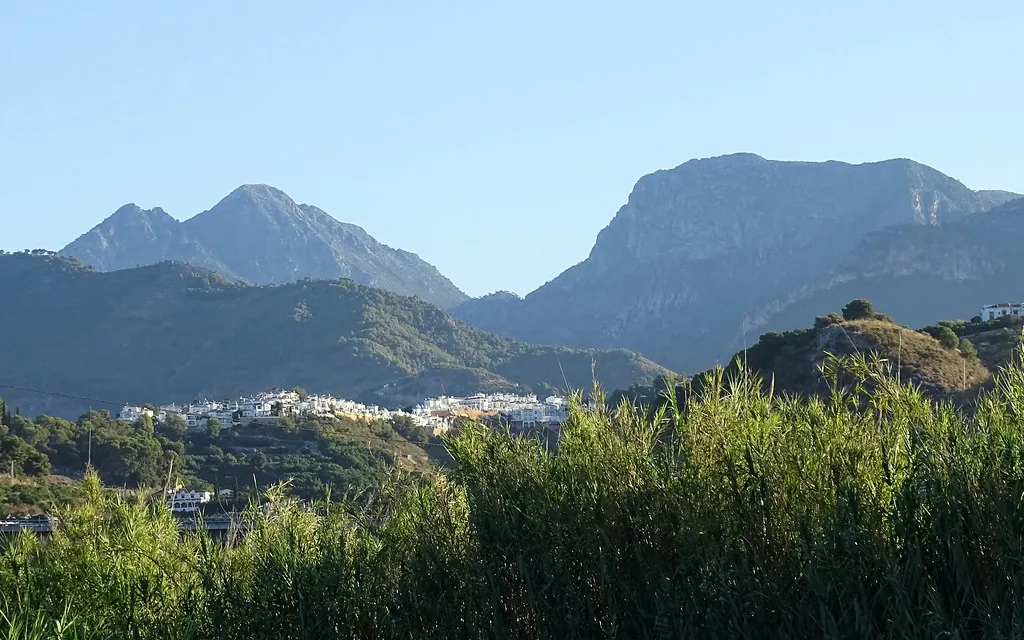
There are places where the GPS feels like it is exaggerating. You look at the screen and wonder if people really live that high up. Salares gives that impression. The road climbs from the coast, twisting through the hills, and then the village appears, a cluster of white houses gripping the slope.
Tourism in Salares has little to do with queues or shopfronts aimed at visitors. This is a small village in the Axarquía, with just under 200 residents and a noticeable Moorish heritage still present in its streets.
It is not a place that tries to impress. It feels as though it simply carries on as it always has. The streets are narrow, the slopes steep, and the quiet is that of a mountain village. There are no obvious visitor-focused shops. Houses are packed tightly together, many adapted to the incline in whatever way was possible.
Traces of its Moorish past
Walking through the centre means accepting that you will be going up and down constantly. The streets do not follow a neat grid. They bend, narrow and sometimes end in small corners. This irregular layout comes from the village’s Moorish origins, shaped more by the terrain than by any sense of formal planning.
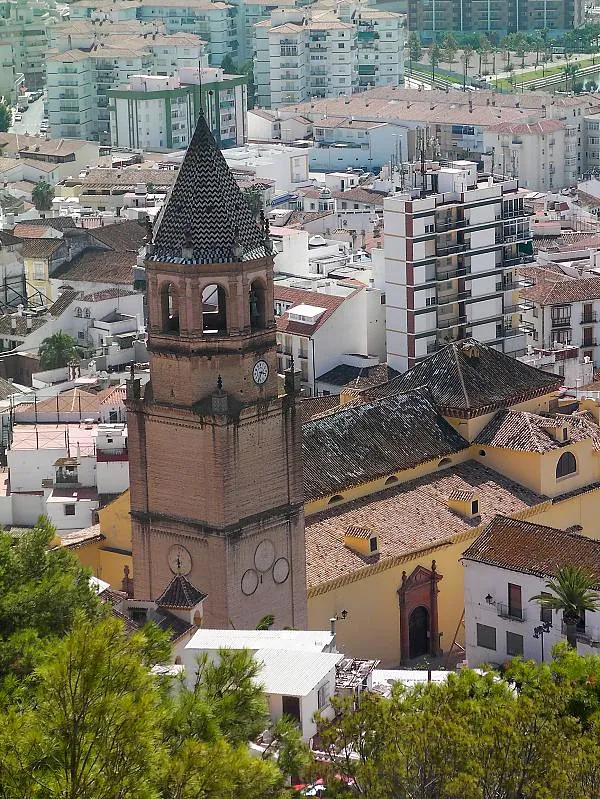
At the highest point stands the Church of Santa Ana. It was built in the 16th century on the site of a former mosque, something quite common in this part of the Axarquía after the Castilian conquest. Its tower can be seen from almost anywhere in the village and works as a useful reference when the streets start to feel confusing.
Among the houses there are still remains that hint at a small defensive position once located here. Nothing especially striking, but enough to suggest the role the village played in watching over these valleys.
A restored public washhouse has also been preserved. It helps make sense of how daily life functioned not so long ago. Next to it is a fountain of Arab origin that is still in use, and some residents continue to come here to fill containers with water.
From any open spot in the village, the landscape takes over. Slopes covered with olive trees, patches of holm oak and, far below, the valley through which the Salares river runs.
Beyond the village streets
The village itself is small, so it does not take long to walk through it. What often becomes more interesting begins once you leave it. Several walking routes start in Salares and head into the surrounding hills, some short and others reaching deeper into mountain terrain.
One of the more common walks follows the course of the Salares river. The path crosses olive groves and sections of denser vegetation. In some places there are natural pools where people cool off when the heat sets in, although it is always sensible to check access conditions or any restrictions.
For photography, early morning and late afternoon offer the best moments. Light enters the narrow streets at an angle, and the white façades reflect a warm, golden tone that only lasts briefly. At those times, the village can seem even smaller than it is.
Food in this part of the Axarquía leans towards solid, traditional dishes and strong olive oil. Expect stews, oven-cooked meats and local sweet wines. It is straightforward, home-style cooking rather than anything elaborate.
If there is still time to explore further, nearby villages are fairly close to one another. By car, it is possible to link several in a single day, travelling along narrow roads that move from valley to valley.
Local celebrations and everyday traditions
Festivities here feel more like gatherings for the village itself than events designed for outsiders. The feast of Santa Ana, held in summer, is when Salares becomes livelier. There is music, people out in the streets and a noticeable atmosphere in the small squares.
In autumn, another familiar scene appears across this part of the region: chestnuts roasting as the colder weather arrives. It is not a large organised event, but rather a custom that continues in many mountain villages.
During Semana Santa, or Holy Week, processions move through the narrow streets of the old centre. The religious floats are small and carried by local residents. Everything happens at close range, and the atmosphere feels direct and personal.
Reaching Salares through the hills
From Málaga city, the journey takes a little over an hour. The route begins along the coast towards Vélez-Málaga, followed by roads that climb inland into the Axarquía.
The final stretch is winding. Driving is not especially difficult, but it requires attention, as the roads are narrow and cross several ravines.
One practical detail to keep in mind is that the village is small and services are limited. It is usually easier to sort out things like fuel or cash in larger towns before heading up.
Salares does not try to draw attention to itself. It is the kind of place you come across almost by chance while travelling through the hills. A walk through its streets, some time on the surrounding paths, and that is enough to get a clear sense of it.