Full Article
about Sayalonga
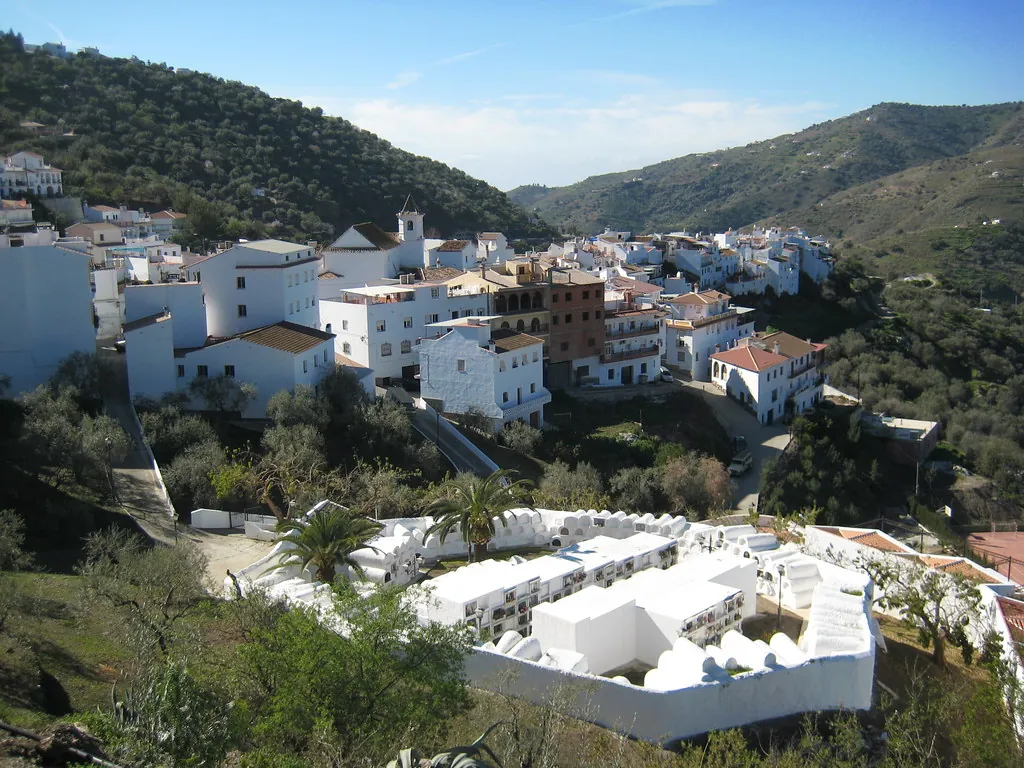
Town known for its unusual round cemetery and as the land of the loquat, with narrow white streets.
Hide article Read full article
A village shaped by its hillside
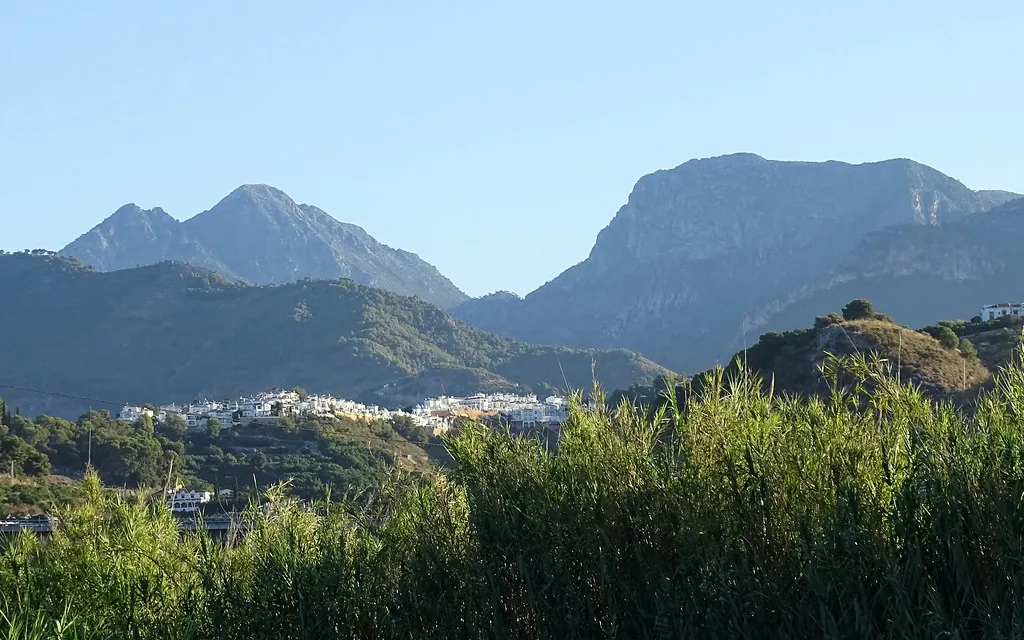
On the southern slopes of the Axarquía, Sayalonga offers a clear sense of how settlement developed across eastern Málaga. The village sits on a hillside, set back from the coast yet always facing the Mediterranean, which appears on the horizon on clear days. Around it stretch agricultural terraces where vines, olive trees and almond trees still dominate, continuing a pattern that has supported local life for centuries.
At roughly 350 metres above sea level, Sayalonga has a population of around 1,600. Its layout follows the terrain rather than any formal plan. Streets are narrow, with constant turns and small changes in level, a structure typical of older settlements in the Axarquía. Whitewashed houses line these routes, and here and there the buildings open up to reveal views across the valley. When the weather is clear, the sea is easy to pick out in the distance.
Everyday spaces and historic landmarks
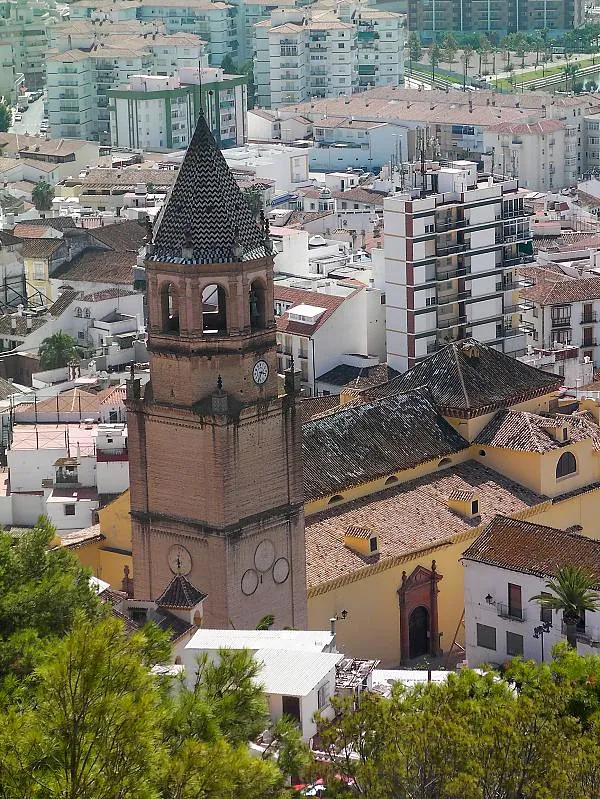
The most prominent building is the Iglesia de Santa Catalina, constructed after the area became part of the Crown of Castile in the 15th century. Like many churches in the region, it stands on the site of a former mosque. Its current appearance reflects several later alterations, which explains its restrained and somewhat mixed style. The tower still acts as a visual reference point from many parts of the village.
Daily life centres on the Plaza de la Constitución. It is not monumental in scale, but it functions as a meeting point where several streets from the old quarter converge. At certain times of day, it is common to see residents sitting on benches or passing through on their way home.
From this square, a number of streets lead towards one of Sayalonga’s most unusual features: the round cemetery of Sayalonga. Its circular design is rare in Andalusia and often mentioned in discussions of local funerary architecture. Built in the 19th century, it still retains its concentric layout, which makes it immediately recognisable.
The village also has a few natural viewing points that open out towards the surrounding landscape. One of these is known as the Mirador del Mediterráneo. From here, the arrangement of the land becomes clear: cultivated hills descending towards the coast, with the outline of Málaga’s eastern shoreline beyond.
Terraced agriculture and rural traces
Much of the landscape around Sayalonga is the result of long-established hillside farming. The land is organised into terraces supported by dry-stone walls, a technique that made it possible to cultivate steep slopes.
For centuries, vineyards played a major role in the area, particularly the moscatel grape used for raisins and sweet wines. Today, vines exist alongside olive groves and small family plots. Within the municipality, there are still lagares and old oil mills, some of which have been restored. Not all can be visited, but they help explain how rural life in the Axarquía functioned before the mechanisation of agriculture.
Paths through the surrounding hills
The area around Sayalonga can be explored along old agricultural tracks that once linked farmhouses, presses and cultivated land. Some of these routes are now used as walking paths.
One of the better-known options is the Ruta de los Molinos, which follows the course of small streams where watermills once operated. Other paths climb towards higher ground, offering wider views of the valley with the sea in the background.
The terrain is uneven and often exposed to the sun. Carrying water is advisable, and the middle of the day can be particularly intense during the hottest months.
Festive moments across the year
The local calendar reflects both religious traditions and the agricultural cycle. At the end of November, the village celebrates Santa Catalina, its patron saint, with religious events and activities held in the streets.
Summer brings a different atmosphere. August concentrates many of the more festive gatherings, with music and evening events taking place in public spaces.
The Feria de la Vendimia, usually held in September, recalls the historical importance of the moscatel grape in the Axarquía. During these days, activities focus on wine and traditional methods of production.
When to go
Spring and early autumn tend to be the most comfortable times to explore Sayalonga and the surrounding paths. Temperatures are milder, and the agricultural landscape changes noticeably with the seasons.
Summer days can be very hot, although a breeze often arrives from the coast later in the day. As the light softens over the hills of the Axarquía, the village streets become easier to walk and the setting feels at its most settled.