Full Article
about Sedella
Quiet village at the foot of La Maroma with Mudejar architecture and a visitor center for the natural park.
Hide article Read full article
A village shaped by the slope
Tourism in Sedella usually begins with where it sits. The village stands at nearly 700 metres above sea level, on the southern side of the Sierra de Almijara, within Málaga’s Axarquía region. Its houses spread across the hillside in small natural terraces, something that becomes obvious within minutes of walking through the centre. Streets rise and fall without any clear pattern, following the terrain rather than a planned layout.
This irregular design is linked to its Andalusí past. After the Castilian conquest in the 16th century, Sedella changed in many ways, yet the network of narrow, winding streets remained. Whitewashed houses with Arab-style tiled roofs and small openings reflect practical needs more than visual effect. They were built to cope with strong sun and mountain winds. Around the village, olive groves, almond trees and small terraced plots form a patchwork typical of this part of the Axarquía, where farming has long adapted to uneven ground.
Buildings, memory and landscape
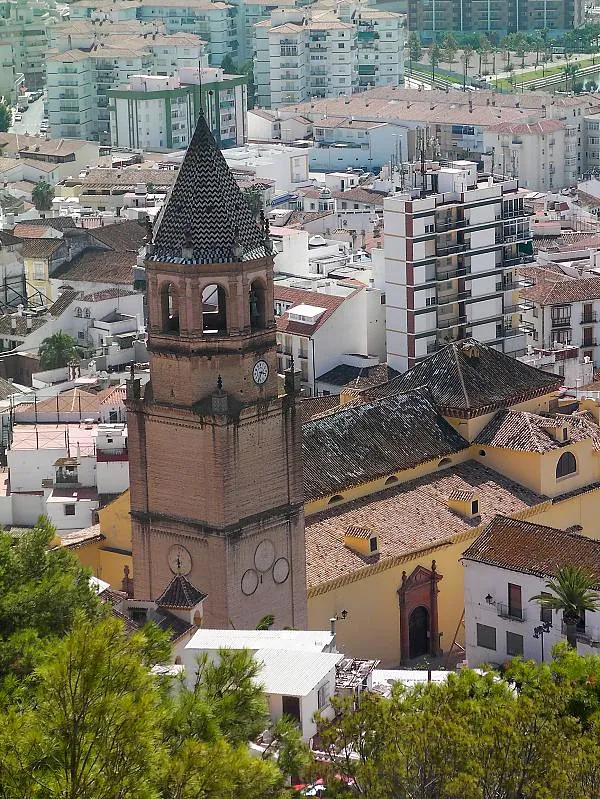
The Iglesia de San Andrés stands where a mosque once existed, a common transformation across many towns in the region after the Christian conquest. The current building dates from the 16th century, though it has undergone later alterations. Its tower, influenced by Mudéjar tradition, rises above the surrounding rooftops and serves as a point of reference from almost anywhere in the village. Inside, there are elements of traditional carpentry and several religious images, often described as coming from different stages of the parish’s history.
Near the centre, the old public washhouse recalls how daily life was organised until relatively recently. Beside it is a fountain traditionally considered to have Arab origins, still in use today.
Another place of interest is the Casa de la Tía Anica. This house offers a look at local domestic architecture, with thick walls, few windows and rooms shaped by both climate and agricultural work. It is less about grandeur and more about understanding how people lived here.
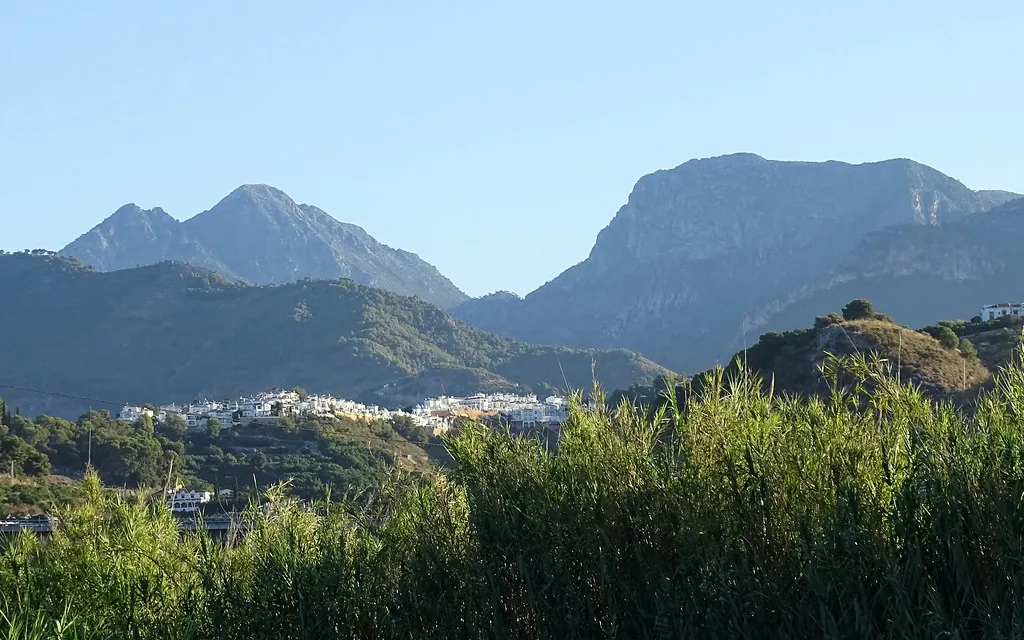
Looking beyond the buildings, the surrounding landscape carries much of Sedella’s character. Terraces supported by dry-stone walls climb the hillsides, showing how generations managed cultivation in difficult conditions. From some higher points in the municipality, clear days reveal the Mediterranean to the south and the peaks of the sierra inland.
Paths into the sierra
Sedella lies on the edge of the Parque Natural de las Sierras de Tejeda, Almijara y Alhama. This position has made it a regular starting point for mountain routes. Several paths begin here and lead into the sierra, passing through pine woods and areas of limestone rock.
One of the better-known routes heads towards the Tajo de la Madera, a rock formation visible from different parts of the area. The path crosses open slopes and offers wide views over the valley. It is sensible to check conditions before setting out, as distances in the mountains can be deceptive and the terrain becomes demanding, especially in summer.
Some nearby rock faces are also used for climbing. There are equipped sectors that have been in place for years, though conditions can change, so up-to-date information is worth seeking before heading out.
Local cooking remains closely tied to what is grown nearby. Seasonal vegetables, slow-cooked stews and goat meat prepared in different ways appear regularly. Olive oil from the area is used in most dishes. In many homes, sweets made with almond or fig are still prepared when the season arrives.
Festivities rooted in the calendar
The festive calendar in Sedella follows the rhythm of the village. During Semana Santa, processions move through streets so narrow that there is barely space for the participants. The atmosphere is more contained than in larger coastal towns.
The feast of San Andrés, the village’s patron, is usually held at the end of November. It brings residents together around shared meals and activities in the main square. In summer, the Fiesta de la Vendimia takes place, linked to the area’s winemaking tradition. It recalls the grape harvest and the process of making wine, something that formed part of the local economy for generations.
Getting there and getting around
Sedella is just over 50 kilometres from the city of Málaga. The usual route follows the Mediterranean motorway towards the Vélez-Málaga area, then continues inland along regional roads. The final stretch runs along narrower, winding routes.
The village itself is easy to explore on foot, though there are constant slopes. Spring and autumn are generally more comfortable times for walking through both the streets and the surrounding paths, when temperatures are milder and the Axarquía landscape appears greener. It is a place best approached without hurry, where daily life moves at a steady pace.