Full Article
about Torrox
It boasts the best climate in Europe and combines an inland white village with a coast packed with amenities.
Ocultar artículo Leer artículo completo
The first thing you notice are the signs. “Mejor clima de Europa” is painted on walls, printed on menus, even stitched into the awnings of the sea-front chiringuitos. Torrox, a scatter of white houses four kilometres inland from its coastal twin, claims the continent’s gentlest thermometer—an average 18 °C in January that keeps the outdoor cafés full of retired Nottingham teachers and Hamburg engineers long after northern Europe has turned grey.
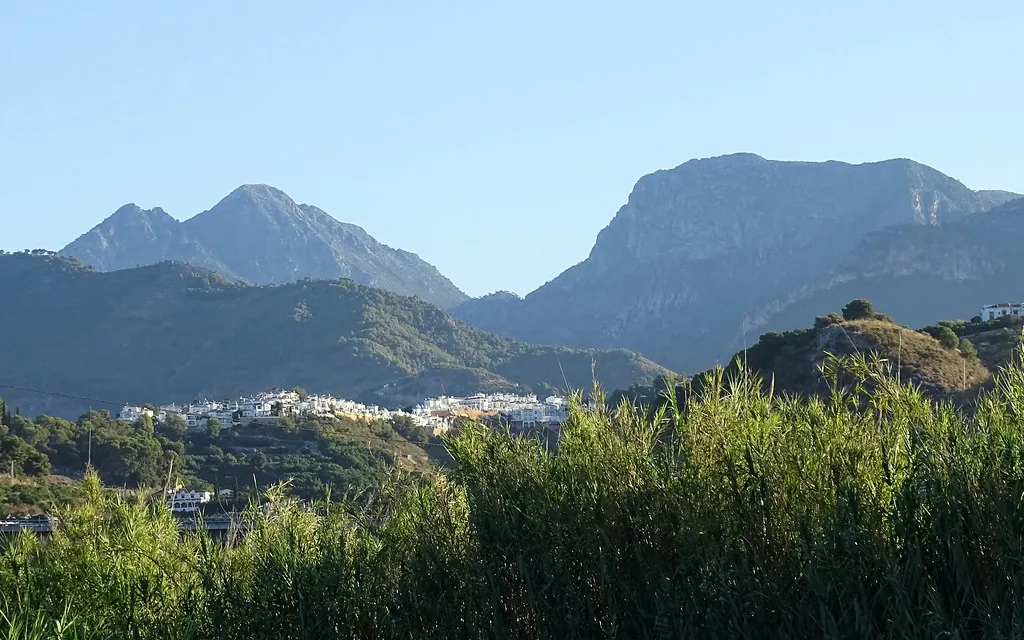
Torrox is really two places sharing a surname. Torrox Pueblo perches 120 m up the last ridge of the Sierra Almijara, its streets tilting so sharply that the 09:30 bus from the coast has to wheeze through switchbacks to reach the plaza. Torrox Costa, by contrast, is a flat, two-kilometre strip of promenade, ice-cream parlours and low-rise apartments where British accents outnumber Spanish before breakfast. A €1.30 local bus shuttles between them every half-hour; if you miss the last return at 22:45, a taxi costs around €8 and the driver will probably greet you in estuary English.
Morning in the pueblo, afternoon on the sand
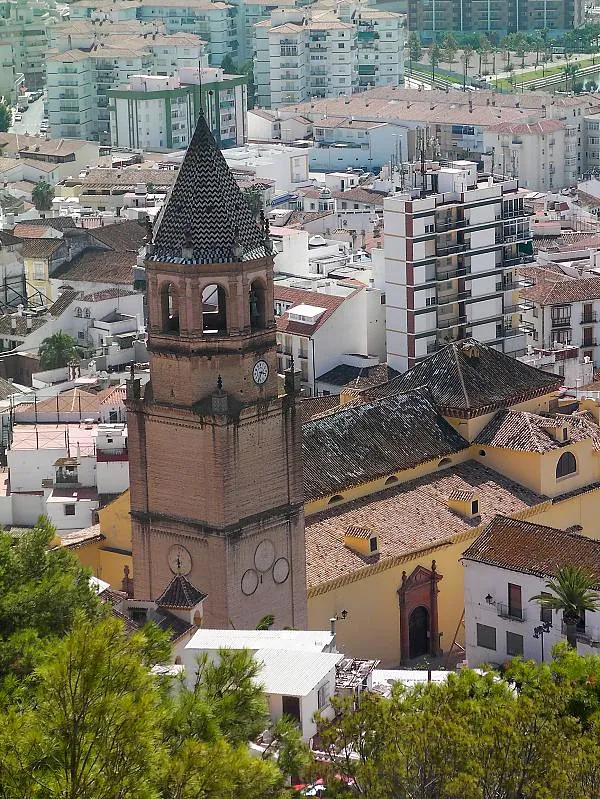
Start uphill. The old centre is small enough to cross in ten minutes, but give it an hour. Iron balconies spill geraniums over lanes barely two metres wide, and every corner seems to end in a view of the Mediterranean glinting 500 feet below. The Iglesia de la Encarnación, rebuilt after the 1568 Morisco rebellion, keeps its Mudéjar ribs beneath a plain Renaissance skin; the tower is the reference point if you get lost buying soap scented with local almonds at the Monday street market.
Walk downhill past the Casa de la Moneda—once the Moorish mint, now a tidy cultural centre with free Wi-Fi—and you reach the sugar-lump lighthouse completed in 1864. From here a paved path zigzags three kilometres to Playa del Cenicero, the first of the beaches. Locals do the walk before the sun climbs over the ridge; sensible visitors take the bus and save their knees for the almond-blossom routes in February.
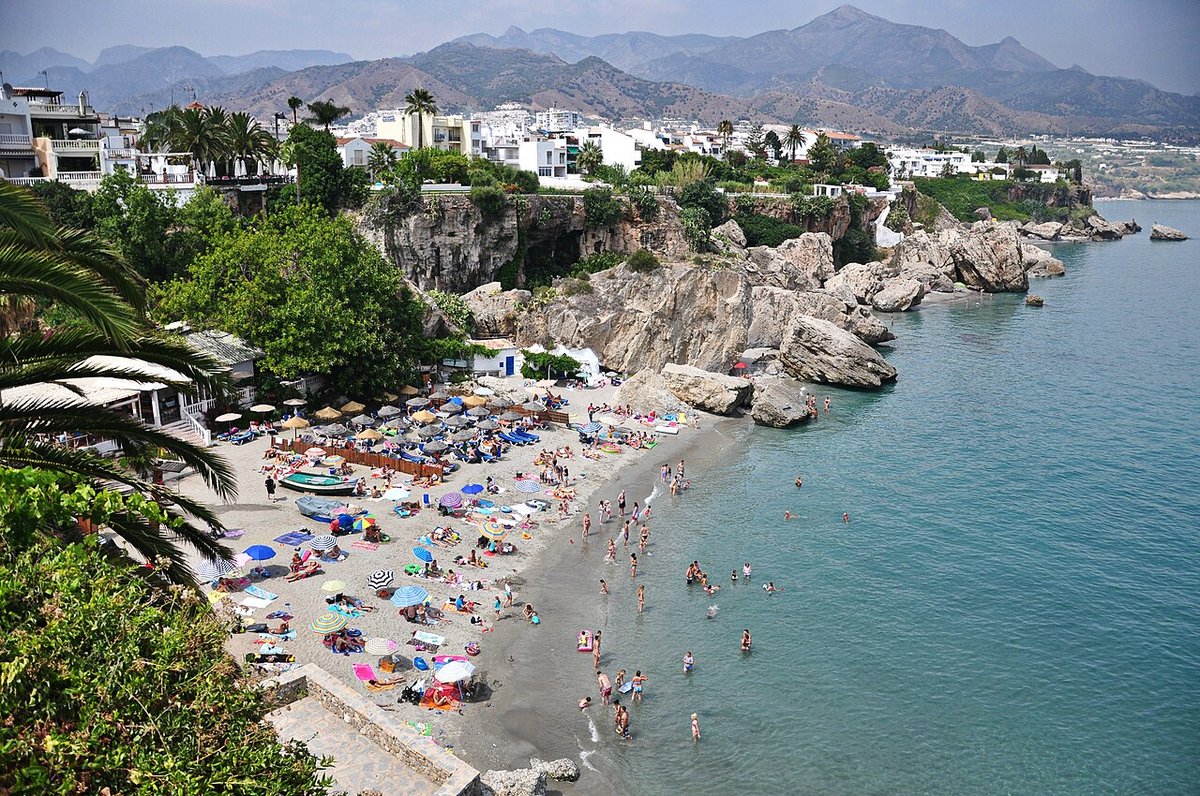
The coast is engineered for families. The sand is yellow, fine enough for sandcastles, and the shelf into the sea so gentle that toddlers wade twenty metres before the water reaches their waist. Four beach bars offer the same menu: espetos of sardines skewered on bamboo, plates of fried anchovies, and tinto de verano that costs €3 if you stand at the counter, €4.50 once you sit on the canvas chairs. Competition is fierce; Almanzor (look for the blue fishing boat parked upright in the sand) wins on flavour, though service slows when the owner’s grandson is allowed to take orders.
Windmills and winter sun
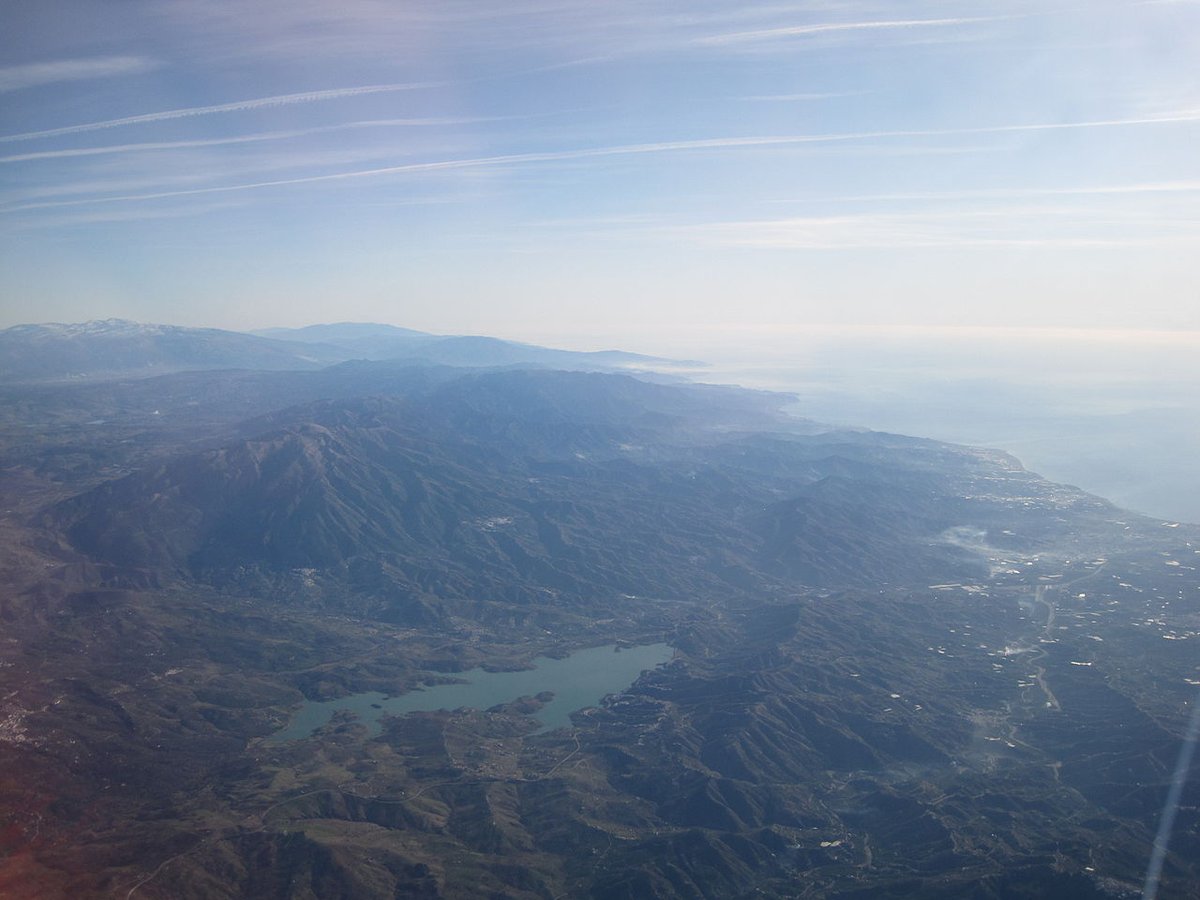
Torrox’s real trump card is the weather. Between November and March the village fills with long-stay caravans and rented flats whose windows overlook the promenade. Morning temperatures touch 22 °C; by 16:00 a breeze descends from the snow-dusted Sierra Nevada 80 kilometres away, so cardigans appear and the outdoor heaters flicker on. The Almanac publishes monthly tables, but conversation is more accurate: “If you can see the Moroccan coast clearly, rain tomorrow; if it’s hazy, another beach day.”
That reliability makes the village a base for walking the Axarquía’s irrigation routes. The signed Ruta de los Almendros begins between the cemetery and the old sugar factory; it loops eight kilometres through terraces of olives and almonds, climbing 300 m then dropping back to the riverbed. February blossom turns the hillsides bridal white; by late May the same trees offer shade. Sturdier boots and a 1:25,000 map open the Sierra Almijara above the village, but paths are faint and summer fire-risk closes them from 15 June to 15 October.
Festivals, fish and the August squeeze
Torrox likes a party. Easter processions squeeze brass bands up lanes barely wider than a coffin; if you value tranquillity, avoid Holy Week. The Feria de las Nieves in early August is bigger still: a foam machine on the plaza, flamenco at midnight, and a maritime procession that decks fishing boats with paper saints before circling the bay. Book accommodation early; the population triples and the underground car park beside Mercadona fills by 10 a.m.
Food remains stubbornly local. Ajoblanco—chilled almond soup with grapes—appears on every menu in summer; winter brings migas, fried breadcrumbs laced with garlic and served with sweet Moscatel grapes. Bar Paco in the pueblo does a mild chicken-and-almond stew that even fusspot children finish; La Bodega on the coast prints English translations but keeps the Andalusian portions. Expect to pay €12–14 for a main, €2.20 for a caña of beer. Vegetarians survive on tortilla and grilled peppers; vegans should head to Nerja, ten minutes east.
Getting here, getting round
Málaga airport is 52 km west. ALSA buses leave the terminal every two hours and reach Torrox Costa in 55 minutes (€5.60). Car hire widens the choice of beaches—El Morche, five minutes east, has fewer apartment blocks and a decent chiringuito called Tito’s—but is not essential. If you do drive, leave the A-7 at exit 285, not 272 as the old guides claim; the new slip road shaves ten minutes off the journey. In July and August traffic backs up from the peaje to the coast; approach before 11 a.m. or after 7 p.m.
Parking is the perennial headache. Blue-zone bays on the paseo cost €1 an hour March–October, free otherwise, but spaces are hunted like truffles. The Mercadona underground car park gives the first hour free, €1.30 thereafter and rarely full before midday. The pueblo is easier: head for the signed aparcamiento above the sports centre and walk downhill—returning uphill with shopping is the price of the view.
When to come, when to stay away
Late January brings almond blossom and empty sun-loungers; late July brings bargain flights and shoulder-to-shoulder towels. May and late-September hit the sweet spot—sea warm enough for a swim, evenings cool enough for sleep, menus still priced for locals rather than package reps. Winter rain arrives suddenly; streets become rivers for an hour, then the tiles steam dry. If the forecast says gota fría, cancel the mountain walk and sit inside with a hot chocolate—Torrox’s drainage was designed for sun, not storms.
Leave before the eleventh of December and you miss the Día de las Candelas, when villagers haul sofas onto the streets, build bonfires and serve free potato stew to anyone who looks cold. It is the sort of evening that makes the climate signs believable: Europe’s best weather, measured not in degrees but in the number of nights you can eat outside without a coat.